Global warming

The great climate climbdown is finally here

Finally, thankfully, the global warming craze is dying out. To paraphrase Monty Python, the climate parrot may still be nailed to its perch at the recent Cop summit in Belem, Brazil – or at Harvard and on CNN – but elsewhere it’s dead. It’s gone to meet its maker, kicked the bucket, shuffled off this mortal coil, run down the curtain and joined the choir invisible. By failing to secure new pledges for a cut in fossil fuels, Cop achieved less than nothing. The venue caught fire, the air conditioning malfunctioned – and delegates were told on arrival not to flush toilet paper.
The AI apocalypse is the least of our worries

What is your p(doom)? This is the pseudo-scientific manner in which some people express the strength of their belief that an artificial superintelligence running on computers will, in the coming decades, kill all humans. If your p(doom) is 0.1, you think it 10 per cent likely. If your p(doom) is 0.9, you’re very confident it will happen. Well, maybe ‘confident’ isn’t the word. Those who have a high p(doom) and seem otherwise intelligent argue that there’s no point in having children or planning much for the future because we are all going to die. One of the most prominent doomers, a combative autodidact and the author of Harry Potter fan-fiction named Eliezer Yudkowsky, was recently asked what advice he would give to young people. He replied: ‘Don’t expect a long life.

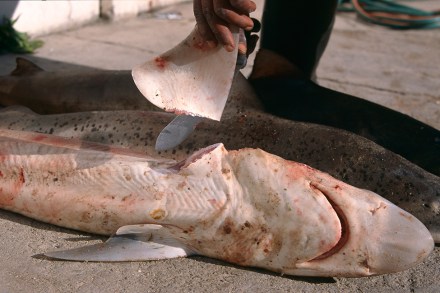
After half a billion years, are sharks heading for extinction?

Sharks were never far from our minds as we grew up on the beach in Adelaide. Although attacks were rare, they were real. My grandfather was witness to the fatal mauling of a swimming instructor in the 1930s, and later a friend from university was killed while scuba diving off Port Noarlunga. Yet for the most part sharks were more an idea than a living presence. Other than an unsettlingly close encounter with a bronze whaler when I was 20, my interactions with the creatures as a young person were mostly confined to observing gentle Port Jackson sharks, wobbegongs and grey nurses while snorkelling and diving. This tendency to see sharks only through the prism of their vastly overestimated threat to human life obscures the many wonders of these remarkable animals.

Is it up to pop stars to save the planet now?

‘Walking by the banks of the Chao Praya on a breezy evening after a day of intense heat,’ writes Sunil Amrith at the start of his melancholic new book, ‘I struggled to connect the scene before me.’ While the river that flows through Bangkok looked idyllic, ‘crowded with noisy pleasure boats festooned with lights’, Amrith was struck by the realisation that half of the city ‘could be underwater by the end of this century’. This thought was the latest stage in a process that he says has taken him time to work out: ‘I can no longer separate the crisis of life on Earth from our concerns with justice and human freedom that inspired me to become a historian in the first place.

The world is ablaze – yet climate chaos still takes us by surprise

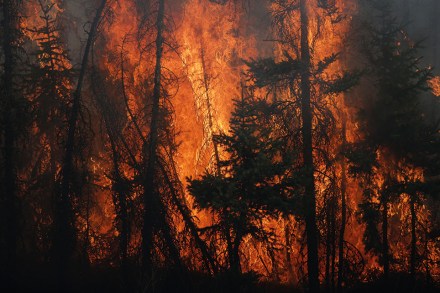
In the light of recent fire emergencies on the Greek islands and in the wider Mediterranean, this book has just acquired even more relevance. It centres on another catastrophe in May 2016, a Canadian inferno nicknamed the ‘Beast’, which has become the most expensive natural disaster in the country’s history. Within three weeks, Fort McMurray’s blaze had incinerated an area the size of Cumbria Within five days of its discovery, the blaze had forced the mass evacuation of 90,000 residents from the city of Fort McMurray in Alberta Province. In just three weeks, egged on by an El Niño cycle as well as fierce winds and record temperatures across America’s subarctic belt, it had incinerated an area equal to the county of Cumbria.

How the population scare predicted today’s climate hysteria

From our US edition

Stanford professor Paul Ehrlich's recent appearance on CBS’s 60 Minutes reminds us what can happen when those with impressive academic credentials begin making end-of-the-world predictions. It was 1968 when Ehrlich published The Population Bomb, a book that declared with absolute certainty that “the battle to feed all of humanity is over.” Because so many people were living so close together and consuming so much of the world’s limited resources, the inevitable future was one of “mass starvation” on “a dying planet.” A year after the book’s publication, Ehrlich went on to say that this “utter breakdown” in Earth’s capacity to support its bulging population was just fifteen years away.

Climate change’s biggest casualty is my winter wardrobe

From our US edition

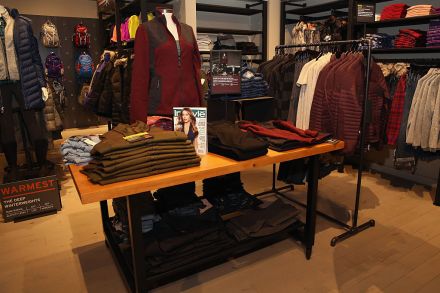
For Christmas this year, Santa Claus brought me the most splendid Maine Mountain Parka from L.L. Bean, rife with thoughtful details and flawless construction from hood to hem. Standing in the living room, I admired the weather-proof cuffs and pulled the oversized zipper with rubber grip pull cord (a must when wearing gloves). I fastened the button-front storm placket — such a satisfyingly haughty act, akin, I’d imagine, to how one of Napoleon’s cavalrymen might have felt strapping on his saber. I flipped the adjustable snorkel hood with its removable faux-fur ruff onto my head and burrowed my hands into the deep snap pockets. I then plopped down on the couch and gazed smugly out the window at the bomb cyclone raging outside.

There is no climate crisis

From our US edition

“No climate crisis” is, of course, not the spin the Intergovernmental Panel on Climate Change (IPCC) is putting on its new 3,676-page report released last month. “The choices we make in the next decade will determine our future,” the IPCC says. “Any further delay in concerted global action will miss a brief and rapidly closing window to secure a liveable future.” It could hardly be plainer. The report is political advocacy barely masquerading as science. The IPCC Working Group II report is not meant to be about policy; that’s the job of Working Group III, which has yet to produce its contribution to the sixth assessment report. “The focus of our new report is on solutions,” the IPCC says of the Working Group II report.

The march of the larch: the Treeline is now encroaching on the arctic tundra

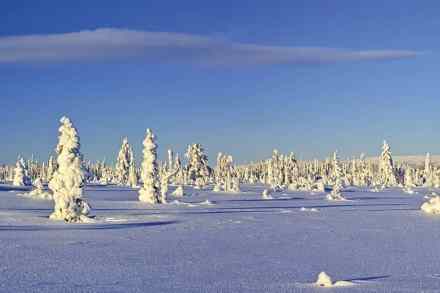
Covering 20 per cent of the Earth’s surface, the boreal forest is the largest living system, or ‘biome’, on land. It contains one third of all the planet’s trees and encircles much of the northern hemisphere in a halo of green. The northernmost extent of this forest, called the treeline, marks the point beyond which it is too cold for trees to grow. This is perhaps not where you’d expect to find Ben Rawlence, an author and journalist whose previous books have focused on humanitarian crises in Africa. But, as he explains in The Treeline, things are changing alarmingly fast in this biome: ‘The trees are on the move. They shouldn’t be. And this sinister fact has enormous consequences for all life on Earth.

‘Don’t Look Up’ and Hollywood virtue-signaling

From our US edition

I sat down to watch Adam McKay’s Netflix comedy Don’t Look Up over the Christmas break with an unusual burden of expectation. Half the people I’d known who had seen it — admittedly, mainly those on the right — had denounced it as unfunny, heavy-handed agitprop, whereas their politically opposed brethren praised it as "timely," "inspiring" and "important." Would I finish watching it and sign up for a series of Greta Thunberg podcasts, or smash my television in and take to the streets, hollering? To be honest, the film is neither offensive nor clever enough to arouse such strong opinions.

Good luck enjoying eating salmon ever again

‘I saw the best minds of my generation destroyed by cat videos,’ begins Henry Mance’s How to Love Animals, winningly. That is the paradox he sets out to unpick in this densely factual and intermittently horrifying book: how a world in thrall to cuteness, endlessly compelled to click on videos of kittens and owls having a special friendship, can remain indifferent to the suffering of almost all other animals, whether farmed, in captivity or in the wild. That’s a tough brief. I’m not sure it’s a book I would choose off the shelf, because the subject matter is deeply unpalatable.

How to boil a frog

From our US edition

Back in the early 1990s Cyril Ramaphosa, South Africa’s president, outlined the new ANC government’s strategy to deal with the whites: 'it would be like boiling a frog alive, which is done by raising the temperature very slowly. Being cold-blooded, the frog does not notice the slow temperature increase, but if the temperature is raised suddenly, the frog will jump out of the water.' As Dr Oriani-Ambrosini put it, 'He meant that the black majority would pass laws transferring wealth, land, and economic power from white to black slowly and incrementally, until the whites lost all they had gained in South Africa, but without taking too much from them at any given time to cause them to rebel or fight.

frog

No, Donald Trump’s climate policies aren’t going to ‘boil the planet’

From our US edition

‘The Trump administration knows the planet is going to boil. It doesn’t care,’ claims Canadian eco-activist Bill McKibben in a Guardian editorial. With enemies as unhinged as this, who needs friends? McKibben is basing his claim on a few paragraphs buried within a 500-page ‘Draft Environmental Impact Statement’ issued by the National Highway Traffic Administration (NHTSA) and subsequently bigged up by the Washington Post as conclusive proof that Trump is the ultimate Gaia-raping super villain. According to the report, on current projections the global mean temperature is going to rise by around 4 degrees Celsius (7 degrees Fahrenheit) by the end of the century.

donald trump’s climate change

The Spectator’s Notes | 9 August 2018

President Trump has ended US participation in the Iran deal and imposed sanctions. No doubt this is annoying to the British and other Europeans who mistakenly helped devise it, but why are they — especially we — clinging to it still? Without the United States, it cannot work. Trump’s move is supported by our allies in the Middle East — Saudi Arabia, the UAE, Bahrain, Israel — who are constantly threatened by Iranian-backed terrorism. Inside Iran, once again (but little reported), people seeking freedom and work are protesting, yet we actively support a regime which has, for 40 years, been bitterly hostile to our interests and way of life.

This silly season, why not panic about global warming?

It all started so well. When the BBC decided that the good weather had gone on long enough to make it newsworthy, they invited the Met Office’s Stephen Belcher on to Newsnight, no doubt hoping that he would fan the flames with some lurid claims about how we were all going to fry in years to come. They were therefore no doubt thoroughly disappointed by his rather measured response, and his suggestion that that it was 'probably part of natural cycles in the weather, but... superimposed on [a] background of global warming'. However, as the warm spell has turned into a heatwave, environmental correspondents in the media have been unable to resist progressively more lurid tales. This is the silly season after all, and there’s none quite as silly as an eco-warrior in the sunshine.

Hostile climate

The subtitle of Al Gore’s new film is ‘Truth to Power’, which is supposed to give the impression of brave old Al fighting for right against the mighty fossil fuel establishment. But it is somewhat ironic, given his response when the power being challenged is Gore himself. The former vice president was in London last week to promote his new film and I, along with the world’s press, was invited to a private screening before being allotted an entire eight minutes talking with the great man. An Inconvenient Sequel is an odd film. Billed as a film about global warming, it is really about Gore himself.

The truth about the global warming pause

Between the start of 1997 and the end of 2014, average global surface temperature stalled. This 18-year period is known as the global warming pause, also sometimes referred to as the global warming hiatus. The rise in global temperatures that alarmed climate campaigners in the 1990s had slowed so much that the trend was no longer statistically significant. It has been the subject of much research and debate in peer-reviewed scientific journals. [caption id="attachment_9890412" align="alignnone" width="620"] Global surface temperature between January 1997 and December 2014[/caption] Then, in the spring of 2015, El Niño, a warm ocean phase in the equatorial Pacific developed. It rapidly drove up global temperatures by 0.5°C in less than a year.

Letters | 22 June 2017

May’s convictions Sir: Nick Timothy seeks sympathy by revealing that his ‘loved ones’ are upset by the personal attacks to which he is now subject (Diary, 17 June). They could have been spared distress if he had not invited retaliation by swearing at senior ministers and civil servants who crossed him. How could a prim vicar’s daughter have allowed endless profanities from this ill-mannered man and his ill-tempered associate Fiona Hill? Perhaps Timothy’s most extraordinary claim is that ‘a return to traditional campaigning methods’ was planned but Lynton Crosby vetoed it. Traditionally the Tories did not contract out their campaign to consultants charging vast fees. The leader and party chairman took charge. The manifesto was carefully costed.

Oceans apart

Readers of The Spectator will be familiar with the argument that climate change, like Britpop, ended in 1998. Raised on a diet of Matt Ridley and James Delingpole, you may have convinced yourself that climate scientists, for their own selfish reasons, continue to peddle a theory that is unsupported by real-world evidence. You may also have picked up the idea that the ‘green blob’, as it has been called in these pages, is somehow suppressing the news that global warming is a dead parrot. That was the case made by Dr David Whitehouse, science editor of Lord Lawson’s Global Warming Policy Forum in a Spectator blog in February last year.

Diary – 2 February 2017

 ‘A Bill to confer power on the prime minister to notify, under Article 50(2)…’. When it comes to the House of Lords, some of those trying to amend or delay the bill will be paid pensioners of the European Commission. Peers are obliged to declare any interest that ‘might be thought by a reasonable member of the public’ to influence the way they discharge their parliamentary duties — unless it is an EU pension. In 2007, a Lords subcommittee said that because their contracts oblige them to support the EU, an EC pensioner who made ‘intemperate criticism of the commission’ would have contravened their obligations under the Treaty of Rome ‘and therefore could in theory damage his pension’.