Germany

Merkel’s immigrant boom wreaks havoc in Germany’s prisons

From our US edition

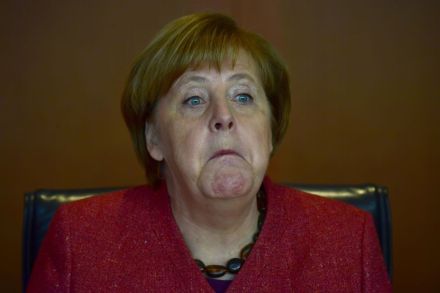
Angela Merkel’s decision to allow more than one million migrants into Germany has caused a crisis in Germany’s prison system. About half the prisoners in Berlin and Hamburg are now foreign-born, according to the latest figures in the German press, and in prisons across the country, German is becoming a foreign language. This surge in outsiders on the inside coincides neatly with the 2015 decision to allow in migrants from the Middle East, Africa and Asia. All regions of Germany report a ‘very strong increase’ in the number of foreign and stateless prisoners, according to data from the past three to five years. Prisons throughout Germany are overcrowded and struggling to handle the influx in population.
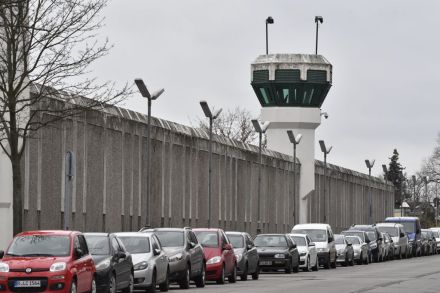
germany prisons

Both sides will blink

What can the EU do to help the Britons out of their Brexit quagmire? Until very recently, the answer would have been ‘little, if anything’. There is a deal on the table, which Theresa May herself pronounced to be non-negotiable. Well, parliament directed her — and by implication, the EU — to think again and to reconsider the vexed question of the Irish backstop. Does anybody on either side of the channel really want to wreck the future relationship between the UK and the EU over the unsolved issue of the Irish border, as well as risk creating renewed enmity along it? God forbid.

How Germany helped shape the conditions for Brexit

German political leaders, industrialists, artists and sportspeople wrote to the Times last week urging Brits to reconsider and stay in the EU. The letter was a mixture of gratitude that Britain had been willing to let Germany rejoin the ranks of civilised nations after the horrors of war, and a rather patronising list of the oh-so-adorable British quirks and foibles: our black humour, our curious habit of drinking tea with milk, drinking ale, driving on the left and pantomimes. But what really struck me was that, for all the warm words, there was no recognition that modern German politics might have played a role in Brexit, let alone a hint of contrition.

The weakness behind Macron and Merkel’s love-in

Emmanuel Macron spoke for three hours, almost without pause, at the first of his grand débats national in Normandy last week, in an attempt to respond to recent protests, while 8,000 policemen kept the gilets jaunes at bay. Yesterday, in the splendour of the Palace of Versailles, Macron hosted scores of international business leaders, many on their way to Davos, to reassure them that France was open for business. They were polite but it is fair to say sceptical, having seen on television the Porsches of bankers burning on the streets of Paris. Today the peripatetic president is with Angela Merkel in the German city of Aachen, known still to the French as Aix-la-Chapelle, Charlemagne’s capital.

Matteo Salvini is doing Brussels a favour with his harsh migration policy

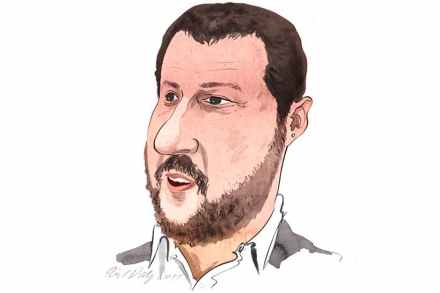
Matteo Salvini, Italy’s deputy prime minister and interior minister, is one of the most controversial politicians in Europe. The 45-year old chief of the League party exudes a down-to-earth demeanour with his common-man social media posts, in which he shares pictures of himself eating Barilla pasta and Nutella. To his many opponents, Salvini is a thick-headed, semi-fascist ideologue who wants to turn back the clock and return Europe to a dangerous form of nationalism. But to his supporters, in and out of Italy, he is a straight-talking, no-nonsense defender of his country's sovereignty against the northern elites in Berlin and Brussels.

How Cameron’s misreading of Merkel led to Brexit | 29 October 2018

It is impossible to overstate Angela Merkel’s significance, to Germany, to the EU, and to Britain. Others are better qualified than me to talk about the first two of those, but as she announces her (slow, deliberate) departure from office, I offer a thought about Merkel and Britain, which is that the modern history of Britain’s European policy has been a story of misunderstanding Angela Merkel, and therefore Germany. This story starts in 2005, when David Cameron stood for the Tory leadership. As a moderate, he was keen to woo the Right, especially on Europe. So he promised to pull the Tory MEPs out of the European People’s Party grouping in the European Parliament.

Angela Merkel is already making life difficult for her successor

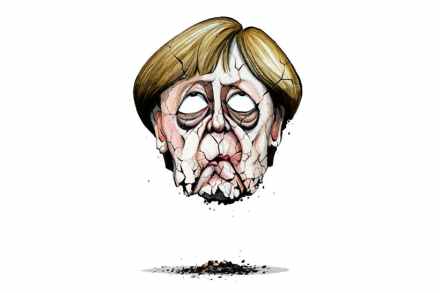
“May Day, May Day. We are sinking.” “This is the German Coast Guard. What are you thinking?” This advert for Berlitz, the language school, is a good metaphor for German politics and the decline of Angela Merkel. After this weekend’s election blow in Hesse, where support for her Christian Democratic Union (CDU) party fell by 11 points, she is now standing down as the leader of her party. Merkel also announced that she will quit as chancellor in 2021. This isn’t surprising. In the past few months, Merkel has defended her position as party leader and repeatedly said that she should stay in that job as long as she leads the country.

A meeting of remarkable men

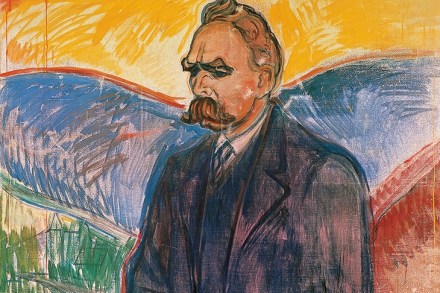
In 1945, with the second world war won bar the shouting, Bertrand Russell polished off his brief examination of Friedrich Nietzsche’s contribution to Western thought with the splendid phrase: ‘His followers have had their innings.’ Russell knew that Nietzsche’s followers didn’t just mean the Nazis. Ten years before Hitler’s acolytes started editing special volumes of Nietzsche’s aphorisms about the Will to Power, the Blond Beast and suchlike, Leon Trotsky declared that ‘the Nietzscheans’ were his natural allies in the creation of the socialist ‘superman’.

Europe ‘resurgent’

When I reviewed the first volume of Sir Ian Kershaw’s wrist-breaking history of the last 100 years of Europe, To Hell and Back, in these pages exactly three years ago, I compared our continent in 1945 to a punch-drunk boxer rising from the canvas with both eyes blacked. How, I wondered, would Kershaw handle the battered old bruiser coping with a not-so-brave new world in which he was no longer the undisputed champ? The image of the wounded fighter, I think, was apt, for the red thread running through Europe in the first half of the century, as Kershaw rightly saw, was violence. States waged catastrophic war on each other and on their own citizens. Belonging to the ‘wrong’ race, religion, or political persuasion could mean imprisonment, torture and violent death.

Ich bin ein Frankfurter

Things I learned about the Germans after a fortnight living as a non--tourist in Frankfurt:   1. Germans, and Germany generally, are among the world’s most underrated things. True they are not so adept at wit, snark, banter, jocularity or general frivolity. But they are kind, welcoming, generous and unlike, say, the French, charmingly grateful when you attempt to speak their quaint, guttural, impossibly inflected language even though — stimmt! — they speak yours so much better.   2. Here’s what happened when I lost my wallet. I got back to my hotel — cursing each step of the way the hours I would have to spend cancelling and re-ordering my cards — to find a message from the front desk.

Angela Merkel prepares for a rematch with Vladimir Putin

German chancellor Angela Merkel has a lot on her plate. In addition to keeping her rabble-rouser junior coalition partners in the tent, constantly looking over her shoulder for the increasingly renegade Horst Seehofer, and trying to come up with a European solution to the headache that is illegal migration, Merkel will be sitting down with Russian president Vladimir Putin this weekend to talk state business at the Meseberg. Merkel and Putin have a lot to discuss. The war in Ukraine’s Donbas region continues at a steady clip, notwithstanding the short-term ceasefires that usually collapse after a few hours or (if one is lucky) days.

Angela Merkel sacrifices her principles to make a migration deal

There was a time not too long ago - less than three years to be exact - when German Chancellor Angela Merkel was at the very top of her game. She dominated German and European politics for over a decade with her clear, effective, but cautious leadership, watching as the German economy solidified its place as Europe’s economic engine. When Merkel decided to open Germany’s doors in August 2015 to hundreds of thousands of refugees fleeing war and persecution in Syria, she became much more than the steward of Berlin’s economic power - she transformed overnight into the moral beacon of the European continent.

The Spectator’s Notes | 12 July 2018

Why do the British turn to the Germans in their moments of European trouble? It never works. When Jacques Delors conceived his single currency plans, Mrs Thatcher over-relied on Karl Otto Pöhl at the Bundesbank to squash them. Dr Pöhl preferred to side with Helmut Kohl. When Britain was struggling to stay in the ERM in the late summer of 1992, the Major government put faith in what they thought were German promises to help them out. These failed to materialise. When David Cameron sought a new EU deal which would win him the 2016 referendum, he placed his greatest hopes in Angela Merkel, who offered him concessions so feeble that even he quickly gave up trying to sell them. Last week, Mrs May flew to Berlin.

Donald Trump is wrong about Germany being a ‘captive’ of Russia

"What good is Nato if Germany is paying Russia billions of dollars for gas and energy?" tweeted Donald Trump on 11 July. Trump was surely referring to Nord Stream 2, the controversial deal between Russia and Germany, whereby Russia will pump natural gas direct to Germany through a new pipeline across the Baltic Sea. Trump reckons such arrangements make Germany a 'captive' of Russia. Is he right? America isn't the only country that's getting hot and bothered about Nord Stream 2. Denmark and the Baltic States have also voiced concerns. The most vociferous opponent of the scheme is Ukraine.

Why Sebastian Kurz is Europe’s most important politician

Austria assumes the Presidency of the Council of the European Union this Sunday, and normally the response among rightminded Britons would be a resounding ‘Who Cares?’ Even before we voted Leave, this rotating six month stint was generally regarded with indifference. Now we’re on our way out, why should we be bothered whose turn it is in the EU chair? Well, the big difference this time around is that Austrian Chancellor Sebastian Kurz is rapidly emerging as Europe’s most influential politician. And for the EU, his spell in the hot seat could hardly have come at a more crucial time. Like Trump’s America and Brexit Britain, Europe is divided.

Is there life after Merkel for German conservatives?

German conservatives are in disarray. Caught between the migrant crisis and Merkel’s looming departure, they are fighting over their own political future. On the surface, Angela Merkel’s Christian Democrats (CDU) and their smaller sister-party, the Bavarian Christian Social Union (CSU), argue over whether German police forces should be allowed to reject certain asylum seekers at the border. But the actual conflict runs deeper: it is not simply about whether or not to reject a few thousands refugees at the border; this is about the very future of German conservative politics. Merkel has now led German conservatives for thirteen years.

On Germany, Trump is right about the big picture, wrong about the detail

Time was, a US President wouldn’t dream of criticising the government of one of its Nato allies in public – but that was a long, long time ago, before the Age of Trump. ‘The people of Germany are turning against their leadership as migration is rocking the already tenuous Berlin coalition,’ tweeted President Trump yesterday. ‘Crime in Germany is way up. Big mistake made all over Europe in allowing millions of people in who have so strongly and violently changed their culture. We don’t want what is happening with immigration in Europe to happen to us.’ Of course Trump is being terribly undiplomatic. No surprise there. That’s his thing – that’s what he does. But is he right?

The future of Scandinavia

From ‘The Baltic question’, 15 June 1918: The future of Scandinavia and the Baltic must depend on the outcome of the war. If indeed Germany were to emerge victorious, then all the evils on which the pessimists delight to ponder would come to pass… The Baltic would be a German lake, and its commerce would be a German monopoly. Swedes and Danes and Norwegians would gradually be converted by Prussian schoolmasters and Prussian police into docile Germans, and their distinctive civilisations and literatures would disappear. Such is the prospect if the Allies were to fail in their task. But, fortunately for Scandinavia and for the rest of the world, the Allies will not fail.

Becoming German

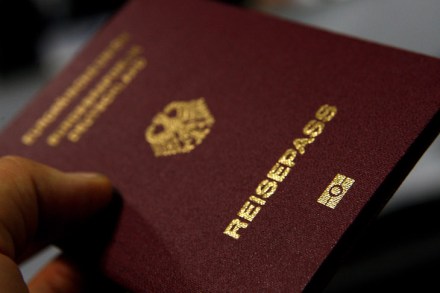
In the end, after all the waiting, the document didn’t look like much — a sheet of A4 paper adorned with a German eagle, and one of those tongue-twisting Germanic compound nouns beneath it: Staatsangehörigkeitsausweis. At last, my Certificate of German Citizenship had arrived. How did I feel? Elated, tearful, overjoyed. It was at this moment that I finally understood how so many Brexiteers must have felt when Britain decided to leave the EU. When Britain voted Leave I was distraught, but I wasn’t at all surprised. For anyone with eyes and ears, it was clear that a great many Britons were passionate about leaving, and that a lot of Remainers were merely lukewarm.

The dilemma of Germany’s Turkish footballers

What’s the German for ‘The best laid schemes of mice and men gang aft agley’? Mezut Özil (Arsenal) and İlkay Gündoğan (Manchester City) are two of the finest footballers in England’s Premier League. They’re both of Turkish descent, so when Turkey’s president Erdoğan came to London on a state visit, a friendly meeting and a photo opportunity must have seemed like a good idea. However Özil and Gündoğan were both born in Germany, and both play for the German national team. The Deutscher Fussball Bund (and some German politicians and journalists) weren’t best pleased. Özil gave Erdoğan a football shirt, which was bad enough, but Gündoğan went one stage further.