Germany

For real political chaos, take a look at Germany

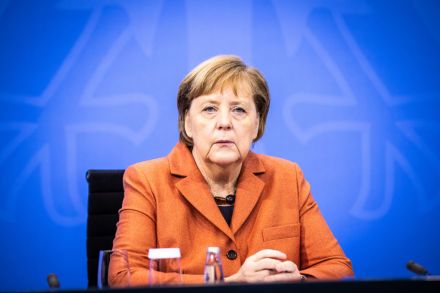
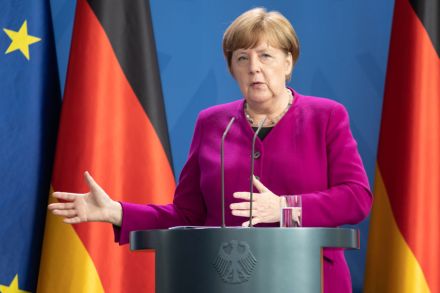
The female leader of a prominent European country fails to win a majority in an election and then struggles to form a coalition. Meanwhile, her government limps from crisis to crisis and finally negotiations break down, leading to another general election just weeks later. Not Theresa May, obviously, because she had little difficulty in forming a workable coalition with the DUP. But it is the situation in Germany where today Angela Merkel said that she has given up on trying to create a workable government with the Free Democratic Party, the Christian Social Union and the Greens. There will now almost inevitably have to be another general election, with Angela

Why a nation’s productivity isn’t a ‘one size fits all’ matter

The outlook for UK productivity is hardly encouraging. The Office for Budget Responsibility is suggesting only anaemic growth over the next five years while a recent survey by the ONS points to the lag between the UK and most of its G7 peers. Before we lament our lot, it is worth considering some of the differences between the UK labour market and those of its contemporaries. UK labour force participation is very high and unemployment is low. This would illustrate that the UK has been successful in getting as many people as possible into productive employment, which is not the case in most European countries.   The main reason for

Is there an alternative to the AfD?

The German Embassy threw a lavish party in London’s Belgrave Square last night to toast the Bundesrepublik’s Day of German Unity, but although the Bier and Sekt flowed freely, and the Ambassador’s Residence was awash with chatter, disunity rather than unity was the main topic of the day. Germany’s Tag der Deutschen Einheit marks the Reunification of Germany in 1990, one of those rare events in German history of which all Germans can feel proud. The Embassy’s annual jamboree is always jolly, yet there’s a ghost at every feast. Last year’s Banquo was Brexit. This year, it’s AfD. As German politicians meet in smoke-free rooms to thrash out the formation

Alternative für Deutschland’s success tells the tale of Germany’s forgotten East

Back in the early 1990s, a few years after the Berlin Wall came down, I went back to the house in Dresden where my father was born. The house was on the outskirts so my father and grandmother survived the bombing – they got the last train out of Dresden before the Red Army arrived. The family I found there had been there since 1945. They’d been expelled from Silesia when Stalin handed the region over to Poland, and had ended up in Dresden along with so many other displaced Germans. They’d been living there for half a century, three generations under the same roof. They didn’t own this house

A beginner’s guide to the AfD

The German public have, as predicted, kept ahold of nurse. But it is the breakthrough of the AfD into the German Parliament that is causing headlines around the world. Of course the four-year old party’s electoral success is also unsurprising. In elections last September the AfD were elected to representative roles in most of the country’s regional assemblies and beat Merkel’s party into third place in her own constituency. Nevertheless, yesterday’s electoral breakthrough is stunning and the success of this four-year-old party is among other things now causing a predictable rash of 1930s analogies. In a media landscape where very few papers can afford any foreign coverage at all, and

Germany’s shy AfD voters hand the Bundesrepublik a seismic shock

The German Embassy in London threw an election party yesterday, but as the guests gathered round the big screens to watch the exit poll the mood became subdued. Of course diplomats are supposed to be neutral and even German journalists strive to be objective, but off the record everyone here in Belgrave Square was saying the same thing: ‘Anyone but AfD.’ Alternative für Deutschland, Germany’s anti-immigration party, has been a thorn in Angela Merkel’s side ever since it was founded four years ago. In Germany’s last election, in 2013, it polled 4.7 per cent – just missing out on the 5 per cent required for representation in the Bundestag, German’s

Merkel limps to victory as AfD surges in German elections

Angela Merkel has won, for the fourth time, but on her party’s worst election result since 1949. Her main rivals did just as badly and the main winner looks like Alternative for Germany (AfD), now Germany’s no3 party. Here’s the national picture: So the centre-left Social Democratic Party is heading for just 20pc, its worst result since the Second World War.  Martin Schulz, SPD leader, said it has been “a difficult and bitter day for German social democracy”. By which he means that AfD are set to break through into the Bundestag with 13.5 per cent of the vote, a result that differs sharply in east and west. In the former East Germany, AfD is the second-largest party with

Frills and furbelows

Over the winter of 1859–60, a handsome young man could be seen patrolling the shores of the Gulf of Messina in a rowing boat, skimming the water’s surface with a net. The net’s fine mesh was not designed for fishing, and the young man was not a Sicilian fisherman. He was the 25-year-old German biologist Ernst Haeckel from Potsdam searching for minute plankton known as Radiolaria. In February he wrote excitedly to his fiancée, Anna Sethe, that he had caught 12 new species in a single day — ‘among them the most charming little creatures’ — and hoped to make it a full century before leaving. Haeckel had a degree

Do we really want restriction on German immigration?

At my nearest library recently there was an art exhibition featuring the works of local school children on the subject of ‘unity’, with lots of drawings (many of them outstandingly good) emphasising how we’re all the same (and yet diverse) and that what we have in common is far more important than anything that divides us. We are totally, totally united. Because I’m a terrible person, there was once a time when this sort of thing would have caused me to break out in an involuntary sneer – except that this was just after the Manchester bombing and one of the schools involved was my kids’, and it just made

Theresa May could learn a lesson from Angela Merkel’s debate performance

Last night’s TV debate between Angela Merkel and Martin Schulz poses a nagging question for British conservatives. No, nothing to do with Brexit – the subject wasn’t even mentioned. Rather, why was Theresa May so afraid of going toe to toe with Jeremy Corbyn before the General Election? If only she’d done a Merkel and faced off her main rival on television, she might have won a decent majority – just as Merkel looks set to do in three weeks’ time. Like May, Merkel is widely (and quite rightly) regarded as an uninspiring public speaker. Like Corbyn, Schulz is an assured performer, with a polished ‘man of the people’ shtick.

Hunt-the-iPhone was the highlight of my hols

For years, Caroline and I have been squabbling over where to spend our summer holidays. Her ideal is a family-friendly Mediterranean resort where she can lie on a beach reading a paperback, while mine involves renting a car and driving from place to place, staying in Airbnbs and packing in as many ‘fun’ activities as we can. Last year she got her way; this year it was my turn. So we took an easyJet flight from Gatwick to Munich. Admittedly not perfect, given that we were going to Italy, but it was the cheapest deal I could find: £450 all-in, including the kids. A bargain, even factoring in a 6.25

Germany’s booming economy paves the way for another Merkel victory

With the German elections now barely a month away, the Bundesrepublik remains beset by worries about terrorism and immigration. Yet, just like the river in the song, the German economic juggernaut just keeps rolling along. The latest GDP figures are even better than expected – 0.6 per cent growth in the second quarter – the best year on year rate since 2014, and the twelfth consecutive quarter in which the German economy has grown. Other Eurozone countries have reported healthy figures, too. France grew by 0.5 per cent, and Spain reported a rise of 0.9 per cent – its strongest result for three years (the British economy grew by 0.3

Cheating German car-makers are good news for Brexiteers

It came as no great surprise to learn that the EU competition authorities are crawling all over the three major -German car-makers, Volkswagen, BMW and Daimler, to investigate collusion via ‘secret technology working groups’ dating back to the 1990s. The most damaging allegation — reported by Der Speigel — is that the three groups colluded over the use of AdBlue, an additive that neutralises -diesel emissions, by agreeing to use small but inadequate AdBlue tanks in their cars when larger, more expensive ones might have done the job properly. (BMW denied that story, but the other two groups declined to comment.) This follows the 2015 emissions -scandal in which half

How Brexit will change Germany

In the summer of 1990, the editor of The Spectator, Dominic Lawson, went to interview Nicholas Ridley, Margaret Thatcher’s Secretary of State for Industry, and asked him about the drive towards European Monetary Union. ‘This is all a German racket designed to take over the whole of Europe,’ said Ridley. ‘I’m not against giving up sovereignty in principle, but not to this lot. You might as well give it up to Adolf Hitler, frankly.’ The consequences of these comments were seismic. Thatcher demanded Ridley’s resignation, she resigned herself a few months later, and for a quarter of a century thereafter successive Prime Ministers did their utmost to distance themselves from

Brexit: A view from Germany

 Frankfurt ‘This is not about punishing Great Britain,’ declared Sigmar Gabriel, Germany’s interim foreign secretary, on his recent visit to London. I fell about laughing, because this is precisely what’s going on. It is as obvious to us Germans as it is to the Brits: the EU cannot tolerate the thought of a successful United Kingdom outside the Brussels sphere of influence because, if that were allowed to happen, others might dare to start thinking about leaving the club too. Everything we hear from Brussels flows from this. The EU presents itself as a champion of free trade, especially when its leaders are attacking Donald Trump, yet it does all

Why we should care about the German elections

German parliamentarians used to pride themselves on being boring, but the past two years have turned Teutonic politics upside down. After a decade of dreary stasis under Angela Merkel, a system designed to run on tramlines has become a rollercoaster ride. So why has the political scene in Germany suddenly become so volatile? And what are the implications of this change of pace for Britain, and the EU? The drama began when Merkel welcomed a million migrants into Germany, a decision which almost destroyed her political career. ‘Wir schaffen das!’ she told Germany. ‘We can do this!’ Unfortunately for her, a lot of Germans disagreed. Her ratings slumped, while those

Back to the future | 29 June 2017

As Kraftwerk took their 3D show around Britain last week, a document from 2013 surfaced online, purporting to be their requirements for car transportation while on tour, necessitated by ‘rather bad driving experiences in the recent past in various parts of the world’. Kraftwerk, it said, should only be driven by ‘suave gear changers (if car is not automatic)’ and ‘suave breakers’. Both radio and aircon should be turned off, and on no account should the driver talk to the band. It had the effect of making the Düsseldorf quartet — long since down to one original member, Ralf Hütter — look like grumpy old men who would rather be

The infinite sphere of Helmut Kohl

Helmut Kohl, architect of German reunification, has died at the age of 87. Here Christian Caryl, writing in 1994, explains how Kohl became a titan of German politics. Like everyone else in Germany, I’ve spent the past five months listening to the press ruminate about the secret of Helmut Kohl’s success. Much of the theorising had to do with girth. His bulk — depending on your point of view — epitomised enormous popularity, or immense political stature, or his country’s dominant status within Europe. He is sometimes said to sail like a ship through seas of adoring crowds, while at other times, he towers like a giant above a dwarfed political competition.

Merkel is right about Trump – so where does that leave Britain?

Angela Merkel has never been a showboating politician. Public speaking isn’t her forte – she prefers to work behind the scenes. That’s why her latest speech has made such big waves, on both sides of the Atlantic. The Washington Post said it marked the beginning of a ‘new chapter in US-European relations.’ The New York Times called it a ‘potentially seismic shift.’ Seasoned US diplomat Richard Haas described it as ‘a watershed’ in America’s relationship with Europe. So what did Merkel say? What did she mean by it? And what are the implications for Germany, and for Britain? Uttered by any other politician, Merkel’s speech last Sunday might not be

Islamism isn’t the only terror threat Germany is facing

Since December, when Islamic terrorist Anis Amri drove a truck into a Berlin Christmas market, Germans have been waiting fearfully for the next Islamist attack. However right-wing terrorism is also a growing concern in Germany, and the latest case to come to light shows how this extremist movement may be evolving. Germany’s Military Intelligence is currently investigating 275 cases of right-wing extremism, but surely none of them is quite so disconcerting as the peculiar case of Franco A. The investigation began in January, when a maintenance worker at Vienna Airport opened a toilet ventilation duct and found a pistol hidden inside it. The police attached an alarm to the air