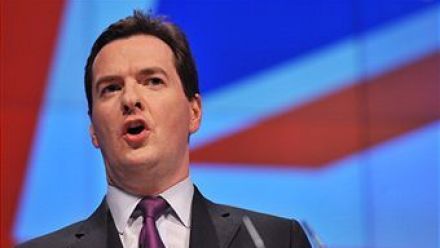
George osborne

What will Osborne’s offer to the IMF amount to?

George Osborne's allies may be filtering across government, but what of the man himself? He was at a meeting of G20 finance ministers in Paris yesterday, and trying to maintain a difficult balance over the imploding eurozone. In part, our Chancellor was firm about Europe's troubles — the area, he said, "remains the epicentre of the world's current economic problems," and he urged its leaders to come up with something "quite impressive" at next weekend's European Council meeting. But he also tried to sound understanding — the UK, he suggested, would consider shuffling more cash into the IMF's bailout account. The offer of more funding for the IMF was arresting — but it's uncertain what it will come to, or whether it will come to anything at all.

The new Tory generation

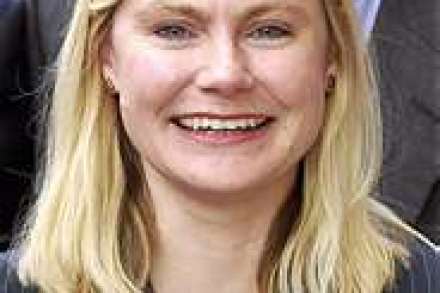
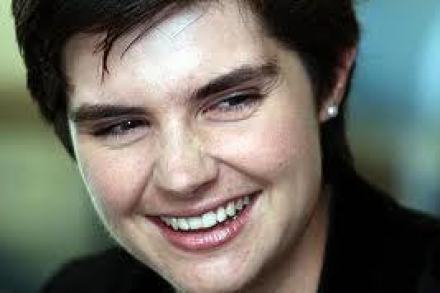
The final reshuffle moves have now been announced. Chloe Smith, the winner of the Norwich North by-election, moves from the Whips office to become economic secretary to the Treasury. Expect Smith to, in time, do a lot of media. Greg Hands, Obsorne’s PPS moves into her slot as a whip. From this position, he’ll be able to continue running the parliamentary side of George Osborne’s highly effective political operation. Sajid Javid moves from being PPS to John Hayes to being PPS to the Chancellor. I suspect that Smith’s promotion will be seen by those Tories who held frontbench positions in opposition but missed out on jobs in government because of coalition as evidence that their chances of promotion are effectively gone.

Greening’s rapid promotion

David Cameron has sent the Cabinet’s safest pair of hands to the Ministry of Defence. Philip Hammond, a robust Euro-sceptic with a belief in firm fiscal management, will bring calm and stability to the department. He’s also the Cabinet minister most likely to be able to sort out the longstanding problems of defence contracts going hugely over budget. As a close political ally of George Osborne, Hammond will be well placed to win extra funding for the department in the, sadly increasingly unlikely, event of the public finances having been put back on a sound footing by the end of the parliament. Hammond is followed at Transport by Justine Greening. Greening voted for Fox in the 2005 leadership election.

Miliband and Balls, in tandem

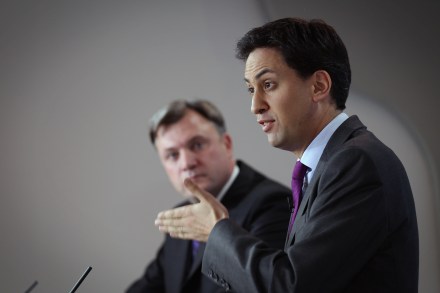
So, CoffeeHousers, are Eds Balls and Miliband a gruesome twosome or the most sparkling partnership since Torvill and Dean? I ask only because they're really pushing the double-act shtick today. There's their first-ever joint interview in the Evening Standard, for instance, in which they reminisce about the Shadow Chancellor's 30th Birthday party, among other things. And then there was their joint appearance to officially launch Labour's 'plan for growth' campaign this afternoon. They were talking policy, but there was also a strong emphasis on their personal relationship: eye contact, anecdotes, that sort of thing. Blair and Brown we are not, they seemed to be saying. As for the policy, if you heard Ed Balls' speech to the Labour party conference, then you've heard it before.

Fox in the clear?

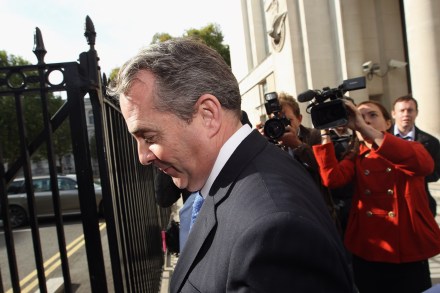
Liam Fox demonstrated today why he'll be staying in Cabinet. He's a tough, eloquent and effective Commons performer who does not fall to pieces when the going gets tough. George Osborne and Michael Gove were both on the front bench with him. One MP told me he saw Eric Pickles in the corridors, giving Fox a hug that almost killed him. All this reflects well on them: in politics, it's always worth noting who stands by colleagues, and who scarpers, when it hits the fan. Fox has, finally, made the two steps required to get on top of this scandal: an apology, and full disclosure to stop the drip, drip of allegations which was giving this story such lethal momentum.

In defence of Liam Fox

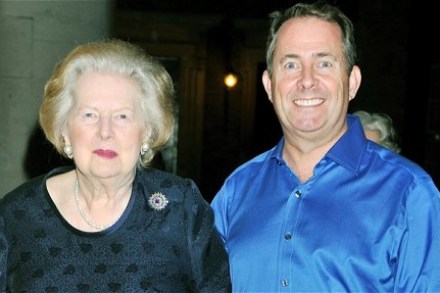
The feeding frenzy over Liam Fox tells us a great deal more about what is wrong with the Conservative Party than it does about Dr. Fox. The Defence Secretary has been an ass. He admits that he allowed “distinctions to be blurred” between his “professional responsibilities and [his] personal loyalties to a friend”. But if someone has known you and counselled you and worked for you over the years it is all but impossible to maintain such distinctions when you are in power. You just have to cut them off, brutally. Fox’s biggest weakness, and one which was well known before this, is that he is too kind. You might say he is too human. It made him a good doctor. But in the higher echelons of politics or business it is a fault.

Brendan Barber’s champagne habit, and other stories

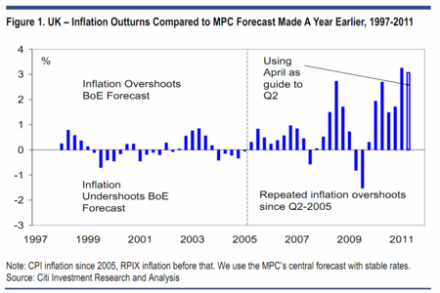
The Tory conference was so forgettable that it’s hard now to remember it took place earlier in the week. But, for what it’s worth, here are my conclusions from the whole conference season: 1. The search for Osborne’s growth strategy has been called off. This ‘leadership’ theme was short for ‘leadership in the crisis, which we’ve now decided is inevitable’. Printing £75 billion will be  prelude to printing £400 billion, the inflation tax is back. Osborne perhaps thinks this new magic gold will bring economic recovery. So did the Emperor in Faust, when the devil suggested that printing money would avert fiscal crisis.

How bad is it, Mervyn?

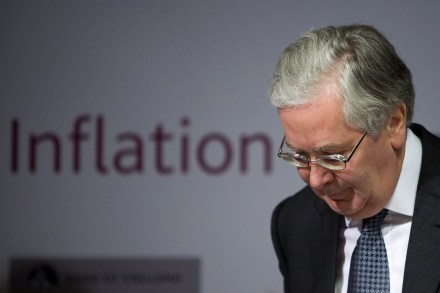
Remember when Alistair Darling said that we faced the worst financial crisis for sixty years? Now Mervyn King has trumped that piece of doom-mongery by telling Channel 4 last night that "This is undoubtedly the biggest financial crisis the world economy has ever faced" (see video above, three minutes in). The Governor of the Bank of England saying that this is the worst crisis ever? On the day that he rushed another £75 billion into the economy? As mood music goes, it is a particularly dreadful symphony.       It is also the sort of situation that Ed Balls will relish, especially with the Pre-Budget Report approaching. And it is true: George Osborne is in a tight spot, both politically and economically.

Another round of Easing

So the Bank of England has pulled the lever on a second round of Quantitative Easing. Apparently sluggish economic growth, plus more ominous signs from the eurozone, have persuaded the central bank it can’t wait any longer to print more money. But given the evidence from QE1 - only a small boost to GDP accompanied by extra inflation - it's a big gamble. Mervyn King & the rest of the Monetary Policy Committee clearly believe that more money in the system is what’s needed to kick-start growth. But even they admit that QE1 didn’t live up to expectations, so why should QE2?

Another voice: Five lessons from Conservative party conference

Here's the latest in our Another Voice series of posts, which give prominence to viewpoints outside the normal Coffee House fold. This time it's the IPPR's Associate Director, Will Straw, with his five-point take on the fringe events of Tory conference, and the lessons that might be learned from them: 1. The Tories know that winning a working majority in 2015 is no easy task. The most popular fringe event according to Fringelist.com was ConservativeHome’s event on ‘How the Conservatives can win the next election.' Reflecting his remarks from the panel, YouGov’s Stephan Shakespeare wrote yesterday that, “today's electoral maths makes an overall a majority a mountain to climb”.

Cameron wants to offer the “right” leadership

As flat as flat champagne — that’s the verdict on this year’s Tory conference, which is ironic given that the two year ban on champagne was lifted this year. Bruce Anderson argues that the dour atmosphere is intentional. These are serious times for sombre politics, not the frivolity occasioned by a conference at a seaside resort. David Cameron’s first objective, Bruce says, is to reassure the country and present himself as a leader for a crisis. Cameron’s conference speech has been widely trailed by most news outlets this morning. Tim Montgomerie has a comprehensive overview of the speech. Cameron’s first challenge is to emote: these are "anxious times” for ordinary people, he will say.

What Fleet Street made of Osborne’s speech

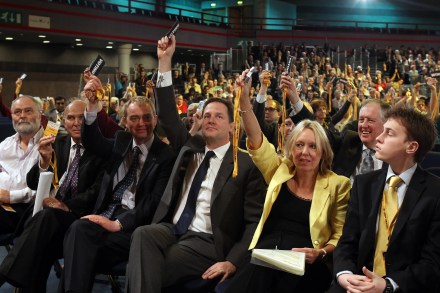
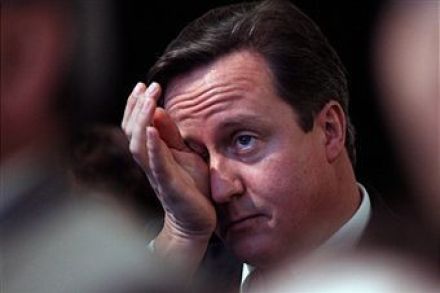
The abiding image of this conference may be the sight of Steve Hilton apparently shepherding the turbulent Andrew Tyrie into a booth, from which Tyrie emerged singing George Osborne's praises. "A huge step forward…you can some consistencies," he said, which was an endorsement of sorts. What did everyone else make of it? As you can see, David Cameron looked morose at times, but the mood in the hall oscillated between sobriety and quiet optimism, matching Osborne's blend of austerity and promise for the future. Fleet Street is similarly conflicted: no paper gives him an unqualified endorsement, but no paper entirely rubbishes him either. The Times concludes (£), as Tyrie did on Saturday, that Osborne is strong on austerity and weaker on growth.

What Osborne got right

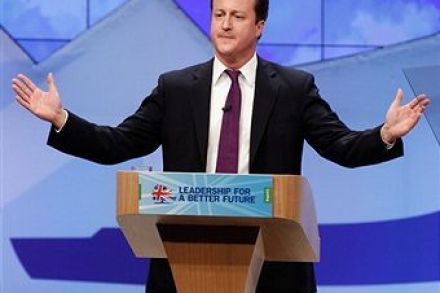
After being mean about Osborne’s sub-prime corporate debt policy, I should say that he got a lot right in his speech earlier today. His delivery was the best I’ve seen: he looked relaxed, and sounded conversational. This suits him: he’s not a hell-and-brimstone kind of politician. He dealt with the dire subject matter in a confident way and was not in the least defensive. And he showed a glimpse of the sunlit uplands, so conspicuously absent from Vince Cable’s doom-laden speech a fortnight ago. That said, it seemed apparent from the rest of his speech that he is bracing himself – and us – for a downward surge on the economic rollercoaster.   “Leadership for a better future,” said the words on the podium.

Osborne’s serenade

As James said, Osborne’s speech was a potent blend of economics and politics. One passage in particular stood out politically: when Osborne referred to those who booed when Ed Miliband mentioned Tony Blair during his speech. He said: ‘You know, there was a time when Labour seemed briefly to realise that to win elections it had to accommodate itself to the real world, stop being anti-business, make peace with middle Britain. Not now. It's over. Once they cheered Tony Blair, now they boo him. I fought three elections against Tony Blair, and I know the damage he did to our country. But it wasn’t just him they were booing last week. They were booing the millions of voters who once turned to Labour because they thought Labour had changed.

Explaining credit easing

Having had a few more discussions, I’m a bit clearer about the government’s plan to do credit easing. The full details of the scheme will be released on the 29th of November as part of the autumn statement. But I hear that the scheme is intended to be worth between the high billions and the low tens of billions and it will be aimed specifically at small and medium sized enterprises, although it could be extended to all companies and expanded up to somewhere in the region of £50bn if the credit markets were to seize up.  I also understand that major supply side measures are being saved up for the autumn statement.

Osborne’s carbon conceits

George Osborne told a Conservative Party increasingly wary of expensive climate policies that Britain needs to "cut [its] carbon emissions no slower but also no faster than our fellow countries in Europe. That’s what I’ve insisted on in the recent carbon budget."  What he actually insisted on was what Chris Huhne described as "a review of progress in early 2014 to ensure our own carbon targets are in line with the EU’s".  Even if that review is serious, and energy intensive industries have every reason to be sceptical, it is only going to hold our policy to the same standard as today.  The current targets require us to cut our emissions faster than our European competitors, and the policies we are adopting to meet them are far more draconian.

Osborne’s big step

As George Osborne was addressing Tory conference, Standard and Poor reaffirmed Britain’s triple A rating. For the Osborne team, it sent out the perfect message — their deficit strategy is keeping the nation creditworthy. It was their piece of conference theatre for this year. The Chancellor’s address was a sombre affair. But, in some ways, it was his most impressive conference performance. It was a classic Osborne blend of politics and economics, but distinguished by a clear and precise analysis of why the economy was not recovering. Osborne’s big policy announcement was that the Treasury was now exploring credit easing.

Full text of Osborne’s conference speech

Today, all around our country – indeed, all around the world – people are anxious, worried about their jobs, their families, how they’re going to pay the bills.   I come to you with words of resolve, determination, confidence and belief.   Belief that the British people will overcome this challenge as we have overcome so many before.   Together, we will ride out the storm.     I don’t want anyone to underestimate the gravity of the situation facing the world economy.   But I also don’t want anyone to think that the situation is hopeless; that there is nothing we can do.   Yes the difficulties are great.   But we should be careful not to talk ourselves into something worse.

Osborne, the caring chancellor

George Osborne is pursuing the Tesco strategy: every little helps. In his conference speech today, he will announce that he has found £805 million to freeze council tax next year, which will save taxpayers £72. Not a lot, you might think – and that’s Labour’s view – but the chancellor is adamant that he won’t “stand on the sidelines” while living standards contract. Substantial tax cuts have been ruled out by Osborne, but he is expected to make further announcements on benefits. Last week, it was rumoured that he would reverse changes to child benefit for a parent who earned around £42,000 per year.