George osborne

Shapps sharpens the Right to Buy

It’s a day for growth initiatives. In addition to those described earlier, George Osborne has announced that Whitehall’s annual underspend will be reinvested into capital spending projects. The emphasis on infrastructure echoes Danny Alexander’s statements during the Lib Dem conference, when the Treasury secretary disclosed that existing programmes would be brought forward and funded by recalibrating budgets. So there seems to be agreement between the two parties about bolstering the coalition’s growth strategy in a certain way, which may explain why the Tories are so determined to resist pressure to introduce politically awkward tax cuts. Grant Shapps has also been elaborating on the changes to the Right to Buy.

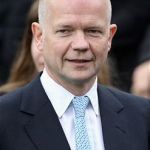
Hague: No deficit funded tax cuts

William Hague’s just been on Dermot Murnaghan’s Sky show. They shot the breeze for a bit, gabbing about foreign affairs and the recent targeted assassinations on Taliban and al Qaeda leaders, then the conversation moved on to tax cuts as an economic stimulus. Hague laughed off the suggestion, saying that the US is in its current crisis because for years it has concentrated on offering tax cuts rather than controlling its deficits. Britain will not make that mistake, he said. ‘No deficit funded tax cuts’ was a line first pursued by David Cameron ten days ago in a speech to the Canadian parliament (although, as Fraser has noted, it has its roots in the 2005 leadership contest and Oliver Letwin’s opposition to “unfunded tax cuts”).

Gabbing about growth

Growth is the word on Tory lips at present. David Cameron responded to Andrew Tyrie’s criticism when he arrived in Manchester yesterday evening, saying that the government has “an incredibly active growth strategy”. And there has been some ‘action on growth’ in the last 24 hours. The right-to-buy is being resuscitated. And the coalition has announced that it will release thousands of acres of publicly owned land to build 100,000 houses and support 200,000 jobs by 2015. The plan will be paid for by selling houses later down the line; the government hopes that the taxpayer will make a profit under this scheme. This reform might stoke the already over-heated fire between the government and the National Trust over planning reforms.

Osborne and tax cuts

“Top Conservative despairs of Cameron growth plan,” says The Times’ front page today. While The Daily Telegraph’s reads: “No tax cuts before the next election, says Osborne”. The two stories are related. British economic growth is evaporating, and more than a few Tory MPs are worried that the Chancellor doesn’t have a coherent growth strategy and that he doesn’t seem to care. Osborne’s cheery interview with Robert Winnett and Ben Brogan will do nothing to allay such fears. He repeats his position on tax cuts: that, while desirable, they are likedessert once the nation has eaten its main course of cuts and tax rises. He appears to rule out using tax cuts as a tool to stimulate growth.

Alan Duncan predicts partial Greek default

On Any Questions, Alan Duncan—a minister of state at the Department to International Development and a longstanding ally of the Foreign Secretary William Hague—has just predicted a partial Greek default. He told the programme that ‘I guess what’s going to happen is there will be a partial default and some kind of agreement’. There have long been rumours in Westminster that the British government’s position was now to—in private—push for an orderly default. Indeed, George Osborne’s comment in his Telegraph interview today that the eurozone “need to end this endless speculation about Greece — they have got to come to a decision and stick to it” implied that.

Tyrie’s blast spices up pre-conference

Treasury Committee Chairman, Andrew Tyrie, has shaken the nascent Tory conference with a coruscating statement about the government’s growth plan and general legislative programme. He writes, in a detailed policy document for the Centre for Policy Studies that is political in its emphasis as much as it is economic: ‘There is much to do, and it is not just a question of gaps in policy. A coherent and credible plan for the long-term economic growth rate of the UK economy is needed.

Cameron and Osborne respond to Miliband

Senior Tories are saying that there won’t be many attacks on Ed Miliband from the party’s big hitters at conference. They are concerned that aggressive assaults on him could win him public sympathy. But both Cameron and Osborne respond to one of the central arguments of Miliband’s speech in their pre-conference turns. Cameron writes in the Mail that ‘the role for government is not to single out good and bad industries, it’s to make it easy as possible for all industries, all businesses, to grow, invest and take people on.

Osborne mulling child benefit u-turn

Eric Pickles makes no bones that his bin policy is aimed at Middle Britain, and the Tories may soon announce more measures to butter up that vital electoral constituency. The Times reports (£) that Cameron and Osborne are seriously considering a u-turn on their controversial cut to child benefits over families in which parent earns more than £42,475, which is due to be introduced in January 2013. George Osborne apparently never does anything unless it yields a political dividend and this is an intriguing development, if it materialises. It reiterates that the Tories know they have a woman problem; identified by Melanie McDonagh in a magazine cover piece earlier this summer.

Tories pray for no more from Europe

Tory strategists had hoped to keep Europe off the agenda at this year's party conference, but they seem to have failed already. The European Commission's threat about welfare claims has forced IDS into action. Ben Brogan reports that the work and pensions secretary was nothing short of visceral in his contempt for the "land grab", which will apparently cost £2.5 billion a year. But, IDS's rage is quiet compared to John Redwood's, who asks "Why won't he [William Hague] get on with renegotiating the UK position [in Europe]?" Next is the EU's Agency Workers Directive, which comes into force tomorrow.

Miliband’s three mistakes

Three things puzzled me about Ed Miliband’s conference speech yesterday. First, I didn’t understand why Miliband did not attack Cameron for having talked about the need for ‘moral capitalism’ and then have not delivered it. It would have been far harder for Miliband’s speech to be caricatured as left wing if he had pointed out that Cameron had promised ‘to place the market within a moral framework - even if that means standing up to companies who make life harder for parents and families’ - and then not delivered on that pledge. The second thing was the absence of any policy at all.

How’s Miliband doing?

In a word: badly. Ed Miliband has now led Labour for a full year, but has made no progress with regards to its standings in the polls. When he took over, the Labour party was at 37 per cent in the polls, according to Ipsos MORI. Considering that 60 per cent give the Coalition government the thumbs down, he's had ample opportunity to improve this figure. And yet he's failed. In their latest poll, MORI again have Labour on 37 per cent.   When it comes to his own personal ratings, the picture is even worse. As Miliband has become more well-known and more people have formed an opinion of him, the number "satisfied" with his performance has actually decreased. This month, it hit its lowest point to date at 31 per cent.

Balls’ Brownies

In his speech today, Ed Balls proved himself worthy of the "Son of Brown" tag, slipping in more than a few "Brownies". I thought CoffeeHousers would be interested in some of the figures behind his claims... Balls claimed that "we went into the crisis with lower national debt than we inherited in 1997". That is flatly untrue. Public sector net debt when Labour took over was £350 billion. In 2006-07 it was £500 billion. Even adjusting for inflation, Brown and Balls had added £62.8 billion in today's money to the national debt they "inherited" by the time the crisis started: Balls' defenders will say that he meant "debt ratio" – and, to be sure, debt did not rise as fast as GDP over those years so the ratio fell (from 42.5 per cent to 35.

Welfare worries

Away from Liverpool, the big stories of the day are the markets’ reaction to the putative Eurozone deal, which has been mixed so far, and the Telegraph’s splash about the progress of the Universal Credit, the coalition’s flagship welfare reform. The scheme is designed to simplify the benefits system and save circa £5 billion a year by reducing the scope for claims to be duplicated and errors made; it is a crucial cog in the coalition’s plan to make work pay. James Kirkup reports that the Treasury has apparently put the credit at the top of its “to watch” list of government projects that are at risk of running over schedule, over budget or failing to be launched at all.

Balls’ new rules

It’s Ed Balls’ speech today, and he’s cleared it with Ed Miliband – a courtesy that Gordon Brown never extended to Tony Blair. He promises to introduce a new set of fiscal rules, which I’m sure will make the nation’s heart leap, given how well the last set of fiscal rules worked. But what jumps out at me is his pledge to use any money raised from flogging off the banks for deficit reduction, rather than a giveaway. Here’s what Balls is expected to say, 'Even as bank shares are falling again, David Cameron and Nick Clegg are still betting on a windfall gain from privatising RBS and Lloyds to pay for a pre-election giveaway. We could also pledge to spend that windfall.

Osborne’s dire warning

This morning’s headlines are apocalyptic: “Global economy on the brink”, “Six weeks to save the Euro”, “Collective action needed now”. The unifying theme is the lack of leadership in the Eurozone: someone must grasp the nettle, say external politicians and commentators. Meanwhile, Charles Moore points out, with typical understatement, that Europe is leaderless by nature: no one is in charge and that is its tragedy. Moore doesn't mention the European President, who could, conceivably, offer direction and insist on fiscal discipline; but Herbert Van Rompuy is yet to meet that challenge. You wonder if someone of Tony Blair’s international standing might have succeeded where Van Rompuy has so far failed.

Read my lips: no new tax cuts

There are still rumours in Westminster that David Cameron will cut taxes to stimulate the economy, but the speech he gave to the Canadian parliament on Thursday rather scotches this idea. Here’s what jumped out at me 1) No Obama-style deficit-financed tax cuts, please, we’re British. "The economic situation is much more dangerous and the solution for most countries can not be simply to borrow more. Because if the government doesn’t have the room to borrow more in order to cut taxes or increase spending, people and markets start worrying about whether a government can actually pay back its debt. And when this happens confidence ebbs away and interest rates will rise, hitting people with mortgages, and hitting companies that want to borrow to invest.

Is Osborne ready for the next crisis?

There is a strange pre-Lehman feeling in the air right now: the idea that something awful is going to happen, but no one knows what or when. This is laden with political ramifications. The problem for the Tories last time was not that George Osborne had been caught aboard HMS Deripaska. The greater problem was that a crash had arrived and the Shadow Chancellor had nothing to say. Brown, at least, seemed to have an agenda, and the Tory poll lead was reduced to one vulnerable point. I admire Osborne, but he can do far better in making the case for the government’s economic strategy. If there is a second crash, he’ll need all his skills to convey confidence – to sound as if he knows what he’s talking about.

Labour is caught on a fork

Listen to John Prescott on the Today programme this morning and you may begin to understand the complexity of the task Labour faces. Prescott was putting the best gloss he could on Labour and the vastly incompetent civil service wasting hundreds of millions on regional fire stations. Listening to his bluster, even the most loyal Labour supporter might have been glad that the party was no longer in office. Prescott showed no remorse; no appreciation that the burden of taxation falls on working and middle class people, who need to hold on to every penny they can. As with so many left-of-centre politicians, he did not regard the waste of other people’s money as a sin.

JFK: a tax-cutting headbanger

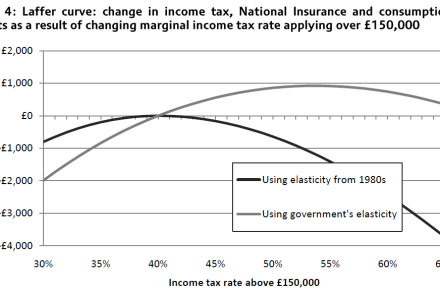
https://www.youtube.com/watch?v=qmHdqWPB_S8 Given that Vince Cable was once a lecturer in economics, it's odd to see him feign ignorance over its basic concepts. Listen to his speech today."There are politicians on both left and right who don’t [get it]. Some believe government is Father Christmas. They draw up lists of tax cuts and giveaways and assume that Santa will pop down the chimney and leave presents under the tree. This is childish fantasy. Some believe that if taxes on the wealthy are cut, new revenue will miraculously appear.” It’s perhaps worth quoting one such ‘childish’ politician who was articulating this long before Art Laffer doodled on a cocktail napkin.

Osborne’s £12bn question

The FT makes for grim reading this morning (£). The paper claims to have replicated the Office for Budget Responsibility’s methodology and it has found that the structural deficit is £12 billion larger than was thought. If this is true, and coalition ministers are scrambling to deny it, then George Osborne is unlikely to have virtually eliminated the structural deficit by the end of this parliament, his avowed aim. The strategic implications are clear: the 2015 election would become a much tougher prospect for the Conservatives, as Osborne might to struggle to present them as the party that delivered the economy from disaster. There have been clear indications that all is not well on the economic front, mainly as a result of global economic slowdown.