George osborne

George Osborne poaches Daily Mail’s political editor

George Osborne has moved to strengthen his personal, political operation by hiring the political editor of the Daily Mail James Chapman as his director of communications. This beefing up of his media team will be seen in Westminster as a statement of political intent by the Chancellor; it gives him a more formidable operation than any of the other likely contenders for the Tory leadership. I am told that Chapman will be handling communications for Osborne in his role as both Chancellor and First Secretary of State.

Louise Mensch backs George Osborne to be the next Tory leader

All this talk from Labour and the Liberal Democrats about who will be their next party leader appears to have got to the Tory camp. Although the dust is yet to settle following David Cameron's surprise Conservative majority in the election, Mensch couldn't help but offer her prediction for who the next Tory Prime Minister will be, when asked over Twitter. The former Cameron Cutie says that the man for the job next time around is not odds-on favourite Boris Johnson, but instead George Osborne: https://twitter.com/LouiseMensch/status/599155805582135296 She claims that Bojo's chance has come and gone: https://twitter.com/EJHarrison6 Of course, whether Boris would agree with Mensch's statement is another issue entirely.

Portrait of the week | 14 May 2015

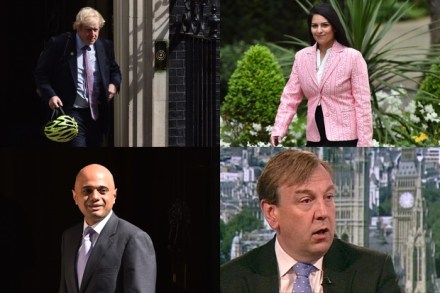
Home David Cameron, the Prime Minister, soon got used to the surprise of the Conservatives being returned in the general election with a majority of 12. He retained George Osborne as Chancellor of the Exchequer and made him First Secretary of State too. Theresa May, Philip Hammond, Michael Fallon and Iain Duncan Smith also stayed put, but Chris Grayling replaced William Hague, who had left the Commons, as Leader of the House, to be replaced as justice secretary by Michael Gove, who was replaced as chief whip by Mark Harper. Amber Rudd became Energy Secretary. John Whittingdale became Culture Secretary in place of Sajid Javid, who became Business Secretary. Boris Johnson was to attend weekly political cabinets.

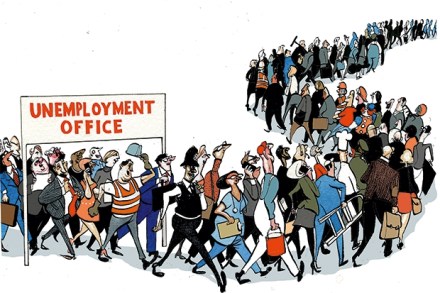
Full employment, Prime Minister? What exactly do you mean by that?

‘Two million jobs have been created since 2010 — but there will not be a moment of rest until we have reached our goal,’ said David Cameron in a Telegraph article a fortnight before the election: ‘Two million more jobs; or full employment in Britain.’ It was a bold statement. Indeed you might think, given unemployment at 1.84 million in the winter quarter, that the target for new jobs was actually an error on the part of who-ever drafts the Prime Minister’s prose. Either way, it drew little attention amid the smoke of battle.

The reshuffle has begun – but the real excitement will happen on Monday

David Cameron has reappointed several of the most senior members of the government. George Osborne stays as Chancellor, Theresa May remains Home Secretary, Philip Hammond Foreign Secretary and Michael Fallon Defence Secretary. Indeed, the only change is Osborne taking over William Hague’s old First Secretary of State title. This is formal recognition that Osborne will, in effect, be the deputy Prime Minister of this Tory majority government. We are told to expect the rest of the reshuffle on Monday. There’ll be particular interest in who Cameron chooses to be his chief whip, a role that takes on particular importance with this small majority.

Cabinet reshuffle: George Osborne, Theresa May, Michael Fallon and Philip Hammond remain in their posts

David Cameron has 'reshuffled' his Cabinet. George Osborne has been re-appointed as Chancellor, and will also be First Secretary of State, as were William Hague and Peter Mandelson. The title implies that he is the most senior minister.  https://twitter.com/David_Cameron/status/596701353289846786 Theresa May will remain as Home Secretary. https://twitter.com/David_Cameron/status/596704917374525440 Philip Hammond will also remain in his role as Foreign Secretary, and Michael Fallon will keep his job as Defence Secretary. https://twitter.com/David_Cameron/status/596707531520610304 https://twitter.

Bond villains

After working for Bill Clinton, the political strategist James Carville said he had changed his mind about where power really lies. ‘I used to think that if there was reincarnation, I wanted to come back as the President or the Pope,’ he said. ‘But now I would like to come back as the bond market. You can intimidate everybody.’ By this he meant that every political leader, no matter how powerful or radical, lived in fear of going too far into debt, lest the market hiked up interest rates, tipping the government into collapse. Alas, that’s no longer the case. This magazine ridiculed Gordon Brown for claiming to have ‘put an end to boom and bust’.

Ed Miliband still isn’t being honest about debt. And yes, that matters

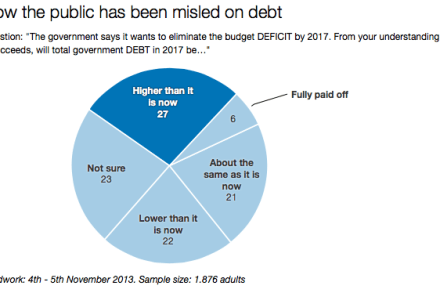
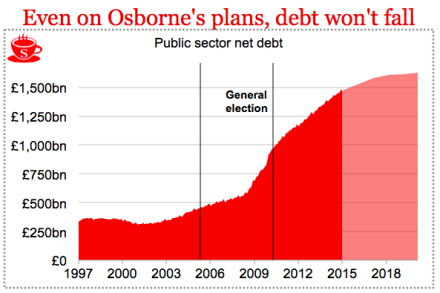
The Guardian’s superb live blog was even better than usual this morning when it covered Twitter’s reaction to the Ed Miliband interview: eight tweets, of which five came from Spectator staff. That’s what I call balance: opinion from the full spectrum of opinion in 22 Old Queen St. We were challenging Miliband's claim when he said the debt was "lower than what we inherited" - it was about £200bn higher. I can’t imagine these tweets went down too well with Guardian readers, because an update emerged later saying that the debt/GDP ratio fell. So was Ed speaking the truth after all? I’m rather keen on this topic.

Diary – 30 April 2015

I have escaped this rather depressing election campaign by retreating to my home in la France profonde — to be precise, in Armagnac, in the heart of Gascony. My only outing, from which I have just returned, was a brief visit to New York, travelling there and back in the giant Airbus 380. The purpose of the trip was to drum up US support for the thinktank I founded in 2009, the Global Warming Policy Foundation, and its campaigning arm, the Global Warming Policy Forum, in the company of our outstanding director, Benny Peiser. Thanks to the wonders of the internet, the GWPF has a global reach, and its international influence is growing.

Only the Tories can meet the aspirations of Ikea’s hard-working families

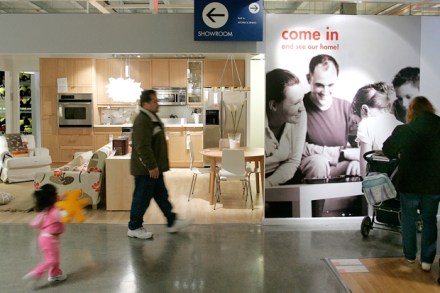
If Ikea were a constituency, it would be a three-way marginal. That was my thought one morning last week as I walked a mile and a half round the Batley branch of the great Swedish retailer behind two keen shoppers (one wearing a pedometer) whom I had driven there as a birthday treat. Here are middle-aged parents buying nursery stuff for pregnant daughters, engaged couples fitting out first flats, Polish families bickering over bargain kitchenware, Muslim housewives chattering behind niqab facemasks, and even what I thought might be a transsexual under a blond beehive. There’s a Scandinavian sense of equality: no fast track through the labyrinth, no exclusive luxury floor. The customers all seem to belong to that floating-voter category now labelled ‘hard-working families’.

Economic confidence comes flooding back, just in time for the election

If there is any link between economic optimism and politics than David Cameron should easily win the general election next week. Today’s figures show consumer confidence around 30-year highs. The number who think now’s a good time to by a house (above) is surging. Not since 1987 have we had so many saying that the UK’s general economic situation has improved over the last 12 months.  As Michael Saunders of Citi puts it (pdf):- With strong job growth (especially full-time employment), record level of vacancies and rising real wages, the “feel-good” factor is clearly back. It’s odd to think that, even with all of this going on, the election still hangs in the balance. Proof, if any were needed, that recoveries never speak for themselves.

Politicians seem to fetishise laws that bind their own hands

What is the point of government passing a law to stop it doing something when it can just as easily repeal it? If George Osborne were still to find himself Chancellor after the election I can’t see that we would feel any more bound to abide by a law fixing the rates of income tax, National Insurance and VAT than he would by a pledge to the same effect. If he ever fancied notching up VAT in a future budget all it would take is a clause in the finance bill excusing himself from such a law. In any case, we haven’t yet seen the text of the tax-fixing bill which David Cameron proposes today.

Have the Tories given up on taking seats from Labour?

David Cameron and George Osborne's campaigning is focused on seats the Tory party wants to hold onto, while Ed Miliband is taking the fight to seats Labour wants to win from them. That's the view in Labour HQ, and they've got figures to back it up: Since 30 March, when the ‘short campaign’ began, Cameron and Osborne have made 61 campaign visits between them, Labour says. More than half have been to Tory-held seats, many of them on the ‘40/40’ list of seats that the Tories need to keep and win in order to end up with a majority. Here's where they've been: Ed Miliband and Ed Balls, Labour says, are campaigning to take seats from the Tories, with three-quarters of their 67 campaign visits to Tory held seats. [datawrapper chart="http://static.spectator.co.

The Conservatives are strategising regional media out of the grid – and it won’t help their cause

This has, I think we can all agree, been the most stage-managed election ever. Nobody on a soap box, no punches thrown, no bigoted women. Just a seamless marathon of national messaging that starts with the Today programme and ends with Newsnight. It is the regional media, however, that feels the iron grip of the parties’ media machines the most. We work where voters actually live. So how we are treated during political visits can be revealing. And Labour, most regional reporters seem to agree, seem to have chilled out. Ed Miliband and other senior Labour figures are freely giving up their time.

At last, tax receipts are surging as Osborne’s recovery continues

The economic good news continues. Until now, the Achilles' heel of the recovery was weak tax revenue – in part deliberate, as Osborne’s tax cuts meant the thousands moving into work got to keep more of their money. But figures out today (pdf) show that the tax haul was up 5.3 per cent in the second half of the financial year, twice the rate of the first half. Wages are finally rising – in the private sector (i.e. most jobs) wage growth is at a six-year high. All this means a deficit of £87bn last year, better than the OBR’s forecast £90bn. In short: it’s all coming good for George Osborne. But at this stage in the election campaign, he’ll be lucky if anyone notices.

Why identikit lines on the SNP are important for the Tories

This morning when George Osborne defended the way the Tories were fighting the election campaign, there was something slightly odd about what he said in response to John Humphrys’ first question: ‘We’re two weeks to go to this election and it’s coming down to a very clear choice on the economy, and on 8 May we can either get straight back to work with a clear plan that is delivering for our country or we face this deeply unstable Miliband/SNP government committed to much more borrowing, and that leads to a dangerous cocktail which increasingly, international investors say will lead to higher mortgage rates, higher taxes and lost jobs, and we have got to avoid that outcome having achieved so much in Britain over the last five years.

Extending right-to-buy is Cameron’s big bazooka. But will it work?  

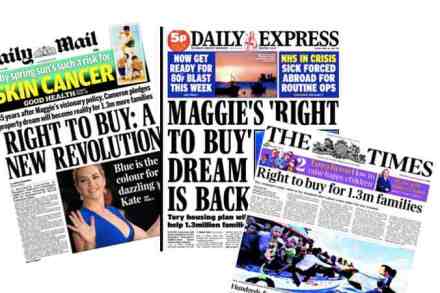
Just a few weeks ago, David Cameron had not decided whether to extend right-to-buy to a further 1.3 million families in housing association homes. The  idea, from Iain Duncan Smith, was relatively new and carried risks. As all radical policies do - but you can see why Cameron would be worried about this one. Imagine two men, who work next to each other in a factory. One rents privately, the other rents from a housing association and is now offered a massive discount to buy his house: up to £102,700 if he's in London, £77,000 outside it. He's is over the moon: his capital gain would  be more than he'd be able to save in a decade or more. But his workmate would be gutted, and would think to himself: I played by the rules.

When will broadcasters challenge Ed Balls on his porkies about his deficit plans?

At Coffee House, we occasionally criticise George Osborne for stretching the truth when describing the deficit — but when it comes to hoodwinking broadcasters and deceiving voters, Ed Balls is the master. Three times on the radio today he lied about Labour’s plans, saying that he intends to have the national debt falling. He has no such plans: what he means is that he plans for the national debt to rise, but to rise more slowly than the economy is growing. What he means is that his plan is not for the debt to fall, but for a ratio to fall: the debt/GDP ratio. And it isn't very ambitious, because that ratio already is falling.

Tories try to use their lead on the economy to bolster their position on the NHS

The Tories believe that their record in government and their lead on economic competence means that they can set out spending commitments without having to set out precisely how they would pay for them. George Osborne’s interview on Marr this morning was a demonstration of this strategy. Challenged repeatedly over where the £8 billion for the NHS that he and Cameron pledged yesterday would come from, Osborne simply pointed out that they have managed to increase the amount of money going into the health service every year over the last five years despite having to make significant spending cuts. However much it infuriates their opponents, I suspect that this Tory tactic is quite effective.