George osborne

The quality, not quantity, of childcare needs improving

The Chancellor has found himself a treasure chest: childcare. In his quest for full employment, it’s seen as crucial for boosting maternal employment. Helping parents with punishingly high childcare costs appeals to and supports those on modest incomes – the so-called ‘blue-collar’ voters - that Conservatives still need to woo. Nothing quite encapsulates the modernisation of the Tory party as its growing enthusiasm for childcare. The Conservatives no longer want to be seen simply as the flag-waver for a traditional family setup. Instead, they aspire to be the party for working people. No yearning for yesteryear, but enthusiastically supporting two-earner couples that are increasingly the norm, out of choice and necessity.

David Cameron makes the case for the Tories’ moral mission

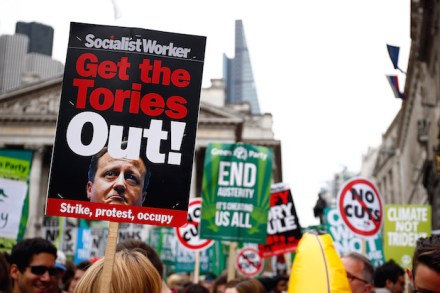
David Cameron has never particularly warmed to the language of compassionate conservatism. In the past, that side of the conservatism has generally been represented by Iain Duncan Smith — with help from the Centre for Social Justice, the think tank he founded. But in light of the rapidly approaching £12 billion of cuts in welfare spending, the Prime Minister will give a speech today outlining why it is important to end the ‘merry-go-round’ of benefits: ‘When it comes to extending opportunity – there is a right track and a wrong track. The right track is to recognise the causes of stalled social mobility and a lack of economic opportunity. Family breakdown. Debt. Addiction. Poor schools. Lack of skills. Unemployment.

Late news: what was really served at the Mansion House banquet

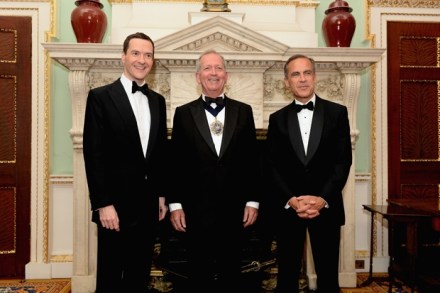
Last week’s deadline did not allow me to report from ringside at the Mansion House dinner, but there was so much to observe that I hope you’ll forgive a late dispatch. What a vivid guide to City psychology and precedence it offered. In the anteroom, Lord (Jim) O’Neill, the Treasury’s new Northern Powerhouse minister, could be seen chatting to ex-BP chief Tony Hayward, now chairman of mining giant Glencore Xstrata. At the top table, HSBC chairman Douglas Flint was carefully separated (by António Horta-Osório of Lloyds) from Governor Carney, so they could avoid discussing HSBC’s plans to move back to Hong Kong.

PMQs sketch: He lays roads. He decrees bridges. Is there anything George Osborne can’t do?

At last it happened. Benn led Labour. Hilary Benn, grandson of a hereditary peer, stood up at PMQs on behalf of the dispossessed. Gravitas was his chosen register. Radicalisation was his chosen theme. His policy: more cash for cops and teacher to discourage Muslims from joining the death-cult. Let’s hope it works. The SNP’s Angus Robertson asked how Sir John Chilcot is proceeding with his slim volume of research into the Iraq war. Who knows? It’s said that Lord Lloyd Webber has already abandoned his ‘Chilcot the Musical’ project because investors couldn’t agree how many years each performance should last. His spokesman, pressed this morning for a deadline, confirmed that the report will appear, ‘before the decade is out.

Backbench ‘plot’ deprives Alan Mak of his favourite spot at PMQs

Unfortunate timing for ambitious new Tory MP Alan Mak to be turned over by the Times today, after he was on the order paper to ask a prominent question at PMQs. Mr S's fellow diarist at the Times wrote this morning: 'Alan Mak (Conservative, Havant) has been an MP for only a month and already his self-promotion is getting up people’s noses. Bad enough to send his maiden speech to everyone in Downing Street, he then baggsed the seat behind David Cameron for last week’s prime minister’s questions and with it a brief TV appearance.' Now Mr S hears there was a concerted effort today not to let Mak take up his new found favourite spot before PMQs. A colleague laments: 'Mak hadn't managed to to bagsy his usual seat up the PM's backside for the first time today.

Osborne’s slick PMQs performance

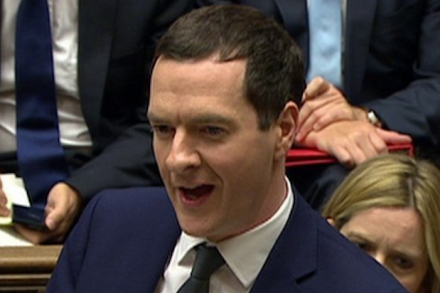
PMQs was not the normal, partisan slug-fest today. Instead, there were a slew of serious questions on the challenge of Islamic extremism at home and abroad and the migrant crisis. George Osborne, standing in for David Cameron, turned in a solid performance. He seemed unfazed by the occasion. His only misstep was persisting with a pre-scripted joke in response to Hilary Benn’s sombre opening question. But other than that, Osborne’s answers were crisp and politically confident. The themes he chose to emphasise were very Osborne. In response to a Labour question on welfare, he had a British version of Angela Merkel’s warning about how Europe can’t afford not to reform its welfare state.

Unemployment down again as the jobs miracle continues

Ahead of his PMQs debut, George Osborne is boosted by the news that unemployment is down again. As the chart above shows, the government’s jobs miracle continues with just over 31 million now in work. Between February and April this year, unemployment fell by 43,000 to 1.81 million. With inflation low and pay packets growing, the declining cost of living, the government is feeling vindicated with its economic plan. Employment minister Priti Patel said this morning: ‘Today's figures confirm that our long-term economic plan is already starting to deliver a better, more prosperous future for the whole of the country, with wages rising, more people finding jobs and more women in work than ever before.

Osborne’s audition

On Wednesday at Noon, George Osborne will rise to respond for the government at Prime Minister’s Questions. The symbolism of this moment won’t be lost on anyone on the Tory benches. It will be the start of Osborne’s audition for the top job. A few years ago, the idea of Osborne as Prime Minister was—as one of his backers puts it—‘a minority taste’. But now, he continues, ‘it is a mainstream assumption’. What has changed things is the economic recovery and the Tories’ surprise election victory, which has vindicated Osborne’s political strategy. Osborne, I argue in the Mail on Sunday, has also become a better politician in recent years; more comfortable in his own skin and in public.

Bilderberg security is stepped up to protect masters of the universe from journalists

This weekend the masters of the universe will gather at the annual Bilderberg conference. The secretive summit, which is being held in Austria, sees heads of banks and company CEOs mix with political heavyweights including the former Secretary of State Henry Kissinger, US pollster Jim Messina, George Osborne and... Ed Balls. No notes are taken, no media are invited to cover the event, and the outcome is never revealed which has led conspiracy theorists to go into overdrive. Theories range from plans for a New World Order to world domination by lizards.

Podcast: The Last Christian and David Cameron’s solemn election night

Will 2067 mark the point when Christianity dies out in Britain? In this week's View from 22 podcast, Damian Thompson and Freddy Gray discuss this week's cover story on the crisis facing Britain’s churches. Is the rise of secularism a problem for just Anglicans, or all Christian denominations in Britain? Is the Church of England particularly to blame? What comparisons are there to what is happening with religion in America? And if these projections are correct, will Christian values continue to underpin British society, long after the religion itself disappears? James Forsyth and Fraser Nelson reveal what David Cameron did on election night.

Ed’s campaign was fine. The problem is his party

Patrick Wintour is one of the best political editors around. For the Guardian he’s been for decades a cool and well-sourced voice: even-handed, informed, interesting but in the best sense dry. So when I heard he’d written the most comprehensive behind-the-scenes account yet of Labour’s failed general election campaign I hurried to read it. I was not disappointed. ‘The undoing of Ed Miliband, and how Labour lost the election’ is an insider account of a chapter of accidents, starting with Mr Miliband’s memory lapse about the deficit during Labour’s last party conference. Apparently he shut himself in his hotel room afterwards and wouldn’t come out.

Osborne’s welcome conversion to the advantages of a budget surplus

There should always be celebration when a sinner repents, and so it’s great to see George Osborne’s belated conversion to the cause of budget surpluses. As the above graph shows, he has not seemed in a rush to hit surplus himself – giving him many more years of increasing the national debt. James Forsyth summed it up brilliantly: Osborne is the St Augustine Chancellor: give me fiscal responsibility, but not yet! And today, he will add something: when I get there, let's make it illegal for anyone not to balance the budget again! In economics, as in much else, converts are always the most zealous. Osborne's new plan—to have surpluses mandated by law—makes a lot of sense.

George Osborne puts Labour ‘on the spot’ with law to enshrine budget surpluses

George Osborne is making his first big move as Chancellor in this Parliament. In his Mansion House speech tonight, he will announce a ‘new settlement' for the economy: a permanent commitment to running budget surpluses in normal times. Osborne will point to the Tories’ election victory as the mandate to enshrine this commitment in law: ‘The result of this recent British election – and the comprehensive rejection of those who argued for more borrowing and more spending – gives our nation the chance to entrench a new settlement. 'In the budget we will bring forward this strong new fiscal framework to entrench this permanent commitment to that surplus, and the budget responsibility it represents.

George Osborne must implement Charlotte Church tax reforms – and urgently

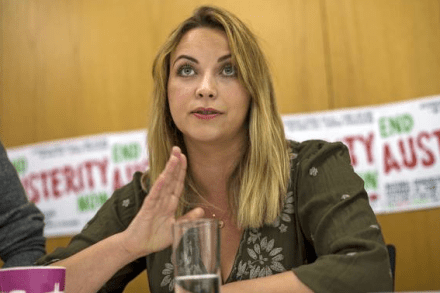
As the Chancellor prepares his post-election Budget, he faces an obvious opportunity. Throughout the last general election campaign, we heard from a great many people advocating higher taxes. And it’s not all vindictive: many, like the writer Polly Toynbee, would actually be liable for a higher tax on the 1pc. A significant number of wealthy people in Britain do actually want to give the government more of their money and at present, there is no easy way for them to do so. Strikingly the singer, Charlotte Church, recently declared that: "I have paid all my tax since I was 12 years old, and I would certainly be happy if the rate was 60 per cent or 70 per cent. I wouldn’t move away, I wouldn’t have an offshore account.

Doggy Dispatch: Marriage problems afoot between Osborne and Gove

Could there be trouble in doggy paradise? Sarah Vine has previously revealed that their family dog Snowy (a Bichon 'ish' dog, who was the runner up in the Westminster Dog of the Year, 2015) is 'married' to Lola, George Osborne's bichon frise. But could it be that Lola has been forced into this canine partnership? Word reaches Steerpike that Osborne's pedigree pup is having difficulty interacting with other dogs. Mr S's newshound says that she is regularly spotted being taken for walks in St James's Park, where it has been noticed that Lola has a fear of other dogs. Perhaps it's best not to expect a litter of Tory puppies any time soon.

The northern powerhouses of ancient Turkey

Government claims that it will ‘free’ northern cities to turn themselves into ‘powerhouses’. Since most of them are held by Labour, this is obviously nonsense. The tedious tribal backbiting and recriminations will continue as usual. There is a better way. When Alexander the Great died in Babylon in 323 bc, the Greek generals he had left in charge of his vast empire all began scrapping to become the next Alexander. Eventually they gave up, leaving three main power blocs: Greece, Egypt and Asia. It is the relationship between Antiochus III, the ‘great’ king of Asia (242–187 bc), and the fractious, freedom-loving Greeks living in western Turkey, that provides a model for how things might be done.

George Osborne kissed Lynton Crosby after election promise backfired

It isn't the type of kiss-and-tell story Mr S is used to reading in the Sunday papers, but Lynton Crosby has today spoken about an election smooch he shared with the Chancellor of the Exchequer. The Sunday Times reports that George Osborne was so convinced that the Conservatives would not win a majority in the election that he promised to French kiss Crosby if they managed to win enough seats. However, with the party storming to victory, Osborne had to honour his promise and kiss Crosby. The election strategist confirmed the incident to the paper: 'It's true. His aftershave still haunts me. Fortunately tongues remained withdrawn. The pledge was on election day. The consummation was the day after at No 10.' No word on what Osborne's wife Frances makes of the encounter.

A sugar tax is simply a tax on the poor

Why is it that whenever anyone proposes a tax on the wealthy all hell breaks loose, but when someone proposes a tax on the poor there is no more than a faint whimper of protest? Yesterday, life sciences minister George Freeman, speaking at the Hay Festival, floated the idea of a sugar tax. In contrast to Labour’s mansion tax or the removal of tax privileges for non-doms, my email inbox was not immediately jammed with statements from upmarket estate agents, accountants and others representing the interests of the rich warning of how it would ruin the economy. It is fairly obvious who will pay the sugar tax: it would be paid for hugely disproportionately by the poor.

Germans propose linking the British renegotiation to Eurozone reform

Wolfgang Schäuble’s decision to link the British renegotiation to changes to the governance of the Eurozone is highly significant. In an interview the German Finance Minister told the Wall Street Journal that he has discussed George Osborne ‘coming to Berlin so that we can think together about how we can combine the British position with the urgent need for a strengthened governance of the eurozone’. Schäuble went on to say that ‘the structure of this currency union will stay fragile as long as its governance isn’t substantially reinforced. Maybe there is a chance to combine both goals’. Schäuble’s comments are the most encouragement that the government has had on the renegotiation front.

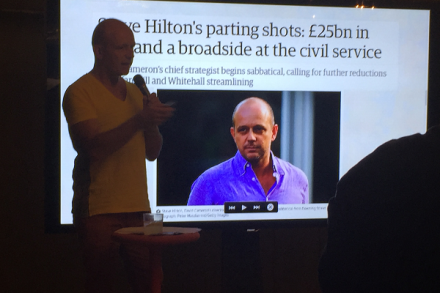
Steve Hilton talks Cameron, Crosby and Vincecablefreude at book launch

David Cameron's former director of strategy Steve Hilton is in town this week to promote his new book More Human. Mr S was a guest at the book launch in East London where Cameron was serenaded by a violinist while George Osborne and Ed Vaizey raised a glass in celebration of the tome. In his speech, Hilton couldn't help but offer his own verdict on the election, making sure to pay tribute to his former boss: 'I am very happy to say welcome Prime Minister. I think the real reason this book is helpful to the Prime Minister is that he can actually say "see, see what I had to put up with all those years".