Genocide

Horoscopes and horror – the reign of Septimius Severus

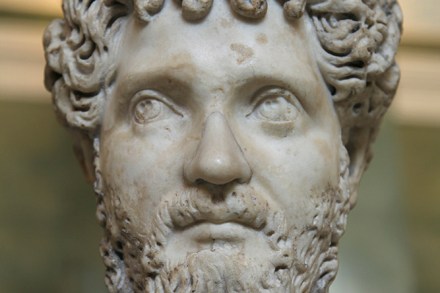
Rome’s first African emperor, Septimius Severus, was renowned during his reign (193-211 AD) for the mass killings of his rivals (ruthlessness even by ancient standards); for his genocide against the Scots (a rare recourse, despite Rome’s bad reputation as imperialists); and his budget-stretching generosity to his soldiers. He had an unusually glamorous Syrian wife, Julia Domna, who indulged her pet philosophers and her husband’s superstitions while setting a hairstyle trend. He had women Christians thrown to wild animals. His two sons, Caracalla and Geta, notoriously hated each other.
Charles Darwin’s contribution to Patagonia’s grim history

It was a journey Bruce Chatwin hankered to make: to Southampton and the grave of General Juan Manuel de Rosas, the exiled Argentine dictator described in the Southampton Times after his funeral in 1877 as ‘one of the most cruel, remorseless and sanguinary tyrants who ever existed on Earth’. Chatwin died before I could accompany him to the Hill Lane Cemetery, but four years later I stood with his widow in front of Rosas’s ornamented tomb in Buenos Aires as we prepared to meander south on a 2,000-mile car journey in his footsteps. In 1989, the year of Chatwin’s death, President Menem decided to have Rosas’s remains repatriated as a gesture of national reconciliation. Their arrival was greeted by mounted lancers wearing Rosas’s signature red uniform.

Donald Trump – the Orange Mandela?

From our US edition

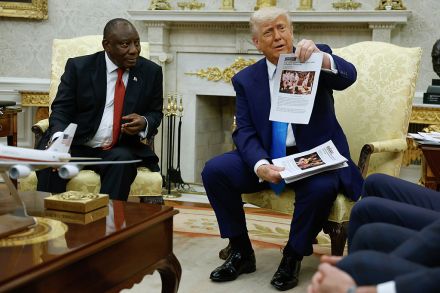
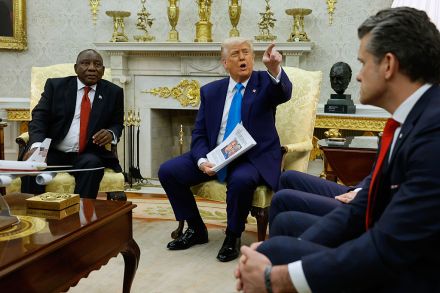
Diplomatic heads are still spinning following Donald Trump’s extraordinary Oval Office press conference with South African President Cyril Ramaphosa yesterday. The media has taken to using the word “ambush” to describe the way Trump sprung his evidence on Ramaphosa to make the point that white South Africans are being violently persecuted. The scene turned into gemors, as they say in Afrikaans, or chaos, and reminded many observers of the wild meeting between Trump and Volodymyr Zelensky in the same room back in February. Ramaphosa had wanted to perform the usual niceties, flanked by a delegation including three white South African golfers, Elon Musk, some of his officials, his minister for agriculture John Henry Steenhuisen and the luxury goods billionaire Johann Rupert.

Exclusive: my son Elon and Trump are right about the ‘white genocide,’ says Errol Musk

From our US edition

Elon Musk stood silently in the Oval Office, eyeballing the South African President while Donald Trump tore into the ANC leader for permitting “white genocide.” The exiting Department for Government Efficiency (DoGE) chief said nothing as the President dimmed the lights and required an unsuspecting Cyril Ramaphosa to watch a short film about white farmers being targeted and South African politicians chanting “kill the farmer.”As Donald Trump berated Ramaphosa, Trump didn’t call on Musk, standing just a few feet away. He didn’t need to intervene: according to Elon’s father, Errol Musk, his son – an outspoken critic of Ramaphosa's government – had already briefed the President about what he agrees is “white genocide”.

Richard Flanagan rails against wrongs ‘too vast to have a name’

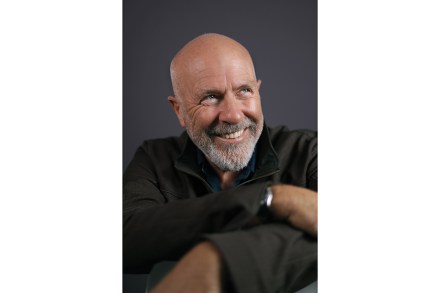
‘Is it because we see our world only darkly that we surround ourselves with lies we call time, history, reality, memory, detail, facts?’ Richard Flanagan’s memoir opens at the Ohama coal mine in Japan, once home to his father and a host of other POW slave labourers. It then spirals outwards via his childhood (in a remote Tasmanian settlement), his much-put-upon mother (who hoped Richard would become a plumber), his semi-present, kindly, traumatised father Archie (enshrined in The Narrow Road to the Deep North) and on through all the now-familiar Flanagan themes.

Gripping tale of Ireland’s most polite bank robber: I’m Not Here To Hurt You reviewed

There should really be a special word for it: that vicarious fragility you feel when hearing of a minor decision with catastrophically heavy consequences, as if a falling acorn had tipped a boulder. In the case of John O’Hegarty, the subject of the engrossing podcast I’m Not Here To Hurt You, the catalyst for disaster was a quick short cut the wrong way down a one-way Dublin street while working as a bicycle courier. It would ultimately lead him – an academic with a master’s degree in psychology – into heroin and crack cocaine addiction, followed by a stint as a bank robber and eight years in prison.

Putin is copying the propaganda playbook of Serbian war criminals

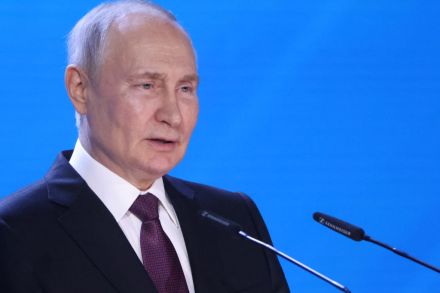
A year ago, Ukrainian soldiers discovered evidence of the Bucha massacre in which Russian forces slaughtered hundreds of Ukrainians in cold blood. Far from owning up to its crimes, Russia has spent the past 12 months trying to spin the massacre as a Western-inspired conspiracy.  The Kremlin said the allegations are a ‘monstrous forgery’ aimed at denigrating the Russian army. This attempt to whitewash the truth has disturbing parallels with the cover up of atrocities that occurred in my home country, Bosnia, during the 1990s.

Sacrificing the Uighurs to the Olympics

From our US edition

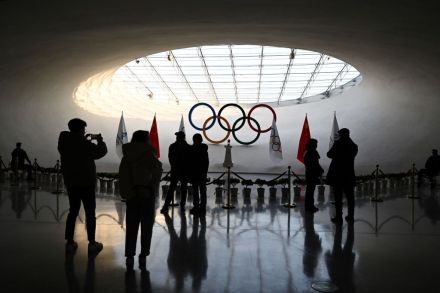
It’s hard to say what was most distressing about the opening days of the Beijing Winter Olympics. The lament of the athletes “injured” by the swabs inserted into their noses for Covid testing? French speed skater Gwendoline Daudet’s anguish under the bubble after she was eliminated from the mixed relay? The embarrassing spectacle of Uighur skier Dinigeer Yilamujiang lighting the snowflake-shaped Olympic cauldron under the gaze of Xi Jinping, an image that the spokespersons of the International Olympic Committee found “charming”? The fact that, unlike in Berlin in 1936 or Moscow in 1980, the matter of a boycott was scarcely mentioned, as “it was shown” that the topic would have a “negative impact” on the athletes’ morale?

Pre-crime has arrived in China

The idea of ‘pre-crime’ was popularised by Philip K. Dick’s story ‘The Minority Report’ and the 2002 Steven Spielberg film based on it. Here was a vision of a shudderingly paranoiac technological dystopia in which you could be arrested for something you haven’t even done yet. Not so science-fictional as all that. ‘Pre-criminal’ is the phrase — apparently one in official currency — that’s used of the protagonist of the story with which Darren Byler begins his chilling short book. Vera Zhou was a student of Byler’s at the University of Washington.

When it comes to Africa, the media look away

Kenya We were flown around the country, hovering low over mobs using machetes to hack each other up Each time I sit in St Bride’s on Fleet Street during the memorial of another friend, I look around at the crowds they’ve been able to pull in and feel terribly envious. Riffling through the order of service and then the church’s book of correspondents to find the faces of old comrades, I’m like a man wondering if any guests will bother turning up to one’s own hastily arranged bring-a-bottle party. Our 1990s generation of Nairobi hacks has been severely depleted. While we survivors are not a distillation of complete bastards, it’s natural to feel many of the best have gone before us. Too many were killed young on the story.

Truss fails her first big test

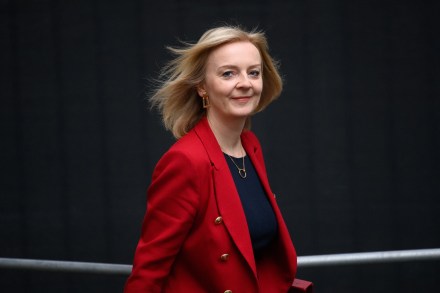
Can anything stop the irresistible rise of Liz Truss? The power-dressing insta lover reinvented herself at International Trade, becoming the darling of the Tory faithful and rising to the top of the ConservativeHome ministerial rankings, where she sits 15 points ahead of her nearest rival. Having served at the top table of Tory politics since 2014, the longest serving Cabinet minister was finally given a Great Office of State eight weeks ago when Boris Johnson entrusted her with the Foreign Office. Since taking up the role, Truss and her allies have been keen to project a more Sinosceptic image than her defenestrated predecessor Dominic Raab.

Interpreting for a dictator: Intimacies, by Katie Kitamura, reviewed

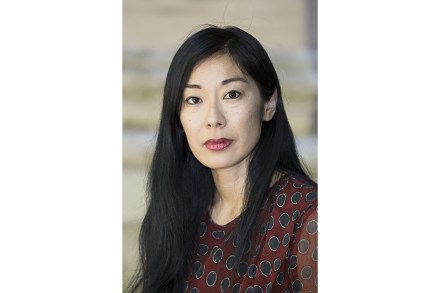
If this is a cautious and circumspect novel, it’s because it involves a cautious and circumspect job: that of interpreter. The young woman at the centre of the story speaks fluent English, Japanese and French, with some German and Spanish. She grew up in Paris, then lived in New York, but death and disruption in the family mean that city no longer feels like home. On a sudden impulse, she applies for a temporary job at The Hague, working at ‘the Court’. What she doesn’t speak is Dutch, though linguistically she’s a quick study. The instability felt when negotiating a new city without fully understanding the language is echoed by the moral relativity involved in her new task, translating for a Francophone African former dictator accused of genocide.

The dictator of the dorm: Our Lady of the Nile, by Scholastique Mukasonga, reviewed

In the cloud-capped highlands of Rwanda, even the rain-makers sound like crashing snobs. When two teenage pupils from Our Lady of the Nile lycée slope off to consult the sorceress Nyamirongi about some boyfriend trouble, she sizes up their genealogies and comes over all Mitford duchess: ‘You’re not from very good families. But nowadays they say it no longer matters.’ Like so much in Scholastique Mukasonga’s novel, it’s a comic scene with a rumble of menace in the background — akin to the rainy season’s distant thunder in these lush, green hills. Where you belong — your people, your connections, your identity — has been a matter of life and death before. Soon it will be again.

The making of a monster: Paul Kagame’s bloodstained past

In June, Commonwealth heads of government will meet in the Rwandan capital Kigali, a city advertised by their Tutsi host, the 63-year-old Paul Kagame, as ‘the Davos of Africa’. Kagame, Rwanda’s de facto leader since 1994 — and boasting more honorary degrees than Barack Obama, although he never finished high school — has become the ‘donor darling’ of the international community. He is why the World Bank has donated in excess of $4 billion, and why, until recently, the biggest bilateral donor has been the UK. ‘As far as I’m concerned,’ says the Tory MP Andrew Mitchell, ‘he is a hero for ending the violence.’ Michela Wrong is a British authority on Africa who begs to differ.

The truth about China’s genocide against the Uyghurs

Last night, the BBC showed witnesses giving stomach-turning testimony about organised rape and torture inflicted upon Uyghurs in China’s far west region of Xinjiang. Victims and former guards, now abroad and willing to talk, spoke of electric batons inserted into women’s genitalia, gang rape by police, an organised rape in front of 100 other women forced to watch with those who looked away punished, and the forcible sterilisation of a 20-year-old. As one witness said: ‘Everyone who leaves the camps is finished.’ In January, both the outgoing and incoming American Secretaries of State confirmed their view that the Chinese Communist Party’s (CCP) treatment of Uyghurs constituted genocide. Not some analogous ‘cultural genocide’. Genocide.

Africa’s invisible epidemics

Africa   ‘Ah, Africa,’ the French scientist sighed contentedly. This was 1995 and all around us was an Ebola epidemic ravaging Kikwit, a village in what they now call the Democratic Republic of Congo. ‘No lawyers to sue us!’ I had just asked him why doctors in the local hospital ward had shown me Ebola victims, lying in beds next to patients suffering milder diseases. In the Kikwit outbreak, the hemorrhagic fever killed eight out of ten people infected — 245 in all. People became sick after kissing and hugging the bodies of their loved ones at their funerals.