French revolution

When the money ran out, so did the idealism in post-Revolutionary France

For his holiday reading in the summer of 1835, the literary and political journalist John Wilson Croker packed the printed lists of those condemned to death during the Reign of Terror in revolutionary France. The several thousand guillotined in Paris after the establishment of the Revolutionary Tribunal (10 March 1793) and before the fall of Maximilien Robespierre (27 July 1794), were accused of crimes ranging from hoarding provisions or conspiring against the republic to sawing down a tree of liberty or declaring ‘A fig for the nation!’ In horrified disbelief Croker asked the question that has never gone away: how could this have happened? How could the progressive revolutionary optimism of 1789 have turned in just five years to summary arrests and executions?

Andrea Chénier, Royal Opera House, review: like a Carry On – but without the jokes

Who on earth could have predicted that a hoary old operatic melodrama set in revolutionary France would find resonance in the present where the pen as a weapon against bigotry and hypocrisy has suddenly achieved iconic status. But hold up, let’s not get carried away. We’re talking about Giordano’s Andrea Chénier. Though its eponymous poet does indeed extol free expression at the service of love, the sentiments — the voices of reason in a time of high anxiety — don’t run too deep. And so we’re back where we started, with a hoary old melodrama.

Andrea Chénier, Royal Opera House, review: like a Carry On – but without the jokes | 21 January 2015

Andrea Chénier Royal Opera House, in rep until 6 February Who on earth could have predicted that a hoary old operatic melodrama set in revolutionary France would find resonance in the present where the pen as a weapon against bigotry and hypocrisy has suddenly achieved iconic status. But hold up, let’s not get carried away. We’re talking about Giordano’s Andrea Chénier. Though its eponymous poet does indeed extol free expression at the service of love, the sentiments — the voices of reason in a time of high anxiety — don’t run too deep. And so we’re back where we started, with a hoary old melodrama.

How the smile came to Paris (briefly)

In 1787 critics of the Paris Salon were scandalised by a painting exhibited by Mme Vigée Le Brun. The subject was conventional enough: a self-portrait of the artist cradling her small daughter. The problem was that Vigée Le Brun was depicted smiling. You could even see her teeth. This was, as one critic put it, ‘an affectation which artists, connoisseurs and people of good taste are unanimous in condemning’. These outraged art lovers must have been rather out of touch with current trends. For, as Colin Jones shows in The Smile Revolution — his revealing history of 18th-century French smiling — the full-on, lips-parted sourire had been increasingly visible in Paris since at least the 1740s.

Terror plots, threats to liberties, banks in crisis: welcome to Britain during the Napoleonic Wars

In our own troubled times it is useful and comforting to recollect that ’twas ever thus.  Violent threats against prominent politicians? Jenny Uglow reminds us that in 1802 Colonel Edward Despard, a British officer turned radical agitator, was the last person in England to be sentenced to be hanged, drawn and quartered, for a plot to kill King George III and the cabinet; while in 1812, the wildly unpopular hardline Tory Spencer Perceval became the only prime minister (so far) to be assassinated, the victim of John Bellingham, a deranged bankrupt. Threats to civil liberties?

This thriller is as good as anything by Hilary Mantel

A few years ago, after a lifetime of wearing white shirts through which the straps of my white bra were plainly visible, I discovered a remarkable fact: if you wear a pink or even a crimson bra underneath a pale shirt, it doesn’t show. For several weeks I passed on this gem of truth to all my women friends. Was my enthusiasm met with relish, gratitude? It was not. They all said the same thing in response: ‘Oh, didn’t you know? I’ve always known that.’ I expected it would be the same in the case of Andrew Taylor. While reading The Silent Boy I was so overexcited by its brilliance that I asked numbers of friends if they’d ever come across Taylor’s work. Surely I was alone in the world in not having heard of this paragon?

The queen, the cardinal and the greatest con France ever saw

You usually know where you are with a book that promises the story ‘would violate the laws of plausibility’ if it appeared in a novel, and that’s in deep trouble. In the case of How to Ruin a Queen, however, this is a boast with a surprising amount of substance to it. You could make it up — just about — but you’d probably have a very sore head afterwards. In 1786 Cardinal Louis de Rohan, Grand Almoner of France and scion of one of the country’s leading families, went on trial accused of having stolen a 2,800-carat diamond necklace. This was serious enough, but what was far more serious was that he was accused of having appropriated the Queen’s name to do so.

Where did the Right and the Left come from? 

What is the origin of left and right in politics? The traditional answer is that these ideas derive from the French National Assembly after 1789, in which supporters of the King sat on one side and those of the revolution on the other. Yuval Levin in The Great Debate, however, argues not for seating but for ideas: that left and right enter the Anglo-American political bloodstream via the climactic public clash in the 1790s between Edmund Burke and Thomas Paine, the prime movers in a pamphlet war that convulsed opinion and engaged readers on two continents. If this is right, then the touchstone of modern political debate in Britain and America is not capitalism v. socialism, or religious fundamentalism v.

The men who invented Napoleon

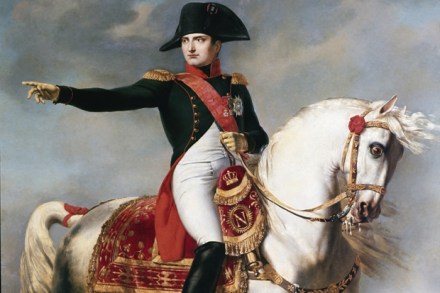
Writing about Napoleon is a risky business. It exposes the author to the brickbats of the blind worshippers for whom he is a numinous hero and the equally challenged detractors who see in him only the petty tyrant. By the same token, most historians find themselves negotiating a slippery path between approval and censure of this most controversial and somehow still very relevant figure. It is one of Philip Dwyer’s great merits that he remains so detached from his subject that he makes the reader forget his own prejudices. He approaches it with the discipline of a chemist in his laboratory: he is understanding of his protagonist but not sympathetic.

Patriot or traitor?

The mighty convulsion that was the French Revolution has stirred the blood of historians from Thomas Carlyle to Simon Schama and consideration of it still inflames opinions. At its centre stood Maximilien Robespierre — 5’ 3”, stern, unaffacted in manner or dress, Spartan in his domestic habits — deified by his followers as the ‘Incorruptible’ and vilified by his opponents as a traitor to the ideals of 1789, bent on dictatorship. Peter McPhee spares us speculation (Robespierre left no memoirs or diaries) on his subject’s ‘inner life’.

A nation of meddlers

If you thought that bust of Lenin you had on your desk as a teenager was the ultimate in radical chic, think on. Infatuated with the French Revolution, Lord Stanhope proclaimed his solidarity at a banquet at White’s Club. Announcing that he was thenceforth to be known as Citizen Stanhope, he ordered the coronets to be removed from the iron gates of his estate, Chevening. Despite its title, David Pryce-Jones’s new book isn’t just, or even especially, about traitors. It’s a high-speed survey of prominent British citizens who have taken up foreign causes.