France

Charlie Hebdo shooting suspects killed and four hostages dead after supermarket raid

Reports are coming in from AFP that the two hostage situations in France are over. The Kouachi brothers, who are suspects in the Charlie Hebdo shooting, were killed in a raid on a printing works in Dammartin-en-Goele this afternoon. They had been holding one person hostage, who has now been freed. Police launch assault where #CharlieHebdo suspects holed up. Photo Joel Saget #AFP pic.twitter.com/KTPZIFhUiA — AFP Photo Department (@AFPphoto) January 9, 2015 In a separate incident in the Paris suburb of Montrouge, the French special forces stormed a Jewish supermarket at around 4:30pm, where another gunman was holding at least five people hostage. The same gunman is also suspected of killing a policewoman yesterday.

The siege in a kosher shop in Paris proves why Israel needs to exist

As I write a siege is ongoing in a Kosher shop in Paris.  In France, Belgium and across Europe in recent years, Jews have repeatedly been the targets of Islamist attack.  They always are.  Last year saw the largest upsurge of anti-Semitic hate crime on record even in the UK. But it is the continent that has seen the worst and growing litany of attacks.  In 2012 Mohamed Merah killed three Jewish children and a teacher at a Jewish school in Toulouse.  In May last year three people were shot dead by an Islamist gunman at the Jewish museum in Brussels. During the twentieth century Judaism on the continent of Europe was almost wiped out.  In twenty-first century Europe the remaining Jews are once again the target.

Objecting to Charlie Hebdo cartoons doesn’t make you a terrorist

The French liberal-left and George W Bush are not natural bedfellows, but today the former are sounding just a little bit like the latter. The ‘Je suis Charlie’ banners they are carrying in reaction to yesterday’s murders at the offices of the satirical magazine Charlie Hebdo are effectively saying, to borrow the former US president’s slogan: you are either with us or you are with the terrorists. The terror attack, of course, deserves universal condemnation. It is an act of cold-blooded murder. That it was carried out against a targeted group makes it neither better nor worse than 9/11 or the London tube bombings which were conducted against random victims.

The charming little airport that ruins thousands of holidays

Horror films occasionally use the device of the deceptive idyll. An apparently restful place — a clearing in the woods, a pretty cottage — is the site of a fiendish atrocity. A goodie escapes and breathlessly reports the matter to the police. Next morning the authorities race to the scene, and find nothing. Wickedness has been concealed. The deceptive idyll has returned. Such a place is Chambéry airport in south-east France. Framed by mountains and fringed by Lake Bourget, it was founded in 1938 and has not grown much. On weekdays little disturbs the airfield daisies save the tinkle of distant cow bells and a cooling Savoyard breeze. You can imagine the Milka girl dating the guy with the ping-pong bats. Yet on winter Saturdays, Chambéry’s mask drops.

The eurozone is strong enough to kick out Greece if Syriza wins

Ever since European Central Bank president Mario Draghi declared himself ready, in July 2012, ‘to do whatever it takes to preserve the euro’, the likely disintegration of the single currency — as predicted by pundits such as yours truly over the preceding years — has all but disappeared from the comment agenda. The combination of a persuasive ECB leader with reform in some bailed-out eurozone states (notably Ireland and Spain) and an easing of bond market pressures, plus the iron will of Germany to see the euro survive, drove the break-up argument into retreat.

Je Suis Charlie

It is important, today especially, to remember that this is nothing new. We have been here before. On the 11th of July, 1991, Hitoshi Igarachi was murdered in his office at the University of Tsukuba. His crime? He had translated The Satanic Verses into Japanese. That was all. Eight days previously Ettore Capriola, the novel's Italian translator, had been fortunate to survive an attempted assassination in Milan. And in October 1993 William Nygaard, the Norweigan publisher of Salman Rushdie's novel, was shot three times. Mercifully and remarkably, he survived. In fact, it had begun before that. On Valentine's Day 1989 when the Iranian Ayatollah issued his fatwa against Rushdie. That was a test too many people failed back then.

Gun attack on French satirical magazine Charlie Hebdo ‘kills 12’

Gunmen have attacked the Paris office of the French satirical magazine Charlie Hebdo. Current reports suggest that up to 12 people have been killed. One eyewitness told French TV channel Itele: 'Two black-hooded men entered the building with Kalashnikovs. A few minutes later we heard lots of shots.' Ils ont tiré à deux reprises les balles ont traversé la porte et la fenêtre pic.twitter.com/Jhgi4MBlnp — yve cresson (@yvecresson) January 7, 2015 The magazine has courted controversy in the past by publishing cartoons of the prophet Muhammad. An hour ago the magazine's Twitter account posted a cartoon of the Islamic State militant group leader, Abu Bakr al-Baghdadi. The attackers reportedly escaped in two vehicles.

Le French bashing has spread to France. Are things really that bad?

The French for French-bashing is le French bashing. This verbally costive nation is at it once again, torpidly borrowing an approximately English expression rather than coining its own. Such bashing is not an exclusively Anglo-Saxon practice. There is indigenous bashing. At least there is Éric Zemmour, whose salutary Le Suicide français was published a couple of months ago. Its very first sentence declares that France is the sick man of Europe — which prompted Manuel Valls, little Hollande’s prime minister this week and a man who is not growing into that poisoned office, to take the bait, exhibit a preposterously thin skin and denounce the book twice in a few days. This is not to suggest that M.

Cognac and the Viking connection in la France profonde

The chestnut trees were still resplendent in yellow leaf along the banks of a misty autumn river on its glide through woodlands, pasture, comfortable towns — and vineyards. This was the Charente. Eighty years ago, before the lorry became dominant, it would not have been so peaceful. In those days, barges laden with barrels of Cognac made their way along this river to the coast to be shipped all over the world. Wine has been grown in Cognac for centuries and exported since the Middle Ages. But it was always inferior to the products of Bordeaux, to the south-west. Even so, its acidity and low alcohol content made it ideal for distillation once the Dutch discovered the technique. They called the result brandwejn: burnt wine, hence brandy.

Is Nicolas Sarkozy headed back to the Elysée – or to jail?

In his more hyperactive moods Nicolas Sarkozy, former president of France, has been known to compare himself to Charles de Gaulle. Following defeat in the 2012 presidential elections ‘Sarko’ made a dignified exit from the national stage, stating that in future his personal commitment to the well-being of France would be in some loftier sphere. De Gaulle did the same thing in 1946; he retired to his country estate for 12 years of reflection and study, before being summoned back at a time of national crisis to found the Fifth Republic. Mr Sarkozy is clearly hoping for a similar resurrection, though there are a number of differences in the two cases.

The real French embassy is a restaurant

Semper eadem. There is some basement in a Mayfair street that is forever France. It is not far from the American embassy, a strong candidate for the all-time monstrous carbuncle award. Bad enough that it should ever have been built: worse still, some ‘architects’ want to preserve it. Its menacing hideousness has made a significant contribution to the growth of anti-American sentiment in modern Britain. Only a hundred yards away, there is an unpretentious building. No disrespect to successive French ambassadors in London, who have made heroic efforts to put the best possible gloss on a failed state, but Le Gavroche has done more than diplomacy ever could to justify the ways of France to Britain and to persuade the rosbifs that they order some matters better in France.

A miracle: French hotels actually like dogs

The first time I checked in to a French hotel with a golden retriever — his name was Gregory, predecessor of the incumbent Douglas — I left him, clearly unhappy, in the bedroom when I went to dinner. Then I realised that every other party already in the dining room included a dog, in some cases a lapdog enjoying morsels direct from its mistress’s plate. So I fetched Gregory, shoved him under the tablecloth and told him to keep quiet. But each time a tasty dish went past, his big hairy head emerged and sniffed the air. Eventually the maitre d’hotel approached. ‘You’re in trouble now,’ I whispered (to Gregory). ‘Ah, quel beau chien,’ said the maitre d’. ‘Would he like to order anything?

French economy minister pushes Germans on bailout money

Emmanuel Macron has only been the French economy minister for a few months, but already he's attracted plenty of domestic outrage, mostly from socialists who think he's a bit too right-wing. Now the former banker seems to be aiming for a wider audience to provoke, suggesting in meetings in London yesterday that Germany should drop its opposition to using the European Stability Mechanism bailout fund as a EU-wide stimulus fund. Macron spoke to British journalists after holding meetings with Vince Cable and Chuka Umunna. He will also meet Osborne during his trip, and hopes to persuade the Chancellor of the merits of using €50bn from the ESM to spend on capital projects across Europe.

Némirovsky’s love letter to the France that spurned her and killed her

By 1940 Irène Némirovsky, who had arrived in France at the age of 16 as a refugee from Kiev, had become a prominent and successful novelist. In March of that year she celebrated what was to be her final publication day. She was Jewish, and for French publishers under Nazi occupation she had ceased to exist as an author when the German army entered Paris. But she continued to write. She moved with her children to a village in Burgundy, hoping to protect her family from the Vichy government’s manhunt, and she started work on her masterpiece, Suite Française, which would lie undiscovered until 2004. She also started three other novels, two of which she finished. Both were published in France after the war. By then their author was dead.

Remembrance Sunday is marvellous; for God-free war commemoration, go to France

The most remarkable thing about the ceremony at the Cenotaph on Remembrance Sunday is that it just gets more popular. A ceremony that a generation ago might have been confidently predicted to appeal to a smaller and smaller bit of the population has somehow attracted the kind of benign publicity you get for the Children in Need awards. And the enormous crowds at the Tower to see the moatfull of ceramic poppies – one for each British life lost – has taken everyone by surprise. It’s got a good deal to do with the centenary of the First World War, of course, but that itself suggests that in a fractured Britain, people attach real emotional significance to wars from a lost world whose very language – such as sacrifice – is alien to our own.

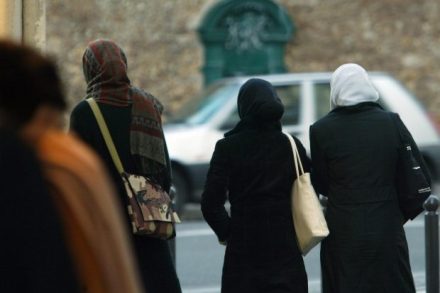
Wear a veil if you like – but don’t treat women like that

What sort of clothing do you wear when you go to the opera? I assume some of you do go to the opera, otherwise the Royal Opera House could be turned into a giant Wetherspoon’s pub. I have never been. Given a choice I would rather browse through a collection of photographs of Brooks Newmark MP’s penis, or indeed gnaw off my right leg. If I were somehow coerced into attending, then without question the costume of choice for me would be a niqab. Then I could sleep without being noticed. Or listen to something more interesting on headphones, such as a collection of Danny Alexander’s speeches or a greatest hits compilation from the Radio 4 programme Does He Take Sugar?

Proof that the Japanese know how to make great Bordeaux

Château Lagrange, a St Julien third growth, has the largest acreage of any Bordeaux classed growth. For much of the 20th century, this was its sole claim to distinction. Under family management, it consistently failed to justify its ranking. Then the Japanese arrived. In 1983, Suntory bought Lagrange for £4 million. There were resentments. In 1987, on the floor of the stock exchange just after the Big Bang had transformed the City, a Japanese broker asked an English counterpart if he could direct him to Wedd Durlacher. This was after lunch and the Englishman was old-fashioned. ‘You lot found your way to Pearl Harbor without any help from me. You can find your own fucking way to Wedd Durlacher.

In praise of the Loire – cradle of civilisation, and wonderful wines

Rivers are the cradles of civilisation and the Loire is an outstanding example. It is one of the head-waters of modern France. By the 7th century, the region had emerged from the Dark Ages and was building on Roman traditions to lay foundations that would endure. St Martin, Clovis: we are at the beginning of a recognisably French history. War is both an expression of civilisation and its curse — but also, occasionally, its saviour. In 732, that nascent French history was in danger of eradication until one of the most important battles in European history took place at Tours, near the Loire. Charles Martel defeated a powerful invading force from Muslim Spain. If he had lost, there would have been little else to impede a Muslim advance.

Countries shape character (so get ready to like Scots less)

[audioplayer src="http://traffic.libsyn.com/spectator/TheViewFrom22_11_Sept_2014_v4.mp3" title="Fraser Nelson, Tom Holland and Leah McLaren discuss how we can still save the Union" startat=50] Listen [/audioplayer]As I write this, I am sitting outside a weinhaus in Kaub, a half-timbered town on the wooded slopes of the middle Rhine. If you don’t know the place, I recommend a visit: the scenery is lovely, the hiking is fine, and the Riesling is great (they have to handpick the grapes, like peasants in a Brueghel painting, because the river-ine vineyards are too steep for machines). But there is another reason to make the agreeable journey to Kaub: it’s a brilliant place to contemplate the mysteries of nationalism and national character — i.e.

Bees make magic: an inspirational case for biodiversity

The importance of biodiversity, a handy concept that embraces diversity of eco-systems, species, genes and molecules, has been promoted for over three decades. Yet much life on Earth still faces unsustainable loss or extinction, perhaps because, as an otherwise upbeat Dave Goulson notes in A Buzz in the Meadow, ‘at a global level, conservation efforts so far have been a dismal failure’. A bumblebee specialist with an extensive interest in the natural world, Goulson presents an inspirational case for awareness and appreciation of the teeming diversity of living things that exists even in our gardens or the local park.