Food

Gene-editing won’t save our fruit

The other day, I had a dismaying experience while making my usual frugal lunch. Usually, a cheese sandwich does me. Two slices bread, salted butter, thick bits of the maturest cheddar Ocado has to offer, and a grind of salt and pepper: a lunch fit for a king. But even kings like to change things up a bit from time to time. Custom has an established track record of staling things. So when I spotted, lurking at the bottom of the crisper, a solitary tomato, blemishless and an inviting deep red in colour, I thought: what the hell, you only live once. A cheese and tomato sandwich it would be, and hang the expense.

The gobsmacking brilliance of baked Alaska

I have never seen a baked Alaska in the wild. Have you? I knew what they looked like, of course, all meringue cheekbones and technicolor interior, but I haven’t actually come across one. For whatever reason, they seem to be an endangered species – so I took to making them myself. The pudding was invented in the 18th century by Sir Benjamin Thompson (also known as Count von Rumford), a physicist who invented the double boiler, the modern kitchen range and thermal underwear too. Thompson realised that the tiny bubbles created when you aerate egg whites to make meringue provided so much insulation that you could torch the meringue and leave ice cream intact, unmelted, beneath.

My Marco Pierre White obsession

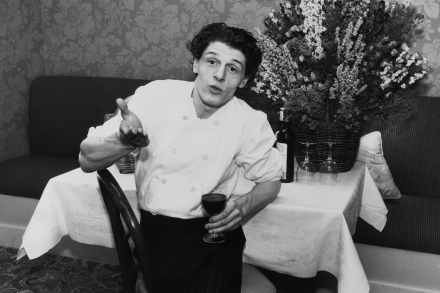
Pierre White, Marco. Chef. Michelin stars: five (all handed back). Wives: three (all handed back). Restaurants owned: number unclear. Hours in a cell: 14. Party: Reform. Brands promoted: Knorr stockpots, Lidl, P&O Cruises. Protégé: Gordon Ramsay. YouTube views: hundreds of millions. Current residence: the countryside, somewhere near Bath, far far away from anyone who tries to talk to him. The obituaries will all call Marco Pierre White a ‘rock star’, and they will be correct. In the 1980s, he was all shaggy verve and sweat and ash. He ‘changed the game’ – as they all say – not so much through his cooking, but through his good looks.

Letters: Bring back mutton

Man out of time Sir: That Mary Wakefield left Rowan Williams ‘with my questions for the most part unresolved’ will come as no surprise to his former students, myself included (‘The ABC of faith’, 19 April). As a ‘mature’ student at Cambridge, there was something very inspiring about Williams the academic, but also comfortingly peaceful about the man; someone always on the journey of discovery and therefore reluctant on many issues to be dogmatic or final about them. His genuine surprise at how the real world operated one easily forgave; his naive approach to other issues, such as Islam, was dangerous but never disingenuous. As an Arabist I did find this hugely irritating.

Long live the long lunch!

I keep on my bedside table, where others might place religious texts, Keith Waterhouse’s seminal The Theory and Practice of Lunch. Waterhouse, that magnificent chronicler of Fleet Street’s liquid lunches and disappearing afternoons, understood what modern efficiency cultists cannot: that civilisation is measured not by what we produce but by how elegantly we pause. His gospel preaches that a proper lunch requires ‘two-and-a-half hours of quality time at a quality establishment’, a commandment I try to observe with monastic devotion at least twice a week. The book’s spine is cracked at the chapter entitled ‘The Lunch Bore’.

Northern Europe doesn’t get salads: Claro reviewed

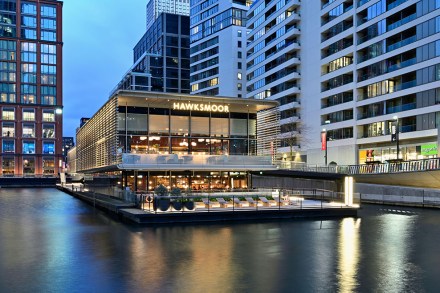
Claro is at 12 Waterloo Place, St James’s, and, when I tried to find out what it used to be – it has the energy of a bank – I found an advert from the Crown Estate offering the lease for a ‘retail or wellness opportunity’. 12 Waterloo Place was pictured in pen and ink, with a woman holding a yoga mat idling past, and a woman in cycling shorts hanging back. I wonder why the Crown Estate is pushing wellness, which I think is being rich, bored and female while not dying. (I have never heard a woman with a good book talk about wellness.) The price is upon application. I looked further: 12 Waterloo Place is 20th-century Baroque pastiche, it was a bank, and it wants to be a wellness opportunity. It should talk to the ducks in St James’s Park. They live inside a wellness opportunity.

Why Easter eggs are getting more expensive

While the US continues to use the price of chicken eggs as a political (American) football, closer to home our concern is with eggs of a sweeter kind. This year has seen chocolate prices rise dramatically. The price of cocoa had remained stable for decades, but in November 2023 it rocketed and has remained high ever since: it is currently almost three times what it was 18 months ago. The sudden increase came about after particularly poor harvests in West Africa, where more than 80 per cent of the world’s cocoa is grown. Extreme weather, in the form of both record-breaking high temperatures and then very heavy rains, have ravaged the cocoa plantations in Ghana and Côte d’Ivoire.

Lamb is for life, not just for Easter

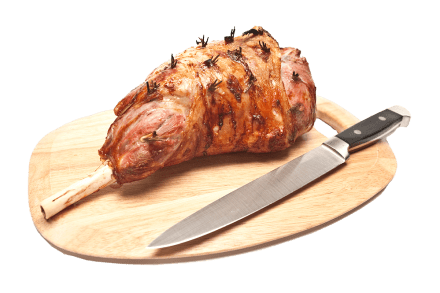
Roast lamb is as expected on the Easter table as turkey is at Christmas. But as a nation, we are falling out of love with lamb. Meat consumption in Britain is at its lowest level since records began, and according to the Agriculture and Horticulture Development Board (AHDB), lamb has been in particular decline for the past 20 years. We may feel we are supporting the sheep-farming industry, but the truth is a little more complicated There are a number of reasons for this: some people are trying to eat less meat for environmental or ethical reasons, while others don’t enjoy the richer taste of lamb compared with other meats. Perhaps most importantly, after a long period of rising in price more drastically than other meats, the cost of lamb reached record highs last year.

The simple elegance of fondant potatoes

In 1999, a relatively unknown American chef wrote an essay in the New Yorker uncovering the secrets of restaurants. ‘Don’t Eat Before Reading This’ lifted the lid on both the underworld of professional kitchens and the mentality of chefs. In it, the writer meticulously took down ordering fish on a Monday (old), eating steak well done (for ‘philistines’), brunch as a concept (despised) and vegetarians in general (‘Enemies of everything that’s good and decent in the human spirit’). The no-punches-pulled writing, which was both lyrical and graphic as well as funny and forthright, was the first published essay by Anthony Bourdain, who would go on to become one of the most influential and beloved personalities in the food world.

The hot cross bunfight

There’s a well-known clip from daytime TV show This Morning where celebrity chef Gino D’Acampo is cooking a classic Italian pasta dish. Holly Willoughby, one of the presenters, tastes it and says: ‘Do you know, if it had, like, ham in it, it’s closer to a British carbonara?’ D’Acampo, in his Italian-accented perfect English, looks at her in horror before replying: ‘If my grandmother had wheels, she would have been a bike.’ This phrase goes round and round in my head as I stand agog in my supermarket’s bakery aisles. Where once there might have been one choice of hot cross bun as we hurtle towards Easter – perhaps one ‘standard’ and one ‘luxury’ in the bigger shops – our options now extend as far as the eye can see.

Smart even for Chelsea: Josephine Bouchon reviewed

Josephine is a Lyonnaise bistro on the Fulham Road from Claude Bosi. It is named for Bosi’s grandmother and is that rare, magical thing: a perfect restaurant. Bosi runs Bibendum (two Michelin stars, and in Michelin House) and Brooklands at the top of the appalling Peninsula hotel (two Michelin stars). He opens a second Josephine this month in Marylebone, which needs it since the Chiltern Firehouse, always a restaurant that felt like Icarus with a kitchen, burnt down to rubble. I haven’t eaten in Brooklands – I wish the Peninsula were an island, so that it could float to Victoria and then away, being an oligarchic monstrosity. But my instinct is: this is the good stuff.

The Judgment of Berkshire

Almost 50 years ago, in a hotel bar in central Paris, French wine faced a reckoning. Steven Spurrier, a British wine merchant, decided California deserved a spell in the sun: at the time French wine was the dominant force in Europe, with bottles from the New World – Australia, New Zealand, the US and the like – considered their poor cousin. Spurrier came up with the idea to pit the very best French Bordeaux against Californian cabernet sauvignons and chardonnays against white Burgundies, and have a panel of experts – all French – rank them in a blind tasting that came to be known as the Judgment of Paris. California won both categories. Odette Khan, a well-known critic, reportedly demanded her scorecard back so news of her grave error wouldn’t reach the papers.

The curious cult of Dubai-style chocolate

Dubai-style chocolate, viral star of TikTok and Instagram, is so popular that Waitrose is limiting sales to two bars per customer. The upmarket supermarket chain has taken the move, the Times reports, ‘because we want everyone to have the chance to enjoy this delicious chocolate’. Some are sceptical. Steve Dresser, who heads up consultancy Grocery Insight, has questioned whether this is a marketing ploy, with Waitrose ‘trying to generate scarcity’. The supermarket says no, assuring the Grocer of the ‘incredible popularity’ of these £10 confectionery bars. It’s incredible all right. Even Waitrose’s yellow sticker fare is beyond my budget, so to me a tenner for a slab of chocolate sounds not so much indulgent as fall-of-the-Habsburgs decadent.

Letters: Where to find Britain’s best dripping

Open arms Sir: The latest magazine (29 March) has two references to American military capabilities, from Rod Liddle and Francis Pike. Mr Liddle suggests that the prevalent attitude over there is that we ‘Yerpeans’ should have contributed more to the recent strike on Yemen (‘America first, Europe last’). He may not have known it was RAF tankers which enabled the US fast jets to attack. (This also escaped the Signal group chat.) Mr Pike suggests that the US navy’s carriers are suddenly vulnerable to modern weapons (‘Carriers of bad news’). As an excellent historian, he will concede that commentators have been writing off naval carriers’ effectiveness for decades. He is right to say that the Americans will have to evolve new technologies to defend their ships.

A crisp and refreshing account of the apple

From our US edition

In Food for Life, Tim Spector’s book on the science of eating, the author gives the chemical makeup of a mystery food, listing more than 30 scary-sounding E numbers, sugars, acids and chemicals, before revealing that it is an… apple. Sally Coulthard’s book, The Apple, shows that it’s the apple’s complexity as well as its familiarity, that makes it the ideal punchline for Spector, and, for Coulthard, a perfect vehicle to carry the history of how we grow, trade, cook and eat together and take responsibility for each other and the environment (or not).

apple

A creche for nepo babies: the River Cafe Cafe reviewed

The River Cafe has grown a thrifty annexe, and this passes for democratisation. All restaurants are tribal: if dukes have Wiltons, ancient Blairites have the River Cafe. It is a Richard Rogers remake of Duckhams oil storage, a warehouse of sinister London brick, and a Ruth Rogers restaurant. Opening in 1987, it heralded the gentrification of Hammersmith, which has stalled now that Hammersmith Bridge is closed to traffic and sits dully on the Thames, a bridge of decline. The River Cafe appears, thinly disguised, in a J.K. Rowling Cormoran Strike novel where a literary agent murders her client because he writes Swiftian pastiche, and it is a good place to watch the Boat Race. It is intensely disorientating until sunset.

Why my dog is vegan (and yours should be too)

This morning, as usual, I was woken up by the large ball of golden fluff that is my dog, Honey. At a time she considers decent, she bounds on to my bed, tail wagging furiously, to tell me it’s time for her breakfast. Honey still has the puppyish bounce she has always had – even though, at the age of almost 12, she is gently settling into canine old age. And I’d go so far as to say that what I give her to eat has a lot to do with her youthfulness. Eye-roll as much as you like, but I believe one of the key reasons Honey is thriving is because she hasn’t eaten meat for more than six years. Yes, my dog is vegan. Not that she realises that, of course: as far as she’s concerned, she still gets the same sausages, dog chews and choice of dry and wet foods as she’s always had.

Sole meunière: simple one-pan sophistication 

Picture the scene. The year is 2004. The setting, a British field or maybe a beach. There is a small open fire burning with a single cast-iron pan perched on it. A male TV chef – dressed in a striped shirt, open at the neck, chinos, possibly red, leather shoes – is standing over it, reverently holding a fish. ‘This is a beautiful piece of fish,’ he says, ‘and we’re not going to do anything fancy here. It doesn’t need it! We’re going to keep it simple.’ There must have been a clause in the contract of any TV cookery show in the early 2000s to say that a beautiful piece of fish should be cooked simply.

Beyond Boswells: Oxford’s new safe space

One can see a city so differently over time. Visiting Oxford recently I noticed fine whisky shops and fashion stores which have always been there but which I barely registered as a student 15 years ago. There are new arrivals: some good, such as the handsome Jericho Cheese Company; others less so, such as the proliferating bubble tea shops catering to the now numerous Chinese, both students and tourists. Covered Market is still there, where we used to indulge at the original Ben’s Cookies. Though I do not remember back then the Thames Valley Police signs now warning of ‘bag dippers’ operating in the area. Oxford is both swisher and scruffier than I remember it. Swish embodied in the new Ivy, in a palatial neo-Gothic pile on the High Street that used to be a NatWest.

What’s RFK Jr. really up to?

From our US edition

Health Secretary Robert F. Kennedy Jr.’s program to Make America Healthy Again (MAHA) appears to be ahead of schedule. At the start of the month, the burger chain Steak ’n Shake announced that it would be frying its food in beef tallow rather than seed oils — and other major restaurant groups are following suit.This week, Kennedy, who hates seed oils and processed foods, rewarded Steak with an almighty PR stunt. He sat down with Fox News’s Sean Hannity to enjoy a burger (Hannity had two) at a branch in Florida. “People are raving about these French fries,” said JFK’s nephew. “They’re amazing,” Hannity agreed.It remains to be seen if the “RFK-ing” of fast food will achieve substantial results.

rfk