Food

A salt for all seasons

From our US edition

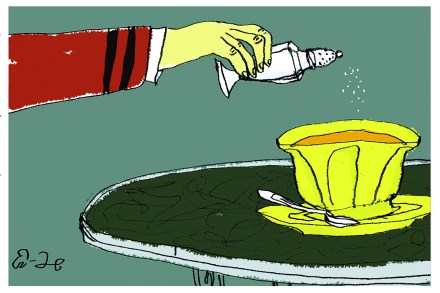
It takes four people, according to the French, to get a salad dressing right: a spendthrift for the oil, a miser for the vinegar, a wise man for the salt and a lunatic for the pepper. A tough cast to assemble, you might think, but the freehanded, the tightfisted and the insane aren’t such rare birds. The true needle in the haystack is the wise man who would have anything to do with a recipe involving four chefs. Cooks, broth, too many — enough said. Most wise men would be out of town before you could say “smoked oak salt flakes” ten times fast. But the point stands: getting the salt right isn’t a walkover. The rookie has to steer a tight course between undersalted Scylla and oversalted Charybdis.
salt

London’s best bakeries

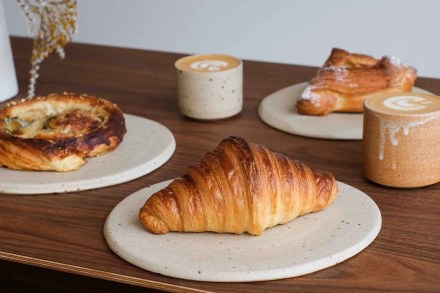
If anyone knows how to do winter, it’s the Scandinavians. The concept of snuggling up with a steaming mug of something caffeinated and a buttery pastry is at the heart of their culture, from the Danish concept of hygge (cosiness – often involving sugar and carbs) to the Swedish ritual of fika (taking time for coffee and cake). Take a leaf out of their book and make a beeline for these five bakeries, which are sure to put a smile on your face this January.  Pophams Bakery, London Fields  Every Saturday, rain or shine, a jolly queue wiggles around the al fresco tables outside Pophams and into the street. London Fields is not short of places for coffee and pastries, but Pophams is a cut above the rest – and the queue shows it.

In praise of meatless steak

Sirloin, rump, tomahawk, fillet, rib-eye. However it comes, is there any food that gets salivated over more than steak? Restaurant reviewers compete to outdo one another with their florid descriptions of the sensual delights of tucking into a particularly prime example. But then steak comes loaded with far more than a dollop of garlic butter or hollandaise. More recently, tucking into a juicy slab of meat has also become a bold statement of ‘I will eat – and live – as I please’, a carpe diem rejection of vegan-botherers and eco-worriers. Veganism is on the rise, with the number of vegans in Britain quadrupling between 2014 and 2019.

Noma and the death of fine dining

The Menu is a horror film about fine dining that revolves around a psychotic head chef (Ralph Fiennes) who runs a destination restaurant on an American island. The island is uninhabited apart from the chef and his staff, who pluck it for the most refined marine treats to serve the obnoxious clientele on a nightly surprise menu. As I sat in the cinema watching it recently, I felt delighted, then sick, then scared – and then enlightened. Enlightened because I finally understood that fine dining – once the summit of high living and my own former obsession as a greedy twenty-something working in lifestyle journalism – is over. It is not just that in this era of obsessive authenticity and sentimentality fine dining feels passé.

The rise of the high-end curry house

Back in 2000, not one Indian chef in the UK held a Michelin star. For many people, dinner at a curry house meant a formica table, plastic cutlery and warm salad garnishes on Brick Lane.  Two decades later, all that has changed. There are seven Michelin-starred Indian restaurants across London and haute cuisine curry houses are taking over swathes of Mayfair and other upmarket areas that were previously the domain of chic French bistros and Italian osterias.   So what’s behind the rise of the high-end Indian restaurant? And which are the dishes not to miss? We spoke to four top chefs at our favourite upmarket Indian eateries in the capital to find out.

Smoked salmon blinis: bitesize luxury for New Year’s Eve

I tend to hunker down on New Year’s Eve, eschewing parties for my own home. Even when I was young, the prospect of sleeping on someone else’s floor or braving the night bus home in the early hours of the morning didn’t really appeal. But sometimes I worry that that can lead to the night being a damp squib. The way to fix this is a little bit of luxury. Perfect bitesize tastes of luxury. And for me, that means blinis topped with the fanciest, most delicious morsels I can lay my hands on. Drink them with something cold and sparkly, and you won’t regret staying in for one moment. If you are more sociable than I am, these also make the most impressive party snacks – and ones that suggest far more preparation and skill than they actually require.

Where to find a taste of Greece in London

Last time I visited Toronto, Canada, I stayed in Greektown, home to one of the largest Greek communities in North America. Several scenes from My Big Fat Greek Wedding were filmed here, and street signs are in Greek as well as English. On the day I arrived, jetlagged and disorientated, I happened upon a restaurant that was so authentically Greek I imagined I could smell the pine trees and hear the soft chirp of crickets. A couple of elderly men sat drinking ouzo at the bar, and rather than being led to a table I was taken into the kitchen where Maria (reader, that was her name, what can I do?) was stirring various pots, including a green bean and tomato dish (fasolakia giaxni) and meatballs (soutzoukakia).

The art of shooting (and cooking) game

I love game, me. Not the great game, of course, which is football. But game, real game, the sort that was running about in hedgerows and copses, and in fields of spent brassicas and wintry stubbles, until you shot it. At this time of year there's nothing better, to my mind, than a day out in the country with a gun and a dog, shooting a few brace of pheasant or duck, and then taking them home for a bit of butchery. People talk about from farm to fork. Good for them. I think from trigger to tongue is even better. I know that butchery sounds grisly and may be shocking to the sanitised ears of Tesco man or Waitrose woman. But the fact is eating meat or fish is a grisly business. Regardless of the posh packaging, there’s been blood spilled along the way.

The Christmas when Parisians ate the zoo

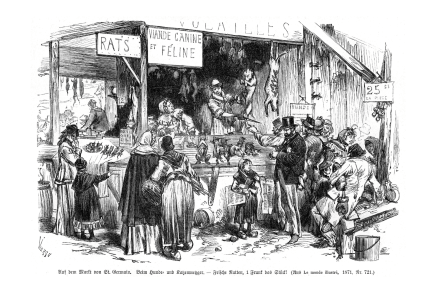
Even if you don’t like Christmas, it’s hard to deny that Christmas dinner is one of the best meals of the year. But for Parisians in 1870, the Christmas meal took an unexpected and macabre turn. While we may think of Paris as being the city of light, good food and fine wine, it’s also the city that once produced a Christmas Day menu of stuffed donkey head, elephant consommé and roasted camel – all courtesy of the Jardin des Plantes zoo. In the late stages of the Franco-Prussian war, Paris found itself surrounded by enemy forces. The Germans aligned themselves with Prussia with a plan to bombard and starve Parisians into submission. All supplies to the city were cut off, meaning there was no meat, fresh vegetables, butter, milk or cheese to be found.

Christmas dinner is the meal we love to hate

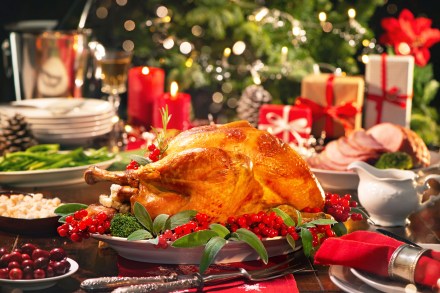
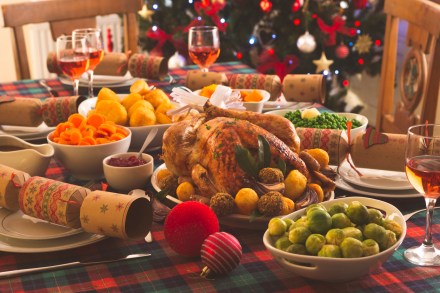
Many of the elements of the Christmas spread have more detractors than admirers. Turkey can seem an undistinguished bird thrust into an undeserved limelight: bland and unwieldy, it’s a far cry from a rich goose or even a regular, moist chicken. Carrots and parsnips – uninspiring. Bread sauce resembles the gruel ladled out to Oliver Twist. Christmas pudding – dense and gluey. And Brussels sprouts, well, enough said. Every year, Christmas dinner-haters crawl out of the woodwork to air their disgust at the traditional meal and find themselves given a surprisingly sympathetic hearing. A 2020 YouGov poll indicated that only around half of us, for example, consider turkey part of our ideal Christmas dinner (it hardly needs saying that for Gen Z the figure is even lower).

Happy Excessmas: why shouldn’t we eat, drink and be merry?

Christmas is coming and it isn’t only the goose that’s getting fat – so are you. That’s according to the skinny, pie-dodging miserable lot who make up the public-health lobby. For these people – who are living proof that a lack of sugar makes you cranky – the countdown to Christmas isn’t an opportunity to excite kids about Santa’s sack or splurge on gifts for loved ones; no, it’s an ideal time to freak people out about the dangers of eating and drinking too much. Every year it’s the same. It starts in November. An alcohol-awareness group (a fancy term for the neo-temperance movement) and obesity experts (a grand title for fat-shamers) rattle off press releases about the awful things we’ll do to our guts and livers.

What should be on your Christmas cheeseboard?

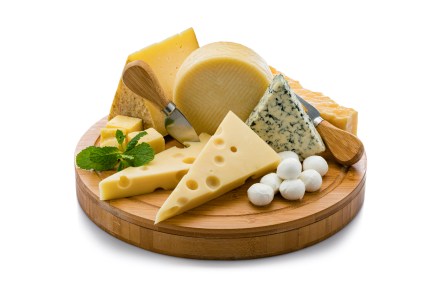
No overindulgent gourmand worth his salt fails to own a stilton scoop. Mine has a bone handle and Mappin & Webb silver plate. It has an ingenious contraption to release the cylindrical pellet of cheese: a bit like those retro ice cream scoops that, with a little squeeze, crack like a whip, the metal slicing under ice as vicious as a mousetrap. My stilton scoop is gentler. One releases the mouldy blue at one’s own pace, until it falls sensuously on to the plate. It is used just once a year, at Christmas, like the cookie-cutter and the nut-cracker. Why this extended detour about a kitchen utensil? Because one cannot talk about cheese at Christmas without talking of stilton.

Japanese food is overrated

From our US edition

After twenty-three years in Japan, I have concluded that the much-lauded, worshipped even, cuisine is overrated. And I am getting a little tired of being told how awe-inspiringly wonderful Japanese food is, often by people whose only experience is high-end sushi or designer tempura in a showpiece Tribeca eatery, a world away from the standard fare available on the backstreets of Shibuya. Part of the problem is that much of what delights the Japanese about their food is unrelated to its actual taste.

Japanese

Turkey isn’t the only option for a Christmas feast

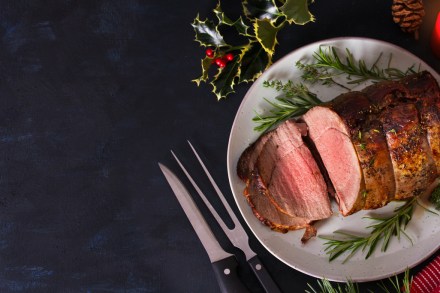
Christmas is coming – but if the geese are getting fat, the turkeys aren’t terribly happy, cooped up indoors on account of avian flu. Around half of the free-range birds produced for Christmas in the UK have been culled or died due to the illness, according to the British Poultry Council – and for those that remain, the government’s anti-infection measures mean they aren’t ranging anything like as freely as before. Some butchers, including the Ginger Pig chain, have announced they aren't selling turkey at all. So if we can’t get a happy turkey, what should we be eating on Christmas Day? Turkeys might seem like the stalwarts of the Christmas feast but they are, after all, New World birds, so latecomers to the festive table in these islands.

The full English is a breakfast to be proud of

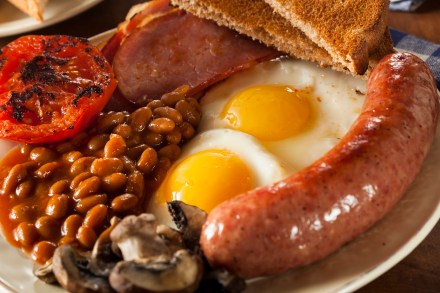
The British playwright Somerset Maugham once said that ‘to eat well in England you should eat breakfast three times a day’. I think he meant it as a jibe, but we should take it as a compliment. Our breakfast is as powerfully evocative of England as any part of our cultural heritage. In The Lion and the Unicorn, stirred to patriotism amid the country’s daily bombardment in the Blitz, George Orwell opined that English civilisation was ‘somehow bound up with solid breakfasts and gloomy Sundays, smoky towns and winding roads, green fields and red pillar-boxes. It has a flavour of its own’. That flavour is of sizzling bacon, straight from the pan. Rare is the Englishman who doesn’t have strong views on how they like it: toasted bread or fried? Mushrooms or tomatoes?

The Menu serves up clever and tangy social commentary

From our US edition

Several years ago, after I passed the bar exam, my wife and I went to dinner at Pineapple and Pearls — probably Washington, D.C.’s second swankiest restaurant. I recall eating some excellent duck, as well as imbibing a selection of craft cocktails served in ever-more exotic glasses and alembics. But what I remember most was dessert: a single gooseberry lacquered with honey. Yes, a single berry. (We ordered Domino’s when we got home.) The Menu is a lacerating bit of social commentary that doubles as a satire of this kind of fine dining — not all that surprising a blend, given the presence of Adam McKay on the production team.

How to eat frites the Belgian way

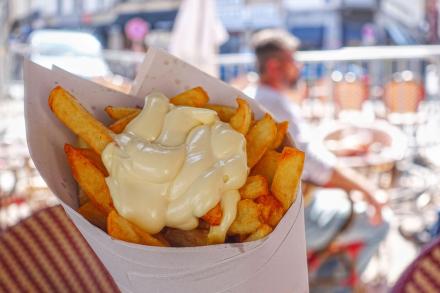
Many things about Belgium are impenetrably mysterious to the incoming foreigner: the commune system, which language to use, how to politely eat moules. But few are as cryptic as the menu of sauces that accompany Belgian frites. Ketchup, tartare, barbecue and mayonnaise seem fine. But what is Samourai? Andalouse? Mega?  Unlike many great Belgian things that have successfully been exported (Trappist beer, chocolate, Tintin, speculoos biscuits, Audrey Hepburn), frites can only be experienced on home turf. And my, aren’t they so Belgian. First, the friteries or fritkots in Dutch – chip shop kiosks found wedged on to street corners and in city squares – are totally egalitarian and the service is totally grumpy.

Three cheers for Branston Pickle

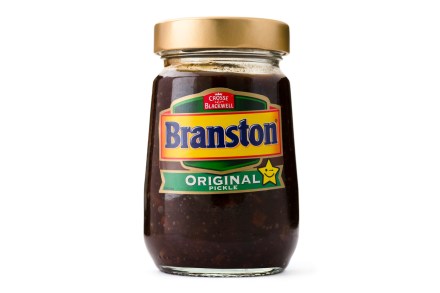
There is no shortage of foodstuffs (or people) jostling for admission into the hallowed hall of ‘national treasures’. Perhaps the best litmus test for right of entry is time-proven popularity, and appeal across class and generational divides. No mere passing flavour of the month or millennial indulgence. Something that unites us all in affection. Branston Pickle ticks the boxes. Branston and cheddar cheese were made for each other. Like jam and clotted cream, or rhubarb and custard; brought together they become more than the sum of their parts. One brings fruity tartness in perfect juxtaposition to the other’s creamy richness. Many a grand dinner party features an elaborate cheeseboard accompanied by membrillo and pickled figs.

Lucius Beebe knew how to live

From our US edition

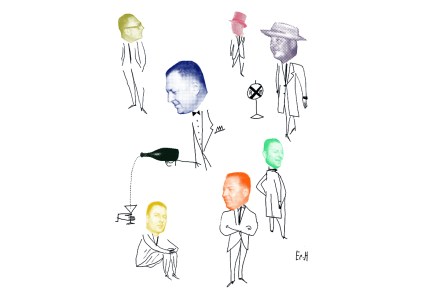
There are some characters who infuse literature and life with disproportionate zest. The nature of their vocations is less relevant than the fervency they bring to the job, which is what makes them stand up off the page and sail through time. Lucius Beebe, who kept a Rolls-Royce and a Bentley, favored bowler hats and evening dress and wrote a column for the old New York Herald Tribune in the 1930s and then for Gourmet until his death in 1966, sits high up on my list of zestful characters who go the distance: militantly old-fashioned, never out-of-date. The association with the estimable, sadly deceased Gourmet justifies talking about Beebe under the food heading as much as any other, even though he did not always write about food as such.

beebe

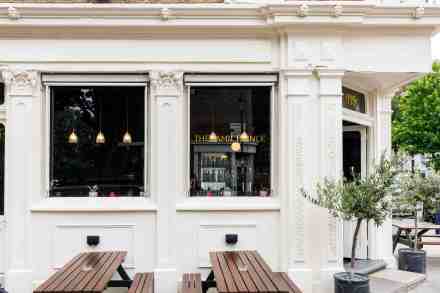
I’ve found the only gastropub worth eating at

The gastropub, an invention of the early 1990s, is a terrible idea. They burst on to the scene when breweries were made to sell off many of their pubs for a song to make way for competition, encouraging Marco Pierre White wannabes to snap them up and replace cheese sandwiches and pork scratchings with kidneys on toast and anything that could be put together in a kitchen the size of a shoebox. Many of them have food prepared off-premises but charge restaurant prices. There are no proper tablecloths, the glasses are made to survive if dropped on concrete floors and it all feels a bit like going round to your friend’s house for a substandard dinner party.