Fiction

After the party: One of Us, by Elizabeth Day, reviewed

From our UK edition

This is the sixth novel and tenth book overall by the highly successful journalist and podcaster Elizabeth Day. She hit her stride as an author with her third novel Paradise City (2015), which was leaps and bounds ahead of her first two in terms of narrative propulsion. Her next was what might be considered her breakout book, The Party (2017), after which came Magpie (2021).  One of Us returns to the characters and story of The Party, but it can easily be read as a standalone. Day has said that the earlier novel was partly inspired by reading The Great Gatsby at the age of 12; and while she has conceded that no one can write like F.

No passive utopia: Tibetan Sky, by Ning Ken, reviewed

From our UK edition

We often forget to ascribe agency to modern Tibet. Politically, it seems to lie mute in the behemoth shadow of China. Culturally, we encounter it more as the backdrop to journeys of self-discovery than a producer of modern culture in its own right. But the villages of the Tibetan plateau are defiantly cosmopolitan in Ning Ken’s novel, the first by this important Chinese writer to be translated into English. Sardonic and erudite, it’s the only major literary treatment of Sino-Tibetan relations to appear in English in decades. The author belongs to the generation of such era-defining Chinese novelists as Mo Yan and Yan Lianke, publishing his first fiction in the heady days of reform and opening-up.

A supernatural western: Tom’s Crossing, by Mark Z. Danielowski, reviewed

From our UK edition

Mark Z. Danielewski is best known for his House of Leaves, a typographically delirious horror novel about a manuscript written by a blind man describing a film which showed an impossible house. It seemed to exhaust a particular kind of postmodernism of footnotes, cryptography, metatexts, pop culture and more, yet remained at heart a story about grief. Tom’s Crossing is more immediately accessible, but it is every bit as clever and even more emotionally devastating. The bulk of the action takes place over five days running up to Halloween in 1982, although with a preface, ‘Some of what happened before’, and a longer epilogue, ‘Some of what happened after’.

A prolonged love affair: The Two Roberts, by Damian Barr, reviewed

From our UK edition

For a time, Robert Colquhoun and Robert MacBryde were at the heart of the in-crowd. Stories of Francis Bacon, Lucian Freud and their wartime circle often make reference to the two young painters from Scotland. Feted in the 1940s for their modernist styles – Colquhoun typically portraying figures, MacBryde preferring still life scenes – they later lapsed into painful, drink-sodden obscurity. Damian Barr’s novel, The Two Roberts, is a tender and evocative act of resurrection. It portrays the men’s lives from the time of their first meeting as students at Glasgow School of Art to the moment in the mid-1950s when, penniless and out of fashion, they retreated to an ancient cottage in Suffolk.

Glamour and intrigue: The Silver Book, by Olivia Laing, reviewed

From our UK edition

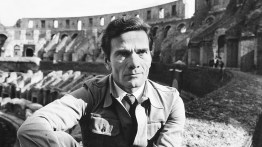
Olivia Laing has had a productive couple of years. The Silver Book arrives hot on the heels of The Garden Against Time, a memoir-cum-environmentalist treatise published in 2024. It is a novel of stunning imaginative power that was apparently written in just three months. Set in 1975, during the making of two great works of Italian cinema, Federico Fellini’s Casanova and Pier Paolo Pasolini’s Salò, it is suffused with the glamour and intrigue of these filmmakers’ worlds. It offers a fictional retelling of the events that led up to Pasolini’s murder – a crime that remains unsolved – on 2 November.

The joy of a miserable literary Christmas

From our UK edition

A Christmas Carol is pretty well unavoidable around now, with Little Women trailing somewhat behind. There’s no shortage of alternative literary Christmases among the classics, however, often less sweetly heartwarming and more invigoratingly grumpy. Nigel Molesworth, it will be remembered, foiled all attempts to inflict A Christmas Carol on him. ‘It is just that there is something about the Xmas Carol which makes paters and grown-ups read with grate XPRESION, and this is very embarassing [sic] for all.’ For the Molesworths among us, there are plenty of alternatives to be had. Sometimes these are depictions of Christmas where no Christmas should be occurring.

An unconventional orphan: Queen Esther, by John Irving, reviewed

From our UK edition

Back in the 1980s and 1990s everyone read John Irving, or so it seemed. You had to have a copy of A Prayer for Owen Meany, The World According to Garp, The Hotel New Hampshire and The Cider House Rules. After a while even the most obtuse reader realised that a novel by John Irving was very likely to contain elements that had appeared in other John Irving novels. In fact, a friend of mine invented John Irving Bingo: cross off a box every time one of the following is mentioned: an orphanage; bears; Vienna; sex that is in some kind of way weird; and sudden acts of violence, usually brought about by ill luck or something worse.

Alice in Nightmareland: The Matchbox Girl, by Alice Jolly, reviewed

From our UK edition

Vienna, 25 July 1934 is a significant date in Austria’s history. But in The Matchbox Girl, the big events happen offstage, the world seen entirely through the eyes of its youthful narrator. We focus not on the assassination of Chancellor Dollfuss and a failed Nazi coup, but the children’s hospital, where 12-year-old Adelheid Brunner is waiting to be assessed for admission because she’s mute – designated ‘special’. Or, as her grandmother puts it, hopeless, ‘an idiot’. In the tall, shabby hospital, the young inmates are a protected community, closely observed by a team of specialist doctors, among them young Hans Asperger, later to find fame with his syndrome. Sister Victorine, a patient, saintly nun, oversees the gaggle of unruly, sometimes frenzied children.

A Faustian pact: The School of Night, by Karl Ove Knausgaard, reviewed

From our UK edition

The fourth novel in Karl Ove Knausgaard’s spooky supernatural series differs from the others in that it is a standalone and doesn’t involve previous characters. Gone, too, are the multiple narrators; and there is only the briefest mention of a new star in the sky – which in the other three books coincided with all sorts of inexplicable occurrences. But it is no less compelling. This is the story of an arrogant young Norwegian, Kristian Hadeland, who arrives in London in 1985 to study photography at a prestigious art college. Though enthusiastic about his subject, he finds it hard to accept the constructive criticism of his lecturers.

A philosophical quest: A Fictional Inquiry, by Daniele del Giudice, reviewed

From our UK edition

A researcher arrives in Trieste to piece together the life of a well-known literary figure. In cafés, bookshops and hospitals he visits the friends and lovers who were part of the writer’s circle. Now dying themselves, they share echoes of a literary scene that has long since dispersed. Women recall how they were celebrated in poetry; men how their conversation sparkled. Someone remembers how the writer once asked if he might immortalise one of his witticisms in his work: ‘Forty years ago I made a joke in a bar, and he said “Oh that’s good! Will you give it to me? I want to put it in my novel.’” But the proposed novel never came. At the heart of this short, dreamlike book is a gap: the great writer around whom this literary society orbited never published anything.

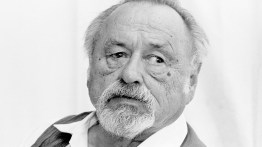
Inside Jim Harrison’s life of excess

Todd Goddard opens his biography of Jim Harrison, the first since the poet’s death in 2016, with an account of a 37-course meal Harrison once consumed in France, over the course of 11 hours. Harrison composed a comic recital of the event, “A Really Big Lunch” for the New Yorker. He loved gourmet dining to the point of gout and revered alcohol as well, guzzling potent vintages in quantity. “Eat the world” was the phrase Harrison lived by, Goddard tells us, which alludes to an appetite for all existence. The cumulative effect of such global consumption is evident on the cover of Devouring Time: Jim Harrison, a Writer’s Life.

jim harrison

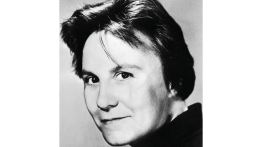
Another collection of Harper Lee’s writings arises

Harper Lee’s To Kill a Mockingbird hardly needs an introduction, as I expect everyone in the world has read it, or has seen the film starring Gregory Peck. (If you haven’t read it, perhaps you should.) Lee, incidentally, went to visit the film set, and had this to say about Peck: “an inspired performance. In some mysterious way, Gregory Peck’s Atticus Finch transcended illusion.” If that seems a tad clichéd and not especially insightful, then I’m afraid to say that this is the general tenor of the nonfiction pieces in The Land of Sweet Forever, alongside eight previously unseen short stories. Go Set a Watchman, a novel which was largely viewed as To Kill a Mockingbird in embryo, appeared ten years ago, to not much acclaim.

A satirical portrait of village life: Love Divine, by Ysenda Maxtone Graham, reviewed

From our UK edition

Love Divine, the debut novella by Ysenda Maxtone Graham, is set in the leafy, fictional parish of Lamley Green and weaves together a tableau of stories about the community. The title comes from the hymn ‘Come Down, O Love Divine’; but beneath this bourgeois Church of England world of round-robins and milky tea is a satirical portrait of a parish with a dark underbelly. Maxtone Graham perfectly captures hypocritical English chit-chat, and the polyphony of perspectives works well. The central thread concerns Lucy Fanthorpe, 54, who is hit by the sudden death of her beloved husband Nick and the gradual realisation that he might have been having an affair. One of my favourite characters is Hugh, the lonely schoolmaster.

Give Andrew Miller the Booker

From our UK edition

The winner of this year’s Booker Prize will be announced tonight. Of the six shortlisted novels, Andrew Miller’s The Land in Winter looks like a good bet for the £50,000 award. It might even be a contender for best Booker novel ever. The prize’s judges have been known to make strange calls – and always bet responsibly! – but the odds on Miller are good. The story takes place against the backdrop of snowbound Britain’s ‘Big Freeze’ between December 1962 and February 1963. ‘For a mile from the Kent coast,’ Miller writes, ‘the sea had turned to pack ice.’ This was the time of Beeching, Babycham, Benny Hill, Acker Bilk, Dr Kildare, the Daily Herald, the Kray twins, London smog, shillings in the meter, the H-bomb and flying saucers.

Bernard Cornwell: ‘I don’t believe in writer’s block’

From our UK edition

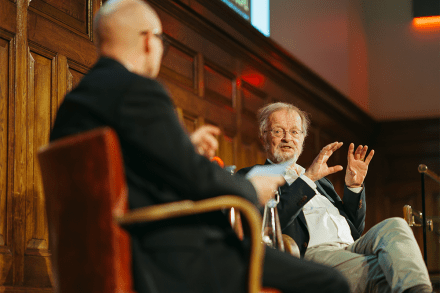
They say never meet your heroes, but Bernard Cornwell didn’t disappoint. Knowing I’m a superfan, the events team at The Spectator asked me to interview him on stage on Monday and he was everything you could hope for: funny, candid, clever. The default register of very successful people in my experience is insincere modesty, but Cornwell was something different – falsely immodest. That is to say, there were moments when he blew his own trumpet, but in a way clearly intended to be ironic. The lasting impression was of someone completely at ease with his achievements – not puffed up, but justifiably proud. Few authors can match Cornwell’s accomplishments.

Farewell to Lyra: The Rose Field, by Philip Pullman, reviewed

From our UK edition

In the middle of The Rose Field, the third volume of Philip Pullman’s The Book of Dust trilogy, Lyra has a conversation with an angel about storytelling. What matters most in a dream, says Lyra, is not information but emotion. It reads like Pullman’s own manifesto: the power of the His Dark Materials and Book of Dust novels is how much they make us feel – about the tie between characters and their daemons, the fear of Lyra’s sinister mother Mrs Coulter, the love between Will and Lyra, the protectiveness of the courageous pot boy Malcolm Polstead... The driving emotional force that carries us through The Rose Field is our desire to see Lyra and her daemon Pan reconciled.

Trouble in Tbilisi: The Lack of Light, by Nino Haratischwili, reviewed

From our UK edition

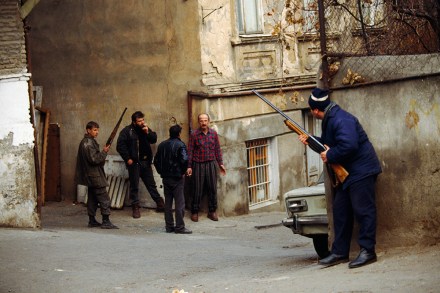
For a newly independent Georgia, the 1990s were a dark time literally and figuratively, as civil war raged, criminality flourished and the power stayed off. The Lack of Light, Nino Haratischwili’s fourth novel to be translated into English, turns that darkness into a gripping story about the power and pitfalls of female friendship that seeks to unpick the horrors of that decade. The narrative opens, briefly, in Tbilisi in 1987. The four protagonists – Keto, Dina, Nene and Ira – are on a schoolgirl mission to hang out in the Botanical Garden after hours. The escapade introduces the girls, who are all neatly – too neatly – ascribed various characteristics.

A literary Russian doll: The Tower, by Thea Lenarduzzi, reviewed

From our UK edition

A girl in a tower. The words trigger instant curiosity. Who is she? Who locked her away, and why? Was it punishment, or sequestration to keep her safe? Thea Lenarduzzi’s The Tower is a literary Russian doll, one story concealed within another, blurring identities, blocking memory. A far from reliable narrator – ‘let’s call her T’ – steers us between fiction and real life while the author herself occasionally amends the telling. Clues are offered as we turn the pages, but we may have misread some of them, or been misled, and the conclusion upends expectations. If this is all beginning to sound rather too Fernando Pessoa, breathe easy. Lenarduzzi’s book is a compelling read, elegant and artful, intertwining myth, fairy tale and reality. Is it a novel or a memoir?

Brown

Is Dan Brown finished?

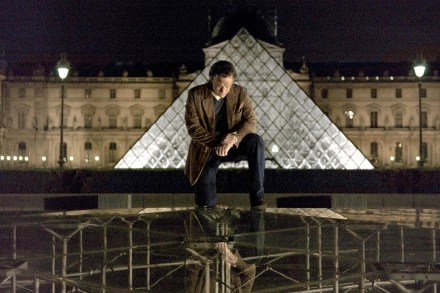
In a moment of modesty that he’s never quite been allowed to forget, Stephen King once declared himself “the literary equivalent of a Big Mac and fries.” This is self-deprecation taken too far. As the author of more than 60 books in a career that has spanned more than half a century, King’s writings have roamed over numerous genres: horror, most famously, but also mystery, suspense, science fiction, fantasy and a surprisingly dour brand of social realism. All are delivered in his trademark muscular prose, dappled with moments of stylistic brilliance. The real purveyor of literary junk food is surely Dan Brown, whose works of fiction mirror far more accurately the salt-rich, nutrition-free offerings of the hamburger giant than anything King has ever produced. If Mr.

An unheroic hero: Ginster, by Siegfried Kracauer, reviewed

From our UK edition

Siegfried Kracauer (1889-1966) made his name as a film theorist. His critical writings have long been available in English, and now his fiction is finally getting its due. The first of his two novels – published in Germany in 1928, five years before Kracauer fled the rise of Nazism – uses as its title his journalistic pseudonym. The protagonist inherits other autobiographical details, too, starting from the opening sentence: ‘When the war broke out, Ginster, a young man of 25, found himself in the provincial capital of M.’ Germany’s descent into the Great War is sketched in vividly cubist images. One character ‘consisted of three spheres stacked on top of one another to form the outline of a bowling pin’; another’s ‘figure possessed the amiability of a rectangle’.