J.S. Barnes

Is Dan Brown finished?

In a moment of modesty that he’s never quite been allowed to forget, Stephen King once declared himself “the literary equivalent of a Big Mac and fries.” This is self-deprecation taken too far. As the author of more than 60 books in a career that has spanned more than half a century, King’s writings have roamed over numerous genres: horror, most famously, but also mystery, suspense, science fiction, fantasy and a surprisingly dour brand of social realism. All are delivered in his trademark muscular prose, dappled with moments of stylistic brilliance. The real purveyor of literary junk food is surely Dan Brown, whose works of fiction mirror far more accurately the salt-rich, nutrition-free offerings of the hamburger giant than anything King has ever produced. If Mr.
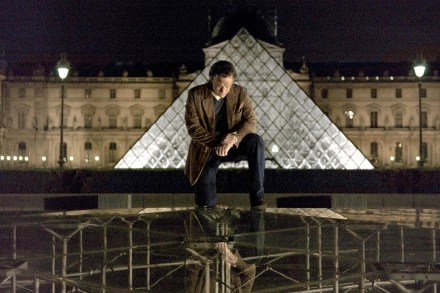

Brown

Bored of the rings: ‘wokery’ takes on Tolkien

"Woke” is a term much overused by those on both sides of the culture war but — a little like pornography — while it may be difficult to define, you absolutely know it when you see it. The capture of the entertainment industry by an ideology — perhaps more accurately described as a group of roughly consanguineous ideas that seem, superficially, to be the Right, Kind and Thoughtful beliefs to hold — seems now to be absolute. Fiction of all kinds has been affected, but heroic narratives have proved especially vulnerable, perhaps because of the size and dedication of their audiences. You will doubtless know the kind of thing I mean.

Rings

Christopher Priest was a grievously underrated novelist

There really ought to be a word to describe the dispiriting realization that a great writer has slipped through our fingers without the culture at large ever quite appreciating what’s been lost. The novelist Christopher Priest, who died earlier this year of cancer at the age of eighty, was one such figure. It would be glib to describe him as the nearly-man of English fiction, for this wasn’t quite the case — instead his career represented a sequence of missed opportunities for the world beyond his chosen genre to recognize his skill and quiet profundity. In some ways, the early part of his publication history closely resembles that of J.G. Ballard without the mid-career renaissance Ballard enjoyed.

Priest