Philip Womack

Philip Womack is a writer, an ex-private tutor and a parent.

In praise of the paperback

From our UK edition

At long last, hardback books, it seems, are finally drifting into, if not obsolescence, then at least abeyance. It turns out that punters are chary of buying hefty tomes, and so publishers are considering putting books out in paperback first. For once, this is a literary development that I will be applauding.  For centuries, hardback books were the only thing you could buy. In the 1920s, it was impossible to stroll along with a paperback of Woolf’s To the Lighthouse in your pocket to impress the ladies, since paperbacks of that sort did not exist. They are a relatively new beast on the literary scene. It was Allen Lane who brought the sixpenny paperback into the world in the 1930s, a feat for which he should be lauded, on a par with Alexander Fleming.

Don’t count out hereditary peers just yet

From our UK edition

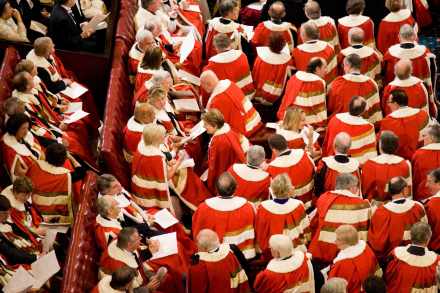
The ermines have been mothballed; the coronets stowed away. The United Kingdom has, at last, thrown out the hereditary peers from Parliament. This levelling process, begun by Tony (not yet Lord) Blair, and stymied for decades, has come to an end. It’s as if the lion and the unicorn had been torn from the royal coat of arms, and ordered to find other work. No longer will we gawp at the peers processing at the opening of Parliament, arrayed alongside their glittering spouses, their titles and names a reminder of centuries of history. Our parliament - the most ancient in the world - has lost that lustre for ever, and will increasingly resemble the bland, managerial talking-shops of Europe.

School choir music is in peril

From our UK edition

You’d be hard pressed to find a more continuous strand in British culture than the chorister. They’ve been warbling in Westminster Abbey since the 1380s. Every national occasion is marked by choirs, the choristers dazzling in their splendidly anachronistic ruffs and robes, present at moments of collective joy or sadness. Funerals, memorial services, royal weddings, carols from King’s College, Cambridge. They are ornaments to our culture. Oodles of composers, musicians and singers, professional or not, have, over hundreds of years, stood in the choir stalls at dawn, at midnight, and lifted their voices to the vaulting roofs. Some of the most beautiful music in the canon was written for choirs: Gregorian chants, Thomas Tallis.

Shakespeare isn’t difficult

From our UK edition

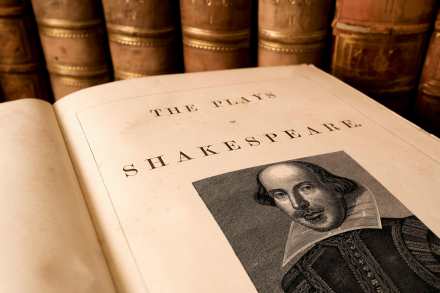
Chloe Zhao may have co-written and directed Hamnet (a film about William Shakespeare’s son), but she claims that she couldn’t understand Shakespeare’s words and had to rely on the actor Paul Mescal to help her. You might have thought that Zhao, who spent her sixth form years at Brighton College (where, one hopes, she at least sniffed at some form of Shakespeare), could have bestirred herself to read one of the many editions with glossaries, or even to bone up on the CliffsNotes, but no. Instead, she is simply contributing to the enduring, frustrating idea that reading Shakespeare is ‘difficult’, as if it were on a par with analytical philosophy or Judith Butler wanging on about hegemonies.

Everyone has forgotten party etiquette

From our UK edition

Growing up, it was made very clear to us that if you RSVPed in the positive to a party, you were absolutely honour-bound to turn up. It was the height of rudeness to chuck. How things have changed. These days, people don’t even bother RSVPing: it’s too difficult. Some are even too lazy to click a thumbs-up on a WhatsApp. More charitably, perhaps they have all suffered collective memory loss, or don’t understand the French. I know what you do when you get an email invitation, or when somebody texts you with the date and time of a party. You think ‘how nice’, and then do absolutely nothing about it until the week before.

No, Christmas isn’t pagan

From our UK edition

At some point during this Advent season and the coming of Christmas, you will log on to your computer, and you will see somebody smugly opining that ‘actually Christmas is a pagan festival’. This person will not know anything about pagans, bar some fuzzy ideas about equinoxes (always with the equinoxes) and sacrifice. The reasons given for this will vary: we put up trees in our houses and decorate them, just like pagans! We light candles! And we give presents, like the Romans did at Saturnalia or the Vikings at Yule or [insert random pagan festival here]. And 25 December is actually the festival of the Roman god Sol Invictus! And it’s near the solstice! And doesn’t it all have something to do with Mithras anyway?

William Atkinson, Andreas Roth, Philip Womack, Mary Wakefield & Muriel Zagha

From our UK edition

35 min listen

On this week’s Spectator Out Loud: William Atkinson reveals his teenage brush with a micropenis; Andreas Roth bemoans the dumbing down of German education; Philip Womack wonders how the hyphen turned political; Mary Wakefield questions the latest AI horror story – digitising dead relatives; and, Muriel Zagha celebrates Powell & Pressburger’s I Know Where I’m Going! Produced and presented by Patrick Gibbons.

How the hyphen turned political

From our UK edition

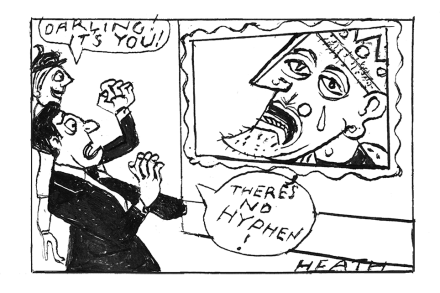
When Buckingham Palace announced that its errant prince, Andrew, would be known as boring old Andrew Mountbatten Windsor, some surprise arose at the initial omission of the hyphen from his surname. The hyphen is, unlike King Lear’s whoreson zed, a necessary thing; without it, names float, unmoored, unsure whether they are attached to first name or surname. The hyphen, despite Lord Tennyson’s ‘idiotic’ hatred of them in his younger years, is a bringer of joy. It joins disparate parts, meaning, as it does, ‘under one’, from the Greek ‘huph’ hen’. It is the most comforting of punctuation marks, despite its ephemerality, slipping, fawn-like, in and out of usage. Who now writes mantle-piece or black-berries?

Another collection of Harper Lee’s writings arises

Harper Lee’s To Kill a Mockingbird hardly needs an introduction, as I expect everyone in the world has read it, or has seen the film starring Gregory Peck. (If you haven’t read it, perhaps you should.) Lee, incidentally, went to visit the film set, and had this to say about Peck: “an inspired performance. In some mysterious way, Gregory Peck’s Atticus Finch transcended illusion.” If that seems a tad clichéd and not especially insightful, then I’m afraid to say that this is the general tenor of the nonfiction pieces in The Land of Sweet Forever, alongside eight previously unseen short stories. Go Set a Watchman, a novel which was largely viewed as To Kill a Mockingbird in embryo, appeared ten years ago, to not much acclaim.

What makes a gentleman?

From our UK edition

The venerable magazine GQ, or Gentlemen’s Quarterly, has issued some 125 diktats about what it takes to be a gentleman in this world of Zoom calls and equality. GQ is, however, no longer quarterly, and some might say it hasn’t been read by gentlemen for some time. Ought we, then, to listen to it? Many of its ‘expert’ pronouncements are baffling: what is ‘popping a Zyn’? Most of the suggestions are about bringing fancy olive oil or luxury candles to parties. (Note to readers, though you won’t need it: don’t.) It also suggests that gentlemen should beclothe themselves in ‘loungewear’, a word which ought to make anyone shudder. Well, I’m sorry, but unless it’s a silk dressing gown from Jermyn Street, I think not.

Why do people feel sorry for me for going to boarding school aged nine?

From our UK edition

Sometimes, when I’m chatting about childhood, at some point it will become clear I went to a boarding school from the age of nine. Reactions can be comical. ‘You poor thing!’ an interlocutor might gasp, gripping my forearm, no doubt picturing cold showers and cruelty. I’ve always responded with bemusement, since my experience largely featured comfort and crumpets. I loved my prep school – Dorset House in West Sussex. It was a world in itself, enclosed and beguiling. In some ways it was unchanging, such as the graffitied Latin primers which were the same our grandparents had used. Yet it could be surprisingly forward-looking, as when it made a satellite link-up to a school in America, many years before the internet.

Tom Slater, Justin Marozzi, Iben Thranholm, Angus Colwell & Philip Womack

From our UK edition

28 min listen

On this week’s Spectator Out Loud: Tom Slater says that Britain is having its own gilet jaunes moment; Justin Marozzi reads his historian’s notebook; Iben Thranholm explains how Denmark’s ‘spiritual rearmament’ is a lesson for the West; Angus Colwell praises BBC Alba; and, Philip Womack provides his notes on flatmates. Produced and presented by Patrick Gibbons.

The coming crash, a failing foster system & ‘DeathTok’

From our UK edition

45 min listen

First: an economic reckoning is looming ‘Britain’s numbers… don’t add up’, says economics editor Michael Simmons. We are ‘an ageing population with too few taxpayers’. ‘If the picture looks bad now,’ he warns, ‘the next few years will be disastrous.’ Governments have consistently spent more than they raised; Britain’s debt costs ‘are the worst in the developed world’, with markets fearful about Rachel Reeves’s Budget plans. A market meltdown, a delayed crash, or prolonged stagnation looms. The third scenario, he warns, would be the bleakest, keeping politicians from confronting Britain’s spendthrift state. We need ‘austerity shock therapy’ – but voters don’t want it.

Wanted: a flatmate for the Pope

From our UK edition

Pope Leo XIV has announced, though not in the form of a bull, that he will be sharing the Apostolic Palace not just with God, but with flatmates. (Being American, he probably refers to them as ‘roomies’.) While this might seem an odd move for God’s Vicegerent on Earth, even the sacrosanct precincts of the Vatican City are not, it seems, immune from the housing crisis. Living hugger-mugger places the Holy Father on a par with almost everyone who’s ever lived. Jesus ‘roomed’ with his apostles, after all, and for centuries kings and queens slept among their attendants. The Pope won’t be advertising for his companions, I imagine, but even so, one does wonder. Will he plump for the best genuflecter, or the one most likely to replace the loo roll?

Goodbye to the letters of introduction

From our UK edition

Re-reading Agatha Christie’s A Murder is Announced this week (it’s the summer holidays! I can relax like anyone else!), I was struck by one of Miss Marple’s wise pronouncements: And that’s really the particular way the world has changed since the war. Take this place, Chipping Cleghorn, for instance. It’s very much like St Mary Mead where I live. Fifteen years ago one knew who everybody was. The Bantrys in the big house – and the Hartnells and the Price Ridleys and the Weatherbys… They were people whose fathers and mothers and grandfathers and grandmothers, or whose aunts and uncles, had lived there before them.

The tragic decline of children’s literature

From our UK edition

The other day, leafing through T.H. White’s The Once and Future King, which enchanted me as a child, I was bedazzled all over again. This time, though, it wasn’t the plot and characters that gripped me, but something better: vocabulary. ‘Summulae Logicales’, ‘Organon’, ‘astrolabe’, ‘metheglyn’, ‘snurt’, ‘craye’, ‘varvel’, ‘austringer’, ‘yarak’: all appear, exuding magic, within the first few pages. Ten points if you know what ‘yarak’ means. The Once and Future King (1958) is a masterful retelling of the Arthurian cycle, both comic and tragic, following the young Arthur, known as ‘Wart’, as he grows into the legendary King; and these fascinating words are not pretentious, but appropriate.

The harrowing true story behind Barry Lyndon

From our UK edition

Stanley Kubrick’s swooningly gorgeous film, Barry Lyndon, has just been re-released in cinemas to mark its 50th anniversary. Much ink has been spilled about its hypnotic beauty, its lavish attention to historical detail, its dreamy, luscious, candlelit photography. Yet William Thackeray’s bitingly satirical novel of the same name is often neglected – as is the true, harrowing story that inspired it. The book Barry Lyndon (first published in 1844) bore its genesis from the story of a real adventurer, Andrew Robinson Bowes, whose cruelty to his wife, the Countess of Strathmore, was notorious.

How to make America read again

Christopher J. Scalia, in 13 Novels Conservatives Will Love (But Probably Haven’t Read) hopes not only to refresh “how conservatives talk about fiction,” but also to disabuse the left of the notion that “conservative thought is an oxymoron.” He’s set himself a difficult task, since, as he notes, nobody reads any more; whether this is truer of conservatives than of the left, I don’t know. Using the form of a book in order to attract people who don’t read might seem odd, but Scalia knows his audience and his light, avuncular style proves engaging throughout. He’s also chosen a structure that even the most TikTok-numbed zoomer might appreciate: the extended listicle.

Scalia

A meeting of misfits: Seascraper, by Benjamin Wood, reviewed

From our UK edition

The sea, as you might expect, looms large in Benjamin Wood’s finely tuned novella Seascraper. Thomas Flett – one of the most touching protagonists I’ve encountered in recent years – is barely out of his teens, but he’s already battered by toil. His days are spent shanking – gathering shrimps on the beach – with only a horse and cart for company. The setting, gorgeously evoked, is Longferry, a grim coastal town in 1950s Britain. Tom himself appears as if he’s been transplanted from the 19th century. The sea, though, brings change, when hidebound past comes crashing against thrusting future. Tom has a stifling oedipal relationship with his mother, who gave birth, aged 16, after an affair with her history teacher.

Pixels are replacing paper

From our UK edition

Those of us of a certain vintage will remember the National Record of Achievement, a brown, crummy-looking folder, sent (personally, I like to think) by Tony Blair to every schoolchild in the country. We were encouraged to keep our certificates within its corporate leaves, from Swimming Level 1 Goldfish to Duke of Edinburgh. Presumably, before the government had this idea, people didn’t know what to do with certificates. Perhaps they were used as kindling, or eaten. Receiving a certificate was a moment of fulfilment. If it came in the post, anticipation was part of the process. Being awarded one in person had extra frisson. Some certificates were better than others. The Associated Board of Royal Schools of Music (how the name hums with authority!