Fiction

Inside Jim Harrison’s life of excess

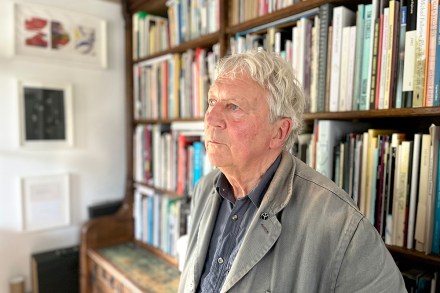
Todd Goddard opens his biography of Jim Harrison, the first since the poet’s death in 2016, with an account of a 37-course meal Harrison once consumed in France, over the course of 11 hours. Harrison composed a comic recital of the event, “A Really Big Lunch” for the New Yorker. He loved gourmet dining to the point of gout and revered alcohol as well, guzzling potent vintages in quantity. “Eat the world” was the phrase Harrison lived by, Goddard tells us, which alludes to an appetite for all existence. The cumulative effect of such global consumption is evident on the cover of Devouring Time: Jim Harrison, a Writer’s Life.

jim harrison

Another collection of Harper Lee’s writings arises

Harper Lee’s To Kill a Mockingbird hardly needs an introduction, as I expect everyone in the world has read it, or has seen the film starring Gregory Peck. (If you haven’t read it, perhaps you should.) Lee, incidentally, went to visit the film set, and had this to say about Peck: “an inspired performance. In some mysterious way, Gregory Peck’s Atticus Finch transcended illusion.” If that seems a tad clichéd and not especially insightful, then I’m afraid to say that this is the general tenor of the nonfiction pieces in The Land of Sweet Forever, alongside eight previously unseen short stories. Go Set a Watchman, a novel which was largely viewed as To Kill a Mockingbird in embryo, appeared ten years ago, to not much acclaim.

A satirical portrait of village life: Love Divine, by Ysenda Maxtone Graham, reviewed

From our UK edition

Love Divine, the debut novella by Ysenda Maxtone Graham, is set in the leafy, fictional parish of Lamley Green and weaves together a tableau of stories about the community. The title comes from the hymn ‘Come Down, O Love Divine’; but beneath this bourgeois Church of England world of round-robins and milky tea is a satirical portrait of a parish with a dark underbelly. Maxtone Graham perfectly captures hypocritical English chit-chat, and the polyphony of perspectives works well. The central thread concerns Lucy Fanthorpe, 54, who is hit by the sudden death of her beloved husband Nick and the gradual realisation that he might have been having an affair. One of my favourite characters is Hugh, the lonely schoolmaster.

Give Andrew Miller the Booker

From our UK edition

The winner of this year’s Booker Prize will be announced tonight. Of the six shortlisted novels, Andrew Miller’s The Land in Winter looks like a good bet for the £50,000 award. It might even be a contender for best Booker novel ever. The prize’s judges have been known to make strange calls – and always bet responsibly! – but the odds on Miller are good. The story takes place against the backdrop of snowbound Britain’s ‘Big Freeze’ between December 1962 and February 1963. ‘For a mile from the Kent coast,’ Miller writes, ‘the sea had turned to pack ice.’ This was the time of Beeching, Babycham, Benny Hill, Acker Bilk, Dr Kildare, the Daily Herald, the Kray twins, London smog, shillings in the meter, the H-bomb and flying saucers.

Bernard Cornwell: ‘I don’t believe in writer’s block’

From our UK edition

They say never meet your heroes, but Bernard Cornwell didn’t disappoint. Knowing I’m a superfan, the events team at The Spectator asked me to interview him on stage on Monday and he was everything you could hope for: funny, candid, clever. The default register of very successful people in my experience is insincere modesty, but Cornwell was something different – falsely immodest. That is to say, there were moments when he blew his own trumpet, but in a way clearly intended to be ironic. The lasting impression was of someone completely at ease with his achievements – not puffed up, but justifiably proud. Few authors can match Cornwell’s accomplishments.

Farewell to Lyra: The Rose Field, by Philip Pullman, reviewed

From our UK edition

In the middle of The Rose Field, the third volume of Philip Pullman’s The Book of Dust trilogy, Lyra has a conversation with an angel about storytelling. What matters most in a dream, says Lyra, is not information but emotion. It reads like Pullman’s own manifesto: the power of the His Dark Materials and Book of Dust novels is how much they make us feel – about the tie between characters and their daemons, the fear of Lyra’s sinister mother Mrs Coulter, the love between Will and Lyra, the protectiveness of the courageous pot boy Malcolm Polstead... The driving emotional force that carries us through The Rose Field is our desire to see Lyra and her daemon Pan reconciled.

Trouble in Tbilisi: The Lack of Light, by Nino Haratischwili, reviewed

From our UK edition

For a newly independent Georgia, the 1990s were a dark time literally and figuratively, as civil war raged, criminality flourished and the power stayed off. The Lack of Light, Nino Haratischwili’s fourth novel to be translated into English, turns that darkness into a gripping story about the power and pitfalls of female friendship that seeks to unpick the horrors of that decade. The narrative opens, briefly, in Tbilisi in 1987. The four protagonists – Keto, Dina, Nene and Ira – are on a schoolgirl mission to hang out in the Botanical Garden after hours. The escapade introduces the girls, who are all neatly – too neatly – ascribed various characteristics.

A literary Russian doll: The Tower, by Thea Lenarduzzi, reviewed

From our UK edition

A girl in a tower. The words trigger instant curiosity. Who is she? Who locked her away, and why? Was it punishment, or sequestration to keep her safe? Thea Lenarduzzi’s The Tower is a literary Russian doll, one story concealed within another, blurring identities, blocking memory. A far from reliable narrator – ‘let’s call her T’ – steers us between fiction and real life while the author herself occasionally amends the telling. Clues are offered as we turn the pages, but we may have misread some of them, or been misled, and the conclusion upends expectations. If this is all beginning to sound rather too Fernando Pessoa, breathe easy. Lenarduzzi’s book is a compelling read, elegant and artful, intertwining myth, fairy tale and reality. Is it a novel or a memoir?

Brown

Is Dan Brown finished?

In a moment of modesty that he’s never quite been allowed to forget, Stephen King once declared himself “the literary equivalent of a Big Mac and fries.” This is self-deprecation taken too far. As the author of more than 60 books in a career that has spanned more than half a century, King’s writings have roamed over numerous genres: horror, most famously, but also mystery, suspense, science fiction, fantasy and a surprisingly dour brand of social realism. All are delivered in his trademark muscular prose, dappled with moments of stylistic brilliance. The real purveyor of literary junk food is surely Dan Brown, whose works of fiction mirror far more accurately the salt-rich, nutrition-free offerings of the hamburger giant than anything King has ever produced. If Mr.

An unheroic hero: Ginster, by Siegfried Kracauer, reviewed

From our UK edition

Siegfried Kracauer (1889-1966) made his name as a film theorist. His critical writings have long been available in English, and now his fiction is finally getting its due. The first of his two novels – published in Germany in 1928, five years before Kracauer fled the rise of Nazism – uses as its title his journalistic pseudonym. The protagonist inherits other autobiographical details, too, starting from the opening sentence: ‘When the war broke out, Ginster, a young man of 25, found himself in the provincial capital of M.’ Germany’s descent into the Great War is sketched in vividly cubist images. One character ‘consisted of three spheres stacked on top of one another to form the outline of a bowling pin’; another’s ‘figure possessed the amiability of a rectangle’.

Honeymoon from hell: Venetian Vespers, by John Banville, reviewed

From our UK edition

‘I am by trade a man of letters,’ Evelyn Dolman tells us as the curtain rises on Venetian Vespers. ‘I had a middling reputation in the period coming to be known, in our increasingly Frenchified age, as the fin de siècle, that is, the 1890s.’ If his writing mostly appears in the review sections, his marriage to Laura Rensselaer, the daughter of an American oil baron, is front-page stuff. But Laura has proved to be a distant, phantasmal partner. Even during the Dolmans’ sole night of physical intimacy, ‘it was as if, clasping me to her breast, she were at the same time looking aside and past my shoulder’. It moreover transpires that T. Willard Rensselaer, dead in mysterious circumstances, has cut his daughter out of his will.

A portrait of alienation: The Loneliness of Sonia and Sunny, by Kiran Desai, reviewed

From our UK edition

Twenty years on from winning the Booker Prize with The Inheritance of Loss, Kiran Desai returns with a vast masterpiece of a love story which has been longlisted for this year’s prize. Our two protagonists, Sonia and Sunny, come from wealthy neighbouring families in Allahabad, but both are in America when the novel begins. Sonia is in Vermont, working for the college library while finishing her studies, and Sunny is in New York, as a reporter for the Associated Press. When Sonia flees a coercive relationship after suffering depression and Sunny agrees to help a childhood friend choose a bride, they both return to India, where they encounter one another on a train from Delhi to Allahabad.

The short, restless life of Robert Louis Stevenson

From our UK edition

The discriminating Argentinian novelist Jorge Luis Borges once revealed his fondness for ‘hourglasses, maps, 18th-century typography, etymologies, the taste of coffee, and the prose of Stevenson’ – a list that was quirky and eclectic, adjectives that neatly encapsulate Robert Louis Stevenson himself. The story has often been told – but it’s a good one – of how the wiry, velvet-jacketed Stevenson emerged from Edinburgh’s haute bourgeoisie to become a hugely successful writer, before ending his shortish, sickly life on the Pacific island of Samoa in 1894, a revered expatriate married to a wilful American woman a decade his senior.

Hell is other academics: Katabasis, by R.F. Kuang, reviewed

From our UK edition

‘Katabasis, noun, Ancient Greek: The story of a hero’s descent to the underworld.’ R.F. Kuang’s latest novel is a promising adventure story full of magic and maths but let down by florid prose. When Alice Law, an American postgraduate student of ‘Analytic Magick’ at Cambridge, learns of the death of her chauvinist thesis supervisor Professor Grimes, she and her peer, Peter Murdoch, must rescue his soul from the eight courts of hell. Their journey comes with the debt of half a lifetime. But without Grimes, Alice is stuck in academic limbo on Earth, so she must pay this penalty and ‘beg for his life back from King Yama the Merciful, Ruler of the Underworld’. The hellscape they encounter differs from Dante’s vision.

Whitehall farce: Clown Town, by Mick Herron, reviewed

From our UK edition

It’s good to be back in the unspeakable awfulness of Slough House, the decaying London office block in which the security service’s rejects do battle not only with the nation’s enemies but also with each other. Clown Town is Mick Herron’s ninth novel in the series, though he has explored different aspects of Slough House’s skewed universe in seven other books. It follows on from its series predecessor, Bad Actors. The office is looking underpopulated these days. River Cartwright, the nearest thing the series has to a juvenile lead, is recovering from life-threatening injuries sustained in the line of duty and hoping against hope that they will not mean the end of his career as a spook.

Lives upended: TonyInterruptor, by Nicola Barker, reviewed

From our UK edition

‘Is it any good?’ a friend asked when he saw I was reading this book. ‘Yes,’ I said, ‘but it’s full of wankers.’ By that stage I was only up to page 24, but the remaining 184 pages did nothing to fundamentally alter my view. There is nothing intrinsically wrong with this. The works of, say, Geoffrey Chaucer and Jane Austen, not to mention thousands of others, would be considerably poorer if all the tiresome people were filtered out. But it does make it hard to read TonyInterruptor for more than 30 pages at a stretch. One has to pinch the bridge of the nose and go for a little walk.

An ill wind: Helm, by Sarah Hall, reviewed

From our UK edition

To read something by the Cumbria-born Sarah Hall is to enter a dizzying, earthy and often dystopian world where the elements rule and nature is blood red. Her nine previous short story collections and novels straddle life’s peripheries, often scratching at the limits of what it means to be human. ‘Mrs Fox’, one of her best known stories – and one of two for which she has won the BBC Short Story Prize – is a visceral tale about a woman who turns into a fox. In her 2021 novel Burntcoat, a virulent virus made Covid-19 look almost benign. Helm is a different beast again, one she has been working on for almost 20 years. Its title and main character is Britain’s only named wind, which hits the southwest slopes of Cross Fell, in Cumbria’s Eden Valley where Hall grew up.

A summer romance: Six Weeks by the Sea, by Paula Byrne, reviewed

From our UK edition

After Jane Austen’s death, her sister Cassandra destroyed the majority of her letters.  This act, often interpreted as an attempt to preserve Jane’s reputation, has had the opposite effect of fuelling fervent – at times prurient – speculation about what the letters contained. While Cassandra may simply have wished to shield her relatives from the lash of Jane’s sharp tongue, later writers, drawing on the author’s fiction and family lore, have surmised that the missing correspondence concealed evidence of a love affair. Such an affair formed the basis for Gill Hornby’s fine 2020 novel Miss Austen and now inspires Paula Byrne’s pleasant if unremarkable Six Weeks by the Sea.

Culture clash: Sympathy Tower Tokyo, by Rie Qudan, reviewed

From our UK edition

Language, it has been said, is the only true democracy – changed by the people that use it. But as with any democracy, there is plenty of disagreement about what alterations are either possible or permissible. Japanese uses three distinct writing systems – kanji, hiragana and katakana – and the relationship between two of them, kanji and katakana, is a key theme of last year’s prizewinning speculative fiction Sympathy Tower Tokyo by Rie Qudan – a lyrical, witty, satirical but meditative and meticulous text, now published in Jesse Kirkwood’s vibrant and faithful English translation. We are in the sprawling metropolis of Tokyo in the lightly altered mid-2020s.

Campus antics: Seduction Theory, by Emily Adrian, reviewed

From our UK edition

There is a fine tradition of campus novels that stretches from Evelyn Waugh’s Brideshead Revisited (1945) and Kingsley Amis’s Lucky Jim (1954) through Donna Tartt’s The Secret History (1992) and J.M. Coetzee’s Disgrace (1999) to Chad Harbach’s The Art of Fielding (2011) and Kiley Reid’s Come and Get It (2024). Emily Adrian’s Seduction Theory, her fourth novel for adults, shows the author’s awareness of her predecessors in the genre. One of its main characters even regards Pnin (1957), a campus novel by Vladimir Nabokov, as his comfort book. Ethan, the character in question, feels he needs comfort because he has cheated on his wife with their secretary.