Fiction

A satirical masterpiece: Blinding, by Mircea Cartarescu, reviewed

From our UK edition

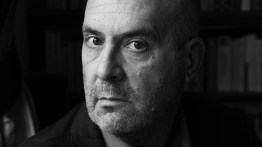
Before the 1989 revolution, Romania had seen nearly a century of polarisation – a fascist regime swiftly replaced by a communist one. In Blinding, Mircea Cartarescu’s first instalment of an ambitious, surrealist trilogy, that duality, along with other antagonisms central to existence, is represented by the motif of a butterfly. The novel was originally published in Romanian in 1996, and the title refers to the epiphany which, it’s suggested, can be achieved if life’s opposites are reconciled. We first meet the narrator, twentysomething Mircea, languishing in a squalid studio flat in Bucharest, his rapidly industrialising home city. He is writing his own ‘endless book’, his aim being absolute self-knowledge.

Time for a reckoning: Vigil, by George Saunders, reviewed

From our UK edition

George Saunders is at his most lively in the company of the dead. At ease with ghosts. In the 2022 Booker-winning Lincoln in the Bardo, Abraham Lincoln mourns his young son in a graveyard surrounded by a clamorous crowd of the newly deceased trying to be helpful. Grief, handled with sweet humour. But Saunders has not always been so gentle. His acclaimed first collection of stories, CivilWarLand in Bad Decline (1997), featured a landscape of grotesque theme parks populated by corpses, enslaved humans and ghosts. Even then, compassion edged in, rubbing shoulders with absurdist humour.  Saunders is a cradle Catholic, and the liturgy frequently surfaces in his stories; but his Catholicism has a humanist face, a vein of kindness running through his work. He is now a student of Buddhism.

A flying visit: Palaver, by Bryan Washington, reviewed

From our UK edition

I’ve never been to Tokyo, but sometimes I wonder: why bother with the plane ticket? The imagined Tokyo is more real than the actual city. For westerners, it is a place whose USP is its unreality: its irreducible strangeness, its intense Japaneseness. It’s a city where lonely souls go to bump against other lonely souls and everything is lost in translation. To spoil this fantasy with too much daylight would be to miss the point. On the surface, Bryan Washington’s Palaver isn’t in a hurry to push against these clichés. It follows an estranged mother and son who meet again in Japan many years after he has left the humidity and homophobia of Texas.

An intellectual farce: Rapture of the Deep, by Robert Irwin, reviewed

From our UK edition

If Robert Irwin had not existed, then Dan Brown, or better still Umberto Eco, would surely have had to invent him. In his Memoirs of a Dervish, the roller-blading, pinball-playing polymath reported: ‘It was in my first year in Oxford that I decided that I wanted to become a Muslim saint.’ Irwin, who died in 2024, first pursued that esoteric life goal in a Sufi monastery in Algeria. He returned to become not just a vastly erudite scholar of Arab Muslim culture but a madcap maverick of a novelist as well. As a writer, he loved paradox, surprise and reversal.

The serious business of games: Seven, by Joanna Kavenna, reviewed

From our UK edition

Joanna Kavenna is very serious about games. Her novels have a certain playful quality, even her debut Inglorious, where the humour and allusions are Mittel-european. More markedly ludic are her Lewis Carroll-esque fantasy about quantum physics, A Field Guide to Getting Lost and the Philip K. Dickish tech-dystopia of Zed. In Seven, however, it’s not just the style but the subject. As if to make clear that games are neither childish nor mere distractions, there is a pointed reference to Johan Huizinga’s study Homo Ludens¸ published on the eve of the second world war. The narrator here is working for a formidable philosopher in Oslo, whose current project is entitled ‘Thinking outside the Box about Thinking outside the Box’. (‘I’m serious,’ the narrator archly notes.

Bookshop blues: Service, by John Tottenham, reviewed

From our UK edition

A friendly admonition for the thwarted or struggling writer in your life: that tempting little job at the local bookshop might not be the best way to keep the show on the road until the Muse comes through. Would-be actors who take a front-of-house gig at the National Theatre aren’t constantly buttonholed by strangers raving about how brilliant Andrew Scott’s Hamlet was. Plus, of course, their more successful contemporaries will generally be elsewhere of an evening, doing shows of their own.

From riches to rags: The Effingers, by Gabriele Tergit, reviewed

From our UK edition

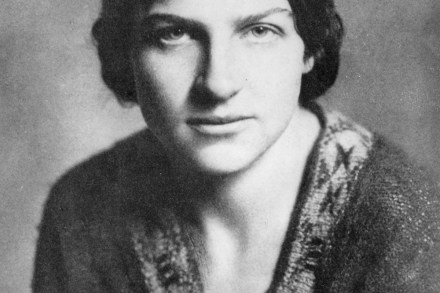
Sometimes the term ‘lost masterpiece’ proves to be little more than a publisher’s puff. At other times, however, a long-buried book that is dug up, dusted down and branded a classic is worthy of the accolade. That applies to Gabriele Tergit’s The Effingers. Originally published – and then promptly overlooked – in the author’s native Germany in 1951 and recently rediscovered and reappraised there, the novel, a vivid chronicle of German Jewish life over the course of 70 years, now appears in English for the first time. Opening in 1878, Tergit charts the progress of siblings Paul and Karl Effinger as they leave their provincial hometown in the south of Germany to make their fortunes in Berlin.

The last chapter: Departure(s), by Julian Barnes, reviewed

From our UK edition

Departure(s), whose publication co-incides with Julian Barnes’s 80th birthday, will be his last book, a thank you and goodbye to his readers. Barnes has blood cancer, but the condition is manageable and not terminal; when he dies, it will be with, and not of, the disease. Or rather, as he puts it: ‘I, in dying, shall have killed my cancer! Barnes 1, Cancer 0 – result!’ Otherwise he is in good nick and still master and commander of his narratives. He is bowing out because his body of work is complete: his 18 novels and two memoirs – or, depending on how Departure(s) is categorised, his 17 novels and three memoirs – form a perfect whole. It is a canny move to write your own final chapter, and Barnes is a canny writer who has always had the sense of an ending.

Coming of age in Melbourne: Landscape with Landscape, by Gerald Murnane, reviewed

From our UK edition

Gerald Murnane’s Landscape with Landscape opens with a splendidly disgruntled preface. The book is a collection of six longish stories and was originally published in 1985, when it was panned by a reviewer. ‘Some writers may claim not to be affected by reviews or even not to read them,’ he observes in his preface: ‘I make no such claim.’ And he explains how this brutal notice (‘I call to mind easily some of the nastiest passages’) led to poor sales and the disappearance of the collection, his fourth book. There is some comedy in this alongside the spiky pathos. Murnane is about as close to review-proof as any writer can get. Now 86, he is often mentioned as a likely contender for the Nobel Prize in Literature. He has high-minded admirers (J.M.

Odd man out: The Burning Origin, by Daniele Mencarelli, reviewed

From our UK edition

This terse, unsparing novel can be summed up thus: after nearly a decade’s absence, the successful designer Gabriele Bilancini returns home to suburban Rome, where he wrestles with an identity crisis. His family and friends – his intimates before he moved to Milan and raced up the social ladder – feel like shameful reminders of his proletarian origins, which he keeps hidden – in ‘the way you hide a sin’ –  from the Milanese élite he is anxious to fit in with. In Milan, where he works and lives with his girlfriend Camilla, the daughter of his mentor, the celebrity designer Franco Zardi, Gabriele dresses smartly, limits lunch to ‘a salad with full protein’ and purges his speech of any signs of his unsophisticated upbringing.

After the party: One of Us, by Elizabeth Day, reviewed

From our UK edition

This is the sixth novel and tenth book overall by the highly successful journalist and podcaster Elizabeth Day. She hit her stride as an author with her third novel Paradise City (2015), which was leaps and bounds ahead of her first two in terms of narrative propulsion. Her next was what might be considered her breakout book, The Party (2017), after which came Magpie (2021).  One of Us returns to the characters and story of The Party, but it can easily be read as a standalone. Day has said that the earlier novel was partly inspired by reading The Great Gatsby at the age of 12; and while she has conceded that no one can write like F.

No passive utopia: Tibetan Sky, by Ning Ken, reviewed

From our UK edition

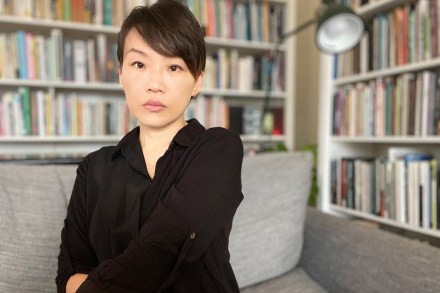
We often forget to ascribe agency to modern Tibet. Politically, it seems to lie mute in the behemoth shadow of China. Culturally, we encounter it more as the backdrop to journeys of self-discovery than a producer of modern culture in its own right. But the villages of the Tibetan plateau are defiantly cosmopolitan in Ning Ken’s novel, the first by this important Chinese writer to be translated into English. Sardonic and erudite, it’s the only major literary treatment of Sino-Tibetan relations to appear in English in decades. The author belongs to the generation of such era-defining Chinese novelists as Mo Yan and Yan Lianke, publishing his first fiction in the heady days of reform and opening-up.

A supernatural western: Tom’s Crossing, by Mark Z. Danielowski, reviewed

From our UK edition

Mark Z. Danielewski is best known for his House of Leaves, a typographically delirious horror novel about a manuscript written by a blind man describing a film which showed an impossible house. It seemed to exhaust a particular kind of postmodernism of footnotes, cryptography, metatexts, pop culture and more, yet remained at heart a story about grief. Tom’s Crossing is more immediately accessible, but it is every bit as clever and even more emotionally devastating. The bulk of the action takes place over five days running up to Halloween in 1982, although with a preface, ‘Some of what happened before’, and a longer epilogue, ‘Some of what happened after’.

A prolonged love affair: The Two Roberts, by Damian Barr, reviewed

From our UK edition

For a time, Robert Colquhoun and Robert MacBryde were at the heart of the in-crowd. Stories of Francis Bacon, Lucian Freud and their wartime circle often make reference to the two young painters from Scotland. Feted in the 1940s for their modernist styles – Colquhoun typically portraying figures, MacBryde preferring still life scenes – they later lapsed into painful, drink-sodden obscurity. Damian Barr’s novel, The Two Roberts, is a tender and evocative act of resurrection. It portrays the men’s lives from the time of their first meeting as students at Glasgow School of Art to the moment in the mid-1950s when, penniless and out of fashion, they retreated to an ancient cottage in Suffolk.

Glamour and intrigue: The Silver Book, by Olivia Laing, reviewed

From our UK edition

Olivia Laing has had a productive couple of years. The Silver Book arrives hot on the heels of The Garden Against Time, a memoir-cum-environmentalist treatise published in 2024. It is a novel of stunning imaginative power that was apparently written in just three months. Set in 1975, during the making of two great works of Italian cinema, Federico Fellini’s Casanova and Pier Paolo Pasolini’s Salò, it is suffused with the glamour and intrigue of these filmmakers’ worlds. It offers a fictional retelling of the events that led up to Pasolini’s murder – a crime that remains unsolved – on 2 November.

The joy of a miserable literary Christmas

From our UK edition

A Christmas Carol is pretty well unavoidable around now, with Little Women trailing somewhat behind. There’s no shortage of alternative literary Christmases among the classics, however, often less sweetly heartwarming and more invigoratingly grumpy. Nigel Molesworth, it will be remembered, foiled all attempts to inflict A Christmas Carol on him. ‘It is just that there is something about the Xmas Carol which makes paters and grown-ups read with grate XPRESION, and this is very embarassing [sic] for all.’ For the Molesworths among us, there are plenty of alternatives to be had. Sometimes these are depictions of Christmas where no Christmas should be occurring.

An unconventional orphan: Queen Esther, by John Irving, reviewed

From our UK edition

Back in the 1980s and 1990s everyone read John Irving, or so it seemed. You had to have a copy of A Prayer for Owen Meany, The World According to Garp, The Hotel New Hampshire and The Cider House Rules. After a while even the most obtuse reader realised that a novel by John Irving was very likely to contain elements that had appeared in other John Irving novels. In fact, a friend of mine invented John Irving Bingo: cross off a box every time one of the following is mentioned: an orphanage; bears; Vienna; sex that is in some kind of way weird; and sudden acts of violence, usually brought about by ill luck or something worse.

Alice in Nightmareland: The Matchbox Girl, by Alice Jolly, reviewed

From our UK edition

Vienna, 25 July 1934 is a significant date in Austria’s history. But in The Matchbox Girl, the big events happen offstage, the world seen entirely through the eyes of its youthful narrator. We focus not on the assassination of Chancellor Dollfuss and a failed Nazi coup, but the children’s hospital, where 12-year-old Adelheid Brunner is waiting to be assessed for admission because she’s mute – designated ‘special’. Or, as her grandmother puts it, hopeless, ‘an idiot’. In the tall, shabby hospital, the young inmates are a protected community, closely observed by a team of specialist doctors, among them young Hans Asperger, later to find fame with his syndrome. Sister Victorine, a patient, saintly nun, oversees the gaggle of unruly, sometimes frenzied children.

A Faustian pact: The School of Night, by Karl Ove Knausgaard, reviewed

From our UK edition

The fourth novel in Karl Ove Knausgaard’s spooky supernatural series differs from the others in that it is a standalone and doesn’t involve previous characters. Gone, too, are the multiple narrators; and there is only the briefest mention of a new star in the sky – which in the other three books coincided with all sorts of inexplicable occurrences. But it is no less compelling. This is the story of an arrogant young Norwegian, Kristian Hadeland, who arrives in London in 1985 to study photography at a prestigious art college. Though enthusiastic about his subject, he finds it hard to accept the constructive criticism of his lecturers.

A philosophical quest: A Fictional Inquiry, by Daniele del Giudice, reviewed

From our UK edition

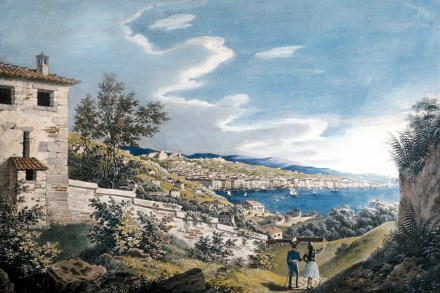
A researcher arrives in Trieste to piece together the life of a well-known literary figure. In cafés, bookshops and hospitals he visits the friends and lovers who were part of the writer’s circle. Now dying themselves, they share echoes of a literary scene that has long since dispersed. Women recall how they were celebrated in poetry; men how their conversation sparkled. Someone remembers how the writer once asked if he might immortalise one of his witticisms in his work: ‘Forty years ago I made a joke in a bar, and he said “Oh that’s good! Will you give it to me? I want to put it in my novel.’” But the proposed novel never came. At the heart of this short, dreamlike book is a gap: the great writer around whom this literary society orbited never published anything.