F. scott fitzgerald

How F. Scott Fitzgerald anticipated our modern age

From our US edition

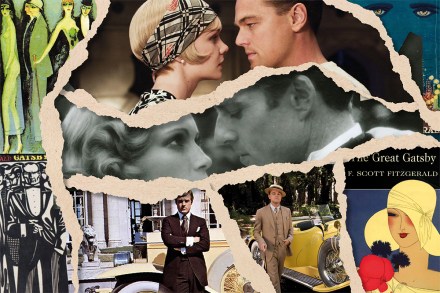
It has never been easier, or less rewarding, to be a Great Gatsby bore. As the book that is frequently, and speciously, cited as the Great American Novel — perhaps because, at around 180 pages, people have bothered to read it — turns 100 this month, it has become the byword for a certain kind of middlebrow literary appreciation. Even people who are barely aware of the novel know certain images and lines, such as the omnipresent lighthouse, “So we beat on, boats against the current, borne back ceaselessly into the past” and the whole Ralph Lauren-esque visual aesthetic that F. Scott Fitzgerald appeared to anticipate. The novel, published in April 1925, has achieved the impossible by breaking free of the page and reverberating across the world in a kind of endless meta-narrative.
Gatsby

What we get wrong about The Great Gatsby

43 min listen

In this week’s Book Club podcast, we’re contemplating the astounding achievement of F. Scott Fitzgerald’s The Great Gatsby in its 100th year. My guest is Professor Sarah Churchwell, author of Careless People: Murder, Mayhem and the Making of The Great Gatsby, as well as the introduction to Cambridge University Press’s new edition of the novel. Sarah tells me what we get wrong about this Jazz Age classic, why Fitzgerald’s antisemitism shouldn’t necessarily get him cancelled, and how Fitzgerald’s great novel traces the arc that leads from 1925 to Donald Trump’s second inauguration.

What makes a good title?

Liszt’s compositions tend to have descriptive titles – ‘Wild Chase’; ‘Dreams of Love’ – whereas Chopin avoided titles. Thomas Wentworth Higginson wished titles on Emily Dickinson’s poems, opposed by his fellow editor Mabel Loomis Todd. They didn’t stick. Maybe this is why Dickinson is acclaimed but unread. ‘I heard a Fly buzz’ is easier to remember than 465. We can express this truth by quoting Dickens on the Bible in Little Dorrit: ‘such hiccupping reference as 2 Ep. Thess. C. iii, v. 6 & 7.’ Or by remembering how often we forget our several PINs. For poets, titles can be a resource, a useful press release before the actual poem Titles are important. Titles are useful.

Is Paris the world’s most bookish city?

From our US edition

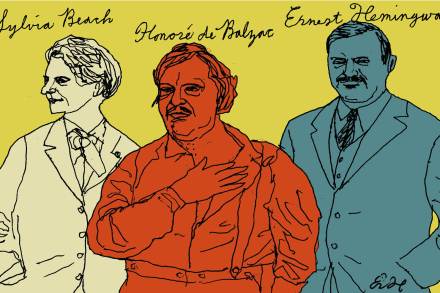
After I ventured to New York in May 2024, bound for a discerning literary journey round the city’s bookshops, libraries and hotels, I received some lively and constructive feedback from Spectator readers. Many, thankfully, agreed with my arguments about its bookish charms, but a consistent theme in the comments I received was, “How can you claim that New York is the quintessential literary city? Have you forgotten Paris?” To which my reply was reasonably simple: “What about Oxford, London, Rome, Edinburgh, Dublin, Santiago or San Francisco?” All of them hugely distinguished citadels of the written word, both present and historic alike. Yet I felt uneasy at my response.

Paris

The fresh hell of Dorothy Parker’s Hollywood

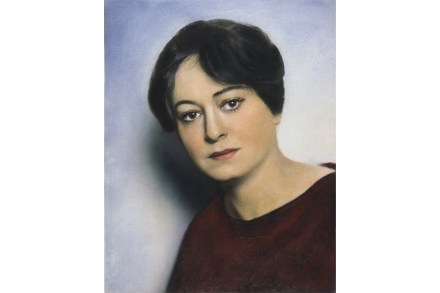
Hollywood didn’t kill Dorothy Parker, but booze probably did. In fact, if Hollywood hadn’t paid her so well to spend so much time at home, she couldn’t have afforded the booze – as well as maintain a lifelong ability to insult almost everyone she loved while still earning their (sometimes reluctant) affection.

How long has Hollywood been out of ideas?

From our US edition

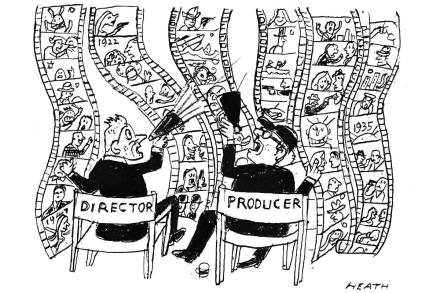
Marie-Georges-Jean Méliès made more than 500 films in his career, but 1896 was a banner year for the Frenchman. He captivated audiences with Playing Cards, his sixty-seven-second exploration of three cigar-puffing men as they are waited on by two young ladies. One man reads the paper and pours the wine as the other two play cards. It was the first reboot in film history. One year earlier, Louis Lumière released Card Game, a forty-three-second exploration of three men with cigars drinking wine and playing cards as they are waited on by a man. Méliès rightly recognized the original’s lack of representation, not to mention the absence of a news- paper.

Hollywood
Gatsby

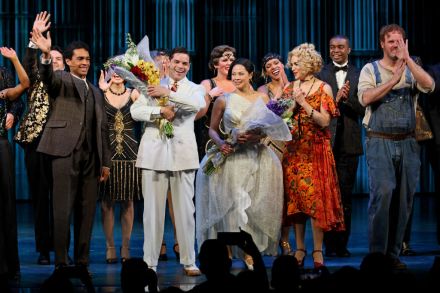
A new adaptation of The Great Gatsby is enrapturing and impressive

From our US edition

In F. Scott Fitzgerald’s classic 1925 novel The Great Gatsby, Daisy Fay is a mercurial character. The popular rich girl from Louisiana — married to Tom Buchanan, an adulterous brute — is ravishing and entrancing and, at times, cruel. It is her voice that most draws Jay Gatsby to her years after their initial fling when he was a poor officer, as he longs for her across the bay. As Fitzgerald describes it, Daisy’s is a voice that rises in dramatic swells and falls to intimate murmurs, coaxing its listeners to draw closer. Gatsby, the nouveau-riche rumored bootlegger from an impoverished farming family, is obsessed with Daisy: her class, her beauty, her unattainability, her voice. It is a voice, he tells the book’s narrator Nick Carraway, that is “full of money.

Has the American novel abandoned God?

From our US edition

I have always thought “Call me Ishmael” to be a rather camp introduction to a novel. Given the line’s conspiratorial intimacy, I have long imagined it whispered by a drag queen in a dive bar at 3 a.m. This, however, is the fault of my own unseriousness. The resonance of the name Ishmael — Abraham’s illegitimate son by Hagar who is destined to wander the desert — remains the opening example of one of the clearest, cleverest and most consistent of themes in Herman Melville’s magnum opus Moby-Dick, namely, the quest for God. Religion runs through Moby-Dick. We might almost say that the Bible haunts it. There are the names, mostly of Biblical characters, and even the direct invocation of prophets: Ezekiel, Elijah and, of course, the ur-whale wrestler, Jonah.

God

The books that made me who I am

Gstaad This is my last week in the Alps and I’m trying to get it all in – skiing, cross-country, kickboxing, even some nature walking along a stream. (I did my last downhill run with Geoffrey Moore, one that ended in a collision with a child at the bottom of the mountain, and I’m thinking of calling it quits on the downhill-skiing front.) The trouble with athletes is that we early on enact the destiny to which we are all subject, an early death. The death of sports talent is a subtle process. The eyes go first, then the step falters. Eventually you feel like an old man who is not in the same league as his opponent. I was lucky to get old late – in sport, that is.

The odd couple: John Keats and F. Scott Fitzgerald

From our US edition

On a shard of paper, some time in the bleak 1930s, F. Scott Fitzgerald incorporated a favorite line from one of his favorite poets, John Keats, in a short verse of his own: 'Don’t you worry I surrender Days are long and life’s a bender Still I know that Tender is the Night.' Keats was a Romantic, perhaps the Romantic, with his lyric gift and tragically brief life. Fitzgerald loved the Romantic poets, and romance in the lower case, but was at the heart’s core a modernist, far more egoist than romantic, and quite hardboiled. The little quatrain above is rather like T.S. Eliot’s ‘jug jug’ in The Waste Land — homage of a sort, but also showing ironic distance, and no intention of writing like Keats.

Fitzgerald

Raymond Chandler and his contrarian cat Taki

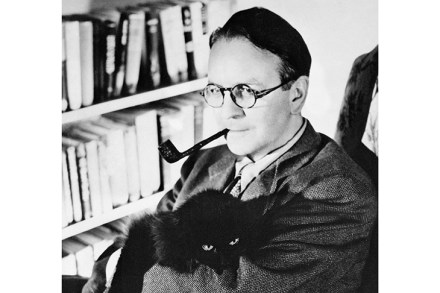
Gstaad That’s all we needed in a great year: copyright has expired on The Great Gatsby. Some Fitzgerald wannabe has already cashed in with a prequel, and I’m certain the worst is yet to come. I suppose that the insatiable hunger for fame and celebrity to impress a shallow and scatterbrained blonde across the water made Gatsby a very tragic hero. But he was not as tragic as Hemingway’s Jake Barnes, who had his you-know-what blown off in the war and could only flirt with Lady Brett from afar. Or Scott Fitzgerald’s other tragic hero, Dick Diver, whose talent wasted away while he amused his rich wife’s friends. At least the Gatsby prequel has, I am told, been written by a very good writer who can create atmosphere.