Eu

George Osborne’s Waterloo

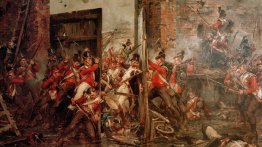
Hougoumont should be a place known to every Briton. It was the site of one of the finest feats of arms in the history of the British military. If this farmhouse had fallen to Bonaparte’s forces during the battle of Waterloo, Napoleon’s 100 days would have become a French 100 years. But history has not been kind to Hougoumont. It stopped been a farm at the end of the last century and souvenir hunters are simply stripping the place. The excellent Project Hougoumont stepped in to try to preserve the site. They found an ally in George Osborne, who first visited Hougoumont in 2012 and was shocked by what he saw.

How George Osborne thinks that Britain can get a new EU deal

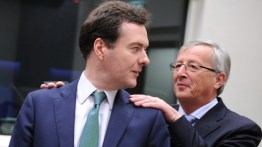
A second Tory term would be dominated by the EU renegotiation. Within 18 months of returning to office, David Cameron would have to get the rest of the European Union to agree to new membership terms for Britain and put the results to the public in a referendum. It is a tall order. But on a trip to Brussels with George Osborne earlier this week, I was struck by how confident he was that a deal could be done. His argument is that the northern European countries, led by Germany, want Britain in as a liberal, free market influence and so will be prepared to accommodate this country’s needs. Given that

One way to persuade me to vote Ukip

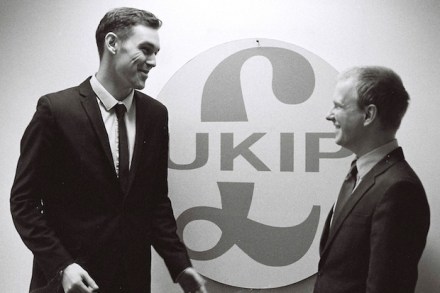
So far, I am disinclined to vote for Ukip in the forthcoming Euro-elections. Our area has been represented for many years by the great Daniel Hannan, the leading practising Eurosceptic of our times, so I have resisted the Faragiste temptation. But I felt a bit wobbly after reading an interview with Nigel Farage in the Guardian. According to its author, Decca Aitkenhead, Ukip supporters — though not the libertarian Nigel himself — want to make dressing up for the theatre compulsory. They are so right. It is now almost compulsory not to dress up for the theatre, even in the West End. This has had the predictable result that theatre-goers pay less attention, eat and

If Ed Miliband is the Union’s saviour then the Union is doomed

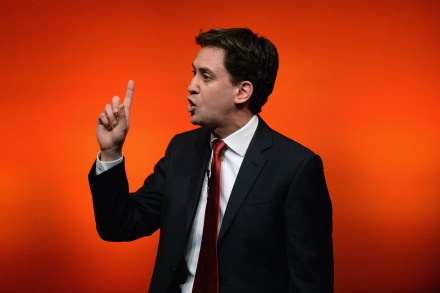
With apologies to John Rentoul, Can Ed Miliband save the Union? is a question to which the answer is God help us all. I admit to a blind spot vis a vis the Labour leader: Looks like Gussie Fink-Nottle, thinks like a Marxist Madeline Bassett. Clever enough in a droopy kind of way but, ultimately, a gawd-help-us kind of fellow. I wasn’t very impressed last time Mr Miliband came to Scotland and so I wasn’t inclined to be impressed by his most recent trip to Glasgow. Which is dandy because I wasn’t. I dare say Miliband’s belief that Scottish independence would be a bad idea – for Scotland and the rest of

How Nick Clegg missed his chance with Nigel Farage

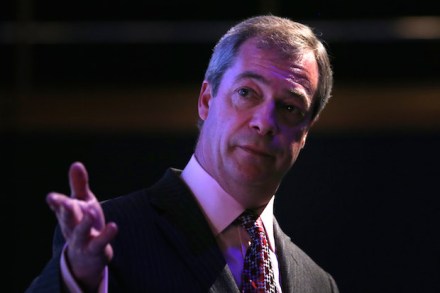
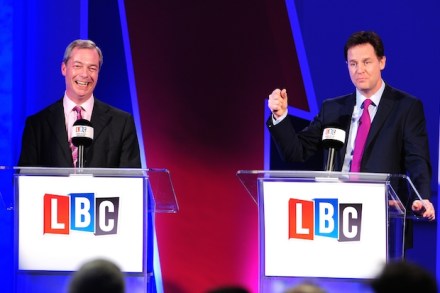
At the start of the year, some of the air seemed to have gone out of the Ukip balloon. The party’s warnings about the scale of Romanian and Bulgarian immigration to Britain hadn’t been borne out by events. But the debates with Nick Clegg enabled Nigel Farage to get his momentum back. In those debates, Clegg was too passive in the first one and then over-compensated in the second with the result that he ended up losing both of them. Clegg’s decision to not engage with Farage in the first debate meant that he missed his best chance to get under the Ukip leader’s skin. Strikingly, Farage admits to Decca

Was I abused by Jimmy Savile?

‘Twenty-six million people in Europe are looking for work. And whose jobs are they after?’ asks the Ukip poster for the euro-elections, beside a Lord Kitchener-style pointing finger. Obviously, Ukip thinks the answer is ‘Ours’. But this isn’t true. Twenty-six million people are not looking for British jobs, but for jobs in general. And even those who do want jobs in Britain are not trying to take jobs from people who have them (though this might sometimes be the effect): they just want jobs. If Ukip is opposed to unrestricted EU immigration, it should direct its anger at the politicians who support this policy, not at the blameless people who,

How to lose Scotland

[audioplayer src=”http://traffic.libsyn.com/spectator/TheViewFrom22_24_April_2014_v4.mp3″ title=”James Forsyth and Alex Massie explain why we need more optimism in Scotland and Westminster” startat=1538] Listen [/audioplayer]For centuries, the possibility of Scottish independence seemed so remote as to be laughable. Until recently the nationalists seemed quixotic, rather than menacing. Now, however, we are facing the very real prospect of a ‘yes’ vote in the Scottish referendum in September, which would in all probability result in the resignation of David Cameron as Prime Minister. An ICM survey published at the weekend found that 48 per cent of voters who have made up their minds intend to vote for separation. The stakes are terribly high. There is much debate

Ukip’s poster campaign misses the point about the job market

‘Twenty-six million people in Europe are looking for work. And whose jobs are they after?’ asks the Ukip poster for the euro-elections, beside a Lord Kitchener-style pointing finger. Obviously, Ukip thinks the answer is ‘Ours’. But this isn’t true. Twenty-six million people are not looking for British jobs, but for jobs in general. And even those who do want jobs in Britain are not trying to take jobs from people who have them (though this might sometimes be the effect): they just want jobs. If Ukip is opposed to unrestricted EU immigration, it should direct its anger at the politicians who support this policy, not at the blameless people who,

The Ukip posters will offend more Londoners than eastern Europeans

Globalisation is like a rising tide; we’re all living in our separate ponds with their own little social ecosystems until the floodwater starts to rise and turns them into one big lake. Many fish, especially, the big ones, are going to benefit but many will suffer in this frightening new world. It is that fear which Ukip’s new posters are aimed at addressing (or exploiting, depending on your view). Sure, Europe is about free movement of labour, but that movement is highly imbalanced and has been for a number of years. Far more people are seeking to come from southern and eastern Europe to work in Britain than vice versa, and

Would the word ‘NATO’ make Vladimir Putin think twice?

Russia, Ukraine, the European Union and the United States will meet in Geneva later today in order to find a solution to the confrontation in eastern Ukraine. There is not much hope of success. The Obama administration has been lowering expectations, so too the Foreign Office. Kiev’s heavy-handedness in eastern Ukraine has embarrassed the western allies; not least because the military deployment yesterday exposed Ukraine’s inherent weakness: government forces were either incapable or reluctant to enforce Kiev’s writ in the east of the country. There were further violent clashes overnight. Kiev says that 3 ‘Russian separatists’ were killed and 13 wounded when trying to seize a military installation on the

Nigel Farage faces down ‘Establishment’ plot

This morning’s edition of The Times reported (£) that Nigel Farage could face a probe into claims, apparently lodged by a former UKIP official, that nearly £60,000 of ‘missing’ European Union funds have been paid into his personal bank account. Mr Farage denies the allegations in strong terms and has invited EU officials to examine his expenses. This is not the first time that UKIP has faced allegations about fiddled expenses. Yet none of the mud has stuck. There are two reasons for this: nothing has been proved and few people appear to understand how the European parliamentary expenses system works (there is, for example, a less than clear distinction between

David Cameron: Trust me to change EU, not Ukip

David Cameron launched his party’s European and local elections campaign in Manchester today. After weeks of polarised debate between Nick and Nigel, the PM had a task in suggesting that there could be some nuance between In and Out which involves a bit of shake-it-all-about. He repeated his line that both the Lib Dems and Ukip took an ‘extremist’ stance on the EU, saying: ‘Looking at the other parties, there are effectively two extremist camps. One says: “we love the European Union.” The other says: “we hate the European Union.” One says: “we want things to stay the same.” The other says: “let’s just walk away from the EU.” But

Cameron’s renegotiation strategy is no longer an obstacle to a second Tory-Lib Dem coalition

David Cameron’s plan to renegotiate Britain’s membership of the European Union has long been regarded as a major obstacle to a second Tory-Lib Dem coalition. But, as I report in the Mail on Sunday, this is no longer the case. The Lib Dem logic is essentially that any deal that other European leaders are prepared to offer Cameron is one that they can accept as well. One Clegg confidant tells me that when it comes to the renegotiation, ‘It is not us David Cameron is going to have a problem with but the Tories.’ Indeed, there are parts of the renegotiation that the Liberal Democrats are already on board with.

The EU is eroding Swiss exceptionalism

Even in Switzerland, the elites are sold on the European Union, though it remains outside. It has a virtually irresistible draw in all European countries for the people that Mr Gladstone disparaged as ‘the Upper Ten Thousand’ (who today probably add up to the Upper One Million). As a result, Switzerland is gradually allowing its exceptionalism — in tax and banking, for example — to be eroded. On the other hand, the Swiss people are stoutly sceptical and have become more so. In February, they voted for a referendum limiting the free movement of EU citizens into their country, and so their EU relationship is now in flux. In this

Clegg lost against Farage, but that’s not the point

Why did Nick Clegg bother debating Nigel Farage? The Ukip leader bagged two decisive victories in the battles. But that doesn’t mean the Lib Dem leader has failed to set out what he wanted to do. Clegg needed these debates to reach out to his base, to motivate them to go out campaigning and vote in May. He didn’t need to ‘win’ in order to do that: he just needed to put the case for EU membership loudly and proudly. He had to remind some of his party’s supporters why they joined the Liberal Democrats and he needs to motivate pro-Europeans from other parties to lend their vote to the

Is David Cameron trying to imitate the Delphic Oracle?

Nigel Farage rather missed a trick in his debate over the EU with Nick Clegg. The Prime Minister has promised us an ‘In/Out’ referendum on the EU in 2017, if the Tories are returned to power. But there is a condition: the referendum will be held (his words) ‘When we have negotiated a new settlement…’ (23 January 2013). The problem is that word ‘When’. Does he really mean ‘If’? As it stands, Cameron’s ‘promise’ has all the hallmarks of the Delphic Oracle. Take poor old Croesus, king of Lydia. The historian Herodotus tells us that he asked the oracle what would happen if he fought the Persian king Cyrus. ‘You will

Nigel Farage’s diary: Comfort for Cameron, and the wonders of German traffic

What a week! I was thrilled to have a chance to confront Nick Clegg but my excitement was tempered with disappointment that neither Cameron nor Miliband agreed to take part — although both were invited. I’d love to have challenged Miliband about the effects of uncontrolled immigration: wage compression, for instance, and the erosion of job opportunities within working-class communities. Why did he chicken out? My bet is he knows these facts are unanswerable. Cameron is, by all accounts, having kittens about Ukip but I think I can set his mind at rest. Our current wave of support seems to be thanks to working-class former Labour voters, which makes perfect sense.

The EU is worse than you thought

For me, by far the most surprising revelation in Martin Durkin’s documentary Nigel Farage: Who Are You? (Channel 4, Monday) was just how astonishingly vast, unwieldy, authoritarian, interfering, undemocratic, sclerotic, and sinister the European Union actually is. As a Eurosceptic, I suppose I ought to have known this already. But the secret of the European Union, as one of Durkin’s talking heads noted, is the way it uses boredom as a weapon. Even those of us predisposed towards thinking ill of the EU are unwilling to apprise ourselves of the full, tedious details because our brains would explode at the sheer, grinding dullness of it all. So it was a

Clegg, Farage and the poverty of Britain’s EU debate

Two of the writers I most admire have fallen out over the Clegg vs Farage debate. James Kirkup calls it for the Lib Dem leader (his reasons here) and Peter Oborne for Farage – but I’m in the happy position of being able to disagree with both of them. I think they both lost, and I explain why in my Daily Telegraph column today. Clegg has decided to ride the Ukip wave, positioning himself as the patron saint of Europhiles who loathe the sight of Nigel Farage. He will be calculating that there are more of them than LibDem supporters. But I regarded their debate on Wednesday as rather sterile,