Eu

Angela Merkel offers a sop to the poor old British

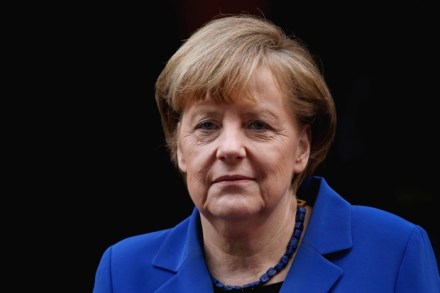
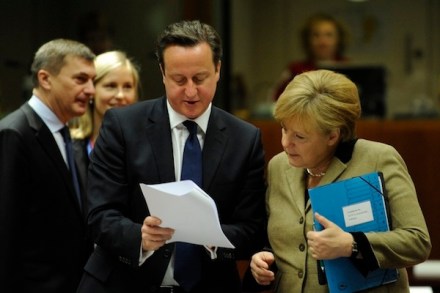
The row over Jean-Claude Juncker was confected outrage which spectacularly failed to achieve what Cameron wanted. It was confected because the alternatives to the ghastly Luxembourg bureaucrat are scarcely less federalist than he is himself. But the real giveaway, the most significant moment, came in Angela Merkel’s statement, issued as a means of giving a sop to the poor old British. Don’t worry, she said, Britain can reach ‘ever-closer union’ – ie political union – at a slower speed. In other words, there is no question that we will eventually succumb, we’ll just do it more slowly than everyone else. Bring on that referendum. Rod Liddle’s new book Selfish Whining Monkeys is available

Video: The week ahead — Juncker and Cruddas

In our latest View from 22 video, James Forsyth and Isabel Hardman discuss the two top stories from this weekend — the ascension of Jean-Claude Juncker and Jon Cruddas’s intervention on Labour’s ‘dead’ hand — and how they will play out over the week.

Confronting the Tories’ original sin: they are still seen as the party of the rich.

Dominic Cummings is at it again. Michael Gove’s former advisor has become a reliably entertaining guide to the Whitehall labyrinth. It is plain, too, that Cummings likes to think of himself as a Teller Of Hard Truths Many Of Which Our Masters Prefer Not To Contemplate Too Deeply If At All. This is fun. His latest post purports to be about swing voters, immigration and the EU but it is really about the biggest problem afflicting the Conservative party: who is it for? And who is it seen to be for? As Cummings puts it: The fundamental problem the Conservative Party has had since 1997 at least is that it

Leaked: what David Cameron really told Van Rompuy and the EU leaders last week

It’s well known that David Cameron voted against Jean-Claude Juncker and tried to persuade his EU colleagues to do the same. Thanks to today’s Mail on Sunday, we know exactly how forceful the Prime Minister was in warning and rebuking his fellow leaders. According to leaked reports, an angry Mr Cameron threw Herman Van Rompuy, outgoing EU chief, out of Downing Street following an argument over Juncker: ‘If it is to be Juncker, I insist on a formal vote,’ said Cameron Mr Van Rompuy blinked: ‘I will decide how the vote is conducted.’ Mr Cameron: ‘You must guarantee there will be a proper vote.’ Mr Van Rompuy: ‘I have said

After being Junckered, the Cameron circle now fear for the renegotiation

Getting Junckered was not an enjoyable experience for Downing Street. Not only has David Cameron lost his battle to stop the former Luxembourg PM becoming Commission President he has also discovered that Angela Merkel’s assurances to him can be trumped by her domestic political concerns. Considering how Merkel is the hinge on which Cameron’s renegotiation strategy turns, this is worrying for him. As I report in the Mail on Sunday, members of Cameron’s circle are now contemplating that the renegotiation might not deliver enough substantive change for the UK to stay in. As one of those who knows Cameron best puts it, ‘They might plump the cushions for us but

David Cameron has to explain exactly how he intends to reform Britain’s EU relationship

The results of last month’s European elections demonstrated an appetite for change in Europe among voters – all parties seem to agree on that. Which is why David Cameron went into the most recent set of EU Council negotiations with cross-party support to secure a candidate for Commission President that would make achieving that kind of change and reform easier, not harder. Today there is a widespread and profound sense of disappointment at David Cameron’s apparent failure to build an alliance to secure an alternative candidate for the role. He weakened his own hand in these vital talks by seeming to choose public criticism at the expense of private influence – all

Cameron defeated as Juncker nominated for European Commission President

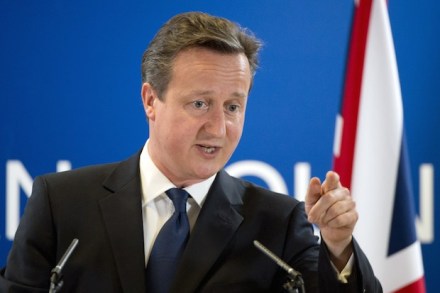
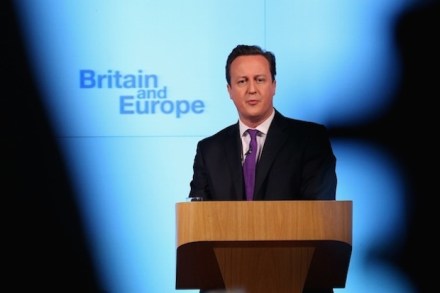
The European Council has nominated Jean-Claude Juncker to be the next president of the European Commission despite David Cameron’s staunch opposition. In the vote that Cameron forced on the appointment, he was defeated 26-2 with only the Hungarians joining the British in opposing the former Luxembourg PM. Junkcer’s appointment casts fresh doubt on whether Cameron will be able to renegotiate a new EU deal for Britain and whether this country will stay in the EU. In the coming weeks, we will have to watch and see whether other EU leaders try and come up with some kind of compensation package for Britain. When Cameron first came out in opposition to

Jeremy Hunt: Better to be isolated and right in Europe

Is it a good thing that David Cameron now appears isolated in Europe as he continues to dig a hole that Jean-Claude Juncker almost certainly won’t fall into? Jeremy Hunt tried to argue on the Today programme this morning that it was, saying that people would respect an isolated Prime Minister who was prepared to make the right argument. He said: ‘Sometimes leadership is lonely, but if it is the right thing to do for Britain, I’m glad that we have got a strong prime minister who’s prepared to take those steps, even if it means that he is isolated from time-to-time, I think people in Europe will respect the

David Cameron is determined to fight Jean-Claude Juncker to the end

The family photo at this week’s EU summit will be a particularly awkward affair. EU leaders will have just come from listening to the last post at the Menin Gate, the memorial to the British and Commonwealth dead of the Ypres campaign, but they will know that they are about to have an unholy row over dinner as David Cameron tries to stop Jean-Claude Juncker from becoming President of the European Commission. Aware of how bad all this looks, the head of the EU Council, Herman Van Rompuy, has been busy trying to prevent a row at Ypres. Cameron and Van Rompuy had a ‘full and frank’ discussion about the

Spectator letters: Islamophobia, breast-feeding and Bach

Rational fear Sir: An interesting contrast between the articles by Douglas Murray and Innes Bowen on Islamic influence in the UK (‘Save the children’, 14 June), and the one by Matthew Parris. Mr Parris sees no essential difference between faith schools. But Christians do not on the whole advocate holy wars against non-Christians, or demand that adulterous women be stoned to death, or that anyone who insults their religion should be beheaded. True, there was a time when the Church might have done all these things, but that was hundreds of years in the past and we are now more enlightened. Recent events in Syria and Nigeria, and now in

The Conservatives may have damaged their chances of reforming Europe

Although many MEPs believe that the European Parliament is the centre of the known political universe, in truth the goings on in Brussels and Strasbourg rarely trouble the attention of anyone who is not a dedicated EU geek. That said, the decision by the Conservatives’ ECR group to admit the anti-euro Alternative für Deutschland party could have wider repercussions for Anglo-German relations, and therefore the prospects for Cameron’s EU reform agenda. For those who are not familiar with AfD here is a potted history: the party was founded by German academics opposed to Merkel’s Eurozone policies, specifically the bailouts. As it has grown, AfD has combined a more socially conservative

Don’t blame the Guardian if criminals are getting better at hiding online. Blame iTunes and Netflix

I wouldn’t wish to deny that all drug dealers and crime lords read the Guardian. Indeed, check the circulation figures, and you’d be forgiven for thinking that only drug dealers and crime lords read the Guardian. So, when I read last week about the trouble that GCHQ is now having tracking online criminality, and the way that GCHQ considers recent revelations about state surveillance via the Guardian to be the cause, I did not for a moment think that GCHQ was entirely wrong. I genuinely wonder, though, if the rogue National Security Agency IT boffin Edward Snowden, whom we hear so much about, has damaged national security as much as

Cameron’s EU threats must be plausible; nobody likes a Prime Minister who cries wolf

Angela Merkel is annoyed that David Cameron seems to be issuing threats to other European leaders in order to get what he wants. At a press conference concluding talks held by the centre-right EU leaders in Harpsund, the German Chancellor reiterated her support for Jean-Claude Juncker, and said: ‘I made myself clear by saying that I am for Jean-Claude Juncker. But when I made that statement in Germany I also made the point that we act in a European spirit. We always do that because otherwise you would never reach a compromise. ‘Thus we cannot just consign to the backburner the question of the European spirit. Threats are not part

Cameron calls on his ‘Northern Alliance’ to help stop Jean-Claude Juncker

David Cameron visits Sweden today to discuss the future of the EU with the German Chancellor Angela Merkel, the Swedish Prime Minister Fredrik Reinfeldt and the Dutch Prime Minister Mark Rutte. The Prime Minister is attempting to block former Luxembourg prime minister Jean-Claude Juncker from securing the top job in Brussels. Earlier this year, Fraser Nelson explained how Cameron’s ‘Northern Alliance’ may reshape Europe. If David Cameron were to divide Europe up, he’d make some crude distinctions. There would be the basket cases, like Italy, Spain, Greece, France — examples, by and large, of how countries should not be run. Then there’d be the former Soviet bloc, sceptical about Brussels because they

What’s the fuss about Juncker? Better a drunken, useless federalist than an effective, sober one

David Cameron is surely right to think that Jean-Claude Juncker is not the man to relieve the European Union’s woes, but I wonder if it is worth a fight. It reminds me of a similar battle by John Major, in 1994, to prevent a fat Belgian called Jean-Luc Dehaene from getting the job, on the grounds that he was too federalist. The post then duly went to Jacques Santer — like M. Juncker, a Luxembourgeois with an alleged fondness for alcohol (he was known as ‘Sancerre’). M. Santer was no better, from the British point of view, than M. Dehaene, and some European diplomatic chips were pointlessly used up. Given Mr Cameron’s stated wish

President Obama tries to save Great Britain from itself

Maybe it’s a special relationship after all. President Obama has given David Cameron and the Better Together campaign a rhetorical boost this afternoon. At a press conference held at the G7 in Brussels, the president said: ‘With respect to the future of the United Kingdom, obviously ultimately this is up to the people of Great Britain. ‘In the case of Scotland, there is a referendum process in place and it’s up to the people of Scotland. ‘But I would to say the United Kingdom has been an extraordinary partner to us. From the outside at least, it looks like things have worked pretty well. ‘We obviously have a deep interest

David Cameron is doing what Eurosceptics want him to do

Tory Eurosceptics from the Cabinet down have long made clear that David Cameron will only be able to get a sufficiently different deal from the EU if he’s prepared to threaten that Britain will leave if it can’t get what it needs. Many have assumed that Cameron, who has been clear that he would prefer Britain to keep in the EU, would not be prepared to do this. But it seems that he is. The German magazine Spiegel reports that Cameron told his fellow EU leaders that if Jean-Claude Juncker, the Luxembourg federalist, became president of the Euroopean Commission he could not guarantee that Britain would stay in the EU.

Does Tony Blair want to be President of the European Commission?

Tony Blair appeared on the Today programme on Tuesday morning to talk about Europe. The televised version showed him against the backdrop of the Brandenburg Gate. He said somewhat predictable things about Ukip being bad and a reformed Europe being good. The mystery was ‘Why?’ Why was he intervening at this point? It took me several hours to puzzle out a possible answer. It lies, I suggest, in his statement that the European project used to be ‘about peace’ and now it is ‘about power’. He was speaking at the beginning of the week when the contest for the presidency of the European Commission comes to a head. Mr Blair emphasised that

If Britain has a culture war, it’s the euro-enthusiasts who started it, not Ukip

Following last week’s Purple Revolution in which the pro-democracy Faragist rebels liberated Britain from the hated pro-EUSSR LibLabCon stooges (at least this is the version I’m telling my kids to repeat to their teachers), a number of people have written about what appears to be the opening of a ‘culture war’ in Britain. Andrew Sullivan talks about ‘blue Europe and red Europe’ in the sense of America’s blue and red states, and sees Ukip as representing the latter just as the Republican Party does conservative, left-behind America. I think there’s some truth in that. Dan Hannan, in true conservative style, clutching doom from victory, has suggested that the rise of

Labour has proved that it speaks for London – and nowhere else

So, now almost all the votes have been counted — except for those in the Islamic Republic of Tower Hamlets, where the vibrant and colourful political practices of Bangladesh continue to keep the returning officers entertained. Allegations of widespread intimidation of voters at polling booths, postal voting fraud and a huge number of mysteriously spoiled ballot papers; so much more fun than the usual dull, grey and mechanistic western electoral procedure. You wonder, looking at the exotic political fervour of Tower Hamlets, how on earth the British people could be so mean-spirited as to have developed this sudden animus against immigration. White British people now make up less than one third