Eu

Europe cannot allow an ungoverned space to exist on its doorstep

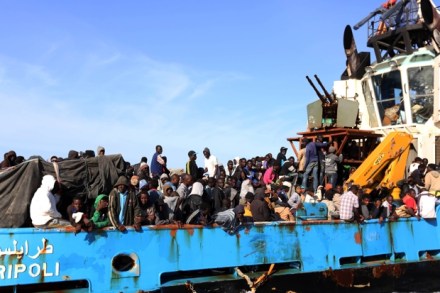
Last month, 700 migrants attempting to sneak into Europe drowned when their rickety vessel capsized in the Mediterranean. This week, the European Union announced a naval initiative to crack down on migrant smugglers. It won’t work. These tragedies are going to recur endlessly, as long as a steady fleet of unsafe boats are able to set sail from Libya. The country has become a political vacuum which no longer deserves to be identified as a sovereign state. The civil war has left no functional state; in many parts, nobody is keeping the electricity running or schools open, let alone policing the coastline to stop illegal migration or the flow of jihadists. Halting human trafficking to Europe

Labour should now define itself as in favour of both a referendum and the EU

The three main Labour leadership candidates have now all said that they want a referendum on Britain’s relationship with the EU. But the party’s ‘official’ position – that is, the policy it went into the last election with that everyone seems quite keen to disown – is that there should not be a referendum. The party will not have chosen its leader by the time of next week’s Queen’s Speech, even if MPs seem to be making their minds up pretty quickly, and so when the EU referendum bill is published in that speech, the party will need to respond. It would perhaps make sense if that response wasn’t a

Germans propose linking the British renegotiation to Eurozone reform

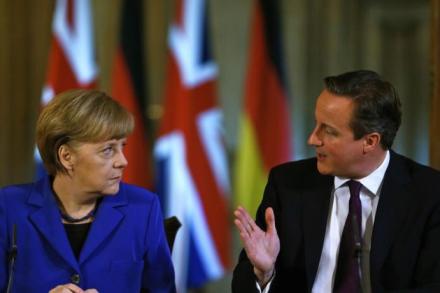
Wolfgang Schäuble’s decision to link the British renegotiation to changes to the governance of the Eurozone is highly significant. In an interview the German Finance Minister told the Wall Street Journal that he has discussed George Osborne ‘coming to Berlin so that we can think together about how we can combine the British position with the urgent need for a strengthened governance of the eurozone’. Schäuble went on to say that ‘the structure of this currency union will stay fragile as long as its governance isn’t substantially reinforced. Maybe there is a chance to combine both goals’. Schäuble’s comments are the most encouragement that the government has had on the

You’ll regret not having a Human Rights Act when a left-wing government returns

In today’s Guardian, Matthew D’Ancona warns that David Cameron may face a successful rebellion from the ‘Runnymede Tories’ if he tries to repeal the Human Rights Act, led by David Davis. Not only would that be a major blow to his authority, it would make remaining in the EU a less attractive option in the forthcoming referendum. Human Rights experts insist that the two issues are wholly separate, although that’s open to debate. But there’s no doubt they’re politically linked. In the minds of some sections of the British public, a good argument for withdrawing from the EU will be to escape the jurisdiction of the European Court – they

Portrait of the week | 14 May 2015

Home David Cameron, the Prime Minister, soon got used to the surprise of the Conservatives being returned in the general election with a majority of 12. He retained George Osborne as Chancellor of the Exchequer and made him First Secretary of State too. Theresa May, Philip Hammond, Michael Fallon and Iain Duncan Smith also stayed put, but Chris Grayling replaced William Hague, who had left the Commons, as Leader of the House, to be replaced as justice secretary by Michael Gove, who was replaced as chief whip by Mark Harper. Amber Rudd became Energy Secretary. John Whittingdale became Culture Secretary in place of Sajid Javid, who became Business Secretary. Boris

How David Cameron will manage his Tory coalition

Up until Thursday night, everything that David Cameron and George Osborne had done in government had had to be agreed by the Liberal Democrats. Every policy had to go through the ‘Quad’, the coalition government’s decision making body made up of Cameron, Osborne, Clegg and Alexander. That doesn’t have to happen anymore. As one Downing Street figure says: ‘It is all completely different now, we can power forward with what we want to do. There’s no need for everything to be watered down. It’s invigorating’. Not having to manage a coalition, also frees up huge amounts of time for both Cameron and the Number 10 operation. It would be well

The people from the sea

 Lampedusa The young hang about in packs or speed around town, two to a scooter. Old women group together on benches around the town square in front of the church. The men continually greet each other as though they haven’t met for years. The likelihood is small. With fewer than 6,000 inhabitants, and as close to Libya as it is to Italy, Lampedusa is the sort of place from which any ambitious young Italian would spend their life trying to escape. Yet every day hundreds and sometimes thousands of people are risking their lives to get here. ‘Please tell people we have nice beaches,’ one islander pleads. And indeed they do,

The Greek crisis is back, and this time it’s more serious than before

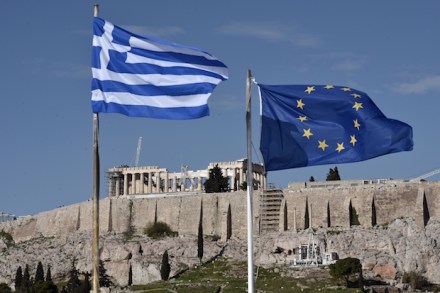
Amidst the hullabaloo of the general election campaign, one thing that has generally gone unnoticed in Britain’s political discourse is the worsening Greek situation. You now have European finance ministers openly talking about the possibility of a Greek default. What has changed is that there is now no goodwill and very little trust between Greece and the rest of the Eurozone. The rest of the Eurozone think that the Greeks are obfuscating and not providing the details needed. While the Syriza-led Greek government feel that the rest of the Eurozone is not providing them with the political cover they need to make a deal. They feel that the Eurozone’s insistence

The other union

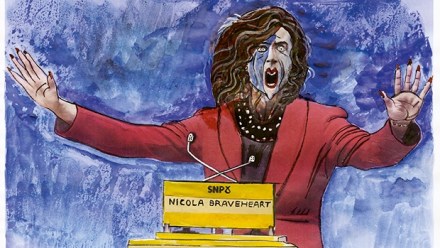
The election campaign is becoming increasingly dominated by a small party whose raison d’être is to preach independence from membership of a union it claims is hindering national ambition. But the party is not Ukip, which had been expected to play a big role in this election. It is the Scottish National Party, which seems ever more likely to hold the balance of power after 7 May and is determined to use it ruthlessly to its own advantage and to the furtherance of its sole objective: the dissolution of the United Kingdom. Nicola Sturgeon has been the only party leader talking about the virtues of national self-government, and she has

Philip Hammond signals extra help for the Mediterranean crisis

Philip Hammond was noticeably keen this afternoon to show the government isn’t standing idly by while migrants drown in the Mediterranean – especially as the refugee crisis is the global story of the moment; the pictures and reports severe enough to have momentarily knocked the election campaign off a number of front pages. Appearing on today’s Daily Politics debate on international affairs, the Foreign Secretary stressed the need for a ‘more formidable operation on the sea’, and said that David Cameron would head to Brussels on Thursday to call for an ‘enhanced operation’ to prevent any further crises. Mr Hammond said: ‘Of course we’ve got to support search and rescue operations in the Mediterranean.

Don’t get angry at Katie Hopkins if you don’t support policies that could save migrants

The latest issue of The Spectator carries an interesting piece by James Bartholomew on ‘virtue signalling’, the bane of social media and political debate; that is, people expressing how ruddy good they are by telling the world how much they hate bad things like Ukip and the Daily Mail. He writes: ‘It’s noticeable how often virtue signalling consists of saying you hate things. It is camouflage. The emphasis on hate distracts from the fact you are really saying how good you are. If you were frank and said, ‘I care about the environment more than most people do’ or ‘I care about the poor more than others’, your vanity and self-aggrandisement

The EU’s asylum policy is to blame for the tragedy unfolding in the Mediterranean

As the leading article in The Spectator this week pointed out, thousands of people are fleeing war and anarchy in Africa and setting sail across the Mediterranean bound for Europe. The latest tragedy comes today, after a boat carrying between 500 and 700 migrants from Libya capsized. So far, only 28 people have been rescued. Coaxed by traffickers who demand huge sums, refugees have been piling into rickety boats which often disintegrate en route. Aid groups, human rights activists, the pope and the EU itself all say the EU-funded rescue operation Triton is inadequate. Well, they’re right in a way, but they’re also missing the point. The real culprit isn’t Triton but the EU’s tragic

Did the £20 million Norwegian’s pay row make BG cheaper for Shell?

Helge Lund was widely expected to go into domestic politics when he ended his successful tenure as head of Statoil, the Norwegian state oil and gas company. Instead, he was hired to run BG Group, the troubled former exploration arm of British Gas, but on a promise of such ludicrously rich terms — up to ten times his Statoil salary — that shareholders, the media and Vince Cable howled in protest. An embarrassed BG board had to scale back the offer, though it remained pretty fat and as I wrote at the time, ‘no mention of Lund, however good he turns out to be, will ever omit a jibe at

Why is Labour making merit out of not backing an EU referendum?

Fair play to Ed Miliband for launching Labour’s business manifesto today in Bloomberg, not perhaps the party’s natural stamping ground, at least not since the prawn cocktail initiative in 1997. And it was gutsy of it too to take out a full page advertisement in the FT – they don’t come cheap – to broadcast the party’s opposition to an EU referendum. ‘The biggest risk to British business is the threat of an EU exit. Labour will put the national interest first. We will deliver reform, not exit’, it says. Granted most British businesses, especially big ones and foreign-based ones, don’t want out of the EU. But doesn’t it seem

Spectator letters: John Major on James Goldsmith

The Goldsmith effect Sir: Much as I admire filial loyalty, I cannot allow Zac Goldsmith’s article about his father to go uncorrected (‘My dad saved the pound’, 28 February). Sir James Goldsmith was a formidable campaigner against the European Union and the euro currency, but at no point did he alter government policy. Zac Goldsmith suggests that I did not offer a referendum on membership of the euro currency out of conviction. This is wrong. I believed that any decision to abandon sterling — which I myself did not favour — was so fundamental that it would need national endorsement. On constitutional grounds some Cabinet members dissented, but many will

Here’s what a real reform of business rates would look like

Of all the measures talked up ahead of the Budget, the reannouncement of a ‘radical’ review of the business rates was the least concrete in content but the most important in potential impact on the domestic economy, and especially on business investment. This column has banged on for years about the iniquity of a system that imposes the highest local taxes on businesses of any EU country, based on pre-crash rental assessments and bearing no relation to the value of diminishing local authority services. It’s a system that, on top of other economic woes, has brought devastation to town centres — and gets away with all this because it has

Wanted: a party leader willing to talk about defence

[audioplayer src=”http://rss.acast.com/viewfrom22/the-death-of-childhood/media.mp3″ title=”James Forsyth and John Bew discuss the lack of foreign policy in the election campaign” startat=928] Listen [/audioplayer]In the 1984 US presidential election, Ronald Reagan came up with an effective way of embarrassing his rival Walter Mondale over defence. ‘There’s a bear in the woods,’ ran his television advert, showing a grizzly bear wandering through a forest. ‘For some people, the bear is easy to see. Others don’t see it all.’ During the British general election campaign, the Russian bear isn’t making any attempt to hide — it is standing on its hind legs and pawing at the trees with its claws. Although everyone can see the bear,

The Great European Disaster on BBC4 reviewed: propaganda worthy of Leni Riefenstahl

My favourite bit of The Great European Disaster (BBC4, Sunday) was the lingering shot that showed golden heads of corn stirring gently in the breeze. It was captioned ‘Europe’. I cannot even begin to describe what a powerful effect this had on my subconscious. It was worthy of Leni Riefenstahl. Indeed, when I experimentally turned off the colour, it was Leni Riefenstahl. ‘Bloody hell!’ I thought to myself. ‘Suddenly it all makes sense.’ But my journey of discovery and enlightenment was only just beginning. I haven’t yet told you what the Ukrainian peasant said. I forget his exact words, but it was something along the lines of, ‘When I think

It’s Nato that’s empire-building, not Putin

[audioplayer src=”http://rss.acast.com/viewfrom22/putin-s-empire-building/media.mp3″ title=”Peter Hitchens and Ben Judah debate Putin’s empire building” startat=33] Listen [/audioplayer]Just for once, let us try this argument with an open mind, employing arithmetic and geography and going easy on the adjectives. Two great land powers face each other. One of these powers, Russia, has given up control over 700,000 square miles of valuable territory. The other, the European Union, has gained control over 400,000 of those square miles. Which of these powers is expanding? There remain 300,000 neutral square miles between the two, mostly in Ukraine. From Moscow’s point of view, this is already a grievous, irretrievable loss. As Zbigniew Brzezinski, one of the canniest of

Who paid for that?

One of the things that even its critics, such as myself, have to concede that the European Union has been good at is making clear what it has funded. By contrast, in this country there’s little to tell you that the taxpayer has paid for something. But this is changing. The government will tomorrow, as I mention in the Mail on Sunday, announce that all publicly funded infrastructure projects will now be branded with a Union flag logo and the message ‘Funded by the UK Government.’ This will apply right across the UK and should provide some clarity as to who is paying for what; using this branding will be