Eu

Eurosceptics fear the ‘In’ campaign will get off to a head start

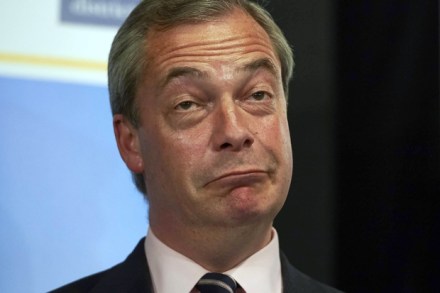
As David Cameron predicted, we are hearing all sorts of ‘noises’ on whether or not his European renegotiation will succeed or fail. But under the noise, as James explains in the magazine this week, the ‘Yes’ campaign to stay in the European Union has already begun. The ‘Yes’ side has many advantages, not least because it has the positive word and is defending the status quo, both of which appeal a little more to voters. It can also enjoy the support of both the Whitehall and EU machines, which is not unimportant. Meanwhile, the frustrations in the ‘No’ or ‘Out’ camp largely focus on timing. Ukip are particularly annoyed that

The Electoral Commission needs reforming. Will anyone dare try?

The Electoral Commission (ElCom) is an institution with a lamentable record of failing to fulfil its role as guardian of our political system. After so many contrary and arguably politically partisan decisions in recent years, one has to ask:  Who guards this guardian? Its chairperson Jenny Watson, as a former women’s rights activist and former member of Liberty and Charter 88, has a strong left-wing influence in her background. Why Watson was ever considered an appropriate candidate for such a politically sensitive role is open to question. She began in the role in 2009, appointed by the Labour Government under Gordon Brown’s premiership, which perhaps explains a great deal. What is less easy

Diary – 4 June 2015

For the first time since the terrorist attack on the Sri Lankan team six years ago, a Test match side has visited Pakistan. The Zimbabwe tourists, playing at the same Lahore stadium where the attack was mounted, were greeted with wild enthusiasm. Less well reported has been the fact that a team of English cricketers (including myself and Alex Massie of this parish) has been touring the Hindu Kush. We played in Chitral, Drosh, Ayun, Kalash and Booni. In these mountain areas many of our opponents were using pads, gloves and a hard ball for the first time. Still, we were overwhelmed, rarely losing by fewer than 200 runs in

Portrait of the week | 4 June 2015

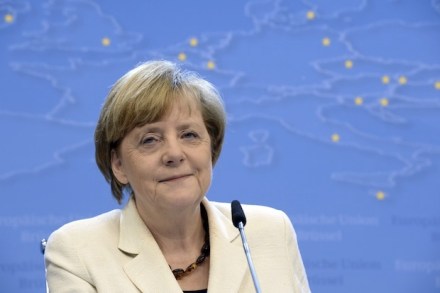
Home David Cameron, the Prime Minister, toured Europe trying to gain support for reforms to favour Britain’s position in the European Union. Angela Merkel, the Chancellor of Germany, said she did not rule out treaty changes in Europe and would be a ‘constructive partner’ of Britain in seeking reforms. Nick Clegg, the former deputy prime minister, was found to be on a list of 89 figures from the EU banned from entering Russia. Jeremy Hunt, the Health Secretary, said he would do something to reduce the cost of agency staff for the NHS in England, which amounted to £3.3 billion last year. The government, which has reduced its stake in Lloyds

The Spectator’s Notes | 4 June 2015

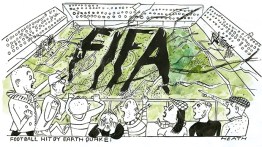
We in the West all hate Sepp Blatter, so we pay too little attention to the manner in which the Fifa executives were arrested. For what reason, other than maximum drama, were they all ensnared in a dawn raid on their hotel in Zurich? Are we really satisfied that the US authorities should behave in this way outside their jurisdiction? What is left of Swiss independence if they act thus under US pressure? Can we be confident that this very fat man called Chuck Blazer really exists, or has he been invented by Hollywood? In America, lawyers are more like political players or business entrepreneurs than the sub-fusc professionals of

The march of the ‘yes’ men

Forty years ago this week, Britain voted to remain part of the European Community. That remains the only direct vote on the European question that the country has had. The promise of a say on the EU constitution was shelved when that document metamorphosed into the Lisbon Treaty, and the ‘referendum lock’ that the coalition introduced has not yet been triggered by a transfer of power to Brussels. So it’s a historic process that the government will begin on Tuesday, with the first Commons vote on its referendum bill. Straight after the election, there was much speculation that the government would opt for an early referendum on EU membership, rather

PMQs sketch: And they’re back

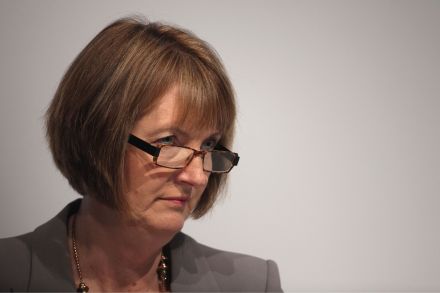
‘Don’t gloat’. Cameron trotted along to the Commons today with this commandment ringing in his ears. He nearly managed it. But his manner betrayed his state of mind. There was an audible zing, an irrepressible sunniness in his voice as he inaugurated his second term. ‘This morning I had meetings with ministerial colleagues and others.’ Rarely has that formula held such a fizzy, cocaine kick. Labour’s acting leader, for now, is Harriet Harman. Is she about to pack it in? She seemed passionless and out of sorts. A scowl kept stealing across her lips as she delivered her joke-free lines. She was like a disgruntled lady mayoress opening a fete

One human right should not be able to extinguish another human right

The Human Rights Act (1998) has a big fan base. In legal, political and celebrity circles there is much enthusiasm for it. Yet the law is not giving us the rights and freedoms we need, because each right can be played off against another. We’ve been losing our human rights in the name of human rights. In the mid-nineties I began chronicling and campaigning for a right to free speech while challenging the Human Rights Act. I couldn’t understand why Britain, a country renowned for its tolerance, was clamping down on the right to free speech (Article 10) including what newspapers published, in the name of a right to privacy (Article

The two tightropes that Cameron must walk on Europe

David Cameron has to walk two tightropes on Europe, and at the same time too. The first is to negotiate a deal with other European leaders that satisfies the bulk of his Euro-sceptic party. If this was not difficult enough, simultaneously Cameron has to show voters that the European question isn’t consuming all of his government’s energies. For despite its importance, it still rankles relatively low on the public’s list of priorities. To address the latter point, I’m told that Cameron will make a major domestic policy announcement in the week of every EU summit in an effort to show that he is not taking his eyes off the home front.

David Cameron’s contradictory EU stance

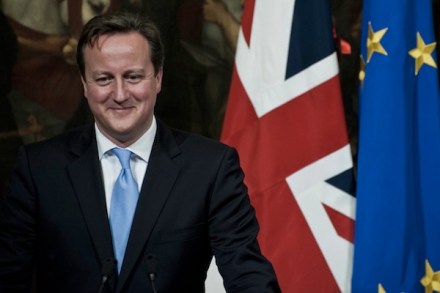
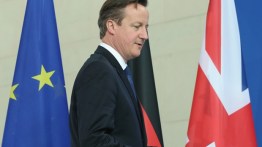
Of all the talks he will have with European leaders about his plans to renegotiate Britain’s relationship with Europe, David Cameron was always likely to enjoy his meeting with Angela Merkel the most. And she doesn’t seem to have disappointed him, saying treaty change was not ‘impossible’ and that ‘we would like to be a part of the process that is going on in Great Britain at the moment and we would like to be a constructive partner in this process’. This is very encouraging for Cameron, though the feeling in Europe generally is still that treaty change is too hard or inconvenient. Which is why Number 10’s insistence on

Barometer | 28 May 2015

Steam privatisation Cunard celebrated its 175th birthday by sailing three liners down the Mersey. The formation of the Cunard Line was an early triumph of privatisation. — The Post Office had been operating a monthly service to New York with sailing brigs since 1756. In 1836 a parliamentary committee decided that a steamship service should replace it, and that it would be more efficient for the Admiralty to put it out to tender to private operators. — Samuel Cunard defeated the Great Western Steamship Company and the St George Steam Packet Company by offering a fortnightly service from Liverpool for an annual subsidy of £55,000. The service, which at first only

Will Cameron’s renegotiation efforts be boosted by the Out campaign’s troubles?

David Cameron is in Holland and France today trying to pave the way for the renegotiation of the terms of Britain’s EU membership. Number 10 believe that now the referendum is definitely happening, the bill for it was published today, they can get other countries to engage with Cameron’s concerns. As I say in the column this week, Cameron’s renegotiation strategy has become clearer in recent weeks. Rather than trying to address every concern about EU membership, he is – as one Cabinet Minister told me – going to ‘focus on three or four big things and make a really big push on them.’ The fact that Iain Duncan Smith

Tony Blair has long been an irrelevance in the Middle East peace process

Following months of speculation, Tony Blair has finally announced he is standing down as the Quartet Representative to the Middle East after eight years in the post. It is tempting to ask whether anyone will notice. His time in the job has been marked by a stagnation of the Peace Process, a hardening of the position of increasingly belligerent Israeli governments and a growing distrust among the Palestinians. Tony Blair himself had long become an irrelevance in negotiations. The truth is that Blair was hamstrung from the moment he took the job (immediately after he stood down as Prime Minister in 2007). He was never a ‘Peace Envoy’, although there was

Cameron’s EU rollercoaster

[audioplayer src=”http://rss.acast.com/viewfrom22/defeatingisis/media.mp3″ title=”James Forsyth and Rob Oxley discuss David Cameron’s EU negotiations so far” startat=1493] Listen [/audioplayer]We have just had a very insular general election campaign, but the mood at Westminster is now determined by news from foreign capitals. There was a flurry of excitement last Wednesday when the German finance minister, Wolfgang Schaüble, suggested linking the British renegotiation to eurozone reform. It led to much talk of a European ‘Grand Bargain’, with Germany and the northern European countries given greater supervision of eurozone finances, the French and the southern Europeans given an explicit, written commitment to ‘solidarity’ within the currency union, and the British offered single-market protections, an opt-out

Cameron’s friend in Brussels

The Spanish, in their local elections, just elected a bunch of radicals who oppose the austerity needed to keep Spain in the euro. Poland on Monday elected a Eurosceptic challenger from the conservative Law and Justice party. And leaks from the Euro-summit suggested that David Cameron will respond to this rare combination of crisis and opportunity by demanding… well, not much in the way of reforms and concessions. Admittedly these leaks may be feints to mislead all sides about London’s negotiating strategy. It’s early days. Nor is Poland yet a reliable ally for Britain in such negotiations: its government will be divided between a Eurosceptic president and a pro-Brussels administration

Which behaved worse: callous Thomas Cook or cynical Barclays?

Which is worse, morally and reputationally — to be Thomas Cook, shamed by its refusal to show proper human concern, for fear of being taken to admit responsibility, over the death of two children by carbon monoxide poisoning from a faulty boiler while on holiday in Corfu; or to be Barclays, fined almost $2.4 billion (heading a list of banks fined more than $9 billion between them for similar offences) for conspiring to manipulate the foreign exchange market over a five-year period? Ethicists could agonise over that one for weeks. But in terms of customer response, it’s clear that the travel agent — whose mistake was not to reject legal advice

Thankfully for Cameron, EU treaty change isn’t a black and white issue

It seems every week now there is a story about France and/or Germany ruling out EU treaty change and thereby putting pay to David Cameron’s EU reform push before it has even really begun. While this makes for good headlines, the reality is much more nuanced. Take today’s example: A leaked preliminary draft of a Franco-German paper on Eurozone reform reported by Le Monde and picked up by the Guardian, stated that in the short term (the next few years) the countries will focus on working within the EU treaties, which has been seen as a blow to Cameron’s reform push. There are some important points to keep in mind

Why David Cameron should take his time with the EU referendum

Exhilarating, isn’t it? A referendum on Britain’s continued membership of the European Union is at hand. For the first time in a generation, there’s a real possibility that Britain might leave. With that prospect so tantalisingly close, it’s tempting to want to rush ahead. ‘Bring it on!’ many regular readers will say. Hold on. Let’s make sure we maximise our chances of winning. Like it, or not, a great many voters – despite all that Brussels red tape and all those ghastly EU commissioners – have yet to be convinced that we should leave. If you think that winning over fifty percent of the votes is easy, just cast your

Cameron’s EU charm offensive must seem genuine

There is so little detail on David Cameron’s talks with Jean-Claude Juncker that it is almost outweighed by the briefing on what the pair ate while at Chequers (a spring salad, followed by pork belly and vegetables and a dessert of lime bavarois). What we were told was that ‘Mr Juncker reiterated that he wanted to find a fair deal for the UK and would seek to help’ and that ‘they talked through the issue at some length in the spirit of finding solutions to these problems. They agreed that more discussion would be needed, including with other leaders, on the best way forward’. Cameron intends to speak to all