Douglas Carswell

The Farage factor

From our UK edition

45 min listen

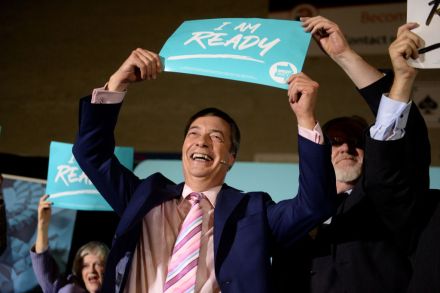
This week: The Farage factor. Our cover piece looks at the biggest news from this week of the general election campaign, Nigel Farage’s decision to stand again for Parliament. Farage appealed to voters in the seaside town of Clacton to send him to Westminster to be a ‘nuisance’. Indeed, how much of a nuisance will he be to Rishi Sunak in this campaign? Will this boost Reform’s ratings across Britain? And could it be eighth time lucky for Nigel? The Spectator's political editor Katy Balls joins the podcast to discuss, alongside former Clacton and UKIP MP, Douglas Carswell (2:32).Then: Gavin Mortimer reports from France ahead of the European and local elections this weekend, where the country is moving to the right.
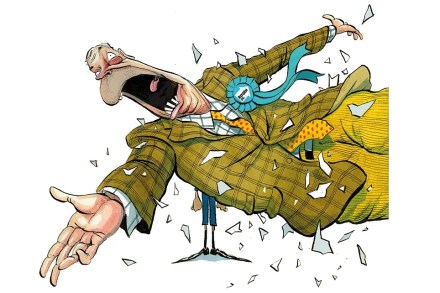
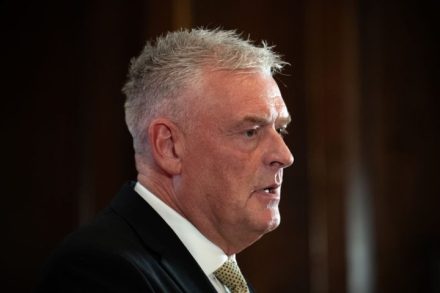
Lee Anderson should call a by-election after defecting to Reform

From our UK edition

Lee Anderson, who has defected from the Tories to Reform, is about to find out that switching parties is not an easy thing to do. Politics is so tribal that most politicians are inclined to stick with ‘their side’ no matter what. When they change sides, it’s worth asking why. Having once been a Conservative MP in a solid blue constituency, who made the decision to join Ukip – which at the time had never won a parliamentary seat – I know how difficult a decision it can be. Anderson is likely to have had a lot of sleepless nights.   If you decide to change party, you owe it to your electorate to go back and ask their permission Cynics might suggest that Anderson, who had already lost the Tory whip, was pushed, rather than jumped. I am not sure that is entirely true.

lockdown files matt hancock

Why everyone in Britain is talking about the Lockdown Files

If you happen to be having a bad day, spare a thought for someone called Matt Hancock, possibly the most hapless person on the planet.  A former British health minister, Mr. Hancock has become a national laughing stock across the Atlantic. First, he got fired from his job presiding over the UK’s National Health Service for breaking his own Covid lockdown rules. Unlike Gavin Newsom or House Speaker Nancy Pelosi who did something similar, Hancock managed to get caught out in spectacular fashion. After helping issue edicts making it illegal for anyone in Britain to socialize with someone outside their family, Hancock was filmed canoodling his mistress like a high-school senior at prom night.  A real-life version of Britain’s Mr.

How to defend free markets in the 21st century

From our UK edition

It wasn’t Liz Truss’s failure to make big changes we should worry about. It was her inability to deliver even the most modest pro-market reforms after a decade in high office that ought to alarm us. As Prime Minister for six weeks, Truss tried and failed reduce Britain’s tax burden to about the level it was under Gordon Brown. As a cabinet minister for ten years, Truss – a mother as well as a free marketeer – tried to reduce the costs of childcare by reducing red tape. Her efforts to change legally mandated child/carer ratios, despite mountains of evidence it could be done safely, were persistently thwarted.

Stuart Wheeler: 1935 – 2020

From our UK edition

If he had lived in a less meretricious age, Stuart Wheeler would be a household name. An extraordinarily successfully entrepreneur, Stuart made his fortune founding the spread betting firm, IG Index. He then proceeded to spend a great deal of it restoring Chilham Castle in Kent and supporting the Conservative party during its nadir at the time of the Blair hegemony. But for me it is the effort Stuart made to ensure that Britain regained her independence by leaving the European Union that really makes him stand out. At a time when the Eurosceptic movement was not only outside the mainstream, but seen by many as a hopeless cause supported only by those beyond the pale, he was a source of quiet inspiration. As a new MP in 2005, I found Stuart to be a constant encouragement.

Brexiteers shouldn’t vote for the Brexit party

From our UK edition

The only person ever elected for the Brexit party’s predecessor, Ukip, at a General Election, I really can’t see the point in voting for them now. Why? If you want Brexit done, Boris needs to be returned as Prime Minister on 12 December with a working majority. Backing him is the only way to beat the Brexit blockers, who’ve done everything they can to try to stop us leaving. A vote for the Brexit party won’t just add to the uncertainty. When Nigel Farage announced he’d be fielding candidates in every seat across the country, unless Boris ditched his deal, he also suggested that the Brexit party now wanted us to remain in the EU for an extra six months. You read that right.

I’d vote for Boris Johnson’s Brexit deal in a heartbeat

From our UK edition

As the only person ever to have been elected for Ukip in a General Election, if I was in the House of Commons today I would not just vote in favour of Boris Johnson's deal. I would do so cheerfully in the knowledge that this is pretty much what I have spent much of my adult life campaigning for. Firstly, UK law will become supreme in the UK. No longer will we be under the jurisdiction of the EU courts.  Nor will we be bound by EU regulation. There’s none of Theresa May’s nonsense about a ‘common rule book’. We will be free to determine our own standards. Who knows, we might even start to use elections to decide such things, restoring purpose to our derelict democracy in the process?

Why David Cameron should take his time with the EU referendum

From our UK edition

Exhilarating, isn't it? A referendum on Britain's continued membership of the European Union is at hand. For the first time in a generation, there's a real possibility that Britain might leave. With that prospect so tantalisingly close, it's tempting to want to rush ahead. 'Bring it on!' many regular readers will say. Hold on. Let's make sure we maximise our chances of winning. Like it, or not, a great many voters - despite all that Brussels red tape and all those ghastly EU commissioners - have yet to be convinced that we should leave. If you think that winning over fifty percent of the votes is easy, just cast your mind back to election night in your constituency... For almost forty years, we Brits have complained about Europe.

A credit boom before each bust

From our UK edition

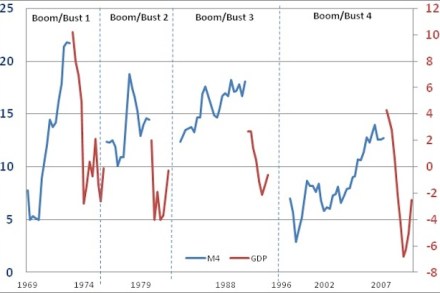
Here is a graph that shows the four economic downturns Britain has been through (red lines) over the past forty years. What I find strking is that each downturn was preceded by the same thing: a surge in the growth of money (blue line). In other words, the bust followed an unsustainable credit-induced boom. The motives and justification behind monetary policy leading up to each boom/bust might have been different. In the early 1970s, monetary policy was shaped by Competition and Credit Control (CCC) reforms. In the late 1980s, those who decided monetary policy wanted to shadow the Deutschemark, then join the Exchange Rate Mechanism (ERM). After that unhappy experience, monetary policy was made in order to target inflation.

Toryism’s trip back to the 70s

From our UK edition

Remember Ted Heath’s greatest hits of the 70s? Riding high in the charts was his 'prices and incomes policy'. Followed by 'state subsidies' and 'picking the winners'. And who can forget the smash hit 'Barber boom' – with the bust on the B side. Far from being a distant memory, too many Tories today are carrying on as if they were in a Ted Heath tribute band. Instead of a statutory incomes policy, they are crooning about something called a 'living wage'. That’s right folks, these retro Tories want us to overturn one of the greatest Thatcherite achievements and undo the free labour market reforms. (Heck, why don’t they go the whole hog, and insist that the living wage be set at £50,000 a year, and we’d all be rich?

iDemocracy and a new model party

From our UK edition

The Conservative party is a bit like HMV, the bankrupt music business. For years, just like HMV, we were market leaders. We won 44 per cent of the vote in 1979, 42 per cent in 1983 and 44 per cent again in 1987. But like the old music retailer, we have been losing touch with our customer base.  HMV sold music the wrong way, via a costly chain of shop outlets. We, too, have been retailing politics the wrong way. We last won a Parliamentary majority over 20 years ago. When we gained office after the 2010 election, we did so having got 36 percent of the vote. A pinnacle of success? Thirty-six per cent would have once been regarded as a disastrous trough. The stark truth we must confront is that the Tory party has wasted away across many parts of the country.

Let’s have iMembers in our parties and really change politics

From our UK edition

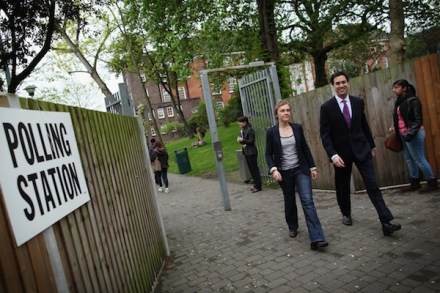
Ed Miliband got it right. Faced with a fiasco in Falkirk, where the trade union, Unite, attempted to fix the Parliamentary selection process, the Labour leader has come out on the right side of the argument about political reform. In our eagerness to attack him, we Conservatives are in danger of putting itself on the wrong side of the debate. Falkirk-type fixes have been going on for years. Safe Labour seats have been run as trade union fiefdoms for as long as anyone can remember. What Falkirk demonstrates is not that tiny cliques have been manipulating party selections, but that that old school way of doing politics is no longer acceptable. The fallout from Falkirk illustrates that deferential democracy is dead.

Why I love Beppe Grillo

From our UK edition

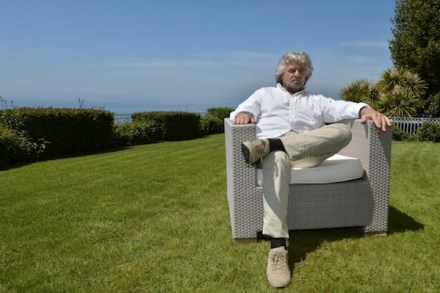
'Crazy Italians!' you might think.  Offered the choice between Bunga Bunga Berlusconi, an ex-Communist and a Brussels stooge, one in four of them went and voted for a stand up comedian. Ever since Beppe Grillo’s shock success in the Italian elections, serious pundits in the mainstream media have been inviting us to disapprove. We are supposed to roll our eyes at the idea that Italians seem unwilling to accept austerity.  We are meant to tut tut at the failure of their democracy to produce a stable administration willing to take instruction from the Eurosystem. This only goes to show, imply the poobahs and the pundits, that Italian democracy is in crisis. Nonsense.  What happened in Italy shows that politics is – thanks to the internet – being reborn.

Time to lift the House of Commons off its knees

From our UK edition

What if we win office, but nothing changes? What if, instead of running a new government, triumphant Tory ministers discover that the machinery of government runs them? Making sure that does not happen requires a strategy. Opposition may be a time for tactics, but how we fare in office will hinge on having a robust, coherent plan. We must have a strategy to make government properly accountable to parliament, and parliament to the people. The MPs’ expenses scandal has turned many people against democracy. ‘If this is how those scoundrels behave,’ runs the argument, ‘MPs can’t be trusted with anything.’ It is almost as if being elected to public office now serves as a disqualification for being put in charge of anything.