Education

Editor’s Letter | 14 March 2019

What should we do with difficult students? The ones who distract everyone else in the class, and don’t care how they are punished? Some schools exclude struggling pupils because they are worried that their exams performance might drag down the class’s grades. But children have a right to an education, says Sophia Waugh, so we need to find a solution. Former teacher Hannah Glickstein agrees, but argues that new Ofsted rules have been put in place by bureaucrats with no experience of teaching. It might not be the sexiest of subjects, but it’s certainly an important one. Talking of exams, Ross Clark takes a look at the rise in unconditional offers to university. As someone who was offered one himself, he thinks that they are a terrible idea.
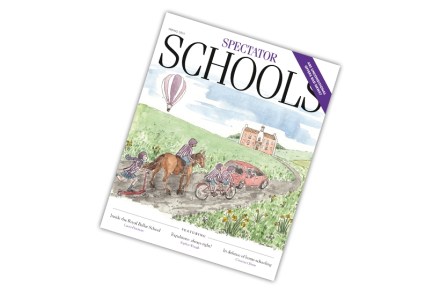
Save your children – take them out of school

A good decade or so ago I wrote a fairly vituperative article in response to a piece by the writer James Bartholomew in this magazine, who had announced that he intended to home-school his daughter Alex, aged nine. James had explained in great detail how he would inculcate his charge in the liberal arts: ‘I don’t want to give the impression that I will be a Gradgrind. We will have some fun, too. Alex loves to paint. We will go to the major Cézanne exhibition in Aix and see his paintings of Mont Sainte-Victoire. Then we will see the mountain itself from the same viewpoint that he used. I hope we will settle down to paint it ourselves — perhaps copying Cézanne’s technique.’ Ever the class warrior, I was annoyed by this paragraph in particular.

Just how bad are Donald Trump’s grades?

From our US edition

Donald Trump really likes to brag about his brains. To listen to him, he has kind of a supercomputer whirring away there beneath the plume of iridescent hair. He can do anything better than anyone else, whether it’s spending a few hours learning about nuclear strategy or winning trade wars. Besides, his uncle taught at MIT, which means that the Trump gene pool couldn’t be more robust: ‘My two greatest assets have been mental stability and being, like, really smart.’ For good measure, Trump noted that his ability to win the presidency on his first attempt ‘would qualify as not smart, but genius... and a very stable genius at that!’ Well, well, well. Now it turns out that Trump went to great lengths to suppress his high school transcripts.

donald trump grades

The problem with measuring progress

The Department for Education (DfE) published its finalised data on the 2018 GCSE results last week, revealing that, for the second year running, white pupils are doing worse in English secondary schools than any other ethnic group. According to the new Progress 8 measure, which assigns a score to GCSE entrants based on how much progress they’ve made between the ages of 11 and 16 relative to children of similar abilities, Chinese pupils do the best, with a score of 1.08, Asians are second (0.45), then blacks (0.12), mixed race (-0.02) and, bringing up the rear, whites (-0.10). What that score means is that on average white children are behind by a tenth of a grade in each of their best eight GCSEs compared to all English schoolchildren with the same grades at the age of 11.

The man who would be king

Last year on Who Do You Think You Are?, Danny Dyer — EastEnders actor and very possibly Britain’s most cockney man — discovered that he was a direct descendant of Edward III. Luckily, nobody had the heart to tell him that for somebody of English stock the chances of not being are estimated at 0.0000000000000000000000000001 per cent, and Dyer reacted with a memorable mix of excitement, delight and overwhelming pride. Now, in the two-part Danny Dyer’s Right Royal Family, both he and BBC1 are milking his regal lineage for all it’s worth in what might well be the oddest TV show of recent times.

The sideways thinking of Silicon Valley

From our US edition

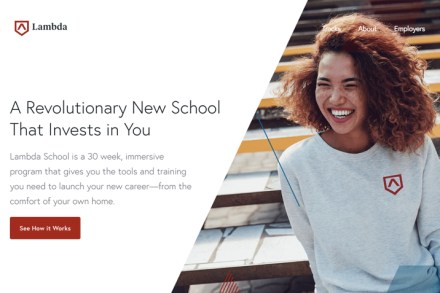
It was the tweet posted by the New York Times that caught my eye: ‘Silicon Valley is backing a novel idea: instead of charging students tuition, students go to school for free and are required to pay back a percentage of their income after graduation, but only if they get a job with a good salary.’ It is all happening at the Lambda School, a new online learning start-up that this week won millions of dollars in backing from a glittering line up of venture capitalists – including Google Ventures, Ashton Kutcher, the actor turned Shark Tanker, and Geoff Lewis, an acolyte of Peter Thiel, the co-founder of PayPal.

lambda school silicon valley

Beyond Brexit | 13 December 2018

None of us can predict the potential fallout from Brexit, good and bad. What began as a vote of confidence in our institutions has shown them to be dangerously fallible. A country where people usually rub along together is now marked by a cultural and emotional rift. If Brexit does continue to dominate our politics for years, will it mean a reform of our institutions, or a battening down of the hatches by a beleaguered elite? Will the House of Lords, having alienated its natural defenders, at last be seriously reformed? Shall we try to restrain the dangerously capricious powers of prime ministers? Shall we empower local government? Both Brexiteers and Remainers will be in a rather militant mood.

Steven Van Zandt: Teachers make great audiences, probably because they never get out

From our US edition

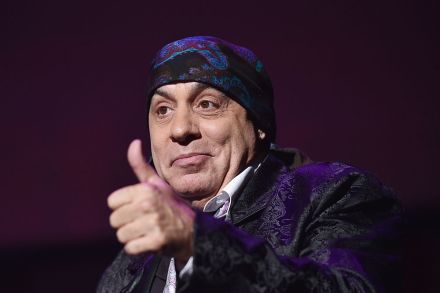
I’m at the airport in Salt Lake City, waiting for the snow to stop so we can get up to Vancouver. I’ve been on the road with the Disciples of Soul since a month before Thanksgiving. This tour, the Soulfire Teachers Solidarity Tour, has been going on and off for a year and a half now, and it ends on December 16. The road is a lifestyle I’ve gotten used to. I miss my wife, I miss my dog. But we don’t go out so long, three or four weeks at the most before going back home. It’s not like the old days, the we’d go out for a year, and stay out. It’s much more civilized now. The tour promotes my music-based school curriculum, TeachRock.org.

steven van zandt

Worrying about schools is more than a middle-class obsession

The yearly scramble for school places is about to start and, as all British parents know, trying to find a school for your children can be an all-consuming business. When searching for a decent state primary for my own children, I was faced with intense competition for places in London along with soaring house prices. So I did what plenty of other middle class parents have done before me and moved out of the capital. For better or worse, my children's education has dictated everything: from where I live to my choice of career. On this week's Spectator podcast, Leah Mclaren takes issue with mothers like me. Isn’t the British obsession with schooling all about status anxiety and paranoia about our children’s life chances, she asks.

Class war

One thing I love about my adopted country is the widespread cultural contempt for dullness. Unlike North Americans, intelligent British people rarely drone on in a witless or self-aggrandising manner. They deflect, make jokes and generally aim to please. But there is one boring subject no one here ever seems to tire of and that is schooling. ‘So where do your kids go?’ I’ve learned is just as loaded and inescapable a London dinner party question as ‘What do you do?’ or ‘Where are you on Brexit?’ If you choose private, you’d better have a plausible explanation (e.g. ‘We just didn’t want to make our child the social experiment’).

How the Tories’ education shake-up risks alienating Jewish voters

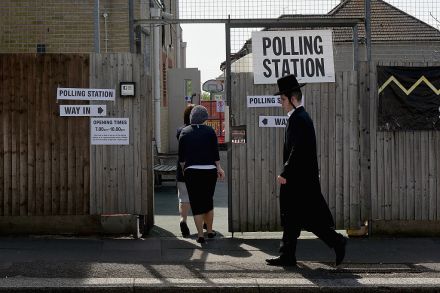
Labour desperately needs to win over Jewish voters if Jeremy Corbyn is to make it to Downing Street. At the snap election, the party was damaged by underperformance in seats with large Jewish populations: Hendon (held by the Tories by a only 1,072 votes) and Finchley (Tory majority 1,657) are two examples. Labour's summer of anti-Semitism has made winning over such voters even trickier. But while the Tories look well placed to keep hold of these seats, they appear to be doing their best to imitate Corbyn and alienate Jewish voters. An increasingly bitter row between the government and orthodox Jewish communities across Britain is to blame for this.

Uncommon knowledge

So farewell, then, to the Common Entrance Exam, bane of a million schoolchildren’s lives since it was introduced in 1904. Three of the biggest public schools — St Paul’s, Wellington College and Westminster — are giving up the exam. From 2021, they will do the pre-test: verbal and non-verbal reasoning, maths and English, taken at the age of ten and 11. Common Entrance was a more gruelling thing, involving up to 14 exams over three days. It’s under-standable that schools want to ease the strain on over-examined children. But all the same, it’s the latest blow to the Great British Eccentric Exam Question. I still cherish the eccentric questions from my own Westminster entrance exam in 1984:   1.

Don’t tell the parents

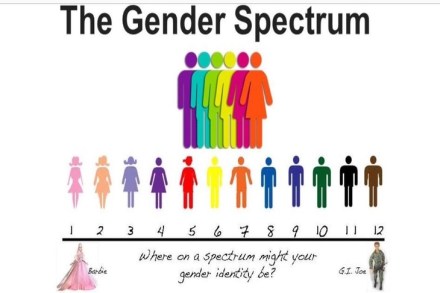
How can we help transgender children? This is a question greatly exercising politicians and many are confused about what to do. In Scotland, children are now expected to ‘demonstrate an understanding of diversity in sexuality and gender identity’. The Scottish government supports a new classroom resource that tells primary school children that they may consider themselves to be a boy, a girl, or neither. ‘You know who you are,’ it explains. What guidance are teachers given? I found out two years ago when I was one of the 3,000 teachers and classroom assistants from across Scotland dispatched for training by LGBT Youth Scotland, a campaign group.

If girls don’t like physics, it’s down to biology

I was delighted to see Claire Foy win an Emmy award for her portrayal of the Queen in the fine Netflix series The Crown. It may have helped assuage her annoyance at initially being paid £200,000 less than her co-star, Matt Smith, who did a fairly good impersonation of a young, brooding Duke of Edinburgh. Foy had more lines than Smith, is as capable an actor as Smith, was the leading role and, importantly, is at least as fit as Smith. This last point is vital because television often casts people on account of their attractiveness, because viewers like looking at attractive people rather than at hideous fat munters. Whatever, there is still sexism around and Foy’s treatment seems to be a good example of it. I can think of no other reason she was paid less, other than sexism.

The bad boys of Naples

Goodnight, Caecilius. Goodnight, Metella. Farewell, faithful Cerberus the dog. What a fate. Buried under the ash and rock at Pompeii. ‘Eheu,’ as they say in the Cambridge Latin Course. ‘Oh dear, oh no.’ But what’s this? A boat leaving the Bay of Naples… A young man on board… Coughing black dust, but… alive. Yes, it’s Quintus, sailing to safety and Book Two. Here we will learn about Quintus’s further adventures in Roman Britain, trips to the baths at Aquae Sulis and an audience with good King Cogidubnus. What fun we had with Caecilius and Co. What bread, what circuses. What larks with Grumio and Clemens, the two buffoonish slaves.

Summertime blues

Every year, like clockwork it comes, the traditional concern that the younger generation don’t do summer jobs like they used to. As the school holidays approach a politician is wheeled out to write a nostalgia piece about part-time jobs, and the ‘essential skills’ these offer. Holiday and Saturday jobs, you see, are the foundations of a successful career, with their promise of resilience-building and priority-juggling. Some statistics will be cited about businesses being desperate for applicants with ‘soft skills’, and on cue, media-friendly CEOs are trotted out to support whichever wayward minister has been handed the keys to the Workshy Teenagers wagon.

Did I destroy my daughter’s prospects?

Every year, thousands of parents face the situation I did in 2014 when I realised that I could no longer afford to educate my ten-year-old daughter privately. At first, I didn’t panic. After all, I lived near some excellent state schools. After queuing for two hours one cold winter Saturday morning for Open Day, we learned that to gain a place at Holland Park you had to live within yards of it, or win a heavily oversubscribed art scholarship, which my daughter attempted — and failed. I still didn’t worry. Why should I have, when 93 per cent of children under 16 in England are educated in state schools? We queued for one Open Day after another. We tried a couple of church schools, but as non-churchgoers our chances were slim.

A parent’s dilemma

In my study at home stands a small cork board with the names of eight target schools for my ten-year-old son. The state schools are on the left, the private schools on the right. The decision is due soon and I still have no idea what to do. There aren’t many things that Britain genuinely does better than anyone else in the world, but secondary education is one of them. The discerning Russian plutocrat, who could buy anything anywhere, would have his son in England for his teenage years followed by an American Ivy League university. International league tables rank our private schools top of the world — their quality is world famous. But what’s less well-known is that exam results in the best state schools are now just as good.

School report | 6 September 2018

    MAKING THE GRADES  When he was education secretary, Michael Gove took it upon himself to reform the GCSE exam system. The A* to G grading system was replaced by a numerical one, with the aim of making it easier to differentiate between the top candidates — A* and A grades were, for example, replaced with three grades: 7, 8 and 9. These new exams were supposed to be harder than the previous ones, with former Harrow headmaster Barnaby Lenon commenting that they ‘contain questions of a level of difficulty that we have not seen since the abolition of O-levels in 1987.’ Despite all of this, GCSE results improved this year. The proportion  of students achieving the pass mark (previously a C, but now a 4) increased by 0.