Drink

The insidious creep of plastic glasses

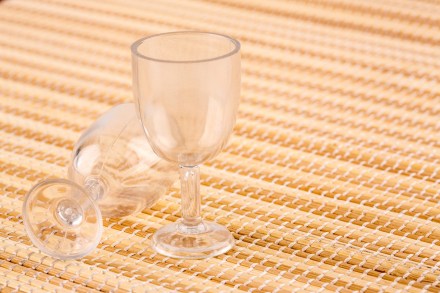
It was the afternoon of the first day of the second Ashes test at Lord’s. In the brief lull between overs, the camera panned, as it often does, to a recognisable face in the crowd: Jacob Rees-Mogg. The traditionalist Tory presented exactly as you’d expect: Savile Row suit, tie and cufflinks. But there was one wrong note: he was drinking from a plastic glass.  Say what you like about Mr Rees-Mogg – and people do – but one attribute that I think we can all agree he possesses in abundance is that he’s in touch, almost viscerally, with his own sense of how things should be done. And this sense, as I perceive it, would very much preclude drinking from a plastic cup.

Letters: Prigozhin is the model of upward mobility

Prigozhin’s example Sir: Educationalists and policy advisers have long been concerned with identifying alternative routes of upward social mobility. The career of Yevgeny Prigozhin provides an illuminating example of precisely this (‘Crime and punishment’, 1 July). Instead of spending years swotting away at A-levels and business studies degrees, Yevgeny opted for hands-on commercial experience by running a hotdog stand in a big city. He was quick to recognise the value of physical fitness in the pursuit of ambition by engaging in regular training at a local gym. Networking was always high on his agenda, and he soon became close friends with an employee of the state intelligence agency who eventually became President of Russia.

When is a martini not a martini?

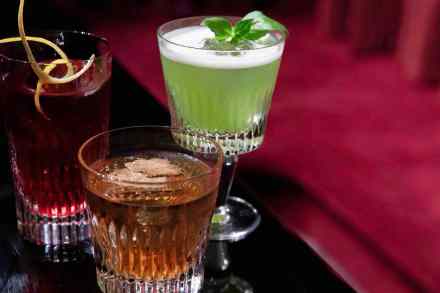
Considering its status as the canon’s most iconic cocktail, it’s remarkable that the martini doesn’t have a single agreed upon recipe. Like many great drinks it comes with more of a template than exact specifications, which basically dares us to riff on the formula. Historically, this has meant altering the garnish – swapping the olive for a cocktail onion, perhaps – or adding a dash of bitters. Today, though, a whole generation of bartenders is using the martini to channel their creativity, introducing bespoke ingredients and flavour combinations to this old favourite. But just how many times can you remix the martini and still retain its essential martini-ness? Gamely, I investigate.

What’s so super about Super Tuscans?

In Fellini’s La Dolce Vita, the hopes embodied in the title dissolve into grimness and black irony. It was all Mussolini’s fault. Despite the endless opportunities Italy offered for enjoyment, Fellini never trusted his own country, or his countrymen. He could not relax into dolce far niente. For decades, many Italian wine-makers churned outa mass-market product to sell cheaply Perhaps he should have spent more time in Tuscany, surely the most civilised region on earth. Venice may claim to be La Serenissima, but among Tuscany’s gentle hills, hill villages and glorious cities, nature and man are in a harmony so serene that one can almost hear the music of the spheres.

The 10 best wines for a summer barbecue

The days when ‘barbecue’ meant a lukewarm beer, bun and burger are long gone.  We’re putting more effort than ever into our outdoor dining – from whipping up zingy marinades with ingredients you’d barely heard of five years ago to diligently waiting for that perfect halloumi char.  All this extra effort on the food front surely warrants some attention to your drinks choices, too. Here are the ten best wines to whip out for a summer barbecue – and the foods to pair with them.  A Growers Touch Durif 2020 Wickhams, £12.20 (or £10.

Where to drink in Miami

From our US edition

Ask anybody who’s really been in a band what being a musician is like, and they won’t tell you about the moments that make it into the Hollywood biopics. To them, the experience is not the hero-shot onstage, or the girls they picked up after a killer set, or anything you saw in Ray or Bohemian Rhapsody. The reality of being in a band is of driving from place to place. Think of Bob Seger’s baleful “Turn the Page” with its opening lyric setting the place: “On a long and lonesome highway, east of Omaha,” where he’s “ridin’ sixteen hours and there’s nothin’ there to do.” This raises an issue of where to drink in Miami.

Miami
wine drinkers diary champagne

A drinker’s diary

From our US edition

It is a crisp, beautiful spring day as I write. The air is light and clear. The skies are a color I have always thought of as Virgin Mary blue, punctuated here and there by attractively arranged puffs of clouds at their whitest and least threatening. The greens of the verdure are at their most flashing and emerald-like. That freshness will be enveloped by summer fullness by the time you read this, a contingency that makes me conclude that something like an abbreviated wine-diary — some of what Kimball drank during the month of May — might appeal to the connoisseurs and aficionados of the column. Let’s start at the tip-top.

The beauty of rosé and roses

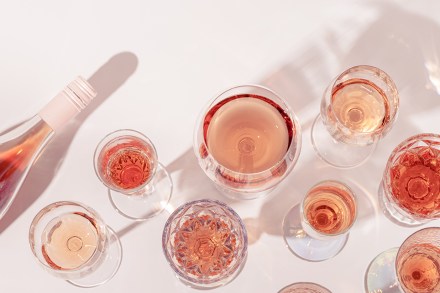
What an idyllic setting. We were amidst the joys of high summer in England, with just enough of a breeze to save us from the heat of the sun, and the further help of a swimming pool. Water without, wine within. We were also surrounded by roses, England’s flower, luxuriating in their beauty and innocence. Experts have applauded my friends’ rose-husbandry. It seemed to this non-expert that they have not merely created a good rose garden; they have triumphed with a great one. Yet other thoughts intruded. Godparents are supposed to abjure the devil. Might Satan not sue for breach of contract? Roses makes one think of Henry VIII. I have recently been reading C.J. Sansom: so much better than Hilary Mantel. His Henry is wholly convincing as a study of corruption and evil.

The Britishness of Bordeaux

Burgundy or Bordeaux? We were discussing that unending question during dinner over the weekend. I think that there is only one answer: ‘Yes.’ ‘But which, you clot?’ ‘Either. Better still, both.’ It is so much a matter of sentiment, and of which great bottle you have been lucky enough to drink most recently. But there is an argument, which is nothing to do with quality, that Bordeaux – claret – is more British. This is as true in North Britain as in England. There are various versions of a well-known piece of doggerel. My favourite is: ‘Proud and erect the Caledonian stood / Auld was his mutton but his claret good.

In defence of the boozy office party

I’m not big on nostalgia – if the past was so great, how come it’s history? - but I allowed myself a smirk of reminiscence on reading recently that Ann Francke, chief executive of the Chartered Management Institute (‘a professional body focusing on management and leadership’) has put the damper on the age-old tradition of getting blotto at work parties. Francke told the BBC that while hanging out after-hours with workmates is ‘a great team-building opportunity’, managers have a responsibility to keep inappropriate behaviour in check. ‘That might mean adding additional activities alongside alcohol, limiting the amount of drinks available per person or ensuring that people who are drinking too much are prevented from acting inappropriately towards others,’ she said.

A parting salute to the swizzle stick

From our US edition

We live in the age of takeaway-everything, a phenomenon amplified since the late, great plague by another barbarism: the drive-thru. You need no longer even get off your derrière to collect the goods. Just lower the power window, flash your phone, then “grab-and-go.” That this is a powerful cultural proposition the conga-line of cars filling multiple lanes at your local Chick-fil-A, where they have it down to a science, will attest. I recall my first innocent meeting with drive-thru, then called drive-in, in 1959 when a bank in the small town where my family lived cut a hole in the wall and installed the requisite sliding drawer. Things have clearly gotten out of hand since. Not all takeaway is created equal.

swizzle
horace

What to do when you only have modest wine on hand for a decorous guest

From our US edition

So, I’ve have been rooting around in Horace’s Epistles, which are full of amusing things. They really are not “epistles” in the conventional sense, since they were make-believe letters, artfully wrought jebux d’esprit that employ the convention of addressing a friend in order to entertain not (or not only) that friend (who may or may not exist) but one’s readers. Horace wrote two books of Epistles, one circa 21 BC when he was in his early forties, one a decade later, a few years before his death in 8 BC at the (it seems now) tender age of fifty-six. One that caught my eye when sitting down to write this column was Epistle 1.

Tinta de Toro: the Spanish red that helped Columbus make waves

I am assured that this is not a legend. But a few years ago, an Irishman’s life was twice saved by a raging bull. The Irish fellow was running with the bulls at a town near Pamplona. He tripped and was virtually impaled. The bull’s horn went into one side of the chap’s stomach and out of the other. He was rushed to a neighbouring hospital, which was accustomed to bull wounds, and the surgeons saved his life. While they were doing so, the aeroplane that he should have been catching took off. There were no survivors. Fifteen years later, the Irishman developed gut rot. One doctor wondered whether scar tissue from the horn wound might be causing the problem. So the patient was opened up. Scar tissue was indeed present and was excised, as was pancreatic cancer at a very early stage.

How to celebrate the coronation weekend

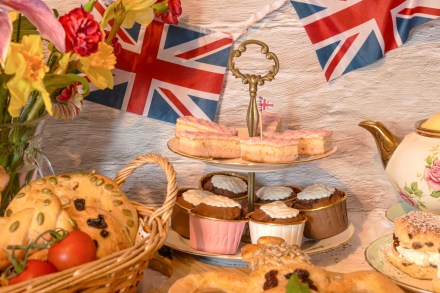
Lots of things seem to get described as ‘once in a lifetime’ experiences nowadays, but for many of us the coronation really will be just that. So, how to make the most of the historic long weekend? Clock off from work at a reasonable time on Friday and while getting dressed into your glad rags pour yourself a glass of English sparkling wine. Nyetimber and Hattingley Valley both have appealing coronation edition cuvées. Have some friends over – as with Christmas or new year, I think the tantalising eve of the big day is always the most fun time for a party. Serve some nibbles, such as Tyrrells's coronation chicken crisps, and a Jack Russell cake from the Waitrose coronation collection (at £24.99 their Leckford Estate Brut is also worth getting as a good-value English sparkling).

The ultimate guide to coronation food

There was nothing actually wrong with coronation quiche, Buckingham Palace’s suggested dish for a coronation lunch. Spinach, broad beans, cheddar: all fine. The trouble was, it wasn’t coronation chicken. When you’re following an actual classic, it’s impossible not to be overshadowed. And coronation chicken is that marvellous thing, a recipe which feels as though it has always been around because it’s so right as a combination of flavours and textures. But like every classic dish, it’s been traduced: take commercial mayonnaise, stir in curry sauce and a bit of mango chutney and a few raisins… and it’s cropping up in all sorts of weird combos now (CC scotch egg, anyone?).

The Loire Valley is the place for bargain hunters

From our US edition

North of Cognac and Bordeaux, due west of Burgundy, the valley of the Loire River, attended on the second half of its journey east by the Cher River, stretches from the Pays Nantes and the Atlantic Ocean to Orléans in the heart of France. It is not quite right to say that this area is like Hamlet’s “undiscovered country from whose bourn no traveler returns,” but it’s my sense that Americans tend to overlook it in favor of its flashier neighbors. This is a pity, not only because the Loire Valley boasts lots of excellent wine, but also because the region still offers many conspicuous bargains, something you will look long and hard for in Bordeaux or Burgundy.

loire

The art of Georgian toasting

From our US edition

There are a few words you need to know when visiting Georgia — gamarjoba for “hello,” madloba for “thank you” — but one word is absolutely crucial, and that is gaumarjos, for “cheers.” The Georgians are serious drinkers, as I recently discovered while visiting a friend in Tbilisi. And when they drink, they toast. And when they toast, they don’t stop toasting. In Georgia, raising a glass is an essential ritual of the supra, their ancient tradition of the feast. The recent discovery of a bronze tamada (“toastmaster”) figurine from 600 bc means it’s older than the development of their written language. As with any ancient ritual, toasting has its own set of rules.

Georgia

Where to find the best Guinness in London

London has always been dogged by the canard that the Guinness here can’t compete with what’s served across the Irish Sea. It is certainly difficult – perhaps impossible – to replicate the quality of the pints in Mulligan’s on Dublin’s Poolbeg Street, or at the Gravediggers by Glasnevin Cemetery. However, there are pubs here that do it admirably – if you know where to look. Whether you’re a lifelong aficionado, or you’re merely observant on St Patrick’s Day, these are some of your best bets for a great London Guinness: The Auld Shillelagh, Stoke Newington A stone-cold classic of a pub, the Auld Shillelagh’s deceptively small frontage on Church Street leads to a longitudinal bar that serves some of London’s finest pints.

Where to break Dry January

Anyone who did Dry January will by now be eyeing the door and contemplating a night on the town. Because it would be a shame to break your sober streak with any old rubbish, here’s a list of the very best places in London to drink right now. Even if you did that very British type of Dry January where you don’t go out for pints but have a bit of wine at home, you’ve definitely earned yourself a treat and should read on. Seed Library X Ruben’s Reubens, Shoreditch The barbecued bar snacks at Seed Library are unbeatable drinking food [Caitlin Isola] The East London hideout of cocktail avant-gardist Ryan ‘Mr Lyan’ Chetiyawardana slides into February with a fresh menu and barbecued bar snacks.

The beauty of the Beaumont inn

From our US edition

It is not often these days that I get to return to the Beaumont, an old inn in the Kentucky Bluegrass first visited half a century ago. The cliché that time and distance make the heart grow fonder has truth in it, as I have relearned this season. The Beaumont has been in the food and lodging business since 1917. It is owned and operated by branches of the Dedman family whose roots reach back to the early days of trans-Appalachian settlement. The original building dates from the 1840s and was once a girls’ finishing school. The young ladies in crinolines are long gone, but not a certain air of gentility. The Beaumont has a worthy watering hole — the Owl’s Nest — refashioned from an old carriage shelter in 2003 when liquor-by-the-drink finally came to Harrodsburg.

Beaumont