Drink

There’s a sherry for everyone

From our US edition

On cold nights, a zesty margarita just isn’t going to cut it. You need a bolder tipple: a glass of sherry, the fortified wine favored by retired generals, members of the Diogenes Club and Ordinariate priests swotting up on Thomas Aquinas for the next Sunday sermon. It’s an appropriate drink with which to reflect on the complexity of life itself. You can go from the crispest blanco sherry, through a series of progressively richer flavors, to the most moreish dulce rum-colored sherry. When I passed through Jerez de la Frontera in southern Spain’s Andalucía region, every bar was jammed with great quantities and varieties of sherry. I had stumbled — literally, as I was hiking a hundred miles of the Camino from the coastal city of Cádiz to Seville — upon the Mecca of sherry.

10 Scotch whiskies to try on Burns Night

Burns Night always feels like a particularly well-timed celebration. Hot on the heels of ‘Blue Monday’ – supposedly the most miserable day of the year – it’s certainly nice to have a reason to get merry. It also happens to be the perfect refutation to those killjoys determined to make Dry January the new Lent.  ‘O thou, my muse! guid auld Scotch drink!’ So wrote Robert Burns in the winter of 1785 in his ode 'Scotch Drink'. The Scottish bard’s love of the stuff is no surprise and no Burns Night celebration is complete without a few drams.

The best cocktails for Burns Night

Tomorrow evening, fans of whisky, poetry and sheep offal will come together to celebrate the birthday of the great Robert Burns. In the dog days of January there are few pleasures as great as demolishing a plate of haggis while trying to twist your tongue around Burns’s immortal verse. No Burns supper is complete without a few drams to raise in tribute. However, you need not feel constrained to drink your Scotch only neat or with plain water. These cocktails are intended to show the range and versatility of Scotch whisky. There’s also a gin number thrown in for good measure in case your guests prefer to raise a glass of Scotland’s other national drink.

A drinker’s guide to flasks

From our US edition

During a recent chat with my twin brother, I told him about a wholesome community event I was preparing to attend. Being the evil twin, he joked, “You should bring a flask.” This idea got us talking about just how, when, and where one is supposed to use a flask. Is one supposed to use a flask? My experience has often been that flasks are shady things, carried by alcoholics or sipped from covertly at events that would be intolerable without a numbing agent. Yet I wonder sometimes if any public behavior these days is really off-limits. America’s major cities all reek of weed, a cohort of busy moms recommends micro-dosing psychedelics, it’s socially acceptable to self-identify as a cloud, and people actually vape in public.

Dry January is cruel

Allow me to set the scene for you. It is the coldest month of the year and also the darkest. The sun sets not long after lunch, ruling out any after-work revelry more exciting than testing your antifreeze. It’s too chilly to go for a walk; even a trip to the gym looms like an endurance test. Despite blasting the heat at all hours, you still can’t get your house warm. Your girlfriend hasn’t been seen in the four days since she took refuge under that blanket with the Friends logo on it. The Christmas season has ended, stripping the winter of its festivity: no more twinkling lights or Andy Williams. You took down your tree weeks ago, lest you become one of those freaks who still has decorations up in February, but without it your house just feels bare.

Confessions of an energy drink addict

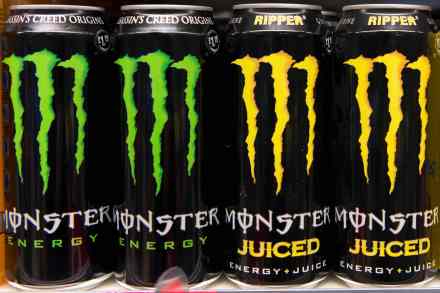
So 2022 bowed out with one last surprise. Who can honestly say they had 'crowds queueing outside Aldi at 5 a.m. for a viral energy drink' on their bingo card? The must-have product in question is Prime, a caffeine-free energy drink created by YouTube influencers Logan Paul and KSI. Since going on sale in the UK recently, it has quickly generated the sort of frenzied hype once reserved for cryptocurrencies or pictures of cartoon monkeys, with stock running out, brawls breaking out and one shop reportedly cashing in by charging £10 a bottle. On the face of it, the Prime story is baffling. But tempting as it might be to scoff at the sight of the wide-eyed obsessives rushing for their fix, I am also painfully aware that I cannot really judge them. For I myself am an energy drink addict.

The best mocktails for Dry January

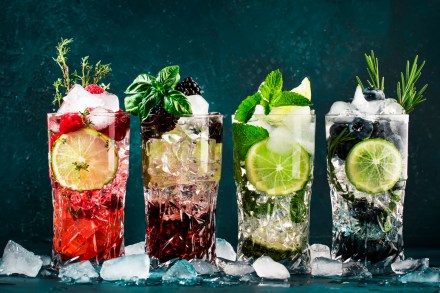
It’s the new year, and that means time for resolutions. Many of us will pursue food-and-drink-related goals: eating healthier, eating out less, or trying a 'Dry January' – giving up alcohol for the month. Non-drinkers have more interesting options these days than coffee or Diet Coke. Commercially bottled kombuchas are a plausible substitute for something stronger. Non-alcoholic beers, wines and cocktails are also multiplying, judging from the crush of Instagram ads I receive. As someone in a semi-permanent state of trying to drink just a bit less, I’m always interested in tactics to facilitate sobriety. This year, I tried out mocktail recipes that might help a Dry January feel livelier.

A sceptic’s guide to English wine

Being in possession of a well-kept secret is every wine-buyer’s goal, not least because uncorking an unusual find impresses even the snootiest of guests. English wine-makers have long been trying to break up any residual secrecy about the worthiness of their wines. Not quite new world, not quite old world, English wine was always going to fill an odd space in the market.  Confession: I never buy wine from the British isles. Almost anything else has always struck me as both better value and nicer to drink. And then I met Matt Hodgson. Hodgson runs Grape Britannia, a modest but expert shop and bar in Cambridge that sells only English wine (plus some Welsh and one from the Scottish borders).

How to make eggnog

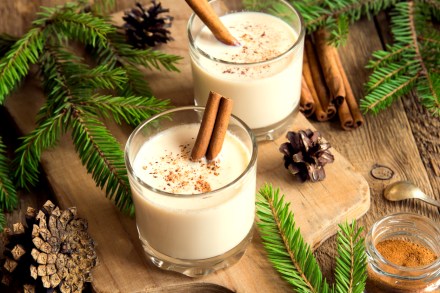
Let Bing sing about a white Christmas, if he insists. My kind of Christmas is more eggnog-toned: yellowy, like old-fashioned incandescent string lights; rich, like real velvet ribbon on presents; topped with pale froth of the most non-utilitarian and fluffy kind; sweet, with a kick of rum or bourbon to redeem it from sentimentality; stippled with a dark sprinkling of freshly grated nutmeg on top to ginger up the olfactory receptors. Uncanonical as it may be to view this time of year through an eggnog-tinted lens, it seems to me that food and wassail are more essential to Christmas than snow. What is the celebration without culinary traditions, even though one man’s festive favourite may be another’s pet peeve?

Buried treasures of the Broadmoor

From our US edition

There are many reasons to visit the magnificently storied and illustrious Broadmoor Hotel, in the Rocky Mountain resort town of Colorado Springs. It has a glamorously luxe and gleaming spa. They will do you a superb dry martini with its own cute little carafe. Prince Harry once nipped into this pink-stone Italianate palace for a cheeky pint. But it’s the fantastical history of the Broadmoor that really compels, and which also tells us something possibly rather important about the relationship between politics and alcohol. The owner-founder of the Broadmoor was a failed-at-Harvard bon viveur by the name of Spencer Penrose.

broadmoor hotel
bourbon

The thrill of bourbon collecting is in the chase

From our US edition

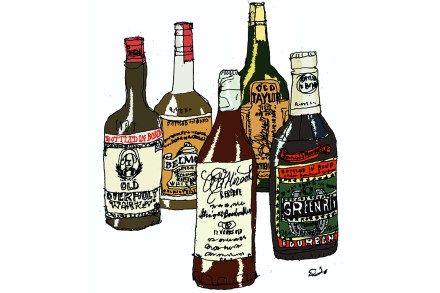
There was once a time when a man would find a bourbon he liked and stick with it. Today, that is no longer sufficient. To enjoy bourbon, one must dive into the depths of bourbon hunting, scouring liquor stores for hard-to-come-by bottles, making friends with the staff so they’ll pull out one of the bottles from the secret stash and joining various social media groups in which fellow members share their tips and finds. My passion for actual bottle-hunting was short-lived, however. It takes too much time and effort and when opportunity costs are factored in, I’d rather pay a little over store price to those who are willing to go stand in line at 7:30 a.m. on a Tuesday morning waiting on the store’s latest shipment.

Rum deal: the fight to save Trader Vic’s

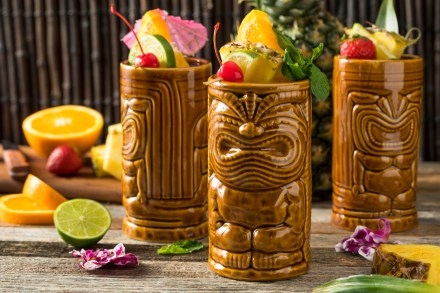
I have just been proposed to in a somewhat slatternly tiki bar in Mayfair. Not just any tiki bar, but Trader Vic’s, the Polynesian-themed restaurant and lounge underneath the London Hilton on Park Lane. Approaching its 60th anniversary, the bar has seen better days, but for historical purposes my partner of 12 years decided that this dimly lit den would be the location for the proposal of a lifetime. Then wouldn’t you know it – just two weeks later I discover that this cavern of delight where I spent many birthdays is being evicted and will close on 31 December. Trader Vic’s began in the 1950s, when Victor Jules Bergeron Jr. (Trader Vic himself) teamed up with Western Hotels in the US to turn his already popular tropical-themed bar and restaurant into a franchise.

Colony Grill’s culture remains

From our US edition

Nothing has done more damage to the watering hole than Bar Rescue. In each episode, the show’s protagonist swoops into some troubled landmark Toledo bar, guts its history in the name of “open concept,” installs some LED lighting to cut costs, adds some overpriced microbrew, and yells at the backwoods staff — his anger a thin disguise for his McKinsey consultant personality. As a finishing touch, he’ll add a crabcake to the menu. Rescue complete. This reverse-Road House consultant is why every bar in America looks the same: bland, bloodless, stocked with minimalist Ikea furniture, cut off from the past. Don’t let the “unique” seasonal IPA or over-sized Jenga fool you. You are staring at conformity.

colony

Roger Scruton’s philosophy of wine

The philosopher Roger Scruton died in January 2020 just a few weeks shy of his 76th birthday. He left behind a large circle of admirers and a correspondingly large shelf of books in a variety of genres – novels, opera libretti, volumes of occasional journalism, cultural and architectural criticism, and various philosophical works, popular as well as technical. He wrote and wrote about music, hunting to hounds and politics. He also wrote about the subject that brings us together: wine. Roger was a gifted teacher, always on the lookout for opportunities to educate the ignorant, enlighten the benighted and expand the horizons of those cramped by bigotry and parti pris. His missionary work extended to the pages of the New Statesman, in whose pages his wine columns appeared.

Old Fashioned values: a cocktail recipe to live by

Take your time. Measure twice. Finish what you start. How will you have time to do it again if you don’t take time to do it right the first time? Work hard at work, then come home. Loosen your tie and relax. Make a highball or mix a cocktail for your wife and yourself. Share the end of the day. We are brothers and we write here of a drink and the man who taught it to us, our father. Teaching us how to make it, he also taught us something of how to live. He was a chemical engineer, and so the formula was important. The drink was the Old Fashioned (or Old Fashion; it doesn’t matter), and this is how he made it.

The return of the speakeasy

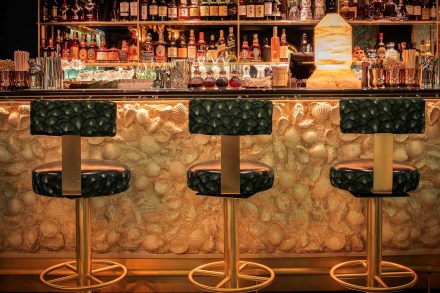
A global pandemic, a booming stock market giving way to painful economic shock, a technological revolution… there are many parallels to be drawn between the 1920s and the 2020s. But if you look very closely, you might find there is another thread linking the two eras: the rise of the speakeasy. These clandestine drinking holes rose to prominence during America’s Prohibition era (1920-33). Following the hardships of the first world war, speakeasies provided a sense of raucous escapism – where jazz music boomed and genders and races mixed freely.The same search for escapism (and nostalgia) is what draws drinkers to them today, says Marco Matesi, bar manager of Downstairs at The Dilly, one of London’s newest speakeasies.

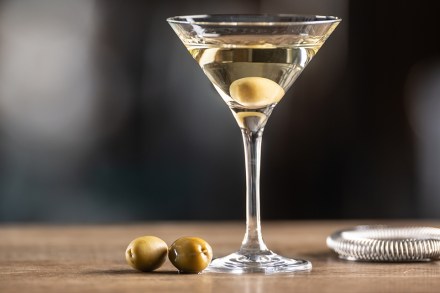
Why the dry martini is the finest cocktail of all

We were discussing bourbon and whether American whiskey could ever rival Scotch. I recalled the first time I ever tried the transatlantic spirit. It was more than 50 years ago, in an undergraduate room in Oxford. The occupant was an ingenious fellow. At the beginning of one term, he wrote to Jim Beam, the whiskey makers. He informed them that he had discovered their wonderful product in the States, but it appeared to be impossible to come by in Oxford, which was a pity, because it deserved to be better known (in truth he had never tasted it and had never been to the US). A case shortly arrived, followed by another at the beginning of next term, and so on. He sent enthusiastic letters of thanks, assuring the Beam-ites that his friends were developing a lifelong taste for the stuff.

A toast to absent friends

There have been few more momentous weeks in British history, or indeed in world history. This commentator must plead guilty. To draw on George Bush Jr, I mis-underestimated Liz Truss and appear to have made the same mistake about Ukraine. That said, we should all be relieved when the war is over on favourable terms, and tactical nukes have remained an item in Russian military doctrine, without becoming part of military practice. Another mis-underestimation has now been corrected, one hopes permanently. Though I was never guilty, the former Prince of Wales had not received the respect that was his due. That is not true of King Charles III. Throughout the United Kingdom, his first coronation has already taken place, in his loyal subjects’ hearts. The Queen is dead.

A toast to the field marshals

August may not be the cruellest month but it is often the most dangerous one. Now that it is over, and rosé is giving way to grouse, we can console ourselves. There has not been a world war. We merely face a number of middle--ranking crises. Over fortifying bottles, I was chatting about such matters with friends who had known the late Peter Inge, a dominating figure even by field marshal standards. It was said that in his company, brigadiers’ coffee cups would rattle with tension. I once taxed him with the contrast between his reputation as a martinet’s martinet and his geniality in private life.

The complicated history of English wine

Hugh Johnson’s classic World Atlas of Wine, first published in the early 1970s, is now up to its eighth edition. My edition, the sixth, was published in 2007. It is 400 pages long and has exactly one page devoted to the wine of the United Kingdom. The latest edition is 16 pages longer but it, too, devotes only one page to British wine. Wine has a long history in the British Isles. Like so many good things (q.v. Monty Python’s Life of Brian), wine was brought by the Romans, who planted vines wherever they could grow (and some places they couldn’t). The Domesday Book, William the Conqueror’s big tax-planning guide, lists 40 vineyards in England.