Denmark

A trove of avian lore and history

I finished reading The Book of Birds by Robert Macfarlane and Jackie Morris, and leaned out of my attic window to smoke and think about it, when there among the tumbling spires of the apple trees was a spasm of fluttering and a flurry of notes: two spotted flycatchers! One held the air for a moment, hovering and looking me in the eye, and then darted back to its perch while the other called. It has been years since we have seen them, and straight to my bird books I went. The Book of Birds was no help because it does not include the spotted flycatcher and is not designed as a recognition guide. Instead, Macfarlane writes: ‘Ours is a field guide with a difference... It asks not “What is that bird?” but “Who is that bird?”. The aim is to help readers identify with them.

Why did the Danish PM call for a ‘spiritual rearmament’?

22 min listen

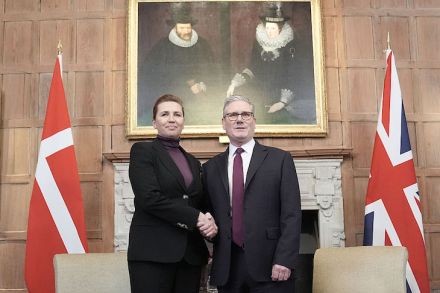
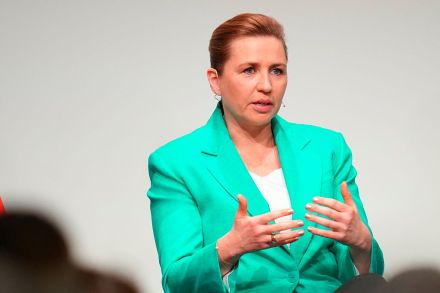
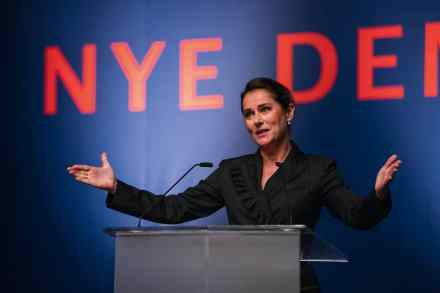
Earlier this year, Denmark’s Prime Minister, Mette Frederiksen, stood before a group of university students and made a striking statement: ‘We will need a form of rearmament that is just as important [as the military one]. That is the spiritual one.’ This was all the more remarkable from the leader of the Social Democrats, and in a country which is amongst the most secular in the world. Danish journalist Iben Thranholm – who joins Damian Thompson for this episode of Holy Smoke – says that in some ways the welfare state had replaced the belief in god in Denmark. So to what extent is Frederiksen's call to action a political project, and how reactionary is it? And is this part of the Christian revival, shoots of which are being seen across the global West?

Tom Slater, Justin Marozzi, Iben Thranholm, Angus Colwell & Philip Womack

28 min listen

On this week’s Spectator Out Loud: Tom Slater says that Britain is having its own gilet jaunes moment; Justin Marozzi reads his historian’s notebook; Iben Thranholm explains how Denmark’s ‘spiritual rearmament’ is a lesson for the West; Angus Colwell praises BBC Alba; and, Philip Womack provides his notes on flatmates. Produced and presented by Patrick Gibbons.

Denmark’s ‘spiritual rearmament’ is a lesson for the West

Something unusual is happening in Denmark – and other countries across Europe, including Britain, ought to pay attention. This spring, Denmark’s Prime Minister, Mette Frederiksen, stood before a group of university students and made a striking statement: ‘We will need a form of rearmament that is just as important [as the military one]. That is the spiritual one.’ Few expected such words from the leader of the Social Democrats, a party which spent much of the 20th century reducing the Church of Denmark’s influence in public life. Yet this was no passing remark. Just days earlier, Frederiksen had announced a major military build-up: increased conscription, a sharp rise in defence spending and intensified strategic readiness.

The return of the implausibly moreish Borgen

A decade ago the unthinkable happened: a subtitled TV drama about people agreeing with one another went global. On paper it bore the hallmark of a barrel-scraping pitch from Alan Partridge. Somewhere between youth hostelling with Chris Eubank and monkey tennis, he might easily have proposed a new ne plus ultra in implausible entertainment concepts: Danish coalition politics. Yet Borgen caught a thermal and soared. The show took its name (which, correctly pronounced, sounds like a Cockney saying ‘Bolton’) from the so-called fortress in the heart of Copenhagen where state business is conducted. It featured Birgitte Nyborg, a moderate heroine who snuck into Denmark’s highest office through a small centrist crack between left and right.

Why Denmark has called for the end of Covid restrictions

England has been described by some as an outlier in that the government is lifting Plan B restrictions in spite of Covid infections remaining high – daily numbers are still higher than at any point prior to the emergence of the Omicron variant. Some have even accused the Prime Minister of lifting the restrictions in order to divert attention from his political troubles. Yet Boris Johnson’s government is not alone. The Danish government, too, has announced that all remaining restrictions will be lifted on 1 February and Covid-19 will no longer be classified as a ‘socially critical disease’ in the country.

Have Southgate’s England lost their moral compass?

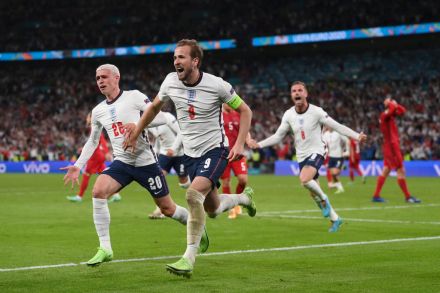
Back in the 1980s the BBC Match of the Day opening credits featured a clip of Manchester United winger Mickey Thomas prostrate on the pitch. He raises himself up and gives a saucy wink to the camera. The implication was that he had ‘won’ a penalty and was cheekily acknowledging his successful deceit. Contrast with Raheem Sterling on Wednesday night. It’s generally accepted that if there was any contact between the England striker and the body parts of various Danish defenders swarming around him, it was minimal, and not enough to send him tumbling to the ground. And certainly not worth a crucial penalty. But Sterling seemed oblivious, no guilty look, no sly wink to anyone, not even a furtive glance at the third official.

Euro 2020: It would have been a travesty if England didn’t win

England 2 (herringmuncher og, Citizen Kane) Denmark 1 (anotherherringmuncher) It was a penalty because the referee gave a penalty and VAR agreed. OK, Denmark? I wouldn’t have given it, mind. But then I would have given the absolutely stonewall penalty when Kane was clattered in the Danish penalty area a little earlier. Either way, it would have been a travesty if England had not won. They absolutely hammered the Danes for the last 75 minutes of the match: the game became a siege. Did the Danes have a single chance after their goal? I don’t remember one. I scarcely remember them attacking. I’ve decided I don’t like them and they’re going on my list of awful countries as a consequence of their bad-tempered, sour grapes, griping.

The misery of watching England beat Denmark on ITV Hub

The tension in last night’s semi-final against Denmark was unbearable, wasn’t it? The early Danish goal – the thrilling equaliser – that penalty rebound! Every true Englishman had their hearts in their mouths. Even Priti Patel, I fancy, found herself reaching for a toothpick. But to those who were watching the show over the internet, it was a hundred times more tense. It wasn’t just: will we score a goal? It was: if we score a goal will I see it happen? The only means of watching the game, for those with Apple TV or a similar blessing of the modern age, was the ITV App. And by the climax of the game it had taken to crashing every seventy seconds or so.

Euro 2020: Don’t underestimate the Danes

Italy: 1 (moped riding infant) Spain: 1 (swarthy bull-taunting thug) Spain are not terribly good at penalty shoot-outs. Hell, even England beat them in 1996. And so they lost a match they had dominated pretty much from start to finish. If you remember, I tipped Italy to win this tournament right at the outset — but there are flaws to this side.  What you need to do — to state the obvious — is take the chances you create, because with Italy there will be chances. They are a counter-attacking side and invite pressure. If that pressure amounts to playing neat triangles outside the penalty area, then forget it. You need to get behind their backline, missus. You need to frighten them. And so Denmark vs England.

How Denmark made England

International football is good for many things other than the sport itself. Politics, culture and history are all in play in the best matches. I’m hardly a football fan but I’d watch, say, Spain vs Portugal just for the spectacle. And who could turn away from Serbia vs Croatia, or Finland vs Russia? Like a lot of countries, England fixtures are often seen through the prism of the country’s history of conflict. So far, Euro 2020 has heard echoes of battles ancient and modern, as England played Scotland then Germany. And everyone knows the history of those meetings. But what about England and Denmark? How many people know that this is about as old a rivalry as nations can have, one that goes back to before there really were nations?

An unrewarding slog: Thomas Vinterberg’s Another Round reviewed

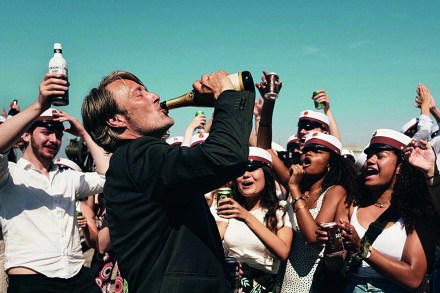
Thomas Vinterberg’s Another Round has been heaped with awards: an Oscar, a Bafta, it swept the European Film Awards. And it has received rave reviews everywhere. I must now work out, I suppose, why I found it such a hard, boring, unrewarding, annoying slog. I did have a stern talk with myself, and even watched it again, but with the same result. I suppose your enjoyment may depend on how much time you might wish to spend with drunk middle-aged men who imagine they are being interesting. Or have you been trapped at parties by too many of them down the years? You may ask yourself: why should I be at all interested in these annoyingly stupid men?

Why is Macron feigning outrage at the Danish spying scandal?

The feigned outrage in Berlin – but mostly in Paris – at the USA’s proxy use of Denmark’s intelligence services to intercept submarine cable traffic to spy on European leaders raises more than a wry smile. Allies have always spied on allies for legitimate reasons. Few have done so, and continue to do so, as much as the French.  As president of France and commander-in-chief of the French armed forces, Emmanuel Macron will be perfectly aware of this. The French foreign intelligence service, DGSE, runs an interception programme on submarine cables that listens in to potential enemies and friends in similar fashion to the US National Security Agency or Britain’s GCHQ.

The competitive cult of cosiness

Do you remember the first wave of hygge, in 2015? It seems a long time ago — back in the freewheeling technicolour of a pre-Covid world — but at that time hygge was the hottest thing to come out of Denmark. The country already attracted envy for its vigorous welfare state, covetable knitwear and high rating on the international happiness index, but the new export outshone them all. It roughly translated as ‘cosy’, people said, but the English word was frail and puny next to the soul-feeding, friendship-cementing, quasi-spiritual force that was hygge. The latter signified home-baked bread and cakes, hand-knitted socks and friends laughing around a wooden dinner table as a hotpot bubbled on the stove.

Why isn’t Britain adopting the Danish roadmap?

Denmark’s greatest philosopher, Søren Kirkegaard, experienced only one epidemic in his lifetime, the cholera outbreak of 1853, which occurred after Denmark foolishly lifted the coastal quarantine that had saved the country from Europe’s miserable 19th century cholera pandemics. Yet he aptly sensed our response to indeterminate lockdowns: ‘the most painful state of being is remembering the future, particularly the one you'll never have’. Danes and Britons are keenly ‘remembering’ summer 2021 and are desperate for lockdown to be over.

Eight key questions on the Danish facemask study

The ‘Danmask-19 trial' sought to test whether face masks are effective in preventing infection with SARS-CoV-2 (the virus that causes Covid-19) for the wearer. It found that the recommendation to wear surgical masks to supplement other public health measures 'did not reduce the SARS-CoV-2 infection rate among wearers by more than half in a community'. So does this mean wearing masks is a waste of time? There are several reasons that drawing such a conclusion from this study might be unwise. A randomised controlled trial (RCT) is often – though not always – the best way of testing whether a treatment works, because RCTs guard against the biases inherent in many other research designs.

Landmark Danish study finds no significant effect for facemask wearers

Do face masks work? Earlier this year, the UK government decided that masks could play a significant role in stopping Covid-19 and made masks mandatory in a number of public places. But are these policies backed by the scientific evidence? Yesterday marked the publication of a long-delayed trial in Denmark which hopes to answer that very question. The ‘Danmask-19 trial’ was conducted in the spring with over 6,000 participants, when the public were not being told to wear masks but other public health measures were in place. Unlike other studies looking at masks, the Danmask study was a randomised controlled trial – making it the highest quality scientific evidence.

Denmark is creating a roadmap for mandatory vaccination

Could British residents be forced to have a Covid-19 vaccine? Yesterday Health Secretary Matt Hancock refused to rule out mandatory inoculation, telling TalkRadio that the government would ‘have to watch what happens and… make judgments accordingly’. His comments have sparked questions about how realistic the prospect of mandatory vaccination is in the UK, or what restrictions people could face – with MP Tom Tugendhat suggesting that the unvaccinated could be banned from workplaces – if they refuse to get inoculated. If a policy of mandatory vaccination were to be carried out in the UK, what might it look like?

Open and shut case: how did lockdown affect shops?

Shot in the arm Global stock markets reached a new high after pharmaceutical firm Pfizer announced a vaccine it is developing has been found to be 90 per cent effective. What have been the best- and worst-performing FTSE 100 shares over the past 12 months? BEST Scot. Mortgage Investment Trust | +109% Ocado | +94% Fresnillo (gold production) | +86% Flutter Entertainment | +75% Polymetal | +51% WORST Rolls-Royce | -74% Int. Consolidated Airlines | -71% BP | -61% Shell (B shares) | -58% Lloyds Bank | -52% Pharma’s life Who was Mr Pfizer? Charles Pfizer set up a factory with his cousin Charles Erhart in Brooklyn in 1849, initially to produce the drug santonin, used to purge the intestinal tract of parasitic worms.

The evidence on school re-openings is being ignored

One of the benefits of the UK exiting lockdown so slowly is supposedly that evidence from other countries can help mould our decisions. If liberalising parts of society in other countries doesn’t cause a Covid-19 flare-up, the UK can proceed with cautious optimism. If lockdown easing leads to a spike in infection rates, the UK can row back its plans before its too late, or put off making changes for a while longer. Around 50 per cent of people polled oppose the partial re-opening Based on this logic, the return of Reception, Year 1 and Year 6 to school today should be warmly embraced, as reports from Denmark over the weekend (which reopened daycare and schools for kids aged two to 12 in mid-April) confirmed that doing so has not led to an increase in infections.