Nicky Otis Smith

The Sweet East is the first film to capture 2020s America

What would an American odyssey look like today? There are too many rabbit holes to go down, too many traps. Besides our fractious politics, everything in 2020s America is busted. Broken self-checkout machines and petty theft are scapegoats for a spiritual and economic crisis — it feels like the end of the world could come at any moment. Non-linear digital media and smartphones have destroyed the monoculture of popular movies and television that used to gird our pop culture. Everyone can find their own niche now, but we have so little to talk about together — not even the dread permeating the country. And it’s been this way for the better part of a decade.  The Sweet East presents the most accurate, from-the-front picture of America today.
sweet east

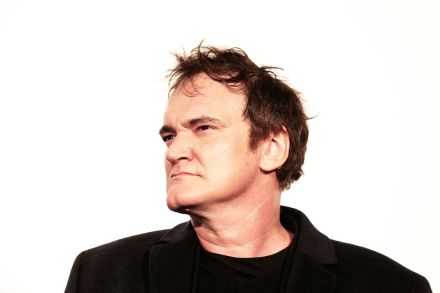
Into the video archives with Quentin Tarantino

Most directors don’t voluntarily retire. If you’re lucky enough to make movies at a studio level for decades, you’re not going to stop unless you can’t remember the name of the president or what year it is. Plastic enhancements may have extended the shelf life of actors and musicians, but directors can keep working until they’re on oxygen (John Huston), half-blind (John Ford), blind (Akira Kurosawa) or cancer ridden, manic, and defecating in buckets (Michael Curtiz). For over a decade, Quentin Tarantino has said that he’ll retire after ten movies — or when he hits sixty, the age he insists all filmmakers begin their steep decline.

Tarantino

The importance of going to the movies

By the beginning of this decade, popular American cinema was once again in peril — just as it was in the 1950s and the Eighties. Then the threat was television and home video, respectively. Now it is streaming. There have been peaks and valleys in between, but before the pandemic, these were the major existential challenges to Hollywood and American movie theaters. The survival of theatrical exhibition after an unprecedented sixteen-month absence speaks to the power of the medium and the ineffable itch that going the movies scratches. Even Steven Spielberg looked desperate, if relieved, when he told Tom Cruise earlier this year, “You saved Hollywood’s ass and you might have saved theatrical distribution” with Top Gun: Maverick.

movies theaters

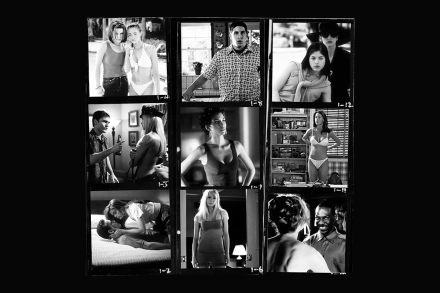
Why were 2000s movies so hypersexual?

Even though the endless debate about sex scenes in movies recurs every three or four months, it remains fixed. Nothing ever moves forward; nothing more is understood; no one’s perspective is shifted. Dug in on both sides of an argument that remains black and white, people refuse to move. Maybe one day they’ll be able to talk in Technicolor, but for now, some are distressed by erotic cinema and others are desperate for more of it. Stellar home-video labels like Severin, Arrow and Vinegar Syndrome continue to provide high-definition discs of genre films full of naked women and bloody bodies. But if Tom Cruise is the only real movie star left, the world won’t get more than a chaste kiss (maybe) from modern American cinema.

sex

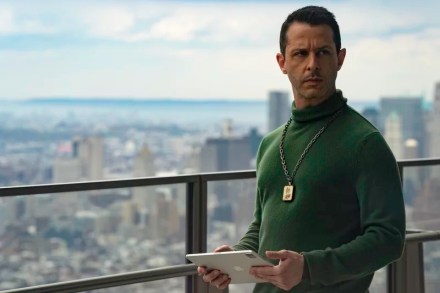
Succession and the rise of ‘eat the rich’ entertainment

From our UK edition

Farces, satires and straight slapstick comedies about extremely wealthy people have made popular entertainment for centuries. In film, the most notable example is Jean Renoir’s The Rules of the Game (1939), in which a group of upper-middle-class French people gather at swanky events, culminating in an affair that ends in a mistaken identity shotgun death, one that will be reported to the police as 'nothing more than an unfortunate accident'. HBO’s Succession, which returns to Sky Atlantic with a fourth season on Monday, has followed an even wealthier group of people, even more self-absorbed, distorted and cut off from the outside world than Renoir’s overzealous swingers and servants whistling past the future graveyards of Vichy.

Avatar 2: a three-hour-plus video game cutscene

A few years ago, someone on Twitter brought up the fact that Avatar, despite being a massive hit, left little to no cultural imprint on American pop culture. I can’t speak for the rest of the world, but after December 2009, all I ever heard about the movie was that the precious material on alien planet Pandora was called “unobtanium,” and that the script was a lazy ripoff of Pocahontas. Those reviews must have been the first time I read the phrase “white savior narrative,” relatively late for a junior in high school. But beyond that, none of Avatar’s characters, story, themes, concepts or images have broken through into general consciousness. It’s the most obscure success of all time. How did a movie make so much money and leave so little behind?

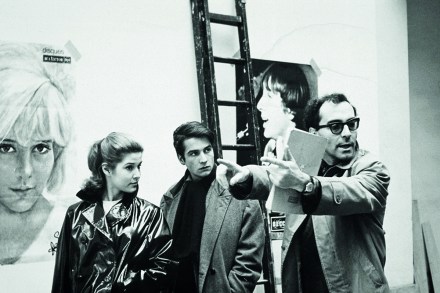
Remembering Jean-Luc Godard

In March 2021, during his last major interview, Jean-Luc Godard reiterated a previous point about the coronavirus being a form of communication. “At first, I thought that production was the main aspect of cinema, and I realized distribution was more important, today more than before. Distribution has choked production by pretending to be at the service of the audience...The virus in its own way, distributes. Today, it would be interesting to know how the virus produces, but we only care about what it distributes.

Godard

Bodies Bodies Bodies cancels its characters to death

Movies that define an era — Fast Times at Ridgemont High, Easy Rider, Casablanca — rarely get stuck there, even if anachronistic references and jokes fly by without notice today (does anyone watching Fast Times today know what a mimeograph is?). Annie Hall and Nashville are as particular to mid-1970s America as they are timeless works of art, both emotional panoramas of a period filled with affluent and successful but unhappy people, confused and eventually destroyed by their own wandering eyes and broken hearts. You didn’t have to have lived through the disappointment of the late 1960s — Vietnam, all of the assassinations — to feel the exhaustion and disillusionment of these films: it’s in every frame, often unsaid.

bodies

The time trap of Irma Vep

In April, director Robert Eggers told GQ that “every time period interests me except for the one we’re living in.” The director of The Witch, The Lighthouse and The Northman will never make a movie set in modern times: “I get enough of the kitchen sink in my kitchen sink... For whatever reason, it just does not inspire me. And you can’t shoot something that doesn’t inspire you.” That’s a good attitude for a director to have, but it’s alarming how many American filmmakers are either uninterested, unwilling or unable to make work that speaks directly, not only to our present moment, but to our future and its possibilities, however limited and grim. Who can blame anyone for being hopeless now?

irma vep

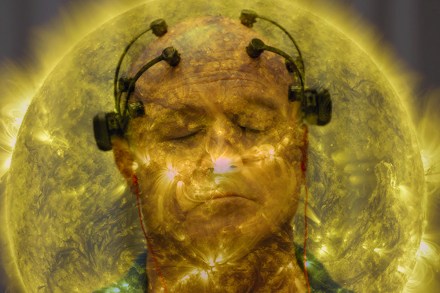
Sinking into the pixels

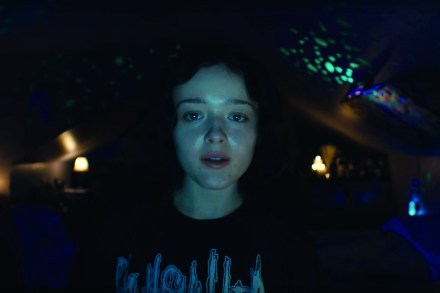
More than two decades into internet ubiquity, we’re finally seeing the rise of a generation raised by screens as much as by their parents and peers. Smartphones and social media may not have reared their ugly heads completely until the 2010s, but even in the lead-up to the millennium, computers and the “World Wide Web” were a frequent topic of pop cultural conversation. Within those conversations was always an enormous amount of anxiety. Chatroom “stranger danger” and scammers posing as Nigerian princes seem quaint now compared to the overflowing sewers on display daily in the most craven corners of the web. Digital anxiety is done.

world's fair

The final word on the millennial generation

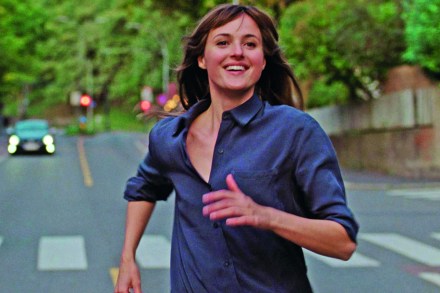
More than anything else, the phrase “I’m still figuring it out” defines the millennial generation. Floating from passion to passion, job to job, lover to lover, possible spouse to possible dead end. In Joachim Trier’s The Worst Person in the World, Renate Reinsve plays Julie, a person that most of us would recognize from life, and certainly from the last ten years of media: approaching thirty; romantic and flighty to a fault (in the prologue, she drops out of medical school to become a philosopher and then a photographer); beginning to feel a void she doesn’t know how to fill.

worst

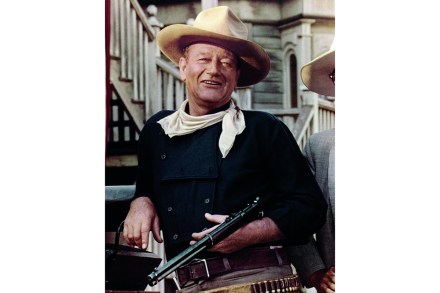
John Wayne behind the blue line

Stars don’t sell movies anymore. They’re even becoming hard to distinguish. Which Chris is in Guardians of the Galaxy and which one plays Captain America? Is Emma Stone in Harry Potter or Cruella? Interchangeable entertainers are nothing new, and I’m sure moviegoers in the 1940s got the Roberts Walker, Taylor, Young and Montgomery mixed up, but those names still sold the movie. Why would anyone pay money to see something called The Clock in 1945 unless it starred Robert Walker and Judy Garland? Could a movie really be that good unless it had Bette Davis or Marlon Brando, Eddie Murphy, Bruce Willis or even Adam Sandler?

Wayne

Time for Another Round

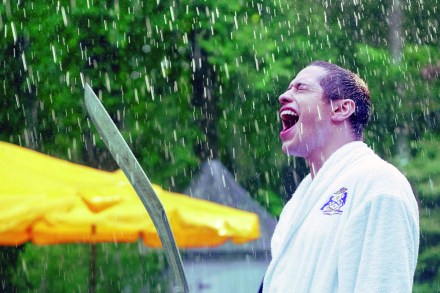
Years ago, a friend of mine turned to me at someone’s birthday party and called beer ‘the universal panacea’. Beyond a physical intolerance to most alcohol, I can hardly tolerate alcoholics and their often appalling behavior. Anything that valorizes drinking alcohol, a drug whose societal acceptance is wildly at odds with its negative effects and addictive nature, is a hard sell for me. Unless you’re a member of the Jackass ensemble — that’s appointment viewing. If you’re getting bitten by scorpions and jumping off buildings for fun, a beer bong up the rear end is a nice surprise, at least in the world of cinema.

another round

Somebody’s watching me

America has an abundance of daring documentarians: Frederick Wiseman, Errol Morris, Alex Gibney, Laura Poitras, Morgan Neville, Matt Wolf, Morgan Spurlock and Michael Moore, off the top of my head. Not a diverse list demographically, but you can tell their movies apart. Some are better than others, some (Poitras and Neville) have oily ethics, but others still have made some of the most iconic American films of this century (Spurlock’s Super Size Me is in the lexicon even if nothing else he’s done is, and say what you will about Moore and his films, his impact on American pop-political culture cannot be dismissed entirely).

all light, everywhere

Affluent white female killer

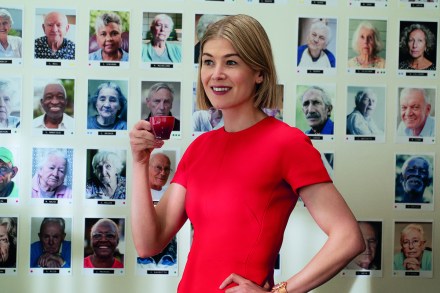
The poster for I Care a Lot, now available on Netflix and Amazon Prime, has a pull quote from a Collider review: ‘DELICIOUSLY NASTY’. In a better world, perhaps this would be true. But here on Earth, we have J Blakeson’s film, starring Rosamund Pike as Marla Grayson, a predatory professional legal guardian convincing crooked courts to grant her the right to put old people in nursing homes against their will, regardless of their health or mental capacity. This allows her to cash in on their homes, jewelry, valuables and anything else that she can vacuum up. Near the beginning of the film, shortly before she picks up ‘a cherry’ in the form of Jennifer Peterson (Dianne Wiest), we see Marla before a wall of her wards, all taped up and looking miserable in their intake headshots.

care

Watching The Woman in the Window

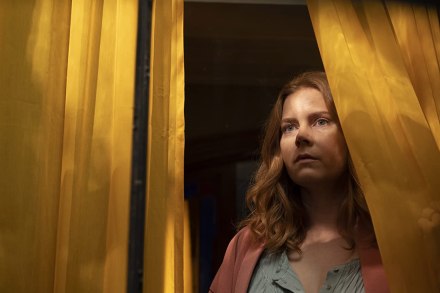
Watching the rich and famous fail in slow motion is an American pastime. Movies like Heaven’s Gate, Eyes Wide Shut and They All Laughed weren’t reviewed — it was their circumstances, their producers, their directors that people wrote about. And that’s how most material on The Woman in the Window (not to be confused with the 1944 Fritz Lang film) begins and ends: ‘A.J. Finn’s beloved novel had a long, hard way to its release.’ Now that it’s here, dumped on Netflix in lieu of a major theatrical release by the already defunct Fox 2000 Pictures, fans of the book are largely disappointed, and fewer still are even aware of the film’s existence. Compared to the anemic ‘Netflix Originals’ it’s padding out, The Woman in the Window is a stunner.

woman window

The last American video store

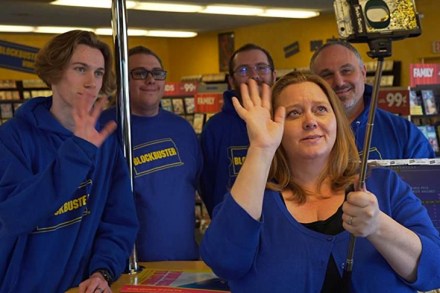
Without a space or a location, ‘the movies’ cease to exist. They become another niche interest with little to no cultural penetration. Awards-season movies, summer blockbusters, sleeper hits and all kinds of popular film phenomena cease to exist without theaters themselves. The last year has shown how much movie culture relies on the activity of going to the movies and the physical space itself. The Last Blockbuster is a documentary about the death of another space: video stores, albeit through the eyes of the last representatives of a corporation that destroyed vast swaths of mom & pop stores across America. Lloyd Kaufman, the co-founder of Troma Entertainment, an independent film distribution company, is an understandably hostile subject.

video

A film festival fiasco in Narrowsburg, New York

If you’ve been involved in the production of a film, you know how intoxicating it can be. The prospect of seeing your work projected in a theater is reason enough to put up with a nightmare of unrelenting stress — for some people, anyway. Others might struggle to understand how an entire town (Narrowsburg, an admittedly very small town in Upstate New York) could be so easily swindled by a cartoon mobster and a mysterious woman with a French accent who tells people she’s from South Africa or Normandy, or descended from French royalty. Then again, Richard Castellano did appear with Billy Crystal and Robert De Niro in Analyze This, and Jocelyne Castaldo, well, who in America wouldn’t be charmed by such an accent?

Narrowsburg