Denmark

Møn

The sky over the island of Møn, which is at the bottom right of Denmark, was cobalt and the whitewashed walls of the Elmelunde church dazzled in the bright sunshine and hurt our eyes. Our arrival had been preceded by an argument about visiting the church at all, some of the party being of the opinion that they had seen enough medieval churches already during the four-week trek across northern Europe. Nevertheless, culture won the day and in we filed to glory in the frescoes of the Elmelunde Master, who some time during the 15th century devoted himself to the decoration of this church. The frescoes are spare and sinuous, bleached in hue and basic in execution.

Why did the House of Lords ever have a rifle range?

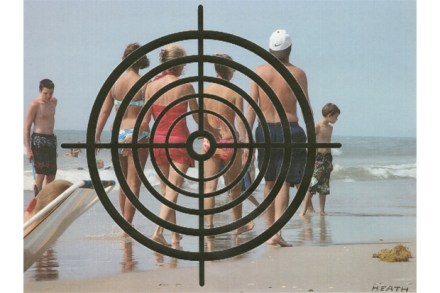
Gun lords The House of Lords shooting range is to be turned into a cupboard, having previously survived an attempt by Labour MPs in 1997 to turn it into a crèche. — The range was constructed in 1916 for the Palace of Westminster Rifle Club, which managed to convince the Lord Great Chamberlain that rifle clubs were ‘a means of promoting a stronger sense of citizenship among members’. — The motive was not to train lords for front but to help them practise for the annual Lords vs Commons shooting match, held at Bisley since 1862. An early participant was the Maharajah of Vizianagram, who in 1875 provided £400 to make a trophy for the event.

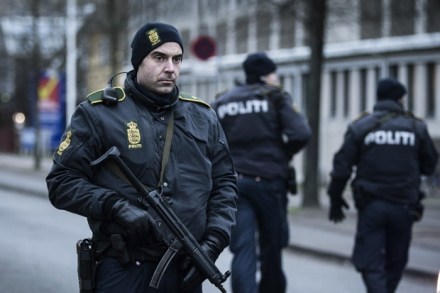
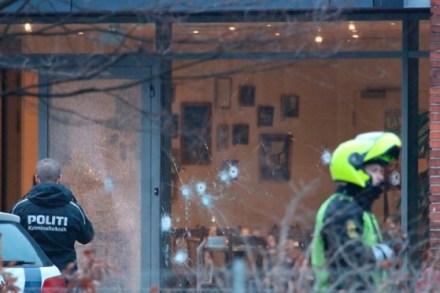
A survivor of the Copenhagen attack speaks: ‘If we should stop drawing cartoons, should we also stop having synagogues?’

Two years ago the Danish writer Helle Brix helped found the Lars Vilks Committee. The group of media figures from left and right came together to support the Swedish artist who has been under constant threat of death since drawing a picture of Mohammed in 2007. ‘We agreed that Mr Vilks should not be alone in the world,’ says Helle when we spoke earlier this week, ‘and if the establishment or the Swedish artists wouldn’t support him then we would. We wanted to give him a platform and a possibility to do what he used to do before he was unable to go out and meet the public because this is, of course, what disappears when you become a target, you get a lot of security around you and people are afraid to invite you.

Copenhagen shooting: we debated free speech despite the gunfire – we will not surrender

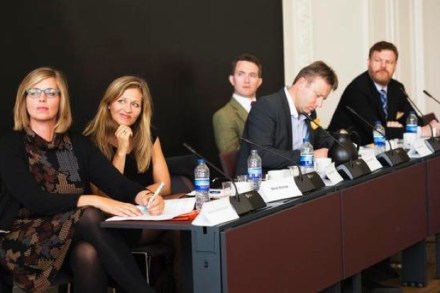
I was invited to Lars Vilks* Committee in Copenhagen to present Passion for Freedom London Art Festival. The committee is organised annually, on the anniversary of Salman Rushdie's fatwa. The meeting started with a short introduction from one of the organizers followed by François Zimeray, the French ambassador, commemorating Charlie Hebdo and discussing the challenges that we face when it comes to the threats to freedom of speech and democracy in our countries. After a short introduction, Inna Shevchenko opened the panel and started to talk about Femen and her work. She also discussed her close friendship with Charb, the editor of Charlie Hebdo, and how they both stood strong exercising their right to freedom of expression.

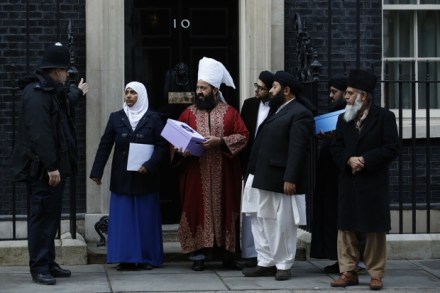
Freedom of speech is a sacred British value (and those who disagree can hop it)

In the aftermath of last month’s Paris atrocities there was a remarkable piece in one of Denmark’s leading papers signed by more than a dozen prominent Danish Muslims.  It said that France, like Denmark, is a country where there is freedom of speech and freedom of religion and that writers and cartoonists had every right, in such societies, to draw and cartoon whatever they wanted, including Islam’s prophet.  Muslims should get used to it. At the end of translating this article for me the Danish friend who showed it to me said something very important: ‘This has only happened because we’ve been having this argument in Denmark for nine years.

The fairytale life of Hans Christian Andersen

It has long been my habit, when approaching a new biography, to read the account of the subject’s childhood first, then jump to the deathbed, before settling down to the main narrative between. It was rather disconcerting, therefore, to find that Paul Binding’s life of Hans Christian Andersen eschews the deathbed and ends with the author’s last, not very cheering, written words rather than his last breath: The brewer is dead, Auntie is dead, the student is dead, him whose sparks of ideas ended up in the rubbish bin. Everything ends up in the rubbish bin. It is only in the chronology that we learn that Andersen’s 70th birthday was internationally acclaimed and that his funeral a few weeks later was attended by the King of Denmark and a multitude of admirers.

It’s time Labour talked about universal benefits

For years the Nordic model has stood out as a beacon of universal welfare provision. But if you want evidence of how the global financial crisis has ripped up the political rulebook then look no further than Denmark, the country with the highest tax burden in the world and one that’s long prided itself on a highly developed system of welfare for all. Its current Social Democrat-led Government has cut welfare payments, raised the retirement age and started to means test college and university students for study grants. And, as of this year, they’ve cut access to child support for richer households. According to Danish Finance Minister Bjarne Corydon, this reflects ‘a continuing debate of priorities’. And it’s not just taking place in Denmark.

How Denmark’s Jews escaped the Nazis

Of all the statistics generated by the Holocaust, perhaps some of the most disturbing in the questions they give rise to are the following. Of the Jews in Hungary, the Netherlands, Greece, Latvia and Poland, between 70 and 90 per cent died, while the corresponding figures for Estonia, Belgium Norway and Romania were between 40 and 50. In France and Italy somewhere around 20 per cent perished. In both Bulgaria and Denmark, however, just one. Bo Lidegaard’s Countrymen is the story of how Denmark to a great extent saved its  Jewish population from the labour and extermination camps, but it inevitably raises issues of equal relevance to the rest of Europe.

Denmark’s ban on ritual slaughter is not kosher

Fey metropolitan ponce that am I, I love nothing better than curling up on the sofa with my partner to watch a Scandinavian drama. Borgen, The Killing; we haven't got around to watching The Bridge, but only because I'm so busy walking around with a baby in a Kari-me or actually lactating milk, so European and progressive am I.

Why are Scandinavians so happy when they should be so sad? 

As I sit here in my Sarah Lund Fair Isle sweater, polishing my boxed sets of Borgen and nibbling on a small piece of herring, it briefly occurs to me that perhaps I too have fallen victim to the prevailing mania for all things Scandinavian. Just about the only person who’s stayed resistant, it seems, is Michael Booth, the author of this book. At home in Copenhagen — he’s married to a Dane — watching the incessant drizzle falling through the perpetual twilight, Booth begins to think he’s losing his mind. How come every survey ever commissioned into human happiness puts the Scandinavians at the top of the list?, he wonders.

Why can’t we admit we’re scared of Islamism?

Firoozeh Bazrafkan is frightened of nothing. Five foot tall, 31 years old, and so thin you think a puff of wind could blow her away, she still has the courage to be a truly radical artist and challenge those who might hurt her. She fights for women’s rights and intellectual freedom, and her background means her fight has to be directed against radical Islam. As a Danish citizen, she saw journalists go into hiding and mobs attack her country’s embassies just because Jyllands-Posten published cartoons of Muhammad that were so tame you could hardly call them ‘satirical’. Bazrafkan is also the daughter of an Iranian family, and the Islamic Republic’s subjugation of women revolts her.

Can you solve the Legomen puzzle?

A scientific study has revealed that the faces of Lego characters are no longer so mindlessly happy as they once were. This is an important thing to know. ‘Put the cancer cure stuff on hold for a while, will you - I’m deeply interested in the facial expressions of plastic toys.’ Anyway, once upon a time Lego men and women had the sort of smug, deluded, grins that one immediately associates with the gullible Danes who manufacture them. Denmark regularly tops the table of the countries with the most stupidly self-satisfied citizenry, a consequence of them stuffing themselves with pastries and bien pensant opinions day in and out.

Spectator Play: what’s worth watching, listening to or going to this weekend | 24 May 2013

This Saturday’s Eurovision contest was never going to be a triumph for the UK, that much was for certain. What was slightly surprising, however, was the Danish victory with their song Only Teardrops The song might have been one of the favourites to win, but the triumph of what Fraser Nelson described as a collaboration between ‘one of Scotland’s world class folk musicians’ and ‘the voice of a rising star of the Danish folk scene’. In this week’s arts lead Emma Hartley interviewed Eurovision winner Emmelie de Forest’s mentor, Fraser Neill, about the making of a very Scottish performer. Here’s a video of the two of them performing Anne Boleyn was, allegedly, one of Henry VIII’s favourite wives; so why did he behead her?

Meet Fraser Neill, the Scots folk musician behind Eurovision’s Emmelie de Forest

To be a folk music fan in Britain today is to be jangling the keys to a cultural palace. For a variety of reasons, we seem to have produced the most brilliant young musicians in decades — but the rest of the world has always seemed rather more excited about the fact than we are. We have started to export musicians, from Spain to Novia Scotia, who go on to musical achievements that are seldom recognised, let alone celebrated, back home. Of the ten million Brits who tuned into the Eurovision song contest, not many would have guessed that the Danish winner was yet another young protégée of a British folk musician. Until a few months ago Emmelié Charlotte-Victoria de Forest was as unknown to Denmark as she was to the rest of the continent.

The Adventures of Ed

Steerpike is back in this week’s edition of The Spectator. Here is a sneak preview, as ever: 'Ed Miliband, meeting Denmark’s prime minister, Helle Thorning-Schmidt, gobbled up his Danish pastry double-quick so that he could immortalise their interview on Twitter. ‘Discussed growth, living standards and how to make Europe work for its people,’ he told his followers. The technical term, ‘people’, here refers to beneficiaries of the gargantuan EU bureaucracy like Glenys and Neil Kinnock who, by an apt coincidence, are the parents-in-law of Ms Thorning-Schmidt. Mr Miliband then sprinted off to a top-level seminar on innovation. This prompted another newsflash. ‘Hearing about Laila Ohlgren who invented the call button on mobile phones.

Borgen and Scotland: A Love Affair Founded on Self-Congratulation

Borgen - the title refers to the Danish equivalent of Holyrood or Westminster - has been terrifically popular amongst those people interested in sub-titled political dramas from Denmark. I fancy that viewers in England have simply enjoyed the programme for what it is: a well-made but impossibly smug piece of "progressive" political propaganda. In Scotland, however, it has been seen as something different: a glimpse of the future. Or, at any rate, one future. In one sense this is reasonable. Even if it is only a TV show, one can see why Scots - and nationalists especially - should be thrilled by a drama showing how the ineffably right-on leader of a small northern European nation can make a mark upon the world. No wonder Nicola Sturgeon is on record expressing her admiration for Borgen.

An assassination attempt on Lars Hedegaard

It has just been announced that my friend Lars Hedegaard, a Danish journalist and frequent critic of Islamic fundamentalism, has narrowly survived an assassination attempt at his home in Denmark. The BBC is reporting: 'Police said a gunman in his 20s rang the doorbell at Mr Hedegaard's Copenhagen home pretending to deliver a package and then fired a shot to the head which missed. TV2 News reported that the gun then jammed, there was a scuffle and the attacker ran off.' Thankfully Lars has not been hurt in the attack. The Danish Prime Minister, Helle Thorning-Schmidt, has condemned the attack, saying: 'It is even worse if the attack is rooted in an attempt to prevent Lars Hedegaard using his freedom of expression.

EU budget talks end

The EU Budget discussions have ended with no agreement, as seemed inevitable after yesterday’s struggles and rows. David Cameron has been copping a lot of flak for his intransigence, particularly from Francois Hollande, who has spent much of the time talking of the need for 'solidarity' with Europe - by which he means the Common Agricultural Policy. Despite these headlines, it's worth remembering that plenty of other countries objected to Van Rompuy's proposals, and for many different reasons. Indeed, far from being isolated, Britain may have forged closer relations with those countries thanks to the experience of these talks.

Can Home Rule Solve Scotland’s Problems?

This is not a Question To Which the Answer Must Be No. I too saw the headline Now 51% Back Independence and thought, "Well, that's interesting but implausible". Then I noticed it was a Sunday Express splash and revised my appraisal to "That's obviously cobblers". And so it is, making it mildly foolish for SNP types to boast of a breakthrough on the back of a sample of 200 Scots that's harldy more dispositive than polling, say, my Facebook pals. Nevertheless, Fraser's post yesterday won't quite do either. For instance, the boss writes: My hunch is that Cameron’s intervention will not have helped Salmond.

Is Scotland a Nordic Country?

This is a question that meets the classic definition of John Rentoul's famous-to-them-that-ken series of Questions To Which The Answer Is No. That is, the people asking the question think the answer is Yes when in fact it is No. This question, like many of the SNP's other witticisms, is the brainchild of Angus Robertson, the MP for Moray who might be thought Alex Salmond's answer to Karl Rove. Like Rove, Angus sometimes gets carried away and this suggestion that Scotland is some long-lost Nordic appendage is one of those occasions. Not that he's alone in wishing Scotland could be redefined in this fashion. Lesley Riddoch had a piece in the Guardian recently making just this argument.