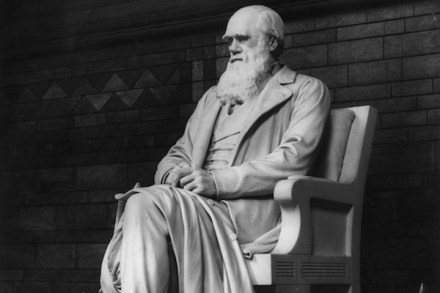
Darwin

Gardening books: Other men’s flowers

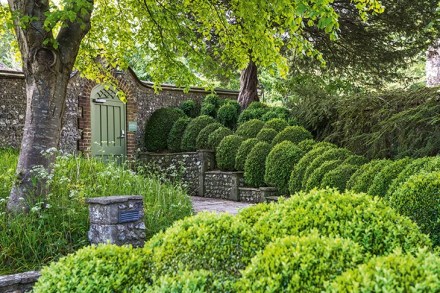
There are probably no more gifted professional gardeners in England than Jim Buckland and Sarah Wain, husband and wife and joint head gardeners at West Dean in Sussex. On the verge of their retirement, after 27 years of effecting a renaissance in the gardens and grounds of this country house arts centre (bequeathed by Edward James), the couple have described their work and achievements in At West Dean: The Creation of an Exemplary Garden (White Lion, £40).

A lesson in natural selection

In a living room in Vineland, New Jersey, in the 1870s, a botanist and entomologist named Mary Treat studied the activities of carnivorous plants and reported her findings to her colleague, Charles Darwin (Treat is extensively referenced in Darwin’s Insectivorous Plants). Treat also corresponded with others — Charles Riley, Asa Gray — about these plants, the tower-building tarantulas she kept in her house, about ant colonies and swamp ferns, and wrote articles and books on her observations.

John Murray announces new prize for non-fiction in association with The Spectator

John Murray – the publisher of Byron, Goethe, Jane Austen and Charles Darwin, inter alia – turns 250 this year. This week, they’re launching – in association with The Spectator (a stripling at 190-odd) – a new international prize for non-fiction. Entrants, who must be previously unpublished in book form, are invited to submit an essay of up to 4,000 words on the theme of 'Origin' (to be interpreted as each writer chooses), together with a proposal for how it might be turned into a book. The winning entry will be published in The Spectator (in print and online), and its author awarded a £20,000 publishing contract with John Murray to produce a book based on their proposal.

What we need is a Freedom of Uninformation Act

One dietary fad that never made sense to me was the campaign against the consumption of eggs. Now call me an old Darwinist, but here we are having spent a few million years evolving into a bald monkey with prehensile thumbs, perfectly optimised as an egg-stealing machine, and yet the digestion of an omelette somehow came as a horrible shock to our cardiovascular system. What next, I wondered. Perhaps they’ll discover that 45 per cent of cows are allergic to grass, or that sharks are largely sea-food intolerant. And it seems that the opprobrium directed at eggs was mostly wrong. It was based on the assumption that, since some cholesterol is bad, and since eggs contain it, ergo the consumption of every single egg was a stepping-stone to the grave.

Frills and furbelows

Over the winter of 1859–60, a handsome young man could be seen patrolling the shores of the Gulf of Messina in a rowing boat, skimming the water’s surface with a net. The net’s fine mesh was not designed for fishing, and the young man was not a Sicilian fisherman. He was the 25-year-old German biologist Ernst Haeckel from Potsdam searching for minute plankton known as Radiolaria. In February he wrote excitedly to his fiancée, Anna Sethe, that he had caught 12 new species in a single day — ‘among them the most charming little creatures’ — and hoped to make it a full century before leaving. Haeckel had a degree in medicine but no interest in treating patients, whose visits he curtailed by holding surgeries from 5 to 6 a.m.

Cathedral of creation

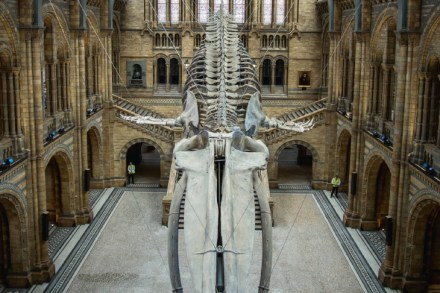
Sometimes, it pays to rediscover what’s already under your nose. I’ve been umpteen times to the Natural History Museum but I don’t think I’ve ever seen it properly, not even at the evening parties I’ve been to under Dippy-the-Dinosaur, until now. I visited the new and refurbished Hintze Hall and it was a revelation. The thing that strikes most visitors is that there isn’t a dinosaur any more — Dippy is on tour — and he’s been replaced by Hope, who is a) a blue whale, b) female and c) genuine (the dinosaur was fake). Swings and roundabouts. We have lost a dinosaur, but we’ve gained an entirely new perspective on an astonishing building, what a Times leader in 1881 called a ‘Temple of Nature’.

Diary – 3 August 2017

Diana Spencer has been dead for 20 years. I was a journalist on the Evening Standard in those days and she came to lunch at the newspaper a few months before she died. Apart from her blinding charm, and her overwhelming beauty, it was her perfect manners which were striking. She mastered a few details about anyone she met, so that they always felt she was interested in them. It is a great gift. I do not go in for meeting famous people, but that lunch was something very special. I went home in a blaze of love which has lasted to this hour. Conservative-minded people feared her because she wanted to upset the apple cart. She certainly did. It is strange that after she had done so, and there were bruised Granny Smiths all over the street, the monarchy was more popular than it had ever been.

It’s in the memes

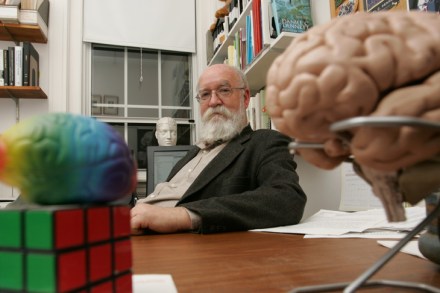
The greatest of Bach’s 224 cantatas is BWV 109, ‘Ich glaube, lieber Herr, hilf meinem Unglauben’. Its subject — the title translates as Mark 9:24, ‘I believe, dear Lord, help my unbelief’ — is that strange cognitive dissonance of believing something yet not believing it at the same time. Daniel Dennett’s new book, From Bacteria to Bach and Back, is aimed at those who suffer from this intermittent unbelief, though not about God — Dennett is, after all, one of modern philosophy’s most prominent atheists — but about his specialist subject: evolution by natural selection. Of course, most educated people nowadays accept Darwin’s great insight.

Embarrassing Victorian bodies

The fetishisation of the Victorians shows no sign of abating. Over the past 16 years, since the centenary of the passing of the Victorian age, we have been treated to a never-ending stream of books about the monarch herself, the houses her subjects lived in, the railways they built and travelled on, their sexual peccadillos, the sensational murders that seized the headlines, and so on ad infinitum. Now we have a study devoted to that ultimate fetishistic object: the human body. According to Kathryn Hughes, biographical writing about the Victorians has been indifferent to their vital signs of life, movement, smell, touch and taste, behaving as if our ancestors were abstractions rather than men and women full of puff and fat who probably stank to high heaven.

Where the wild things are

‘What is man, that thou art mindful of him?’ asks the Psalmist. It’s a good question. God Himself doesn’t give a very satisfactory answer. In one breath he insists that humans are a little lower than the angels, made in His own image, but also (in a formulation as bleak and more terse than any modern reductionist’s) that they are made of dust, and to dust they will return. Darwin tells us a similar story. We don’t have to flip back too many pages in our family albums, he says, before we see furry, feathered and scaly faces. But then he draws an exuberantly branching tree of life, rooted in stardust, and tells us that we’re perched on the topmost bough. It’s not surprising that we’re confused.

Paths to fulfillment

You could say that this book contradicts itself. Robert Moor’s chosen topic is trails — not just walking, where you go for a bit of a stroll and might turn here or might turn there, but specifically trails, where you can only follow one route. He likes them because ‘they are a rigidly bounded experience. Every morning, the hiker’s options are reduced to two: walk or quit.’ And yet the book itself operates by exploring tangents, lots of subjects related to trails but which aren’t themselves trails. Not that the contradiction matters; Moor goes down some pretty interesting tangents.

The key to a hidden kingdom

It’s a modern pastime to hypothesise about what makes a good relationship. One evening not long ago in a Berlin bar, I listened to a friend diagnose how things were going with his partner: ‘We might have become a bit too symbiotic.’ Surprisingly earnest perhaps, but that’s what you get when a sociologist dates a psychoanalyst. On the way home, I wondered why symbiosis, apart from the obvious dangers of parasitism, might not be that desirable coexistence all our theories point toward. After all, the OED recommends that this ‘interaction between two different organisms living in close physical association’ is ‘typically to the advantage of both’. The darker side of symbiosis, I suppose, is the risk of losing yourself.

The other glorious revolution

There was no science before 1572, the year that Tycho Brahe saw a new star in the night sky above him. To be sure, the Greeks had made efforts to present their knowledge of nature in a systematic fashion, but they lacked the tools — more specifically they lacked the ways of thinking — that have allowed investigators over the past 300 years to question the traditions that have preceded them, to probe the inner workings of nature, and in so doing to build increasingly informative accounts of the world that surrounds us. These ways of thinking were invented over the course of the 17th century: a period whose momentous significance for all that would come after amply justify naming it ‘the scientific revolution’.

The best things in the world spring up by accident

Since no one has bothered to ask what my must-read book of last year was I’m going to tell you here: it’s Matt Ridley’s Evolution of Everything. I don’t think it has appeared on nearly so many recommended lists as his previous bestsellers Genome and The Rational Optimist, nor has it been so widely reviewed. And I have a strong inkling as to why: its message is so revolutionary as to alienate pretty much everyone across the spectrum, from Christians and Muslims to corporate bosses, historians, feminists, educationalists and conspiracy theorists, from Greens and socialists all the way across (if there’s a difference) to Conservatives like George Osborne and David Cameron.

Green is the colour of happiness

According to this wonderfully thought-provoking book, human attachment to plants was much more evident in the 19th century than it is now. In those days people showed genuine wonder at their ‘strange existences and unquantifiable powers’, especially the British, who fashioned the most ambitious glass building of the age —the Crystal Palace in Hyde Park — drawing on the weird architecture of the amazonica lily as a blueprint. Richard Mabey suggests that these are more prosaic times, where trees are invariably seen as primary producers, economic heavy-lifters or practical oxygen-supply operatives, or merely as a vegetative background to the planet’s real agents: ourselves and other animals.

Clash of the titans

This is an odd book: interesting, informative, intelligent, but still decidedly odd. It is a history of the Victorian era which almost entirely eschews wars and imperial adventures and concentrates instead on the social, political and intellectual climate of the times.  This is still a vast spectrum. Simon Heffer concludes that he must decide which facets deserve attention and picks out those which interest and entertain him most; hence the occasional oddity. Can the building of the Albert Memorial really be worth 30 pages? Or the conflict over the style of architecture to be adopted for the new government buildings in Whitehall be worth 20?

E.O. Wilson has a new explanation for consciousness, art & religion. Is it credible?

His publishers describe this ‘ground-breaking book on evolution’ by ‘the most celebrated living heir to Darwin’ as ‘the summa work of Edward O. Wilson’s legendary career’. As emeritus professor of biology at Harvard, Wilson, now 84, is revered across the world as the doyen of Darwinists. And in announcing that he will offer a new answer to those three cosmic questions scrawled in the corner of a Gauguin painting — ‘Where have we come from? Who are we? Where are we going?’ — he leads us to expect some profound new insight into how a billion years of evolution have made us a species unique on earth.

Why politics needs more Darwinists – and fewer economists

An ardently left-wing friend of mine is travelling over from Thailand next week to look for a private school for his daughter. My email to him was short. It read ‘Charles Darwin 1, Karl Marx 0’. Nobody among the sharp-elbowed middle class ever allows his political convictions to override the pursuit of a good education for his children. They will pay or move house or, if those two approaches fail, rapidly reawaken a long-dormant interest in Catholicism. One reason for this inconsistency is explained in four words by the evolutionary theorist and sociobiologist E.O. Wilson, by common consent the world’s leading expert on ants. His simple observation on Marxism was ‘Beautiful theory. Wrong species.

Darwin — from worms to collops

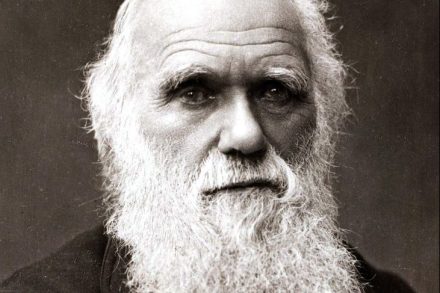
By all accounts a modest and retiring example of his species, Charles Darwin would surely have been more astonished than flattered by the honours done him during this year’s bicentennial celebrations. By all accounts a modest and retiring example of his species, Charles Darwin would surely have been more astonished than flattered by the honours done him during this year’s bicentennial celebrations. An avalanche of major exhibitions, international conferences, TV and radio series — everything, indeed, short of a movie starring Brad and Angelina — is accompanied by a perfect tsunami of books made saleable by association with the bald, bearded sage of Down House.