Conservative party

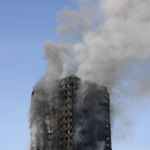
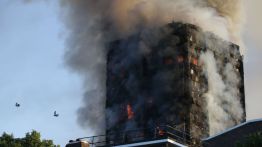
Those who died at Grenfell Tower were the victims of bad government

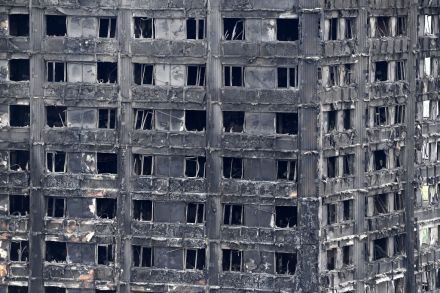
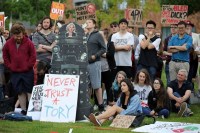
Had the Grenfell Tower tragedy befallen one of the millionaire high-rises built along the Thames recently, it would still be a catastrophe that shocked the country and the world. But what makes this disaster so numbing and sickening is to see, in the faces of the dead, some of the most vulnerable people in our society. People who were, in effect, in the care of the state – that is to say, in our collective care. If we pay taxes and vote, we’re part of a system that’s supposed to devote the greatest attention to those in greatest need of government help. And on Tuesday night, dozens of them were killed – through, it seems, near-contemptuous neglect from various layers of government.

Theresa May is failing to learn from Gordon Brown’s mistakes

One of the truisms that has emerged from this election is that maybe Gordon Brown was right to veer away from calling an early election after all. Pursuing a snap election turned out to be a grave error for Theresa May, and so perhaps the Labour Prime Minister was wiser than everyone gave him credit for at the time. But while this may seem obviously true, what has actually happened is that May has confirmed her similarity to Brown. The latest YouGov polling on May’s personal ratings reminds us that both reaped a severe punishment for going anywhere near an early poll, regardless of whether they followed through and held the election.

High life | 15 June 2017

I was busy explaining to a 23-year-old American girl by the name of Jennifer why the election result was not a disaster. She is a Spectator reader and wants to work in England, preferably in politics. She called the result the worst news since her father had abandoned her mother. I begged to differ. Actually, it was a far better result than it would have been had the Conservatives won a majority of 100, I told her. She gasped in disbelief, but soon enough she was hooked. Do not be alarmed, dear readers. I have not taken LSD. Nor am I suffering from populist-nationalist rage at global elites and starting to hallucinate.

Nick’s a visionary – he deserves a second chance

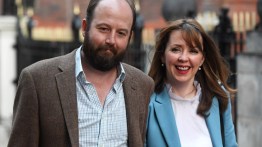
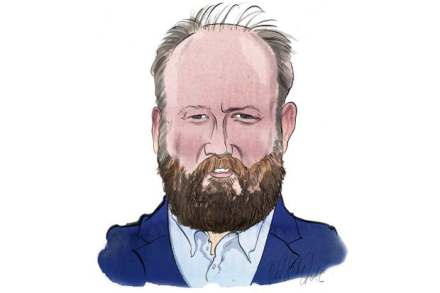
I first met Nick Timothy in July 2015. He had just been appointed director of New Schools Network, the free schools charity I now run, and wanted to talk about the future of the policy. He has been portrayed in the media in the past week as a right-wing thug, as well as a swivel-eyed Brexiteer, but that wasn’t the impression he gave as he sipped his builders’ tea. On the contrary, he was trying to think of ways to weaken the association between free schools and the Tory party, particularly within the education sector. His mission, he explained, was to create cross-party support for the policy by setting up more free schools in disadvantaged areas.

Diary – 15 June 2017

Nobody inside CCHQ was prepared for election night’s 10 p.m. exit poll. Lynton Crosby’s last text to me predicted that we were going to ‘do well’, which according to our expectations would mean a Conservative majority of more than 60. A late projection, based on data from the ground and Jim Messina’s modelling, suggested we would win 371 seats, giving us a majority of 92. In the end, the Conservatives got their highest share of the vote since 1983, and more votes than Tony Blair managed in any of his elections, yet still we ended up with a hung parliament. Skilful leadership may deliver stability, but the absence of an overall majority means the nature of the Brexit deal the government negotiates is more uncertain.

Grenfell Tower and the politics of needless death

As the body count rose from the Grenfell Tower fire, sensible people warned us not to rush to judgement. Activists, mainly from the left, denounced a complacent housing bureaucracy at the Kensington and Chelsea Tenant Management Organisation, and a Conservative government, which had refused in its laissez-faire way to regulate rented housing. The warnings sounded sensible. At the time of writing, I still do not know for sure why the fire spread with such ghastly effectiveness. Why rush to judgement and into print? In any case, is there not something wrong with people whose first reaction to a disaster is to take cheap shots? But sensible points can be beside the point.

How long can Nicola Sturgeon pretend that nothing has changed?

Is Nicola Sturgeon, not to put too fine a point on things, losing it? Just six weeks ago this question would have seemed preposterous. But that was before the SNP’s disastrous election result. Yes, disastrous. Sure, everyone expected the SNP to lose votes and seats but no-one really thought they could lose 21; no-one really thought their share of the vote would fall by 13 points or that they would misplace almost half a million voters. No-one thought their result would be so very much worse than expected. No-one includes the opposition points and, pertinently, the SNP itself.  And in response to this, what has Nicola Sturgeon said? Only this: nothing has changed. This is a line that will not, cannot, hold.

The future belongs to the Left

When I was in my early 20s and quite conservative I assumed I was just an anomaly, someone who develops these traits earlier than normal, and conservatism was like baldness or impotence or the other bad things that get you in middle age; most of my friends and contemporaries would catch up at some point, because these things just develop at different speeds. Now in my late 30s I realise it's worse than that and almost none of my friends and acquaintances are going to become more conservative; if anything, they've become more left-wing than they were 20 years ago, as the barometer of what is progressive and therefore acceptable has shifted. Many of them would have been among the 40 per cent of the population who voted for Corbyn last week, and the 50 per cent aged 35-44.

Hands off our Ruth

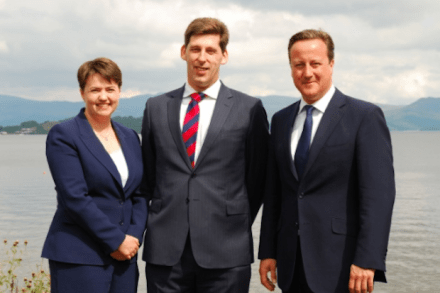
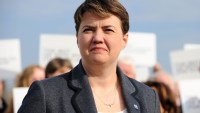
At last, there is light in the north. The long Scottish Tory winter has finally ended, giving way to the freshest spring imaginable. Just ten days ago, leading Scottish Tories believed they might win half a dozen seats at the general election. Even on election night they struggled to accept the reality of what was happening. ‘Ayr? Really?’ But they did win Ayr. And Stirling. And Angus. And Gordon. And Moray. This was emphatically not Theresa May’s victory. It was Ruth Davidson’s. Now, in the aftermath of this Ruthquake, a question arises: if Ruth can save the Scottish Tories, couldn’t she do something similar south of the border? Every newspaper has carried a version of this fantasy.

I don’t blame millennials for voting for Corbyn

On the morning after the election I was drinking coffee with one of my heroes, Sir Roger Scruton. We talked about the moment during the 1968 Paris évenéments when Scruton, who had been fairly apolitical up to that point, suddenly discovered he was a conservative. He had watched the educated children of privilege wantonly destroying the property of their social inferiors in the name of something or other, and realised: ‘Whatever they are for, I am against.’ That was the reason he has spent so much of his life since trying to develop a philosophy of conservatism as thorough, persuasive and enticing as the variations on Marxism so compelling to those students.

Where we went wrong

Nobody inside CCHQ was prepared for election night’s 10 p.m. exit poll. Lynton Crosby’s last text to me predicted that we were going to ‘do well’, which according to our expectations would mean a Conservative majority of more than 60. A late projection, based on data from the ground and Jim Messina’s modelling, suggested we would win 371 seats, giving us a majority of 92. In the end, the Conservatives got their highest share of the vote since 1983, and more votes than Tony Blair managed in any of his elections, yet still we ended up with a hung parliament. Skilful leadership may deliver stability, but the absence of an overall majority means the nature of the Brexit deal the government negotiates is more uncertain.

The Tories must learn fast to avoid the chilling prospect of Prime Minister Corbyn

Nick Timothy has penned an honest and reflective piece about the Tory election boorach. It can’t have been easy to write less than a week on from defeat and his departure from Downing Street. The most important point he makes is substantive. Theresa May abandoned the One Nation vision she sketched out on the doorstep of Number 10 upon becoming Prime Minister. It was a blueprint for a modern conservatism that believed in markets but didn’t worship them, that championed liberty but also the freedom to take advantage of its opportunities. It was a communitarian Toryism halfway between Burke and Berlin — the kind of politics advocated by Robert Halfon, sacked by the PM in an apparent effort to make sure she had alienated absolutely every last person who ever rated her.

The cost of Theresa May’s deal with the DUP

Theresa May's deal with the DUP has been delayed as the government deals with the Grenfell Tower blaze. Even without the tragic events of last night, there's reason to suggest that May's deal with the DUP would not have been signed this week. Although the two parties are said to be finalising the 'terms and conditions' of an agreement, behind the scenes the DUP are driving a hard bargain as they attempt to squeeze more and more out of a beleaguered Prime Minister. There is growing anger among Tory MPs that May has misplayed her hand in these negotiations. By announcing that the Conservatives would govern in conjunction with the DUP, she made it so that any failure to do so would look like weakness.

Tory leader runners and riders: Who could replace Theresa May?

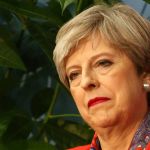
Theresa May has granted herself a brief reprieve by saying ‘sorry’ to Conservative MPs. But while the Prime Minister’s apology won her some breathing space, in the long term little has changed: the PM’s Downing Street days are numbered. Who could be next in line to take over as the new Tory leader? Boris Johnson Boris remains the bookies’ favourite despite being badly bruised by last year’s bungled bid for the top job. The Foreign Secretary has thrown his weight behind May for now. It’s difficult though to ignore George Osborne’s assessment that Boris is in a ‘permanent leadership campaign’.

Yes, the lowest-paid did best under Cameron

Was the general election a vote against austerity? I was on the Today programme this morning to discuss this point, and in the course of the interview said that the lowest-paid did best under the Cameron years. This raised some degree of incredulity from Twitter, reported by Huffington Post. What planet am I on? I thought I’d answer. The Cameron years were tough, especially for those on welfare. But the aim was always to make people better-off by moving them into work. David Cameron did cut tax for employers, with corporation tax far lower. Liam Byrne, with whom I was on the Today programme, said that companies hoarded cash – but he didn’t say that they also employed a lot more people than they used to. So while 442,000 public sector positions were cut, 3.

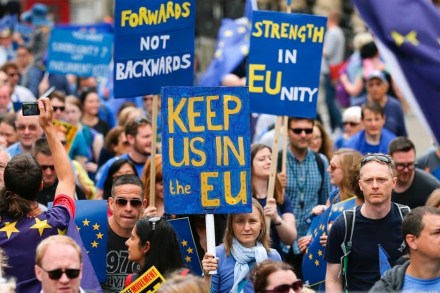
It’s delusional to claim the election result was a vote against Brexit

How deliciously tempting it must be to do as the Times and FT has done today, along with many others since last Friday, and try to interpret the election result as somehow a vote against Brexit – or against the withdrawal from the single market. 'The notion of a ‘hard’ (to be precise, a dogmatic and ideologically driven) Brexit should be promptly abandoned', asserts a leader in the Times, echoing the sentiments of Tim Farron, Nicola Sturgeon, Ruth Davidson and many others. How tempting – and how utterly wrong.

Forget Michael Gove or the rise of the Remainers. The reshuffle is about the march of the moderates

Michael Gove will get all the headlines, and there is something darkly ironic about his appointment. Theresa May may be fighting for her political life, but even her 11th hour manoeuvres have a sharp edge. She’s been forced to bring back a man she sacked, but her choice of job is lovely: Michael Gove of the Leave campaign now gets to tell British farmers how life will be better when farm subsidies end. Meanwhile, Gove replaces Andrea Leadsom, another Leaver, who as Commons leader now gets to oversee the speeding legislative freight train that is the Great Repeal Bill, not to mention seven or eight other bits of Brexit legislation - all without a Commons majority.

It’s a question of when, not if, Theresa May will resign as Prime Minister

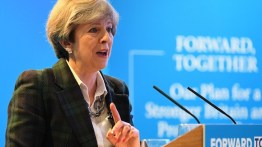
Only one Cabinet member – Chris Grayling – had a good word to say about Theresa May and even he waited hours to say it. The silence of the others underlines the scale of trouble that the Prime Minister is in with her own party after blowing its majority in pursuit of a personal mandate. If she had won a landslide (which seemed to be there for the taking), she wanted to make it a very personal landslide, asking people to ‘vote for me’ rather than her party. As I say in my Daily Telegraph column today, the defeat must now be owned by her personally. And the silence of her Cabinet is intended to let her dwell upon this fact: she shut most of them up during the campaign, hoping to personalise the glory of victory. They now want her to personalise the misery of defeat.

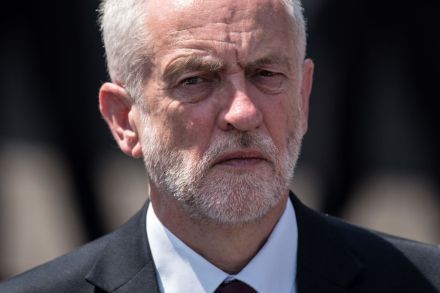
Jeremy Corbyn’s unlikely fans show he is no revolutionary

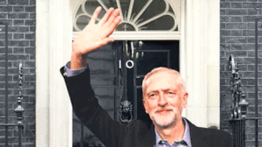
So now we know: Jeremy Corbyn is a counterrevolutionary. The man who fancies himself as the secret Red of British politics, surrounding himself with trustafarian Trotskyists and the kind of public-school radical who gets a hammer-and-sickle tattoo just to irritate his parents, is now being talked up as a potential saviour of the establishment from Brexit. From Guardian scribes to actual EU commissioners, the great and good want Corbyn to save their hides from that raucous revolt of last June. You couldn’t make it up: Jez the tamer of the agitating masses. No sooner had those exit polls revealed that May was struggling and Corbyn was rising than the EU-pining lobby was saying: ‘Jez we can stop Brexit!