Conservative party

Corbyn overtakes May on question of who would make the best PM

Would Jeremy Corbyn or Theresa May make a better Prime Minister? In April, when Theresa May called the election, that question was barely worth asking: 54 per cent backed May compared to just 15 per cent who opted for Corbyn. Now that’s all changed. For the first time, Jeremy Corbyn has overtaken Theresa May on the question of who would do the best job running the country. A YouGov poll in the Times today puts Corbyn on 35 per cent; just 34 per cent picked the PM. We don’t necessarily need a YouGov survey to tell us but this demonstrates the utter collapse in Theresa May’s popularity. More troublingly for

What are the Conservatives for?

Should it be Boris? He was twice elected mayor of a Labour city and if the Tory mission is to stop Jeremy Corybn, surely you need someone charismatic to see off a populist. Then again, David Davis is a dependable caretaker, a bruiser who can hold the line on Brexit. Or why not skip a generation? There’s the articulate Priti Patel and the accomplished Dominic Raab. And to make this party go with a bang, why not ask Michael Gove to be someone’s campaign manager? He’ll change his mind on the day and then: pow! They’ll all form a circular firing squad, like last time, and whoever’s left standing wins.

The Spectator Podcast: The dying of the right

On this week’s episode, we look at conservatism’s apparent decline, how society has responded to the Grenfell Tower tragedy, and whether young people have had their critical faculties vanquished by a certain boy wizard. First up: This time last year many were wondering whether the left, in Britain and abroad, was in terminal decline. The Brexit vote and Trump’s shock victory seemed only to compound that, and yet, just a few months later, the Spectator now has a cover piece, by Fraser Nelson, declaring that conservatism needs saving. How did we get here? And can anything be done about it? To discuss this, Fraser joined the podcast along with Michael Heseltine. As Fraser writes in

What the papers say: The Tories are in office but not in power

This was a Queen’s Speech to fit the ‘sombre mood of the nation’, says the FT. ‘British politics is in a state of paralysis,’ and the government’s plan ‘was notable for what it lacked’, the paper says – pointing to the key manifesto pledges cast aside. It’s good news that some of these policies – such as a free vote on the hunting ban – are gone. But there’s further good news, too, in the form of Theresa May’s ‘belated recognition of the complexity of the Brexit process’, the FT says. Indeed, ‘Mrs May’s monopoly over the terms of Brexit has also been broken’ – with Philip Hammond among those now

If Jeremy Corbyn can rise from the depths, why can't Theresa May?

When John Curtice speaks, listen. That’s one thing we learned in the general election. This week we hosted John at the Social Market Foundation, where he explained just what actually happened on June 8. Among his many observations was that Jeremy Corbyn really had done something unprecedented: he changed the way voters saw him, for the better. In John’s view, no one has ever done this before. Public opinion of Corbyn was settled: he was useless. And voters, once they’ve decided you’re useless, don’t change their minds.  But they did. They still don’t think Corbyn is brilliant, but they don’t dismiss him the way they used to. The great Curtice brain holds no other example

Europe’s imploding right

If the British Conservative party is feeling stunned, having calamitously misread the public mood in a general election, then it is in good company. Across Europe, right-wing parties are struggling to find messages that resonate. It’s not that voters have turned away from conservative ideas: polls show a huge number interested in individual liberty, lower taxes and the nation state. The problem is that conservative parties have given up on those ideas — and, as a result, voters are giving up on them. Take Fredrik Reinfeldt, prime minister of my native Sweden between 2006 and 2014. He started off well, reforming welfare and cutting taxes. But then it all went

Corbyn regains his confidence - but his Brexit troubles aren't far away

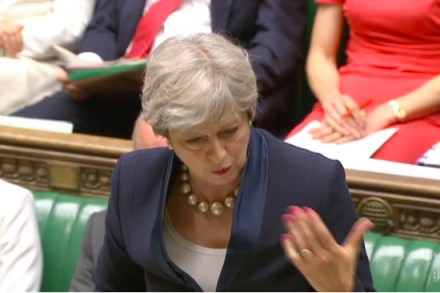
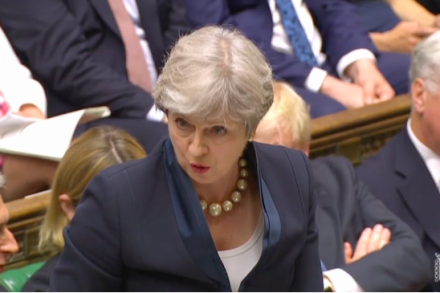
Today’s exchanges between Theresa May and Jeremy Corbyn in the Commons following the Queen’s Speech showed how much difference confidence makes to a leader’s performance. While Corbyn will never be a scintillating orator – speaking for far too long and ending with a sentence that seemed to be aimed more at entering the Guinness Book of Records than at making any sense – he made the most of the opportunity that such a threadbare speech presented him with. The election result may not have delivered him into government, but it has made him look like far more of a winner than the woman who called the poll. The Labour leader

Queen's Speech: the full guide to what's been scrapped

Today’s Queen Speech was supposed to be a moment of crowning glory for Theresa May. Instead, it’s a muted affair, with the Tories’ plans for Government left in tatters as a result of their blown majority. ‘Strong and stable’ is out; in comes ‘humility’ and ‘resolve’ – and the party’s manifesto has been largely binned. Here’s what didn’t make the cut: Donald Trump’s state visit: The Queen’s Speech made no mention of Donald Trump’s state visit to the UK. Downing Street was insisting recently that there was no change to the schedule following Theresa May’s invitation which she offered to the President back in January. It’s clear this isn’t the case and the

Labour is now the party of the middle class

I’m not sure I’ve ever been so pessimistic about this country’s future, and I’m not usually a barrel of laughs to start with. Aside from the terrorism, and the recent tragedy in North Kensington, there are real black clouds in the distance. Investors are being put off Britain, a problem that pre-dates Brexit but is surely aggravated by it. There seems little hope that the Tories will follow Philip Hammond in pursuing a more moderate line in Europe. (Would the catchphrase ‘Stop, Hammondtime’, galvanise the public, I wonder? Kids still like MC Hammer right?). Meanwhile the opposition – even moderate members – are now calling for people’s private property to

What's wrong with the 12 new Scottish Tory MPs?

Although the snap election result was disappointing for the Conservative party as a whole, there was reason for celebration north of the border. Ruth Davidson led the Scottish Conservatives to unprecedented success, with 13 MPs elected in total. Now that David Mundell is no longer the Tories’ only MP in Scotland, the Secretary of State for Scotland is finally spared the embarrassment of not being able to fully staff his office. So, which of the new intake of Scottish Conservative MPs will fill the vacant ministerial post in the Scotland Office? None of them, it so turns out. Apparently not one of the 12 pass the test. Instead, Ian Duncan – the Scottish

The Tories desperately need new ideas to keep Corbyn out of power

Every discussion with a Tory Minister or MP now ends up with a go through of the runners and riders for the leadership. But just as important as the personality is the policies. One of the major problems for the Tories at the last election was that they had almost no positive offer; what did they offer a thirty something on fifty thousand a year who didn’t stand to inherit anything? Tories can’t expect young people to be capitalists, when they have no capital. This makes the need for new ideas on the centre-right a matter of some urgency. Without them, Jeremy Corbyn—or someone very like him—will be Prime Minister

Please can the bullying of Theresa May stop?

We all remember it from school, whether as perpetrator, or assistant of perpetrator, or victim: the moment when everyone turns against another pupil and it becomes legitimate to be vile to her. When she is ‘down’, it becomes more and more enjoyable to torture her and to find endless new aspects of her to be woundingly vicious about, every hour of every day. It has been like this for Theresa May in the last week. She’s the outcast in the playground, knowing that if she so much as opens her mouth to say something, she’ll receive a torrent of withering sarcasm. Please can it stop? It leaves a nasty taste

No, the election was not a rebellion against Brexit – or ‘austerity’

The lessons to be learned from the Conservatives’ poor showing in the election could fill more pages than the national curriculum. Don’t unleash on the public a manifesto which has not even been tested among senior ministers. Don’t think you can get through a seven-week election campaign by endlessly repeating the same mantra, especially when you are being ridiculed for it. Don’t underestimate how quickly public opinion can change. Sell yourself, your party and its ideas, rather than just attacking your opponent. Yet there is a serious danger that Theresa May and the rest of the Tory party could pick up the wrong message. There is a growing narrative that

Trying to turn Grenfell Tower into a morality tale about the rich and poor stinks

Who would want to be a political leader in the wake of a disaster such as that of Grenfell Tower? If you show up and hug the victims you run the risk of being accused of opportunism and obstructing the emergency services in their work; if you stay away from the site you will be accused of callousness – even if you are spending your time working on the practical issues relating to the event. But there is a very strong emerging narrative: that Jeremy Corbyn got it right by turning up and sharing the grief of the victims, and that Theresa May got it horribly wrong by restricting her

Those who died at Grenfell Tower were the victims of bad government

Had the Grenfell Tower tragedy befallen one of the millionaire high-rises built along the Thames recently, it would still be a catastrophe that shocked the country and the world. But what makes this disaster so numbing and sickening is to see, in the faces of the dead, some of the most vulnerable people in our society. People who were, in effect, in the care of the state – that is to say, in our collective care. If we pay taxes and vote, we’re part of a system that’s supposed to devote the greatest attention to those in greatest need of government help. And on Tuesday night, dozens of them were

Theresa May is failing to learn from Gordon Brown's mistakes

One of the truisms that has emerged from this election is that maybe Gordon Brown was right to veer away from calling an early election after all. Pursuing a snap election turned out to be a grave error for Theresa May, and so perhaps the Labour Prime Minister was wiser than everyone gave him credit for at the time. But while this may seem obviously true, what has actually happened is that May has confirmed her similarity to Brown. The latest YouGov polling on May’s personal ratings reminds us that both reaped a severe punishment for going anywhere near an early poll, regardless of whether they followed through and held

High life | 15 June 2017

I was busy explaining to a 23-year-old American girl by the name of Jennifer why the election result was not a disaster. She is a Spectator reader and wants to work in England, preferably in politics. She called the result the worst news since her father had abandoned her mother. I begged to differ. Actually, it was a far better result than it would have been had the Conservatives won a majority of 100, I told her. She gasped in disbelief, but soon enough she was hooked. Do not be alarmed, dear readers. I have not taken LSD. Nor am I suffering from populist-nationalist rage at global elites and starting

Nick’s a visionary – he deserves a second chance

I first met Nick Timothy in July 2015. He had just been appointed director of New Schools Network, the free schools charity I now run, and wanted to talk about the future of the policy. He has been portrayed in the media in the past week as a right-wing thug, as well as a swivel-eyed Brexiteer, but that wasn’t the impression he gave as he sipped his builders’ tea. On the contrary, he was trying to think of ways to weaken the association between free schools and the Tory party, particularly within the education sector. His mission, he explained, was to create cross-party support for the policy by setting up

Diary - 15 June 2017

Nobody inside CCHQ was prepared for election night’s 10 p.m. exit poll. Lynton Crosby’s last text to me predicted that we were going to ‘do well’, which according to our expectations would mean a Conservative majority of more than 60. A late projection, based on data from the ground and Jim Messina’s modelling, suggested we would win 371 seats, giving us a majority of 92. In the end, the Conservatives got their highest share of the vote since 1983, and more votes than Tony Blair managed in any of his elections, yet still we ended up with a hung parliament. Skilful leadership may deliver stability, but the absence of an