Climate change

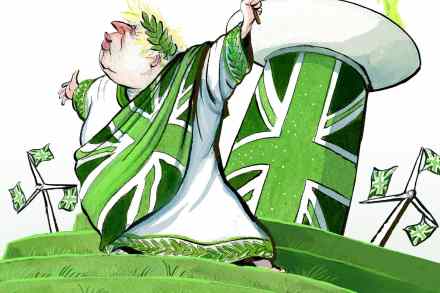
Boris Johnson should trust the market to solve climate change

From our UK edition

In a 368-page document published this week, the government announced its strategy to cut emissions to net zero by 2050 and confirmed its target for all electricity to come from low carbon sources by 2035.  It’s difficult to imagine worse timing for the release. An energy crisis is exposing the failures of decades of massive state meddling in the market. Insulate Britain have been picnicking on the M4 and M25. And on Wednesday a leak of documents showed Saudi Arabia, Japan and Australia are asking the UN to play down the need to move rapidly away from fossil fuels. None of this has weakened the Prime Minister’s resolve, though that’s hardly surprising.

The media has a climate change blind spot

From our UK edition

Are you someone who is delighted by the government’s eye-wateringly expensive commitment to deliver ‘net zero’ by 2035, or are you a dissenter on the grounds that its plans do not go far, or fast, enough? According to the BBC and many other media organisations, you must surely belong to one of those two groups. Somehow the widely held viewpoint to which I subscribe – that the weight of evidence suggests man-made climate change is a big problem but we should still scrutinise climate policies on grounds of proportionality, value for money and how they measure up against less idealistic alternatives – has been squeezed out. Tuesday morning’s news bulletins on the Today programme provided a case study of how the debate is being framed.

Join: The Spectator’s online COP26 summit

From our UK edition

The two-week COP26 climate change summit starts this weekend, with 100,000 expected on a protest march in Glasgow. And tomorrow, we at The Spectator will hold our own (virtual) summit looking at what lies ahead — and asking if history is about to be made, and how much of this is likely to be political theatre. The morning will open at 9.30am with a keynote speech from Dieter Helm, professor of energy policy at New College, Oxford: I'll be in discussion with him afterwards. His book, Net Zero, is perhaps the best primer you'll read on the topic: he supports the objective but is sceptical about the "jaw-jaw" of climate summits as a means of pushing through meaningful change. Then Kate Andrews will discuss the elephant in the room: nuclear power.

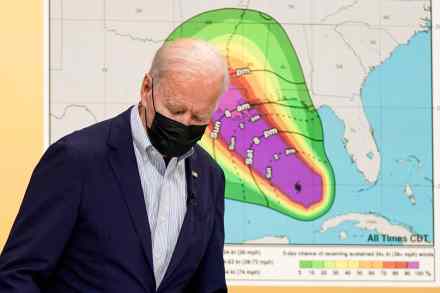
Biden walks naked into a climate conference

Nye Bevan, the British socialist, famously denounced the nuclear unilateralists in his party for sending a future foreign secretary 'naked into the conference chamber’. Unless Congress passes the stalled budget reconciliation bill, President Biden will fly to the COP26 Glasgow climate conference, which starts in less than three weeks’ time, in a similar state of undress. Before the Paris agreement in 2015, UN climate change conferences were about hammering out the texts of binding climate treaties and agreeing to emissions reduction targets. All that has changed. Climate change targets are now decided in advance by individual countries in their Nationally Determined Contributions, draining climate conferences of drama and turning them into a giant show-and-tell.

climate

Big Tech is censoring the climate change debate

'The limits of my language mean the limits of my world.’ — Ludwig Wittgenstein, Tractatus Logico-Philosophicus, 1922 Wittgenstein wrote that as an ontological and epistemological foundation for his larger belief in freedom of speech. He who controls the language also controls reality, something that today's left understands brilliantly, even devilishly. America historically has not limited freedom of thought and speech, and the resulting clash of ideas has improved our national discourse. The language police makes us weaker intellectually by limiting the world in which we live. The language around climate change and the green movement is one more area the left wants to control, especially given that trillions of dollars in spending are on the line.

big tech

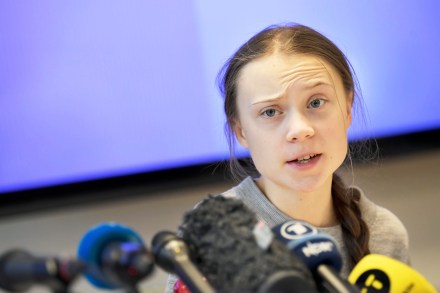
Greta Thunberg didn’t win the German elections

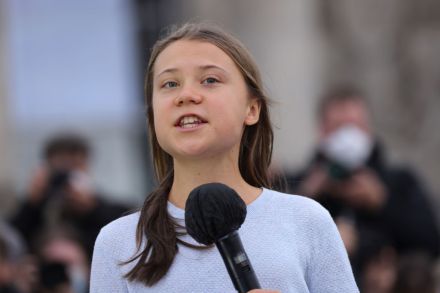
Greta Thunberg is back in business. Previously slowed down by European pandemic restrictions, the Fridays For Future movement has now hit the streets, starting in Berlin. 'We must not give up, there is no going back now,' Thunberg told thousands of local protesters. The appeals and influence of her movement have translated, at least somewhat, into a stronger climate-focused youth vote in last month's German elections. The Green party has made significant advances in Parliament, becoming one of the kingmakers in upcoming coalition talks. Yet Germany’s environmentalists aren’t the only ones who outperformed their previous results. The liberal-democrat FDP scored 23 percent of Germany’s first-time voters, the same amount as the Greens.

greta

It’s no wonder young people have ‘eco-anxiety’

From our UK edition

Is it any wonder that children and young adults are going down with ‘eco-anxiety’ , as claimed in an opinion piece in the BMJ this week? One of the pieces of evidence it cites is a survey published in 2020, which claimed that 57 per cent of child psychiatrists had dealt with patients who were feeling anxious about climate change. It would be easy to dismiss this as another case of the ‘snowflake generation’ lacking the toughness of their forebears. But even if it is true that earlier generations of children, such as those brought up during the second world war, seemed to cope much better with the genuine threat of being wiped out by the nightly bombing of British cities, I think we ought to take it seriously as a mental health issue.

Does Sunak care about net zero?

From our UK edition

The biggest story of the Tory conference wasn’t about a gaffe or a controversial statement. It was about something that wasn’t said, and the person who didn’t say it. Rishi Sunak’s silence on net zero is a big deal, as the next few weeks will prove. The Chancellor didn’t mention net zero in his conference speech. So what, you might ask? After all, it’s an environmental thing and he’s Chancellor, right? No. net zero is an economic story, and a big one. It’s about growth, investment, public spending, tax and jobs. According to Sunak’s Treasury: This will be a collective effort, requiring changes from households, businesses and government.

The green movement flirts with violent sabotage

'What actions are you recommending for the pro-life movement?' the New Yorker Radio Hour host asks his guest, a tenured university professor and author of How to Blow Up an Abortion Clinic. 'Well,' the guest replies, 'I am recommending that the movement continue with the March for Life and crisis pregnancy centers but also open up for property destruction. We need to step up because so little has changed and so many babies are still being killed. So, I am in favor of destroying machines and property, not harming people. I think property can be destroyed in all manner of ways. It can be neutralized in a very gentle fashion, or in a more spectacular fashion as in potentially blowing up an abortion clinic.' 'Do you yourself plan to be involved in such actions?

law climate

Why Johnson sounds pessimistic about Cop26

From our UK edition

The Prime Minister has touched down in New York for the UN General Assembly where he hopes to press countries on committing funds for the Cop26 climate talks. Ahead of the summit, Boris Johnson has urged wealthier countries to contribute to a £100 billion a year funding target aimed at helping developing nations to cut carbon emissions. That commitment is viewed as key to getting the ball rolling when the negotiations get underway at the summit in Glasgow in November.  Behind the scenes there is increasing pessimism about what Cop26 will achieve But things aren't going to plan. Speaking to hacks on the trip, Johnson said it would be a stretch to get the money all there during his trip.

Afghanistan and climate change: the West’s twin failures

The West’s humiliation in Afghanistan has an older brother: climate change. As siblings, the two share characteristics, most obviously an inability to confront unwelcome facts. In Afghanistan, there was a large constituency led by the Pentagon invested in the mantra of proclaiming progress in the fight against the Taliban. Climate has its own industrial complex of NGOs, climate scientists, renewable energy lobbyists profiting from the energy transition, eager helpers in the media, and politicians posing as world saviors. Energy experts tell us renewable energy is cheaper than building new fossil fuel power stations. If they’re right, why did China build the equivalent of more than one large coal plant a week last year?

climate change

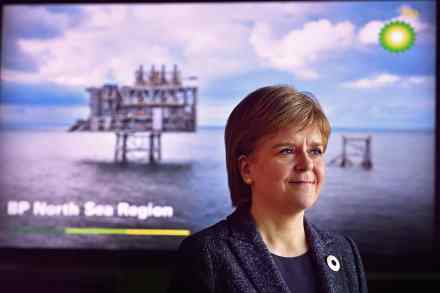
Does Nicola Sturgeon care more about oil revenue or climate change?

From our UK edition

'Now, as I've hopefully made clear throughout all of my remarks, the North Sea will continue to produce oil for decades to come. It still contains up to 20 billion barrels of recoverable reserves. Our primary aim – and I want to underline and emphasis this – our primary aim is to maximise economic recovery of those reserves.' The words are from a speech made in June 2017, a few months after the Paris Agreement that aimed to limit climate change came into effect. A speech by a pro-oil Conservative, or perhaps the head of an industry group working on behalf of the oil sector? No. They are, in fact, the words of First Minister Nicola Sturgeon speaking at the Oil and Gas UK Conference that year.

Are China’s climate promises just a load of hot air?

From our UK edition

Few cities in China represent the country’s addiction to coal more than Tianjin, where Alok Sharma travelled this week to talk about cooperation on climate issues. It sits on the coast of one of China’s most polluted regions, and its port is a key hub for trading 100 million tons a year of the stuff – that’s roughly 12 times Britain’s annual coal burn. Chinese coal consumption is on track to increase this year by around ten per cent. To meet that demand, vast new open cast pits are being rushed into service in Inner Mongolia, China’s biggest coal production region, from where supplies are brought down the coast to Tianjin.

Justin Welby is missing a trick on climate change

From our UK edition

Justin Welby urges us, echoing Deuteronomy, to 'choose life', so that our children may live. It is an apt use of scripture, in the face of the climate emergency. But his performance on Radio 4 this morning was far from impressive. The Archbishop of Canterbury spoke of the need for ‘meaningful sacrifices’, but when asked which ones he was making he sounded a bit muddled, as if he was not ready for such an obvious question. His first answer was ‘recycling and all that’, a locution with an air of irritation, like a man too often nagged to take the bins out.  Can’t Lambeth Palace afford daily sausages? Asked about meat, he said he had cut down, but mainly for health and financial reasons. (Can’t Lambeth Palace afford daily sausages?

Was Hurricane Ida really caused by climate change?

From our UK edition

It’s climate change, innit? No sooner had Hurricane Ida smashed into the coast of Louisiana with winds of around 150 mph than the usual claims began to be made, the ones we get every time a hurricane makes landfall in the US: that it has been caused in part by man-made climate change. Climate models have tended to predict that tropical storms will become stronger as warmer seas lead to more energy being absorbed by the storms. Trouble is, observational evidence does not suggest that this has happened — at least not yet.

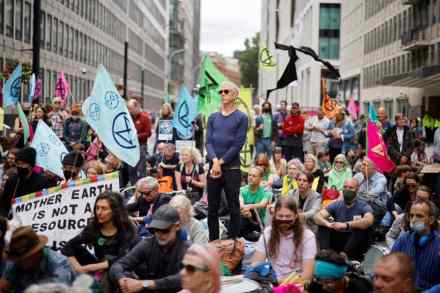
Extinction Rebellion and the hypocrisy of the new eco-elite

From our UK edition

Do you ever get the feeling that the elites are just taking the mick? That behind our backs they’re high-fiving each other and saying, ‘I can’t believe we’re still getting away with this?’ I do. Especially on the climate-change issue. The gall of an establishment that lives it up in carbon-fuelled luxury while telling the rest of us to stop being so eco-destructive really has become too much to take. Eco-hypocrisy abounds. Take John Kerry. He is Joe Biden’s climate-change envoy, which basically means his job is to wag his finger at the entire world for being so dirty and polluting. And yet there he was a few weeks ago landing in Martha’s Vineyard in his private jet for Barack Obama’s lavish 60th birthday party.

Greta Thunberg is right

From our UK edition

I am not usually on the same page as Greta Thunberg but she is absolutely right when she accuses the UK of lying about cutting its carbon emissions by 44 per cent since 1990. I have heard ministers repeatedly make this claim on radio and television while hardly ever being challenged on it — so I am thankful that Thurnberg has done what others have failed to do. The government’s 44 per cent claim is based on its official figures for territorial emissions — i.e. those physically spewed out within the UK. It excludes emissions from international shipping, aviation, the manufacture of goods elsewhere in the world for the benefit of UK consumers and the burning of biomass in UK power stations.

Portrait of the week: Cameron’s cash, A-grades abound and Tower Bridge won’t budge

From our UK edition

Home With less frightening domestic data on the coronavirus pandemic to ponder, subjects such as the rivalry between Boris Johnson, the Prime Minister, and Rishi Sunak, the Chancellor of the Exchequer, found time for discussion. The seven-day average of coronavirus cases detected by tests remained below 30,000. In the seven days up to the beginning of the week, 637 people had died with coronavirus, bringing the total of deaths (within 28 days of testing positive) to 130,281. (In the previous week deaths had numbered 524.) In a week, numbers remaining in hospital fell from 5,943 to 5,631. Three quarters of adults had received two doses of vaccine, but numbers crept up very slowly for first vaccinations, because of the low uptake by those under 35.

What ministers won’t admit about A-levels

From our UK edition

The tale of A-levels shows how ministers can sometimes find themselves in a position when it is simply too dangerous to admit something that is true. To the exterior eye, it is obvious that the temporary abolition of exams and its replacement by teacher assessment has produced grade inflation. This year’s A-level cohort has not suddenly got a third better than its pre-Covid equivalent. You or I can point that out, but if Gavin Williamson, the Education Secretary, says it, he thereby implies that he has presided over a change which devalues the exam, seriously weakening the basis of admissions to university. He will also be accused of disparaging pupils who, we all know, have had a very rough time.

In defence of net zero: yes, we can afford it

From our UK edition

Late in 2013, David Cameron snapped. ‘Get rid of all the green crap,’ the then prime minister told energy ministers. His demand came after a backbench revolt over the surcharges tacked on to household energy bills to support onshore wind power. Not for the last time, his decision was based on a spectacular failure to see one of the big trends of the age: the stunning fall in the costs of renewable energy that was already under way. In the past decade, the cost of generating electricity from onshore wind has fallen by 40 per cent. For offshore turbines, it’s down almost a third. Globally, it’s now generally cheaper to construct and run new renewable generation than it is to build a new station to burn fossil fuels.