Climate change

Why ESG is sinister

In contemporary finance, a bank’s “head of responsible investing” is meant to be an apostle of woke capitalism: a very modern kind of money man who tours the world touting all the good their employer is doing. So you might have expected a speech on climate change and finance by Stuart Kirk, the man with that job title at HSBC Asset Management, to be a bromide-filled snoozefest about the win-win nature of the transition to the green economy. But Mr. Kirk’s address at a recent conference on “Moral Money” was nothing of the sort. Instead, he delivered a broadside against the fashionable idea that climate change is a risk that no financial institution can afford to ignore.

esg

There are almost no animals left – but we’ve been here before

From our UK edition

Laikipia You know things are bad when the zebras are thin. Even during most droughts, zebras are like matrons at the gym in stripey spandex stretched around plump buttocks. Pastures vanished long ago and our plains resemble Sudan’s Batn-el-Hajar – the Belly of Stones desert – so that I cannot even recall what they were like when they were last thick with green grass. The zebra foals are dying, the elephants are thin, while the buffalo disappeared a while back. The dry has killed quite mature trees which now shudder with the sound of termites and crash to the ground. To the north of us, horned skulls and dried carcasses litter the trail where the cattle-keepers trekked their animals vast distances in search of rain. Up there the countryside is silent.

Fact check: Is Sadiq Khan right about fires?

From our UK edition

Will global warming condemn Britain to more fires? Sadiq Khan, Mayor of London, has been widely quoted this morning comparing recent fires around the capital to the Blitz. ‘Yesterday was the busiest day for the fire service in London since the second world war,’ he said – climate change caused the heatwave which ‘led to the fires’. He added that he was dismayed that the Tory leadership contenders were not discussing this ‘elephant in the room.’ So is this right – or misleading? As so often, it’s a mixture. Khan is correct to say that the number of calls to London fire brigade was a record high: it received more than 2,600 calls. But 999 call handlers can receive hundreds of calls about the same incident.

Dutch farmers are fighting for freedom

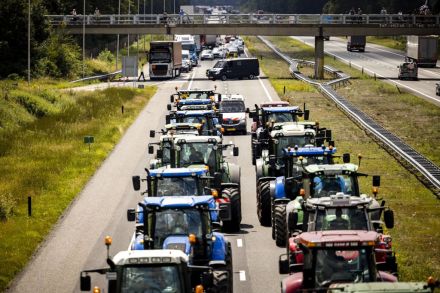
Dutch farmers have had enough of government overreach. And they’re taking to the streets as only farmers can. The government of the Netherlands, in order to fight climate change, recently proposed a 50 percent cut in ammonia and nitrous oxide emissions by 2030 — which will disproportionately impact the agricultural industry. Small farms are thus faced with two choices: shutter entirely or face poverty after culling their livestock. The Dutch government is not sympathetic to these concerns. In their words, “The honest message...is that not all farmers can continue their business.

Among the green conservatives

The American Conservation Coalition last week held its first official summit, hosting a vibrant crowd of over 250 people. The organization boasted speakers such as Michigan congressman Peter Meijer, New Hampshire governor Chris Sununu and conservative radio host Jason Rantz. Cockburn was lucky to attend — and even luckier to partake in the open bar. The many speakers held talks and panels on topics such as China as a player in the clean energy arms race, nuclear power as an alternative to fossil fuels, and the deregulation of free market economies. While it is still far from the mainstream attitude in conservative thought, the ACC represents a growing minority of people who recognize climate change as a threat, only without the left's “doom and gloom.

What the new GCSE in global warming should teach

From our UK edition

For years, environmentalists have campaigned for children to study global warming as a subject rather than simply as a part of geography. Their wish has now been granted in England with a new GCSE in natural history, starting from 2025. We know nothing yet about the syllabus but it’s quite the opportunity to ask what our planet’s problems really are, and how effective the net-zero agenda is as a solution. Rather than be scared to death about the future of the planet, pupils should instead be encouraged to take a rationalist approach. They might ask whether the obsession with climate change in recent decades has taken attention away from the many other major problems facing the planet.

BlackRock is right to abandon eco-activism

From our UK edition

Is this the end of climate activism from pension providers and other institutional investors? BlackRock, which manages $10 trillion in assets, has toned down its enthusiasm for blocking company boards that are not sufficiently committed to a carbon-free future. In January 2020, BlackRock’s CEO Larry Fink shook up the world of investment by writing an annual letter to the CEOs of companies in which he invests, warning them that in future BlackRock would take a more critical view of their climate change policies.

My raging case of ‘climate anxiety’

Recently, I came down with a severe case of climate anxiety. Not because I was worried about global warming but because the globe wasn't getting warm enough. It has been an unseasonably cold spring here on the East Coast. As recently as two weeks ago, a winter storm thrashed the Northeast, while last week the temperature here in Virginia kept getting stuck the 50s. Of course, our science-positive betters insist that a single spell of cold weather can't be used to challenge the climate change "consensus." But then they also seize upon every drought, heat wave, wildfire, hurricane, tornado, flood, derecho, hailstorm, rainstorm, power outage, riot, and coup in Myanmar to argue in favor of climate change. So no wonder some are feeling a little on edge.

We must all become Doctor Dolittles and listen to the wisdom of animals

From our UK edition

One day the writer and artist James Bridle rented a hatchback, taped a smartphone to the steering wheel and installed some webcams in order to make his own self-driving car. Armed with software cut-and-pasted from the internet, his aim was to collaborate with the AI he’d thus devised and travel to Mount Parnassus, sacred to Dionysus and home of the Muses, ‘to be elevated to the peak of knowledge, craft and skill’. Just try telling that to the traffic cops. This batty project had a serious point. Bridle wanted to subvert the idea that we cede control to our dismal robot overlords every time we plug co-ordinates into the GPS. To that end, he went about training the car, which he had rigged up with what amounted to a neural network that functioned like a simplified brain.

The island that time forgot

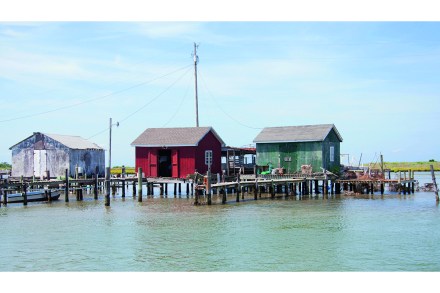
James Eskridge cuts a defiant figure as he rides around Tangier Island on his motorbike. The weathered, garrulous water man known to all as “Ooker” is the mayor, spokesman and public face of one of America’s most endangered communities. Buffeted by rising sea levels and relentless erosion, Tangier is not so slowly sinking into the shallow waters of the Chesapeake Bay, threatening its ancient community of crab-hunting, God-fearing, Cornish-sounding fishermen with extinction. The Chesapeake, site of the first British settlements in America, has some of the highest relative sea rise on the planet. If Tangier disappears beneath its waves, America will lose a living link to its pre-revolutionary past.

tangier

It’s time to clamp down on militant protesters

From our UK edition

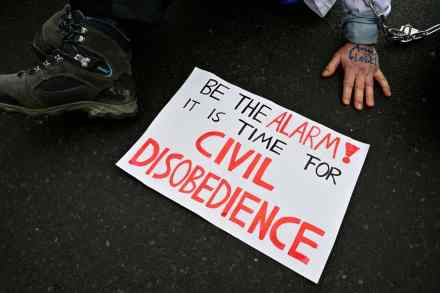
The right to protest against the policies of the government of the day, the system in general or even just to 'stick it to the man', as 1960s radicals used to put it, is fundamental to a free society. But when the freedom to protest is deliberately used by activists to take away the freedom of others to go about their normal lives then we reach an ethical crunch point. One man’s freedom has then become, as it were, another’s suppression and the law must adjudicate between the competing claims. So it is with the campaign tactics of various climate alarmist groups that have sprung up such as Extinction Rebellion, Insulate Britain and most recently Just Stop Oil.

Our children are at breaking point – and it’s our fault

From our UK edition

I think it’s time we stopped scaring the children. I think they’ve had enough. They’re at breaking point now, every generation more anxious than the last – and anxious younger, too. There’s a record number of British children diagnosed with anxiety, and a record wait – two years – for therapy, though I’m not at all sure the therapy as it is helps much. The usual idea is that if the kids are troubled, it’s the world that’s to blame: smartphones, Instagram, the constant comparing; Trump, Putin, the existence of Tories; Covid, global warming. No wonder they have the heebie-jeebies. But I think in fact that we’re doing it to them. It’s us, the parents, carers, teachers in charge.

How ‘questioning authority’ gave us wokeness

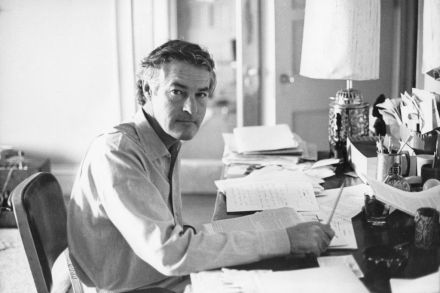
When I was in high school in the late 1960s, a bumper sticker, “Question Authority,” became a common sight, as did a button saying the same thing, usually worn on a tie-dye T-shirt or denim jacket. I was among those contrary teenagers who wanted to know, “On whose authority am I commanded to question authority?” The answer wasn’t hard to find. The man who most visibly pushed the slogan was former Harvard clinical psychologist and ardent LSD proponent Timothy Leary. He was known for his counsel “Drop out, turn on, tune in,” which was adopted by his League of Spiritual Discovery, which turned LSD into a sacrament. Whether Dr. Leary originated “Question Authority” or just promoted it is unclear, but that seems apposite.

Old man yells at gas prices

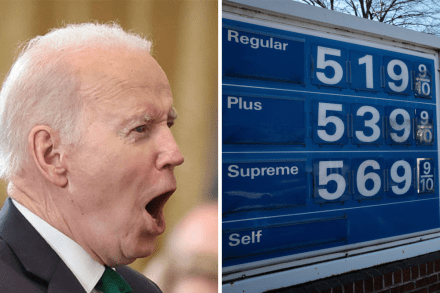
President Joe Biden has lashed out at fossil fuel companies, accusing them of using high gas prices to “pad their profits at the expense of hardworking Americans.” These are the same fossil fuel companies, by the way, that two years ago were charging a measly average of $1.84 a gallon. They’re also the same fossil fuel companies that in 2020 donated $1.6 million to Biden’s presidential campaign. But no matter. If nothing else, Biden’s inveighing against Big Oil takes me back to my more youthful days when progressives were less afraid to run hard against what they called “the polluters.” Back then, every oil derrick was a seething Deepwater Horizon just waiting to explode and blackface the local terns and herons.

Is global warming really more dangerous than Putin’s nuclear threats?

From our UK edition

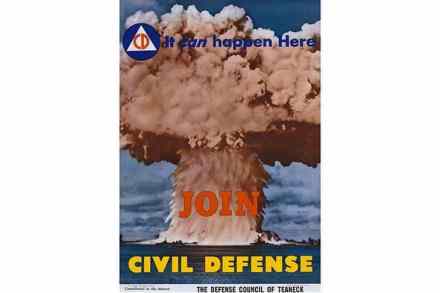
Having just dusted down my Geiger counter and argued with the family about whether or not there is room for our dog, Jessie, in the cellar fallout shelter, I thought I would check in with the Bulletin of the Atomic Scientists to see how long we’ve got before our recently acquired small paddock sprouts its first crop of Cobalt-60. The Bulletin of the Atomic Scientists was begun in 1945 by the physicists who, having devoted several years of their lives to the Manhattan Project, suddenly realised that their striving might not be, in the end, exclusively beneficial for the human race. As the most lionised of them, J. Robert Oppenheimer, put it at the time (without a great deal of cheer): ‘Now I am become death, destroyer of worlds.

There is no climate crisis

“No climate crisis” is, of course, not the spin the Intergovernmental Panel on Climate Change (IPCC) is putting on its new 3,676-page report released last month. “The choices we make in the next decade will determine our future,” the IPCC says. “Any further delay in concerted global action will miss a brief and rapidly closing window to secure a liveable future.” It could hardly be plainer. The report is political advocacy barely masquerading as science. The IPCC Working Group II report is not meant to be about policy; that’s the job of Working Group III, which has yet to produce its contribution to the sixth assessment report. “The focus of our new report is on solutions,” the IPCC says of the Working Group II report.

Against the Covid ‘new normal’

During the entire past two years of Covid hysteria I never stopped traveling. “Work from home” wasn’t a privilege awarded to me. My love of logic and language was perpetually bothered by a frequent airline announcement: “Federal law requires” mask mandates, a statement most untruthful. There is no law. Congress passed no new legislation; there is only regulation, the demon spawn of power-hungry politicians and a bloated bureaucracy. For those who can’t be bothered with the democratic process of elected officials proposing bills and deliberating, voting and enacting legislation, the immeasurable, and not enumerated, power of the bureaucratic state is an attractive work-around.

mask mandates new normal

Storm Eunice has nothing to do with climate change

From our UK edition

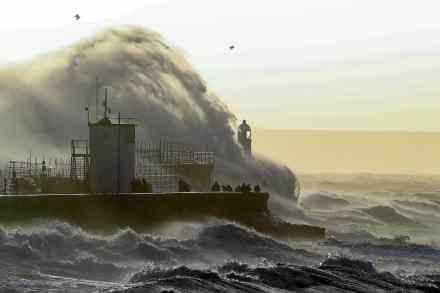
I sat tight and braced myself for the worst this morning — not high winds but for the Today programme to blame storm Eunice on climate change. Sure enough, at a quarter past eight, it didn’t disappoint. While a report acknowledged that it was not possible to blame specific weather events on climate change, Baroness Brown, who sits on the government’s climate change committee, was hauled on the show to explore the link between ‘extreme weather’ and climate change. She suggested that the Intergovernmental Panel on Climate Change (IPCC) would be producing a very frightening report on it soon. The use of the generalised term ‘extreme weather’ — i.e.

After Covid, Kenya’s flower industry is gearing up for its next challenge

From our UK edition

The alpine slopes of Kenya’s extinct volcanoes are the floral equivalent of Bordeaux. It’s there that the roses grow for the world’s weddings, funerals and Valentine’s Day bouquets. The higher the altitude, the larger your flower head, and roses raised in the shadow of Mount Kenya’s glaciers, or on the vast caldera of Mount Elgon, come in a dazzling spectrum of colours, petal shapes and scents. In normal years, billions of blooms fly out of Nairobi, destined for everywhere from Shanghai and Riyadh to Melbourne and Slough. But in 2020, the roses bloomed in vain. The world’s skies emptied of aircraft in March 2020, and Kenya’s rose growers threw away mountains of flowers that could not be exported.

Hydrogen vs electric – which car is the better investment?

From our UK edition

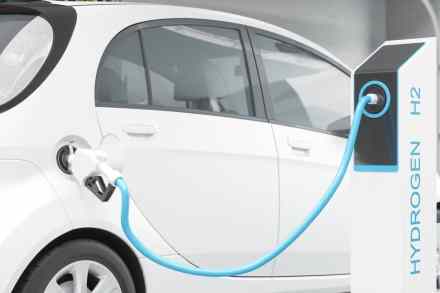
Does the future of motoring really lie in electric cars? Battery powered motors are now commonplace, but a few intrepid British drivers have gone for hydrogen fuel cell models instead. They currently have two choices. The £69,495 Hyundai Nexo (28 sales) and the £55k plus Toyota Mirai (about 200 owners including James May), so they’re hardly cheap. Eventually there will be more, including a BMW X5 4x4 due to be launched later in 2022. Jaguar Land Rover is also said to be looking at the technology for its heftier offerings. These cars take minutes to re-fuel, go further between top ups and, unlike battery cars, aren’t adversely affected mileage-wise by cold weather. The only thing they emit is water vapour.