Katy Balls

Katy Balls

Katy Balls is The Spectator’s former political editor.

The Kirsty Wark Edition

From our UK edition

30 min listen

Kirsty Wark has worked for the BBC for almost 50 years and is one of the UK’s most recognisable broadcasters. In 1976 she joined BBC Radio Scotland as a graduate researcher. Having produced and presented several shows across radio including The World At One and PM, she switched to television, and went on to present shows such as Breakfast Timeand The Late Show. However, she is best known for presenting BBC Newsnight for over 30 years, which saw her interview key political and cultural leaders. Having stood down after the 2024 election, she now presents Front Row, The Reunion, and documentaries like Icons of Style.
10 years of politics as Balls bows out

From our UK edition

21 min listen

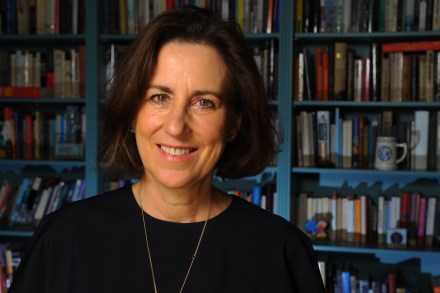
Katy Balls joins Coffee House Shots for the last time as the Spectator’s political editor. Having joined the magazine ten years ago – or six prime ministers in Downing St years – what are her reflections on British politics? Katy’s lobby lunch partner from the Financial Times Stephen Bush joins Katy and Patrick Gibbons to try and make sense of a turbulent political decade, work out where the greatest risk is to the current Labour government, and attempt to make some predictions for the next ten years.  Produced by Patrick Gibbons.

Paul Wood, Katy Balls, Olivia Potts, Benedict Allen, Cosmo Landesman and Aidan Hartley

From our UK edition

40 min listen

On this week’s Spectator Out Loud: Would Trump really bomb Iran, asks Paul Wood (1:38); Katy Balls interviews Health Secretary Wes Streeting on NHS reform, Blairism and Game of Thrones (8:38); Olivia Potts examines the history – and decline – of the Easter staple, roast lamb (18:25); the explorer Benedict Allen says Erling Kagge and Neil Shubin were both dicing with death, as he reviews both their books on exploration to earth’s poles (22:13); Cosmo Landesman reflects on what turning 70 has meant for his sex life (28:46); and, Aidan Hartley takes us on an anthropomorphic journey across Africa (33:55).  Produced and presented by Patrick Gibbons.

Labour Together? Party morale & the threat of Reform

From our UK edition

11 min listen

Former Labour MP Jonathan Ashworth and Patrick Maguire from The Times join Katy Balls for her penultimate Coffee House Shots podcast as The Spectator's political editor. Since losing his seat at last year's general election, Ashworth has been CEO of Labour Together – but not for much longer as he exclusively reveals on the podcast. Less than two weeks to go from the local elections, and only a few months away from marking one year in power, what is morale like in the Labour Party? While Patrick reflects on who might, or might not, be feeling happy, Ashworth provides more reasons for Labour supporters to feel bullish – particularly when thinking about the threat from Reform. Produced by Patrick Gibbons.

The Deborah Mattinson Edition

From our UK edition

29 min listen

Deborah Mattinson joined the House of Lords as a Labour peer in February. Her involvement in politics began when she worked alongside Peter Mandelson and Philip Gould to create Labour’s Shadow Communications Agency for Neil Kinnock. In 1992 she co-founded Opinion Leader Research, and she went on to advise Tony Blair ahead of the 1997 election and later became Gordon Brown’s chief pollster. In 2021 she was appointed Director of Strategy for Keir Starmer, a position she held until stepping down following last year’s landslide victory. On the podcast, Deborah tells Katy Balls about growing up as a Labour supporter with a father active in local Tory politics, the work hard/play hard culture of advertising in the 1980s and how to decipher what voters really think during focus groups.

How Wes Streeting will make or break Starmer

From our UK edition

15 min listen

Michael Gove and Katy Balls join James Heale to discuss their interview with the Health Secretary Wes Streeting included in this week’s special Easter edition of The Spectator. Michael identifies three key reasons why Streeting’s fate is key to the success of the government: immigration, the cost-of-living crisis and faith in the NHS. Seen as the ‘golden child’ of Number 10, Streeting has as many supporters in the Labour party as he has detractors – but his Blairite-coded image could help him take the fight to Reform.  Also on the podcast, Michael, Katy and James discuss Nigel Farage’s progress in the local election campaign.

Reform vs Labour: who’ll win the battle for the north?

From our UK edition

When MPs and peers were recalled to parliament for an emergency debate on renationalising British Steel, one man was the talk of the terrace: Nigel Farage. Out by the river, a Labour peer congratulated the Reform leader for ‘leading on everything’. After all, Farage had been in Scunthorpe days earlier calling for steel nationalisation.  Since I started covering British politics for The Spectator ten years and six prime ministers ago, there have been plenty of times when an insurgent party appeared to be on the rise. In 2015, the ascent of Ukip contributed to David Cameron’s decision to call a referendum on EU membership. Then in 2019, the success of the Brexit party in the European elections spurred many Tories into backing Boris Johnson for leader.

Has a US-UK trade deal inched closer?

From our UK edition

13 min listen

As Donald Trump’s policies on tariffs keep shifting, leaving countries scrambling to react, there has been some good news for Keir Starmer and the Labour government. Speaking to UnHerd, the US vice-president J.D. Vance spoke up the UK’s chances of securing a trade deal. While this would be a win for Starmer, questions remain over the substance – from agriculture to food, what would be included? And can we really believe it will happen? The Spectator’s political editor Katy Balls and deputy US editor Kate Andrews join Patrick Gibbons to discuss.  Produced by Patrick Gibbons.

Scunthorpe’s steel and Birmingham’s bins: a tale of two Labours

From our UK edition

10 min listen

Panic has subsided over the British Steel crisis as Deputy Prime Minister Angela Rayner, while visiting the site in Scunthorpe, confirmed that the raw materials needed to keep the furnaces running have been secured. While questions remain over the long-term future of the site, the Government are quite confident in their handling of the crisis so far – something not unhelpful with just over two weeks to go from the local elections. Less helpful is the news that over in Birmingham workers have rejected a pay deal with the Labour-run city council; the bin strike will continue. Is there more the government could be doing to end the dispute? Political editor Katy Balls and former Political Secretary to Tony Blair John McTernan join Patrick Gibbons to discuss.

‘Nationalisation in all but name’: the blame game over British Steel

From our UK edition

11 min listen

Parliament was recalled from Easter recess for a rare Saturday sitting of Parliament yesterday, to debate the future of British Steel. Legislation was passed to allow the government to take control of the Chinese-owned company – Conservative MP David Davis called this 'nationalisation in all but name'. Though, with broad support across the House including from Reform leader Nigel Farage, the debate centred less around the cure and more around the cause.  Katy Balls and James Heale join Patrick Gibbons to discuss the debate, the political reaction and how much of a precedent this sets for Starmer.  Produced by Patrick Gibbons.

The economy is growing!

From our UK edition

11 min listen

Finally, some good news for your Friday: the economy is growing! Just when everyone seems to be revising down expectations of growth, the Office for National Statistics (ONS) estimates that GDP grew by 0.5 per cent in February. It also revised January’s figures upwards to give growth for the last quarter of 0.6 per cent, and annual growth of 1.4 per cent. It looks – for now – that the Reeves recession has been put on hold and that Labour's growth agenda could be working. That said, Labour cannot afford to celebrate just yet. There is reason to believe the figures could be overstated, and there are some trust issues with the ONS – the government last week announced a review of its ‘performance and culture’.

The Lindsey Hilsum Edition

From our UK edition

34 min listen

Lindsey Hilsum is the International Editor for Channel 4 News, where she has worked for over 25 years. Having started her career as an aid worker in Latin America, she transitioned to journalism, and she has now reported from six continents for over three decades. She has covered many major conflicts including Kosovo, Iraq, Syria, Ukraine and across the Middle East during the Arab Spring. Her third book I Brought the War with Me: Stories and Poems from the Front Line is out now. On the podcast Lindsey tells Katy Balls about starting out her career in Guatemala and in Kenya, what it was like being the only English-speaking journalist in Rwanda when the genocide broke out in 1994, and why she is drawn to studying human behaviour in extreme situations.

‘The art of the deal’?

From our UK edition

15 min listen

Two days ago, talk of a 90-day pause on Donald Trump’s ‘reciprocal tariffs’ was branded ‘fake news’ by the White House. But yesterday, the President confirmed a 90-day pause on the higher tariff rates on all countries apart from China. There is some confusion about whether this was The Donald's plan from the start – although the safe assumption is that it wasn't, and that someone senior in the White House sat him down and explained the market chaos he has caused. Is this 'the art of the deal’? Regarding China, the President wrote: ‘Based on the lack of respect that China has shown to the World’s Markets, I am hereby raising the Tariff charged to China by the United States of America to 125 per cent, effective immediately.

How Starmer plans to weather Trump’s storm

From our UK edition

Since Donald Trump returned to the White House, Keir Starmer has struggled to set the agenda. The latest attempt came with the Spring Statement, but events soon overtook that when the US President announced his mass tariffs, which could derail Rachel Reeves’s spending plans. It is not yet 100 days into Trump’s secondterm, and ministers have already had to adjust rapidly to the new normal. Even without the unpredictability of decisions from the White House, government communications have proved challenging. The long-standing No. 10 director of communications, Matthew Doyle, recently stepped down. At a recent away day, his successor James Lyons spoke on the importance of moving to digital platforms such as social media and podcasts as well as traditional outlets.

What could a US-UK trade deal look like?

From our UK edition

13 min listen

Trump’s levies have kicked in today: including an astonishing 102 per cent tariff on China – after it missed the deadline to withdraw its retaliatory tariffs – and 20 per cent on the European Union. The combination of these explosive tariffs has sent markets sliding once again. This follows a slight recovery in the markets yesterday after suggestions by some in the Trump administration that they may be willing to negotiate the tariffs down. In the UK, the economic uncertainty has ‘turbocharged’ plans which have been whispered around Westminster for some time, including nationalising the British steel industry. Attention has also turned towards a trade deal with the US, and the complexion that might take in a post-tariff landscape and in the context of the EU reset.

Is Trump the new Truss?

From our UK edition

15 min listen

The fallout from Trump’s tariffs continues. Last week, Donald Trump ended the free-trade era that has underpinned growth for decades (and potentially also heralded the end of globalisation). Markets around the world have taken a nosedive, prompting fears of a global recession. The only (brief) reprieve was when stock markets rallied because of a misunderstanding regarding comments made by Trump’s economic adviser. Once these had been clarified, the Nasdaq dipped once again. Republicans are starting to turn on Trump – including Elon Musk, who has been sending out some coded tweets. The strength of the reaction from the markets has drawn comparisons between Trump and Liz Truss, whose mini-Budget spooked the markets so comprehensively that she had to backtrack after just ten days.

The Katie Lam Edition

From our UK edition

28 min listen

Katie Lam was elected as a new Conservative MP, for Weald of Kent, at the 2024 election. While studying at Cambridge she was president of the Cambridge Union and chairman of the Conservative Association, and she was later a special advisor – first under Boris Johnson in the business unit at Number 10, and then later working on counterterrorism with Suella Braverman. In between university and politics, she worked at Goldman Sachs and at AI-specialists Faculty, and she is also an accomplished lyricist and scriptwriter having co-written five musicals. She was appointed a Tory assistant whip last year when Kemi Badenoch took over as leader.

Keir Starmer plots retaliatory tariffs

From our UK edition

How will the UK respond to Donald Trump’s ‘Liberation Day’? After the US President announced a batch of new tariffs yesterday, including a 10 per cent blanket levy on imports from the UK, ministers are discovering the pros and cons of the new normal. Supporters of Keir Starmer have taken comfort that the White House has imposed the lowest rate on the UK.  China faces total effective tariffs of 54 per cent, and the EU will be on levies of 20 per cent. While some around the Prime Minister have suggested that the UK is receiving preferential treatment because of clever diplomacy, others point to the trade deficit and fact that it is outside of the EU.  Yet even a low tariff is a problem.

Trump’s tariffs explained

From our UK edition

12 min listen

It's the day after America 'reclaimed it's destiny', or so Donald Trump says. The President announced a raft of 'reciprocal' new tariffs from the White House rose garden, including a 10% levy on the UK which – before it comes into effect on 5th April – the government hope to negotiate down.  Other countries have come off much worse. China, for example, will experience a 34 per cent ‘discounted reciprocal tariffs’, compared to the 67 per cent Trump claims China puts on US goods. The European Union will experience 20 per cent levies, compared to the 39 per cent Trump also says is put on US goods. ‘We’re a very kind people, we’re very kind,’ the President said of Americans. But ‘not so kind when you get ripped off’.

Robert Jenrick is the talk of the Tory party

From our UK edition

In Westminster, politics is often a zero-sum game. There is a winner and a loser. But this week, two politicians from opposing sides found themselves being praised for the same thing: the Sentencing Council climbdown. After a long standoff with the government, the independent body stalled plans to bring in new rules on sentencing criminals from ethnic minorities, which were widely criticised as ‘two-tier justice’. The plans were first revealed by Robert Jenrick, the shadow justice secretary, after he spotted advice given to magistrates and judges which would have meant certain minorities could receive preferential treatment on sentencing compared to white men.