Climate change

The Greek wildfires and the failings of the state

From our UK edition

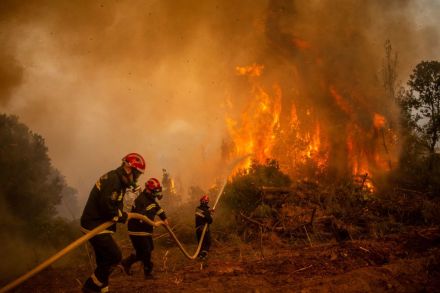
The wildfires raging across Greece for what is by now more than a week, show no sign of abating. High temperatures continue in what is the country’s worst heatwave in almost four decades. While no region of the country has been spared, the images coming from the northern part of Evia island are particularly striking. One, showing an elderly woman in despair – the grim atmosphere behind her painted dark red by fire and smoke, like a still from a post-apocalyptic film – became the prime example of what the new reality of extreme temperatures will look like. It was from Greece, but it could as easily have been taken in Turkey, Italy, Spain and other places around the Mediterranean sea that are fighting the same battle.

What’s the truth about the UN’s ‘code red’ climate warning?

From our UK edition

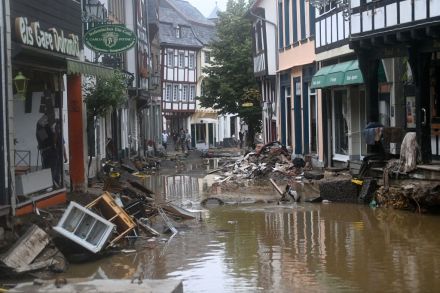
Predictably enough, the UN's Intergovernmental Panel on Climate Change report has been greeted with hyperbole about fire, flood and tempest. It is 'code red for humanity,' according to UN general-secretary Antonio Guterres. 'This report must sound a death knell for coal and fossil fuels before they destroy our planet.' As ever with IPCC reports, the content doesn’t live up to the hysterical reviews. If the vision presented in it were the basis of a disaster movie you would want your money back.  No, it doesn’t say that the German floods were caused by man-made climate change – something implied by much of the press coverage, which used photos of the damage in Rhineland towns to illustrate the publication of the report.

Revealed: the BBC guide for covering climate change

From our UK edition

Climate change is once again dominating the news agenda. A report from the Intergovernmental Panel on Climate Change warned that even if emissions are cut rapidly, the effects of global warming will be felt across the world. The report – which Boris Johnson has declared sobering reading – leads the news today, with the BBC dedicating seven stories on its homepage today to climate change. So just as well then that BBC staffers were recently treated to an internal audience research briefing telling them how best to convey messages about climate change to different audiences.

climate racism

Climate racism isn’t real

How many headlines have you seen about climate and environmental racism? So many you think of it as a real problem? Now, how many articles have you actually read about climate racism? If you’ve read one, just one, then you already know it doesn’t exist. Once you get past the fear-mongering click bait and the SEO-friendly headlines, almost all reportage of climate racism dances around the real issue: wealth inequality. Journalists are quick to note that poverty perpetuates climatological and environmental issues against inner-city working-class Americans, many of whom are non-white, but no less American. They don't seem quite so bothered about rural Americans with cancers and lung disease caused by pesticides and pollutants, almost all of whom are Caucasian.

Chris Packham’s suggestions to save the world

From our UK edition

On Monday 2 August, the BBC Today programme offered its ‘Countdown to COP26’. For the rest of the month, Amol Rajan announced, Chris Packham would give us ‘a different suggestion’ about climate change EVERY DAY. I make that 26 Packham slots — Sunday being Today-free — on the main national news magazine programme. Chris’s Day One suggestion to address the ‘colossal, planet-threatening mess that we find ourselves in’ was that everyone should buy an alarm clock (second-hand if possible to save on emissions), set it to wake up 15 minutes earlier and devote that quarter of an hour to doing something helpful, rather as we did, he said, when we abolished slavery.

Can Scotland reach net zero without the Union?

From our UK edition

What’s more important to supporters of Scottish secession, achieving the break-up of Britain or seeing Scotland successfully transition to net zero greenhouse gas emissions? It is a difficult question for environmentally conscious independence supporters to face, but face it they must, for it is becoming increasingly clear that Scotland cutting itself out of the UK will see England, Wales and Northern Ireland power ahead to net zero while Scotland gets left behind. This month saw the publication of the Office for Budget Responsibility’s (OBR) latest fiscal risks report. The bi-annual document identifies and models potential shocks to the public finances.

Boris Johnson’s dangerous eco-obsession

From our UK edition

It is a notable feather in Nigel Farage’s cap that his new evening show on GB News has already become essential viewing for Tory high-ups. Last week brought a series of reports by well-connected commentators suggesting that Boris Johnson was worried about Farage highlighting the government’s chaotic failure to stem the cross-Channel flow of migrant boats. The issue has suddenly shot up the list of issues mentioned by Tory voters, with new polling from Redfield & Wilton Strategies now identifying immigration as their top concern. This week the former Ukip leader has touched another nerve with some Tory MPs by wondering aloud whether their party’s green obsession is reaching a pitch that is going to put off many of its core voters.

Britain, climate change and the reality of extreme weather events

From our UK edition

‘Extreme weather will be the norm,’ says the Guardian. Britain is gaining a more ‘violent’ climate according to Sir James Bevan, chief executive of the Environment Agency. ‘The UK is already undergoing disruptive climate change with increased rainfall, sunshine and temperatures, according to scientists,’ wites the BBC’s ‘environmental analyst’ Roger Harrabin. But how many people making these sorts of claims have actually read the Met Office’s report – the ‘State of the UK Climate 2020’ – as opposed to merely reading the press release? Not for the first time, the real data presents a very different world from the one depicted in the increasingly hysterical reporting on climate change.

The West’s moralising over climate change will cost India

From our UK edition

On Tuesday, I chaired a session at Policy Exchange addressed by Tony Abbott, the eloquent former prime minister of Australia, now an adviser to the British Board of Trade. Although he acknowledged severe recent difficulties, he declared himself optimistic that free-trading democracies, such as his country and ours, can combine to strengthen rules-based, transparent trade (i.e. the sort of trade China dislikes) across the world. I truly hope he is right. One problem, though, which we barely touched on, is climate change. In the West, this is considered the great global challenge of our time. In developing countries, however, it is often seen as the West’s way of denying them the advantages which made us rich.

Let’s hope the Third World prevails at COP26

From our UK edition

On Tuesday, I chaired a session at Policy Exchange addressed by Tony Abbott, the eloquent former prime minister of Australia, now an adviser to the British Board of Trade. Although he acknowledged severe recent difficulties, he declared himself optimistic that free-trading democracies, such as his country and ours, can combine to strengthen rules-based, transparent trade (i.e. the sort of trade China dislikes) across the world. I truly hope he is right.  One problem, though, which we barely touched on, is climate change. In the West, this is considered the great global challenge of our time. In developing countries, however, it is often seen as the West’s way of denying them the advantages which made us rich.

Can London’s floods be explained by climate change?

From our UK edition

It’s climate change again, innit. It didn’t take long for Sunday’s flooding in London to be put together with Canada’s recent heatwave and the floods in Germany and China to be used as ‘evidence’ of ever-accelerating climate change – giving us even less time to save the world than previously thought. ‘More rain as Londoners call out climate change,’ screamed a headline on City A.M., alongside pictures of water pouring through Stratford DLR station and cars stuck on the North Circular.

Iran is running out of water

From our UK edition

It’s far from an exact science, but if you want to get a sense of where the world is heading in terms of resource scarcity then you could do worse than considering the cost of a litre of oil versus a litre of water. These days a litre oil of crude is worth around 45 US cents (33p); a litre of bottled water in the UK will generally set you back around 65p. Oil has dropped around 100 per cent since its high in 2008 while water’s value has held firm, and even risen across the Middle East and Asia. This is probably unsurprising. Right-thinking opinion now considers oil an anathema while water is drying up almost everywhere — and nowhere more so than Iran.

Is climate change to blame for Germany’s flooding?

From our UK edition

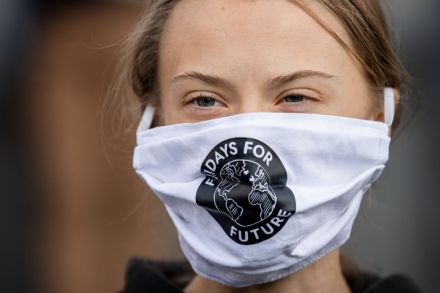
Greta Thunberg has declared the floods in Germany, Belgium and the Netherlands to be the product of man-made climate change, adding ‘We’re at the very beginning of a climate and ecological emergency, and extreme weather events will only become more and more frequent.’ Well, that’s sorted out that one, then. We hardly need Angela Merkel or the Prime Minister of the Netherlands, Mark Rutte, to confirm it for us. Nor, indeed, do we need to hear from Michael Mann – aka Mr Hockey Stick – to tell us that the floods are the living embodiment of what climate scientists have been warning us about for decades.

Is the shrinking global population good news?

The New York Times recently published a lengthy piece on the long- term ‘slide’ in world population with ‘plunging fertility levels’ and ‘sweeping ramifications’. How will the lower projected levels of world population affect climate change? Surely, if humanity is a blight on earth, as leading environmentalists assert — from the great naturalist David Attenborough who famously said that ‘humans are intruders’ to UN secretary general António Guterres who declared that ‘humanity is waging a war on nature’ — then surely the projected decline in world population by the end of the century should be welcome news.

population

Rishi Sunak and the coming Tory battle over climate change

From our UK edition

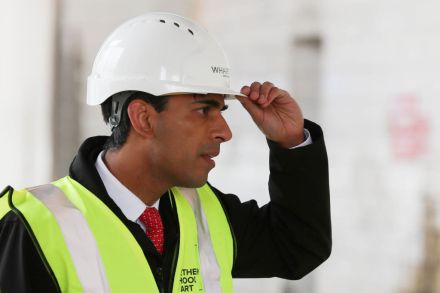
The Chancellor, Rishi Sunak, isn’t normally given to waffle, which makes his maiden appearance on GB News all the more remarkable. Asked by Andrew Neil who – government or homeowner – would have to pay the estimated £10,000 per household cost of replacing domestic gas boilers with heat pumps to help reach the target of net zero emissions by 2050 Sunak replied:  'So when you say the alternative is the household or the government, the government’s money is the people’s money. And that’s my point when I say ultimately we all pay. The government does have any separate money of its own' As a general point of political philosophy, it was a fair enough statement.

Rishi Sunak’s waffle exposed the flaw in Boris’s green agenda

From our UK edition

Who pays? It is one of the most important questions in politics, especially when it comes to the sort of expensive zeitgeisty ideas that governments love to take a reputational ride on. When Margaret Thatcher was Tory leader, she tried to exempt her party from this charge of vulnerability to fashionable notions that come with eye-watering price tags attached, once observing:  'The Labour party scheme their schemes, the Liberal party dream their dreams, but we have work to do.' Nobody who has followed the career of Boris Johnson at all closely would seek to exempt him. Indeed, 'schemes and dreams' appear to be what make him tick.

Greta Thunberg doesn’t like you

From our UK edition

Dorian Lynskey recently wrote a piece celebrating Bob Dylan’s 80th birthday entitled 'Bob Dylan doesn’t like you'. The article highlighted the disdain Dylan has for fans, critics, journalists, and even the Nobel Prize Committee. Feted as the voice of a generation, and often acting like it, he still has nothing but scorn for those who acclaim him as such. Another 'voice of a generation', some three generations removed, Greta Thunberg has been acclaimed by many politicians for her climate activism. But there is little sign that Thunberg has anything but scorn for them in return. It would be fair to say to most world leaders 'Greta Thunberg doesn’t like you'.

France’s latest fiscal trade-off

From our UK edition

France’s deficit is set to reach 9.4 per cent of GDP this year, more than last year, even though France's first lockdown was more severe and lasted for a longer time. This may relate to accounting issues, as some spending is only reported this year even if it is related to last year. But these are details – the main issue is something else entirely. The journalist Dominique Seux wonders whether France has maxed out its spending capacity at the moment when environmental challenges require extraordinary efforts. Were France's spending choices last year done with full awareness of how they would compromise future fiscal room for manoeuvre? France was always amongst the high deficit countries in the EU.

Is climate change really causing hundreds of UK deaths?

From our UK edition

Given the power that the daily statistics of Covid deaths have exerted over us this year, it was only a matter of time before we started being bamboozled with terrifying figures of the estimated death toll from climate change. Sure enough, the latest issue of Nature Climate Change contains a widely-reported paper by the London School of Hygiene and Tropical Medicine and the University of Bern, which attempts to quantify the death toll from higher global temperatures. The scientists ran a simulation which they claim predicted what the weather would have been like in recent years had it not been for man-made climate change.

How Canada will conquer the US

It’s difficult to get people to take the idea of Canadian world domination seriously — and I admit the notion snuck up on me too. My first inkling came last year, when I found out Toronto was on track to overtake Chicago as the city with the second-largest number of skyscrapers in North America, New York being the first. But then came the news about Kansas City Southern, at which point I realized: Canada is on the march. You’ve probably never heard of Kansas City Southern. I hadn’t either, and my knowledge of railroads — that’s what KCS is — is well above average. Here are two of the three things you need to know about it: 1) The KCS originates in Kansas City and heads south. You might have figured that out for yourself, I suppose, but railroad names can be deceptive.

Canada