Climate change

Biden’s big energy bust

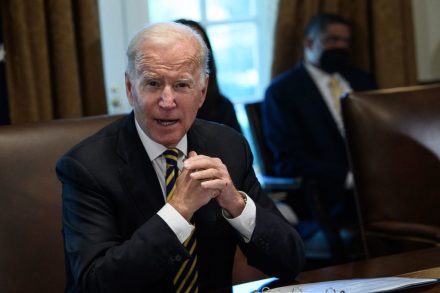
"For too long, we’ve failed to use the most important word when it comes to meeting the climate crisis,” President Biden declared in his presidential address to Congress in April 2020. “Jobs. Jobs. Jobs.” Investments in jobs and infrastructure, the president pleaded, have often had bipartisan support in the past. In November, he got nineteen Republican senators to vote for his $1 trillion infrastructure bill, but the main planks of Biden’s climate plan were in the $2.2 trillion Build Back Better Act. The House passed it in November, only for it to fail in the Senate, thanks to opposition from the most powerful man in Washington, at least when it comes to passing legislation.

energy green biden

The unexpected brilliance of Don’t Look Up

From our UK edition

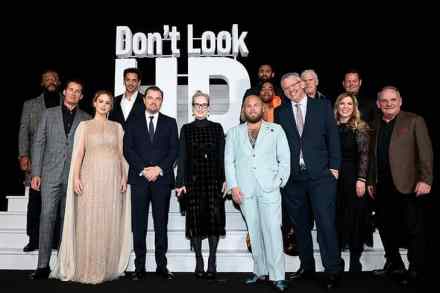
I wasn’t looking forward to seeing Don’t Look Up, the new satirical film on Netflix. It’s about a couple of American scientists who discover a giant ‘planet-killing’ comet that’s going to collide with Earth in just over six months. They try to warn the world about this existential threat but no one takes them seriously, from the President of the United States on down. Some people half- listen, but then get distracted by gossip or greed or lust, and when they do engage they come up with excuses, like pointing out the science is only 99.78 per cent certain, not 100 per cent, so why don’t we just ‘sit tight and assess’? Or maybe we can solve the problem with technology?

The march of the larch: the Treeline is now encroaching on the arctic tundra

From our UK edition

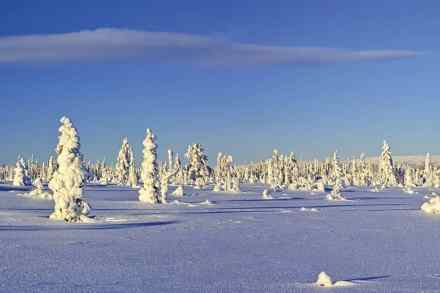
Covering 20 per cent of the Earth’s surface, the boreal forest is the largest living system, or ‘biome’, on land. It contains one third of all the planet’s trees and encircles much of the northern hemisphere in a halo of green. The northernmost extent of this forest, called the treeline, marks the point beyond which it is too cold for trees to grow. This is perhaps not where you’d expect to find Ben Rawlence, an author and journalist whose previous books have focused on humanitarian crises in Africa. But, as he explains in The Treeline, things are changing alarmingly fast in this biome: ‘The trees are on the move. They shouldn’t be. And this sinister fact has enormous consequences for all life on Earth.

E.O. Wilson and the climate cult

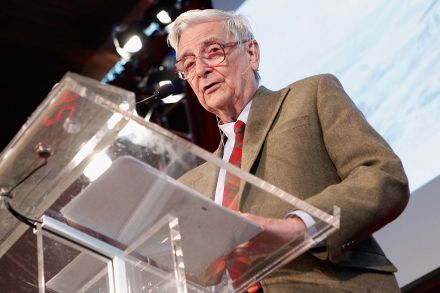
Famed ant specialist and sociobiologist E.O. Wilson passed away on December 26, age ninety-two. He came to national attention in 1975 with the publication Sociobiology: The New Synthesis, which is one of those books that steamrolled into public consciousness. It may not have been as revolutionary as Darwin’s On the Origin of Species by Means of Natural Selection, but not for want of trying. Wilson had something new to say about how evolution works and it provoked responses every bit as harsh as those Darwin encountered a century earlier. He was especially reviled by his Harvard colleague Richard Lewontin, one of the founders of molecular evolutionary theory, who saw no validity at all in Wilson’s interpretation of social structures as embodying evolutionary strategies.

wilson

The end is always nigh

From our UK edition

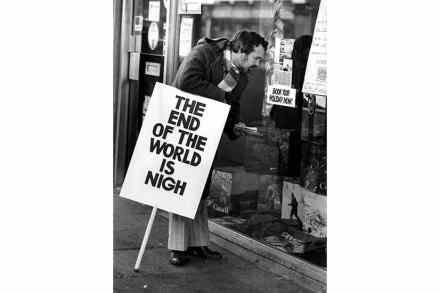
Typically for my generation, I woke repeatedly as a kid with my pyjamas soaked in sweat because I’d had yet another nightmare about nuclear war. While I rarely dream about mushroom clouds any more, a dark cloud of one shape or another has dogged me like a sooty, vaporous stray for my entire life. For my conservative classmates in the mid-1960s, American democracy was on the cusp of being overtaken by communism, even if they weren’t sure what that bogeyman was. Yet don’t imagine liberals like my parents were by contrast keeping sensibly calm and carrying on. The left has manfully merchandised the end of the world since I can remember.

‘Don’t Look Up’ and Hollywood virtue-signaling

I sat down to watch Adam McKay’s Netflix comedy Don’t Look Up over the Christmas break with an unusual burden of expectation. Half the people I’d known who had seen it — admittedly, mainly those on the right — had denounced it as unfunny, heavy-handed agitprop, whereas their politically opposed brethren praised it as "timely," "inspiring" and "important." Would I finish watching it and sign up for a series of Greta Thunberg podcasts, or smash my television in and take to the streets, hollering? To be honest, the film is neither offensive nor clever enough to arouse such strong opinions.

Build Back Better was doomed from the start

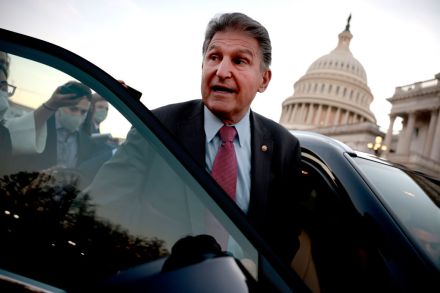
Joe Manchin was never going to vote for Build Back Better. Now that he's declared himself a "no" and all but killed President Biden's titanic spending package, it's time for Democrats to admit as much. To be sure, Manchin has played well the role of centrist negotiator. He's furrowed his brow and raised pragmatic concerns over renewable energy and inflation. He's huddled with his fellow Joe at the White House and won plenty of concessions. He's provided chum for bored (and boring) political analysts, as analyzing him and his fellow holdout Kyrsten Sinema became a kind of Kremlinology for the Twitter-addicted. But such breathless parsing forgets one simple fact: all politics is local.

joe manchin build back better

Our new era of Jewish-Muslim relations

From our UK edition

Reactions to the recent passing of F.W. de Klerk transported me back to my childhood in South Africa. The horror of apartheid was a frequent topic of conversation in our family. My uncle’s law firm, Witkin, Sidelsky and Eidelman, pioneered the employment of black people and gave Nelson Mandela his first job as a clerk, in defiance of the accepted practice at the time. My mother was the principal of the only training college for black pre-school teachers and my father, a rabbi, made pastoral visits to Robben Island. We were all-too-aware of the urgent need to dismantle the structural racism that plagued the country. When de Klerk and Mandela worked together to do exactly that, the joy was tempered by the knowledge that it had taken far too long.

The climate change conformists

Herman Melville spent several weeks as an involuntary guest of the Typee, Marquesan Islanders known for their fierce cannibalistic ways and their exquisite tattoos. It was 1842 and Melville was a rebellious twenty-two-year-old hand who had jumped ship from a whaling vessel. Several years later, in his first novel, Typee: A Peep at Polynesian Life, Melville recounted his deep fear that his hosts would tattoo his face. Facial tattoos were common among the islanders. Some Westerners got facially tattooed as well, but those were men who had relinquished their homes and become the original beachcombers, white men who belonged neither here nor there. Tattooing in general was hardly a respectable thing.

Guilt-free hilarity: Vanya and Sonia and Masha and Spike at Charing Cross Theatre reviewed

From our UK edition

World-class sex bomb Janie Dee stars in a fabulously silly revival of the American comedy Vanya and Sonia and Masha and Spike. She plays a movie diva, Masha, who loves to flaunt her wealth in front of her mousy sister and bookish brother. Striding into the family home with her long hair flying and her scarlet lips curling, she narrows her eyes and flings shafts of desire in all directions. Then she arches her neck and tosses back her head to give her bust an extra half-inch of uplift. A stunning display. The show is about three middle-aged siblings whose over-intellectual parents named them after characters in Chekhov plays. Vanya is a hopeless dreamer.

We aren’t serious about fighting climate change

“UN Global Climate Poll: ‘The People’s Voice Is Clear – They Want Action.’” So ran a typical headline in the British newspaper the Guardian in January. Yet this month, a poll released as world leaders met at the Glasgow Climate Change Conference prompted a very different Guardian headline: “Few Willing To Change Lifestyle To Save The Planet, Climate Survey Finds.” Huh? Yes, surveys are essentially universal in showing people worldwide are terribly concerned about Global Climate Change (GCC) and support efforts to mitigate it, often no matter how drastic. But those polls may reflect a false perception.

Pregnant at the end of the world

We hear lot of talk these days about anti-natalism: the ethical view that procreation is morally wrong. Young women and men are choosing not to have kids and, in extreme instances, choosing sterilization in their late teens. “I got my uterus thrown out voluntarily at 19!” a young woman boasts on an internet forum devoted to this topic. Climate anxiety often tops the list of reasons cited by contributors. Call them the “baby doomers.” When I went down the rabbit hole to read what these young folks are saying, they sounded exactly like me in my twenties. My climate anxiety peaked in the early 2000s (thanks, Al Gore). The inconvenient truth is that I loudly told anyone who would listen that I was never having children.

children pregnant

Insulate Britain are not martyrs

From our UK edition

Throughout the Insulate Britain protests there was a suspicion that the group was deliberately trying to get its members behind bars during the COP26 conference — a suspicion that was enhanced when a spokesperson for the group told the Guardian on 24 October:  It’s fair to say that there is absolute disbelief and surprise that the campaign has lasted this long. We assumed that we would not be allowed to carry on disrupting the motorway network to the extent we have been. We thought that people would basically be in prison… if our actions are as dangerous and as disruptive as is being claimed, then I think the question has to be: why are we being allowed to continue day after day?

Why COP26 flopped

From our UK edition

King coal is dead, long live king coal! That might be a fitting epitaph for COP26, which mercifully ended last Friday. It culminated with an agreement, which had not so much been watered down as to have virtually evaporated. Fossil fuels, it seems, are here for the foreseeable. What went wrong? That’s a question the ‘deeply frustrated’ COP26 president Alok Sharma might well be asking himself. He appeared to be close to tears at the denouement of the negotiations, pushed to emotional extremis by the last-minute wrangling over a single word: should we commit ourselves to phase out our use of coal, or phase- down our use of coal.

Joe Biden’s sacrificial presidency

The worst kept secret in Washington, DC is that Joe Biden is a one-term president — whether he knows it or not. This weekend, palace intrigue stories from Politico and CNN pitted Vice President Kamala Harris against Transportation Secretary Pete Buttigieg. The kids are fighting over Grandpa Joe’s inheritance before he’s even cold. Biden doesn’t acknowledge this. He’s signaled multiple times that he intends to run for a second term in 2024. He has been trying to capture the White House for over thirty years. He’s not just going to give that up willingly as he managed to go from party punchline to party patriarch in the span of one election. But to believe the choice is up to him is to believe that his staggering fall in poll numbers is imaginary.

bucket list

The cynical brilliance of Boris Johnson’s green conversion

From our UK edition

Does Boris Johnson really believe, as he told COP26 a few days ago, we’re at 'one minute to midnight' on the man-made climate change doomsday clock, and that 'if we don’t get serious about climate change today, it will be too late for our children to do so tomorrow'? I ask only because in 2013 he used his Daily Telegraph column to write:  As a species, we human beings have become so blind with conceit and self-love that we genuinely believe that the fate of the planet is in our hands – when the reality is that everything, or almost everything, depends on the behaviour and caprice of the gigantic thermonuclear fireball around which we revolve.

Is climate change scepticism growing in Japan?

From our UK edition

Fumio Kishida, the newly-installed Japanese prime minister, could have been forgiven for giving COP26 a miss. The opening ceremony in Glasgow coincided with the general election he was fighting back home. But Kishida, having won the election, did make the trip, where he gave a speech broadly but not unreservedly supportive of international efforts to cut Co2 emissions. The reward for his restrained tone and tepid assurances? Japan was named ‘fossil of the day’ by the Climate Action Network group, an ‘honour’ bestowed on countries deemed insufficiently devoted to the cause.

The perverse fantasies of XR’s founder

From our UK edition

If we don’t cut carbon emissions, your mother will be raped. This is the deranged prediction of Roger Hallam, the weird-beard co-founder of Extinction Rebellion. Eco-doomsters used to say the ice caps would melt and polar bears would perish unless we all went green. Now they’re upping the ante. Now they’re prophesising gang rape, murder and war if you don’t shrink your eco-footprint. Better get recycling. Hallam’s nutty foretelling of an epidemic of rape appears in a piece of writing titled ‘Advice to Young People, as you Face Annihilation’. He’s a cheery soul, isn’t he? Apparently he wrote it when he was in jail for four weeks last year on suspicion of conspiracy to commit criminal damage. The whole thing is nuts.

Net zero is a disastrous solution to a nonexistent problem

From our UK edition

Human folly is all too common. But in a long life I have never come across anything remotely as bad as the current climate scare. The government’s COP26 targets are ambitious (and eye-wateringly expensive). Amid the debate, one important question seems to be missing. Are we really facing an existential threat? Or might the climate change ‘crisis’ in fact be quasi-religious hysteria, based on ignorance? It is true that, since the industrial revolution, when we began to use fossil fuels — first coal, then oil and gas — as our source of energy, this has led to a steady, albeit gradual, increase in the amount of carbon dioxide in the atmosphere. The know-nothings (notably but by no means exclusively the BBC) customarily refer to this as pollution.

Letters: Why net zero is impossible

From our UK edition

Carbon deceit Sir: At this week’s climate change conference, countries will be urged to follow the UK’s ‘lead’ in setting the goal of net-zero carbon emissions by 2050 (‘Cop out’, 30 October). This goal is impossible for any advanced economy based on mass consumption. The majority of British manufacturing has shifted abroad, where labour is cheap and items are mostly produced with electricity supplied by coal and other fossil fuels. For a real figure for Britain’s emissions, the consumption of goods produced overseas must be included. As our consumption has increased enormously over the past 30 years, this carbon addition will be substantial. It is a dangerous nonsense for rich countries, therefore, to pretend they are cutting carbon emissions.