Joe Wallen

Joe Wallen is the South Asia correspondent at the Daily Telegraph.

Imran Khan: The conspiracy against me

From our UK edition

Pakistan is familiar with political unrest. No prime minister in its independent history has completed a full term in power; some of its most popular leaders have been assassinated or executed. Even so, the events of last month were extraordinary. On 9 May, in response to the arrest of former prime minister Imran Khan on corruption charges, thousands of protestors stormed buildings belonging to the country’s all-powerful military and set the army headquarters alight. More than 40 people died in the clashes with the army and police, and approximately 10,000 officials and supporters of Khan’s party, Pakistan Movement for Justice (PTI), were arrested. The country was on the edge of anarchy.

The Dabbawalas of India will be celebrating Charles’ coronation

From our UK edition

Mumbai, India Weaving through the throng on a hot May afternoon, Kiran Gavande had a determined look on his face, despite the sweat that trickled down from his head. This wasn’t a routine trip to the market in Mumbai’s Lal Baug neighbourhood for Mr Gavande. Instead of buying onions and tomatoes, he was searching for a silk turban and an intricate shawl to give as a gift to King Charles.  His gifts would soon be handed over to the British High Commission before being shipped over to the UK and presented, by hand, to Charles, following his coronation today.

India’s war on Christians

From our UK edition

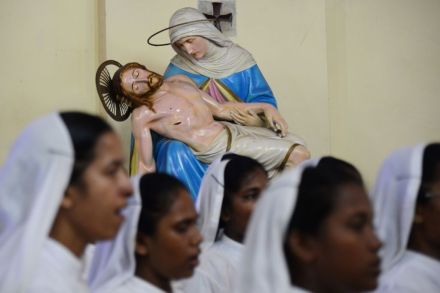
Christmas is usually Nayomi Gracy’s favourite time of year. But this year, Gracy is feeling more fearful than cheerful. Right-wing Hindu groups have recently led a succession of violent attacks against her Christian community in the southern Indian state of Karnataka. When she attends church in her home city of Bangalore on Christmas Day, the congregation will be guarded by armed police. 'It is a mental torture. They say we cannot go to church or they will kill us but the police have promised to protect us and to help us,' said Gracy. India’s historic Christian community dates back to 52AD. It is believed the Apostle Thomas, better known as Doubting Thomas, arrived in the southern India state of Kerala and baptised a small group of residents.

The Taliban and Isis are in a battle for control

From our UK edition

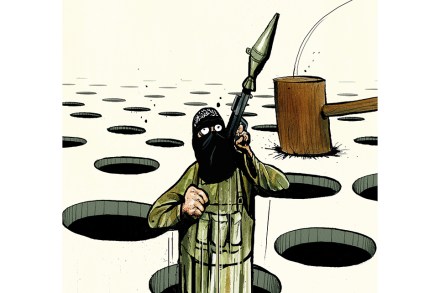
Kabul An insurgency has once again started in Afghanistan – and this time, the Taliban is the target. Since the Americans left Kabul last year, high-profile Taliban figures have been the victims of 220 remote explosive and suicide attacks, one of which took place the day before I arrived in the capital in October. A suicide bomber somehow managed to strike in a mosque inside Afghanistan’s Interior Ministry, which is responsible for security and law enforcement in the country. It was the type of attack that should have been impossible to carry out. Four people were killed and two dozen wounded. They were the latest victims of a war between the Taliban and Isis. Isis and the Taliban both follow variations of jihadist Sunni Islam, but they are ideological enemies.

Sri Lanka’s descent into chaos

From our UK edition

Colombo, Sri Lanka Some 13 years after the end of a civil war that saw 100,000 deaths, Sri Lanka is once again on the cusp of serious violence. Earlier today, the police opened fire on protesters in the town of Rambukkana. One person has died and at least ten people are said to be in critical condition. It’s the first use of deadly force against demonstrators who seem to have filled the entire island in recent weeks. Grainy footage shows half-conscious bodies being carried into hospital, bullet casings littering the quiet palm-lined streets. This was meant to be a time of celebration. Buddhists are marking the new year while the country’s Muslim minority observe Ramadan.

India is going to keep polluting. They can thank China

From our UK edition

Mumbai India is the last major global polluter to set a date to go carbon neutral. In a surprise announcement on Monday, Prime Minister Narendra Modi told COP26 that his country will hit this target by 2070. That doesn't mean India is going to start cutting emissions any time soon. India’s ruling Hindu nationalist party, the BJP, believes it has the right to use coal to stimulate economic growth. The country argues that its per capita consumption of non-renewables is still a fraction of West's. Faced with the task of quadrupling its power output by 2050, the country's coal production is expected to increase by 28 per cent over the next ten years.