Climate change

The shifting language of shame

From our UK edition

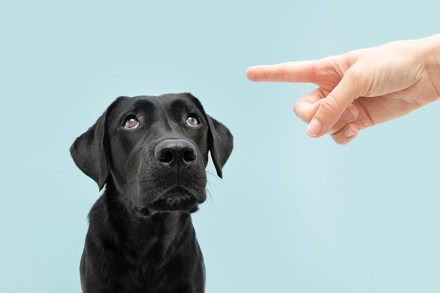
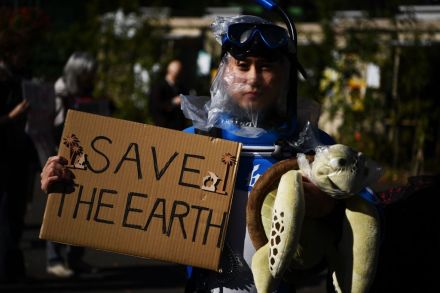
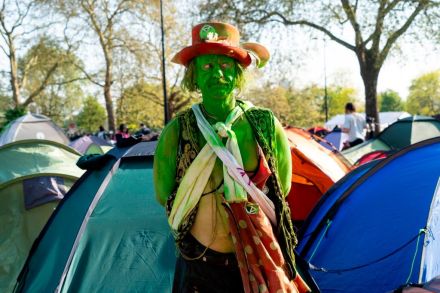
As his tweed jacket flapped open to one side of his stomach, my husband stood up unsteadily and arched his arm, jabbing his finger towards me and chanting: ‘Shame on you! Shame on you!’ It didn’t work, because I’ve been living with him so long that, as Berowne says in Love’s Labour’s Lost, ‘We are shame-proof’. His little performance was in response to some news item about Tell the Truth, a spin-off of Extinction Rebellion. Its members don’t actually want journalists to tell the truth, but to do as they say. Their first ‘demand’ is that the climate crisis ‘must be front-page news every single day’. They also demand we change our language.

The strange truth about Japan’s climate change target

From our UK edition

Japan has just raised its target for reducing carbon emissions from 26 per cent to 46 per cent (by 2030 from 2013 levels). But how was this figure arrived at, environment minister Shinjiro Koizumi was asked? Through a careful analysis of the threat and a realistic assessment of what could be achieved, taking all relevant factors into consideration? Well, er no, according to Koizumi, the number 46 just appeared to him in ‘silhouette’ in a sort of vision. Shinjiro Koizumi, son of former prime minister Junichiro Koizumi, made the comments in an interview with the TV station TBS last weekend. The interviewer, despite her face mask, was clearly stunned by the revelation that the country’s emission target did not appear to have any scientific basis.

Joe Biden’s skewed climate change priorities

From our UK edition

It's not hard to see why politicians like Joe Biden and Boris Johnson want to talk about climate change.  First of all, it looks good to the electorate. Caring about the planet (or at least being seen to care about the planet) is one of the things that marks you out as 'a good person'. It also allows leaders to compare themselves to other leaders and take pride in being more hardline than others. It tends to result in massive government-sponsored infrastructure programmes, requiring the Prime Minister and various cabinet ministers to keep their hi-vis jackets and hard hats within easy reach. Most importantly of all, the results won’t be seen until well after their term of office has finished.

John Kerry: America’s failfather

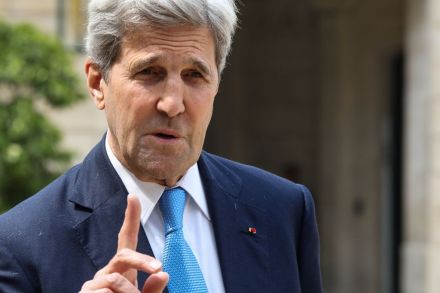
Former defense secretary Robert Gates once wrote that President Joe Biden has been ‘wrong on nearly every major foreign policy and national security issue over the past four decades’. To which John Kerry might reply, what am I, chopped liver? After all, when it comes to disastrous track records, America’s haughtiest envoy should not be overlooked. John Forbes Kerry is a case study in failing upwards. It’s rumored that when Joe Biden’s cognitive decline became increasingly apparent in the lead-up to the election, Kerry wondered if he might fail his way into the Oval Office.

john kerry president

Can Boris Johnson’s green makeover woo red wall voters?

From our UK edition

COP26, the United Nations Climate Change Conference due to be held in Glasgow, isn't until November, but work is already underway in Downing Street to put the government's green agenda front and centre. After confirming earlier this week that the government will seek to cut carbon emissions by 78 per cent by 2035, Boris Johnson has this afternoon spoken at Joe Biden's Leader's Summit on Climate.  The Prime Minister praised the US president's commitment to cut greenhouse gases by 50 per cent from 2005 levels by 2030 as a 'game changing announcement'. He also said it is 'vital for all of us to show that this is not all about some expensive politically correct, green act of bunny hugging'.

Theatre’s final taboo: fun

From our UK edition

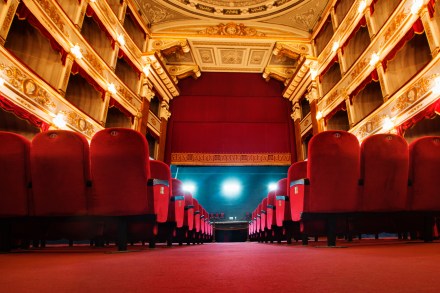
How will the theatre look after lockdown? A clue emerges in a statement made by Guy Jones, the literary associate of the Orange Tree in Richmond. ‘The victims of this year are many. Homelessness is on the rise, loneliness is deadly, the monster of racism lurks in every-day interactions… and many of the inequalities we live with are written into the systems in which we are asked to participate.’ ‘The victims’. That’s his starting point. It might seem odd that a theatre should prioritise the injured and the aggrieved, as if the stage were a tribunal or a public court where justice is dispensed. But that’s how theatres see themselves. Lockdown and the rise of BLM in 2020 have created a host of new causes to be fought over by snarling dramatists.

Unhappy blend of melodrama and allegory: Southwark Playhouse’s The Sorcerer’s Apprentice reviewed

From our UK edition

The Sorcerer’s Apprentice is a musical fantasy set in a Nordic town near the Arctic circle. Johan is a magician whose healing powers have won him the respect of his neighbours. But his rebellious daughter, Eva, has been expelled from school for scrawling ‘down with the patriarchy’ on a mirror. She’s also suspected of trying to sabotage a local factory that refines energy from the Northern Lights. The wicked factory owner, Fabian, is an emotional cripple who lives with his sick mother and rejects claims that the aurora is fading because too much energy has been extracted from it. If he continues to run the factory at full tilt, he may harm the atmosphere and destroy the town.

Macron is taking on the eco killjoys

From our UK edition

Emmanuel Macron won't forget the Yellow Vest movement in a hurry. The ragtag army that recruited regardless of sex, age, region and political persuasions, seriously rattled the president of France in the winter of 2018-19. Never in his wildest dreams could Macron have imagined, when he signed off his fuel tax rise, that within weeks he would be barricaded inside the Élysée as outside heavily-armed police faced down furious protestors. Still, it taught Macron one thing: that those in the provinces see the world differently to the progressive political and media class in Paris. That's why Macron has prioritised combating Islamism and uncontrolled immigration over the environment in the lead up to next year's election.

The good news on climate

From our UK edition

As I watch the snow blow past my window, it’s hard not to scoff at the idea of a ‘climate emergency’. However, I’m probably in a minority. The idea that we are currently experiencing a dangerous deterioration in our weather has been pushed so hard, and for so long, that the man in the Clapham Uber is now thoroughly convinced. Those of us who have the time and inclination to look at the evidence for such claims, on the other hand, realise that they are largely overblown. The Global Warming Policy Foundation, where I work, has just published a review of the impacts of climate change and it’s a valuable antidote to the relentless alarmism pushed by some academics.

The elitism lurking at the heart of the green movement

From our UK edition

There’s a movement in the UK that is trying to block the building of essential new council housing. It is also agitating to stop the opening of a new coal mine, which would deprive working men and women of a good, honest way to make a living. What is this movement? A neo-Thatcherite organisation, perhaps, hell-bent on finishing Maggie’s task of putting coal miners out of work and shrinking social housing? A bunch of aristocrats and toffs, maybe, who are sick of their leafy living areas being swarmed by council-house residents and the precious countryside being blighted by such ghastly things as mines and factories? Nope, it’s environmentalists. It’s greens. It’s those eco-warriors who pose as super-progressive and claim to care about people.

Putin is finally waking up to Russia’s climate change problem

From our UK edition

The snow is falling in Moscow, but that is after the warmest autumn there on record. Meanwhile, perhaps reflecting that with the arrival of vaccines, there is at least the prospect of an end to the Covid-19 crisis, the climate change debate is rekindling – and with a particular geopolitical angle. Much of the conventional wisdom is that it is a perverse boon to Russia. Representative of this perspective, for example, has been a recent study that led the New York Times to predict that Moscow will ‘win the climate crisis’ – while its partner, ProPublica, warned that ‘Russia could dominate a warming world.’ Stirring stuff, and no doubt music to Vladimir Putin’s ears.

Hate in a damp climate

When Ross Clark was writing this excellent novel about climate change, he couldn’t have known that by the time we read it the world would be paralyzed by a pandemic. Now that’s happened, it adds a whole new layer to The Denial’s themes of hysteria, self-righteousness and dodgy statistics. Bryan Geavis is a retired meteorologist living in the south of England in ‘the near future’. He used to work for a large oil company, though has to keep this quiet as there are prison terms for anyone who worked in the industry. A storm blows up in the North Sea which causes flooding in London.

denial

Trump’s barber paradox

For 30 years, Donald Trump regularly visited the Paul Molé Barber Shop in Manhattan’s Upper East Side. Adrian Wood, the barber who owns the shop, remembers that Trump would instruct barbers precisely where to snip his mane, and would never allow them to expose his bald spot, as revealed by a report in the New York Post: ‘He’s a complete control freak. He dictates exactly how you cut every hair on his head. “Cut here, cut there. That’s enough.” And you just do what he says.

pardon

Prince Harry should dial down his eco-alarmism

From our UK edition

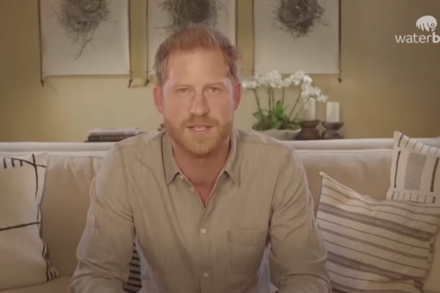
‘What if every single one of us was a raindrop?'  I have no idea what goes into the Californian drinking water, but the Duke formerly known as Prince Harry seems to have been knocking it back. We are fortunate indeed that, despite having fled State-side to secure greater privacy, the Duke and Duchess of Sussex continue to send us regular character-improving missives. This week sees Harry return to a favourite theme: climate change. Speaking at an online event to mark the launch of WaterBear, a new subscription television platform for environmental and conservation documentaries, Harry pondered: ‘Every single raindrop that falls from the sky relieves the parched ground. What if every single one of us was a raindrop, and if every single one of us cared?

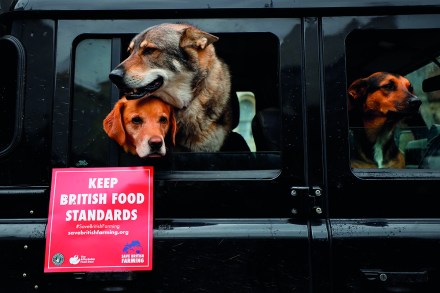
Farmers aren’t to blame for climate change

From our UK edition

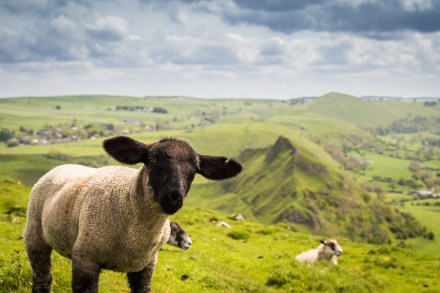
Welsh hill farmers are a hardy lot. Despite the almost mystical and romantic images that come to mind when you think of a Welsh hill farm, the truth is a far soggier affair. People have struggled to eke a living out of what is an extremely difficult terrain for generations, which has, in turn, created the communities and the culture we enjoy in rural Wales today. Such is the case where I live: a small parcel of land stretching from the river Dee and up the slopes of the Berwyn mountains in the north of Wales. My father-in-law is the third generation to farm this land. He and those that went before him nurtured this small corner of the earth in order to feed their families and the nation.

Boris’s wind power pledge won’t be cheap

From our UK edition

Boris Johnson likes a big announcement. Back in his days as London mayor, he told us he was going to build a new airport on an island in the Thames estuary and a tree-lined ‘garden bridge’ further upstream. Although not as hare-brained as his more recent plan to build a bridge to Ireland, neither of these schemes ever came to anything. Much of the government’s announcement today of a major green spending spree gives the impression of having been conjured up with the same lack of any serious intent, ‘smart cities’ being an obvious example. However, some of it looks positively alarming. Take home insulation, for example.

Can China be trusted on climate change?

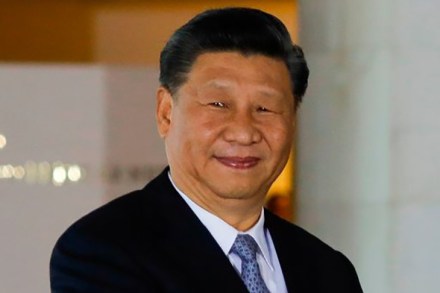
Xi Jinping was widely praised on Tuesday after he told the United Nations General Assembly via videolink that China would ‘achieve carbon neutrality before 2060’. Environmental activists, academics and government leaders in the West hailed the move as a big deal, a significant step toward addressing climate change. The New York Times couldn’t resist framing this story as a ‘pointed message to the US’ which under Trump has increasingly diverged from the growing scientific and political consensus on climate change. President Trump, famously, initiated the process of withdrawing the country from the 2015 Paris Climate Accords.

china climate xi jinping thought

How environmentalists destroyed California’s forests

I believe it was John Fremont who once exclaimed in astonishment that one could ride a horse at full gallop in the Forests of the Sierras in California. Well, one can do that again now — not among the towering conifers, but over the ashes.Right now I'm seeing the mountains I grew up in — where I went to school, where I hung out, camped, backpacked, boated, cheated death and generally formed the foundation of my character — burning down. It makes me sad and angry.  This didn't have to happen. Once upon a time, forests in California were logged, grazed, and competently managed. It wasn't always perfect, but generally it worked.Fires, which are a natural part of that ecosystem, were generally small — not just benign but beneficial.

What we can learn from Sweden

From our UK edition

It is a particular pleasure to be returning to the columns of The Spectator, more than half a century after I became editor. The paper has been part of my life for a very long time. When I was at school, more than 70 years ago, we were all told to read Harold Nicolson’s column every week, to learn the art of essay-writing. I like to think that it was still a good paper in my time, but it is a much better one now. Fraser Nelson and his team are doing an excellent job. Our lives remain dominated by the plague, aka Covid-19. The government’s handling of it — admittedly a difficult task — has not been brilliant, but no worse than the performance of its scientific and medical advisory group (no acronym has ever been less apt than Sage).

Avocado angst: is there anything safe to eat?

Your morning coffee is now an ethical minefield. Sure, you’ve remembered your reusable cup and are smugly avoiding adding to the 2.5 billion disposable cups dumped each year. But, ma’am, which milk would you like in your latte? Asked this question in my local coffee shop, I panic. Obviously not dairy, thanks to the methane-burping cows that produce it. Coconut is imported and food-mile heavy. Aren’t almonds causing drought in California? And isn’t the Amazon being razed to make way for soya plantations? Oat milk then, except I don’t like the taste. And isn’t coffee a pretty unethical product all told anyway? I recently stood at the counter for a full 20 seconds, lost in a moral milk maze.

avocado angst