Theo Hobson

Theo Hobson

Theo Hobson is co-editor of Created for Love: Towards a New Teaching on Sex and Marriage.

The trouble with Zionism

From our UK edition

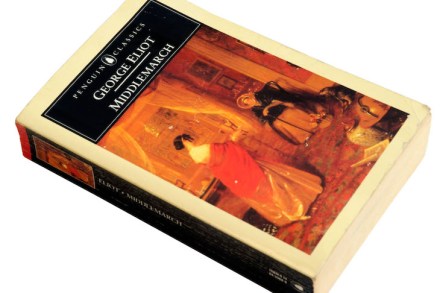
I believe in Portugal. I believe that it exists. I believe that it has the right to exist. But I do not passionately believe in it. I do not feel any sort of loyalty to it. Those are obviously two different sorts of belief. So it would be unhelpful to have a word that combined them: 'Portism', say. That word would just sow confusion. It would unstably veer between the belief that Portugal is a legitimate nation, and a sense of loyalty to it. 'Zionism' is such a word. It hovers between meaning ‘the state of Israel is legitimate’ and ‘the state of Israel has my loyalty’. This conflation made some sense a century ago, before the foundation of Israel. In the days of Theodor Herzl and Daniel Deronda, Zionism had clear reference to a political and religious ideal.

Is Prince William really a shy Christian?

From our UK edition

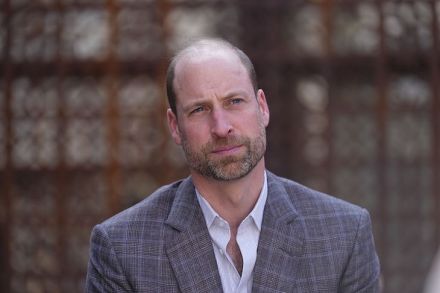
So Prince William is a good Anglican after all. He has told the Times, through an aide, of his commitment to the Church, on the eve of attending the installation of the new Archbishop of Canterbury. But does he consider himself a Christian believer? The statement awkwardly dances around that question. It leaves the impression that he does not really consider himself a Christian, but knows that he must keep this semi-veiled. We then hear that ‘his relationship with the Church will “evolve” from that of previous monarchs, whose strong faith underpinned their reigns.’ The statement is difficult to analyse because the words are not quite his. They come from an aide; he presumably signed them off, but there is an air of vagueness and deniability in such a not-quite-statement.

Why Muslims should be allowed to pray in Trafalgar Square

From our UK edition

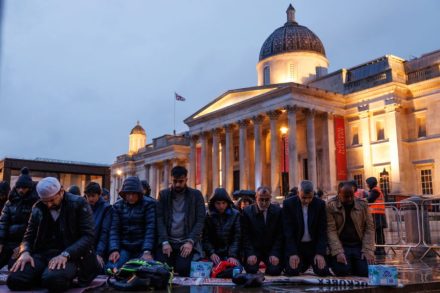
I approve of the large Muslim prayer meeting held in Trafalgar Square on Monday. But I would not want such a thing to happen more than once a year. I do not agree with Nick Timothy that it was an 'act of domination'. But I am glad that his comments have caused a debate: we should be thinking about these things without fear of censure. We should admit that public religion is problematic and ponder why. Timothy says that Muslim prayers should be confined to mosques: 'They are not welcome in our public places and shared institutions.' The Prime Minister responded with indignation: various religions are allowed to stage celebrations in Trafalgar Square, so why should Muslims be treated with suspicion?

The real problem facing Church of England liberals

From our UK edition

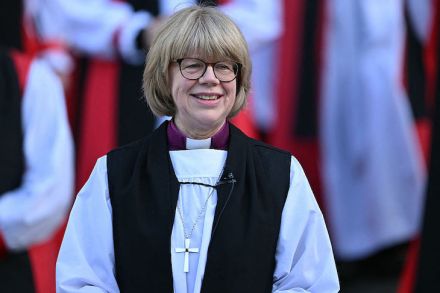
Is there anything much to say about Sarah Mullally, the Archbishop of Canterbury? It seems that she is a very nice, Christian lady. She used to be Britain’s top nurse. Um, she is a brilliant manager. She is good at washing people’s feet, both for practical and ceremonial purposes. She has an awesome work-ethic. She can show emotion: she cried when telling the Church of England's Synod about the micro-aggressions that female clergy suffer. She seems to embody the Church’s official line on the gay issue: in favour of greater inclusion, but not wanting to change the doctrine of marriage. Would the Church really risk antagonising the liberal majority, and prodding this dormant crisis into life? To help me out I have just read a very brief biography by Tim Wyatt.

Andy, Mandy and the dark side of liberalism

From our UK edition

Our public morality has two parts. Part A: people are free to do what they want, even if they do things that most people disapprove of, like getting drunk a lot, or sleeping around. Unless you harm others in some tangible way, you can do what you want. This is good, in my opinion. Andy and Mandy are scapegoats. We condemn them with special force, in order to reassert the moral code that unites us Despite this, our culture is not amoral. Part B: we value some forms of life over others. We value people who help others, who are trustworthy, faithful to their spouses – people who are not selfish and greedy. But the second part of our public creed is difficult to articulate. It sounds preachy to say: ‘People should be community-minded, not selfish’.

The trouble with post-liberalism

From our UK edition

For quite a while now, intellectual movements have been nebulous things. This started with postmodernism, which everyone was talking about in the 1980s, but no one could quite define. Or maybe it started a bit earlier, with the New Left, a mix of Marxism and any other trendy shiny thing. But at least that was decidedly left. You might suppose sensible mainstream theologians have been calmly refuting such reactionary posturing. If only In our day, it is ‘post-liberalism’. For about fifteen years now, the term has attracted academics and pundits who want to sound edgy. At first, it was the iconoclastic banner of a few theologians and philosophers; then a few think-tank types took notice.

In praise of Nick Gibb, the schools minister you’ve never heard of

From our UK edition

One of the most effective British politicians of recent years is a household name only in the most policy-wonkish of households. I mean Nick Gibb, the schools minister who worked alongside Michael Gove. Gibb kept a lower profile than Gove and so managed to stay in the Department for Education longer, bedding in the reforms that everyone except the odd Marxist lecturer deems highly successful. Let’s have a few more politicians like Gibb: limelight-shunning iconoclasts who leave off grandstanding and quietly fix stuff Gibb has co-written a book that will not do much to lift his obscurity. Reforming Lessons: Why English Schools Have Improved Since 2010 and How This was Achieved is a rather dry affair, low on Westminster gossip and high on graphs.

At 53, I’m training to be a priest

From our UK edition

I have recently begun training for holy orders in the Church of England. I know, they’re getting desperate. My motivation for wanting to be a priest is selfish. I want more joy in my life. You might feel that joy is to be found in extreme sports, or pop concerts, or snorting coke from the midriffs of hookers. But I think you mean pleasure. Joy is deeper, linked to a sense of the goodness of existence. It seems to me that joy is to be found in doing cultural things. I don’t mean going to plays or art galleries; I mean cultural things that are very participatory and democratic. Things like this: getting to know people who are different from me, through putting on a little play, making stuff for a festival and seeing some local children enjoying it, singing a rousing song.

We shouldn’t shy away from the question of national identity

From our UK edition

Please remember not to talk about religion or politics over the turkey this Christmas. It can cause terrible rows. One of the functions of the BBC, especially Radio 4, is to host such discussions, so that we don’t have to. The Moral Maze is still worth a listen, from time to time. This week, some of the panel and some of the guests were half-daring to discuss a profoundly difficult question. Is ethno-nationalism something we should condemn? Or should we be realistic, that it is an inevitable component of politics? We are schooled in the evasion of this question. The evasion is largely benign. For there is a fine line between brave honesty and racism.

Tommy Robinson wants to put ‘Christ back into Christmas’? No, thanks

From our UK edition

So Tommy Robinson is inviting us all to have Christmas with him. The far-right activist has announced that there will be a huge open air carol concert in central London on 13 December, a seasonal Unite the Kingdom rally. The aim, he says, ‘is to put Christ back into Christmas.’ Hmm, isn’t that what thousands of church services already do? Robinson is saying: we should be proud of our national religion. Is he wrong? Yes and no So what is Robinson's motivation for wanting to stage a very large and very public Christmas event? Well, he makes it pretty clear. ‘We shouldn’t have to put this on’, he says. ‘There should be a massive Christmas event put on by our government – did you see Poland’s this year? Did you see the Christmas market switch-on?

Why the BBC keeps on blundering

From our UK edition

The dust is settling on the BBC's latest crisis over its sloppy editing of a Donald Trump video, but it won't be long before the next blunder. The reality is that every BBC crisis is epiphenomenal: the anger that periodically flares up against the BBC is rooted in our frustration that it fails to do the impossible and provide cultural order and unity. This is hard to articulate, so we magnify secondary issues like the pay of its top presenters, and perceived bias in the news. In doing so, we ignore the real problem: that the BBC can't win. We can no longer trust the BBC to shelter us from the winds of the international entertainment industry Providing common culture in a diverse nation has never been easy. In its formative decades, the BBC succeeded in pulling off this juggling act.

Tim Shipman, Ian Williams, Theo Hobson, Lara Prendergast & Lisa Haseldine

From our UK edition

34 min listen

On this week’s Spectator Out Loud: Tim Shipman says that the real war for the right is yet to come; Ian Williams examines the farce over the collapses China espionage case; Theo Hobson argues that the Church of England is muddled over sex and marriage; Lara Prendergast reads her letter from America; and, Lisa Haseldine goes on manoeuvres with the German army, the Bundeswehr. Produced and presented by Patrick Gibbons.

The Church of England’s muddle over sex and marriage

From our UK edition

Whatever you think of the new Archbishop of Canterbury, Sarah Mullally, there can be no doubt about this: she firmly backs the Church of England’s current official teaching on sex and marriage. Indeed, as the bishop who was recently in charge of updating that teaching, it might be the case that she upholds it more completely and sincerely than anyone else. Perhaps some readers would like to be reminded what the Church’s current official teaching on sex and marriage actually is. It is this: marriage remains the preserve of heterosexuals. Homosexuals may have their unions blessed in church. Um… that’s it. That’s all that can be said for sure. What about this obvious question: does the Church condemn sex outside of marriage? There is no clear answer.

A female Archbishop of Canterbury changes everything for the CofE

From our UK edition

Dame Sarah Mullally's appointment as Archbishop of Canterbury is not a normal story about a woman being appointed to a certain position for the first time. The difference is that the Church of England never made a clear decision about the legitimacy of women clergy. Here, at last, is its clear decision. The word decision has ‘cut’ or ‘kill’ in it. It means killing off the alternative course of action. This the Church failed to do. Over thirty years ago, it chose to allow opponents of women clergy to stay, and to effectively form a sub-church, with its own bishops. It has always spun this as a brave and open-minded path: look how we model diversity, was its intended message. In reality, it has seriously undermined the morale of the Church.

Is Charlie Kirk a Christian martyr?

From our UK edition

This feels deeply inappropriate, I thought, as I started watching Erika Kirk’s hagiographic eulogy. I am watching a grieving widow in order to analyse her performance, and pass judgement on her message. Her husband was brutally murdered just ten days ago – let her grieve. Don’t use her as journalistic material. But anyone who chooses to speak of the most serious matters, in whatever circumstances, is subject to criticism. Being a victim of some terrible act of violence is no exemption. Victim status does not authorise one to tell a nation what the essence of Christianity is, for example, and expect one’s account to be unchallenged.

America’s troubled theopolitics

From our UK edition

The bloody ideological instability of the United States – demonstrated this week by the horrific killing of Charlie Kirk – has a root cause that is not widely discussed, except in shallow and polemical ways. The nation of the United States was built on a faultline It is theopolitics. That means the relationship of religion and politics. Of course we are mainly talking about Christianity, which has always been the nation’s dominant religion. It’s a pretty complicated topic, but that’s no excuse for not attempting to grapple with it. There are two main ways in which Christianity relates to politics, and the United States is uniquely conflicted about which of these two should dominate.

The vampiric desires of Putin and Xi

From our UK edition

‘They’re vampires’ was my first thought. I had just heard the news that Putin and Xi were discussing how to prolong their lives, as they walked toward their places at the Tiananmen Square military parade. On the official news footage, Putin’s translator could be heard saying in Chinese: ‘Biotechnology is continuously developing.’ And then: ‘Human organs can be continuously transplanted. The longer you live, the younger you become, and [you can] even achieve immortality.’ Xi responded: ‘Some predict that in this century humans may live to 150 years old.’ Kim Jong-un was there too, but is not known to have contributed to the conversation. Maybe the blood-sucking image came to me because I was, when I heard this news, giving blood.

Biddy Baxter’s Blue Peter and the end of a common culture

From our UK edition

I haven’t written a poem in memory of Biddy Baxter, stern matriarch of Blue Peter, who died yesterday but here is one I made earlier. First, a brief thought on the programme that she edited from 1962-1988. On one level, it was just a magazine show for children – a bit of chat, a few guests, a craft section (famous for its use of ‘sticky-back plastic’, as they weren’t allowed to say Sellotape, and the phrase ‘here’s one I made earlier’). But on another level it was our virtual community, our virtual school, our first taste of national culture. Baxter decided against having Paul McCartney on the show.

Bonnie Blue and the menace of ‘para-porn’

From our UK edition

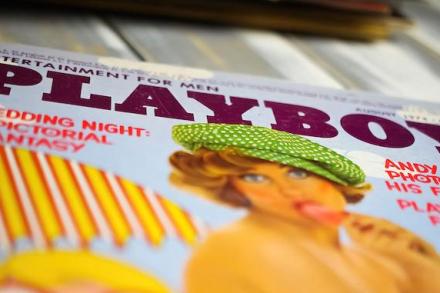
There are two proper responses to pornography it: to condemn it, and to ignore it. There are two other responses. One is to use it. It doesn’t bother me too much if some men are enriching internet prostitutes while debasing themselves, as long as everyone shuts up about it. It’s the final possible response to porn that concerns me: giving it air-time. Para-porn takes very different forms. One form of it is the reality show that’s all about casual sex Lots of media activity claims to be reflecting on porn in a thoughtful way, but is actually promoting it. News stories about porn, and documentaries about porn, and interviews with porn stars are not healthy reflections on a serious issue. They are the servants of porn.

The Church of England must stop feeling guilty about the Reformation

From our UK edition

Thomas More has a richly ambiguous place in our religious and political history. Like a brave hero of conscience, he defied the will of a tyrant, even unto death. A herald of modern liberty, then? Not quite. Before he found himself on the wrong end of the axe, as Lord Chancellor he calmly sent many dissidents to their death. His cause was not modern liberty, but the defence of the old version of authoritarian order. The Catholic Church calls him a saint. The English Reformation was a good thing. Thomas More was on the wrong side of history He is back in the news because a church in Canterbury has said it wants to exhume his remains, which the Catholic faithful are obviously keen to venerate. The surprising thing is that this church, St Dunstan’s, is Anglican.