Christianity

The end of Christendom is nigh

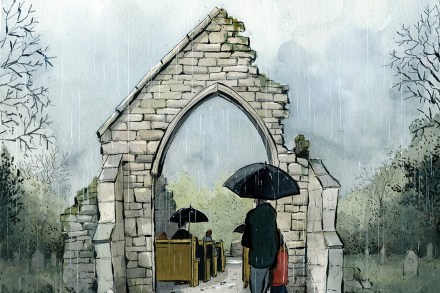
If you are of a traditional turn of mind, you might well go to church this Christmas, sing the carols you knew in childhood and feel a bit of a Dickensian glow. If you are already Christian, the experience will confirm your sense that what is commemorated is the most stupendous thing in human history – the arrival of Jesus Christ, whether or not you believe the stories as told in the readings. Statistically, however, it is highly unlikely that you will be going back to church for months – probably not until next year. If you did venture into your local church on a normal Sunday, you would find a tiny band of old people like me who go regularly and who are wondering, all the time, how much longer it can all continue.
A Christian revival is under way

This is my second Christmas as a Christian. As an atheist, I had dismissed the bright lights and customs of Christmas as traditions that had evolved to keep our spirits up as the cold of winter creeps in. But the more I learn about, and participate in, the rituals of my adopted faith, the less Grinch-like I become. Christmas isn’t just crass commercialism, it’s vital to a western revival. Celebrating it is more important than ever. The date of 25 December was significant before the birth of Christ of course. It coincided with the Ancient Roman celebration of Winter Solstice, just as 25 March was the Spring Equinox.

What The Spectator taught Benjamin Franklin

Christmas came early this year. No, I’m not moaning about the carols that my local café started piping at the beginning of September (although that’s enough to enrage any priest). This year my first proper Christmas moment occurred two weeks early when a lovely couple chose to have not one but two Christmas carols for their wedding. We hadn’t even hit December before I found myself in the curmudgeonly position of muttering ‘Except Easter’ as a full church belted out the line ‘This holy tide of Christmas all other doth efface’. It was all very jolly, even if I felt momentarily Scroogelike. Not that this was the most amusing of the winter weddings that we’ve held at my church, St Bartholomew the Great in West Smithfield.

In defence of faith

For what should we give thanks this Christmas? The faith that sustains millions through life’s challenges and inspires countless acts of compassion every day? The hope that our world may be redeemed by love? The charity that makes us think of the voiceless and the vulnerable who need our love and protection? Faith, hope and charity are virtues at the heart of Christian belief. They are not exclusive to Christianity, of course, but the place of religion in our national life has underpinned the moral reasoning which has upheld our civilisation. The idea that atheists are privyto some higher level of neutrality doesn’t stand up to scrutiny The principle of the equal worth of every individual is at the heart of Christian belief.

Defender of the Faith: how have the King’s religious beliefs changed?

31 min listen

As we approach the end of a uniquely painful year for the Royal Family, the King's trusted biographer, Robert Hardman, joins Damian Thompson to discuss the Monarch’s faith. As Robert recently revealed in his updated biography of Charles III, the cancer-stricken King has been drawing solace from a Christian faith that has become increasingly explicit over the years. He still thinks of himself as the ‘defender of faith’, but now also unapologetically uses his ancient title of ‘Defender of the Faith’, meaning Christianity. Specifically, he is more attracted than ever to the traditions of the Orthodox Church into which his father was baptised.

We need to learn to pray again

In The Spectator’s basement kitchen a few weeks ago, I cornered a young colleague, Angus Colwell, and asked him what he made of Rod Dreher’s new book Living in Wonder. The thrust of it is that we are not in an age of enlightenment so much as ‘endarkenment’ (Dreher’s term) and that, having turned our backs on God, we have become easy pickings for demonic forces. ‘Oh Lord’, said Angus, turning wearily away, ‘I’m so sick of demons.’ This delighted me then and still delights me, both because it’s so surreal and also because it rings so true. If you’d told me ten years ago that young political types in 2024 would be talking knowingly about the ancient devil-gods of the Mesopotamian region – Moloch, Ishtar and Baal – I’d have said your vape was spiked.

Is it time for Jordan Peterson to declare his spiritual allegiance?

Alan Isler’s novel Clerical Errors (2001) features a troubled priest who mocks the faith he has largely abandoned. ‘How can any rational creature not see in the story of Christ the pattern of countless pagan myths, the universal romance of the sacrificial god, his apotheosis and his rebirth?’ Jordan Peterson’s new book stands this argument on its head. That core Old Testament and gospel narratives are echoed in other cultures, past or present, is hailed as a mark of biblical universality. What applies to the resurrection also covers themes including sibling rivalry (Cain and Abel), pride and overreach (Noah’s Flood), deliverance from slavery (the Exodus) and the Fall itself. These archetypes abide in our collective unconscious for good reason.

After Welby: what’s next for the Church of England?

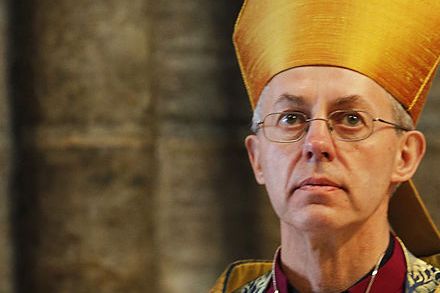
It’s taken him more than a decade, but Justin Welby has finally united the Church of England. The petition calling for him to resign over the findings of the Makin Review into the serial abuser John Smyth was set up by three clergymen who would normally disagree: Dr Ian Paul, Robert Thompson and Marcus Walker, the spirit animals of the C of E’s evangelical, liberal and High Church wings. ‘Over any other issue Ian Paul and Robert Thompson would practically be suggesting pistols at dawn across the Synod chamber,’ says one member of the General Synod. Yet they were united in their anger against the Archbishop of Canterbury and in their conviction that he needed to resign.

Welby resigns: crisis at the Church of England

18 min listen

After mounting pressure, the Archbishop of Canterbury Justin Welby has resigned. His resignation comes days after a damning report into the child abuser John Smyth who was associated with the Church of England. Welby was apparently made aware of the allegations in 2013, yet Smyth died in 2018 before facing any justice. Since the report was published, Welby and the Church have faced questions about the failure to act and the lack of urgency. The Spectator’s editor Michael Gove joins Damian Thompson to discuss what Damian calls ‘not just a shocking moment in the history of the Church of England, but in the history of English Christianity’.   Produced by Patrick Gibbons and Natasha Feroze.

Did Christianity create secular humanism?

33 min listen

Since the election of an overwhelmingly secular Labour government, people who describe themselves as humanists have a spring in their step: for example, there's a prospect that humanist weddings will be legally recognised in England and Wales (they already are in Scotland). But what exactly is a humanist? Definitions vary and there's a heated debate about to what extent the ethical but firmly atheist beliefs of the rather loosely organised modern humanist movement are descended from Christianity. In this episode of Holy Smoke we'll hear from Andrew Copson, CEO of Humanists UK since 2010 & President of Humanists International, and the theologian and Spectator contributor Theo Hobson, author of God created Humanism: the Christian Basis of Secular Values.

Catherine Nixey’s Heresy is a joy to read

From our US edition

What people tend to forget about Jesus Christ is that he killed children. As a five-year-old, Jesus was toddling through a village when a small boy ran past, knocking his shoulder. Taking it like any five-year-old would, Jesus shouted after him "you shall not go further on your way," at which point the boy fell down dead. Later, when the boy’s parents admonished Joseph and Mary for failing to raise their son properly, Jesus blinded them. Something to bear in mind next time you ask yourself: "What would Jesus do?" If this story is unfamiliar, that is because it doesn’t appear in any of the Bible’s traditional Gospels.

Heresy

We’ll never know what treasures the Tudor Reformation robbed us of

In 1693, quarrymen working near Caerleon, outside Newport in Wales, uncovered an alabaster sculpture of a figure they did not recognise. The man wore a suit of armour, which had once been covered in gold leaf. In one hand he held a sword, in the other a pair of scales. The scales themselves held a girl’s face and a globe of the Earth. The sculpture was donated to the Ashmolean, but experts there were baffled by it. Could it represent the goddess Astrea, one of them wondered. In fact, it represented the Archangel Michael, one of the most significant figures in the medieval church. Among other things, it will be Michael who wields the scales on Judgment Day.

The Olympic Games have been really bizarre

From our US edition

I am typically a huge Olympics fan because I am very big into national pride and love to shamelessly root for the USA. Gymnastics, swimming, volleyball, soccer, or even canoeing, judo and fencing — don’t care, will watch. Unfortunately, this year’s Summer Olympic Games in Paris, France were immediately marred by the obvious mockery of the Christian faith during the opening ceremony. There was a drag show version of Leonardo Da Vinci’s depiction of Jesus Christ’s Last Supper with his apostles prior to his crucifixion (plus, separately, a faceless rider on a pale horse and a queer ménage à trois).

Does Keir Starmer’s atheism matter?

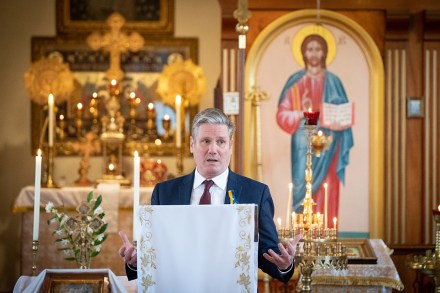
Good Friday, 2021, at Jesus House For All Nations church in Brent, north-west London. Face masked, head bowed, hands clasped, Sir Keir Starmer stands alongside Pastor Agu Irukwu. The pastor opens his arms to invoke Almighty God. We hear Starmer in voiceover: ‘From rolling out the vaccine to running the local food bank, Jesus House, like many other churches across the UK, has played a crucial role in meeting the needs of the community.’ A nice video tribute for Easter, this. Good to see churches getting some recognition. A sign, perhaps, of the inclusive national unity a Labour government would foster.

The roots of anti-Semitism in Europe

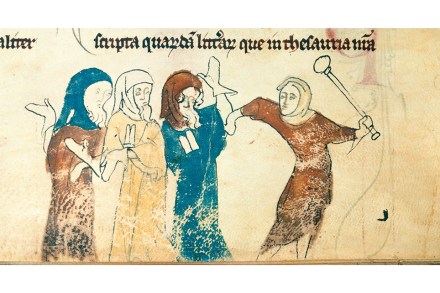
The medieval trope that Jews are inherently bloodthirsty has echoed down the ages. Forms of the blood libel have been disseminated ever since the myth emerged in England in the 12th century with claims that Christian children were being ritually murdered by Jews in re-enactments of the crucifixion of Jesus. In the aftermath of 7 October, Labour’s Rochdale by-election candidate Azhar Ali accused Israel of lowering its defences so that it could justify the shedding of innocent Palestinian blood. Gigi Hadid, the American model, shared a video which alleged that Israel is harvesting the organs of Palestinians.

‘God hates pride,’ from the Colorado GOP to you

From our US edition

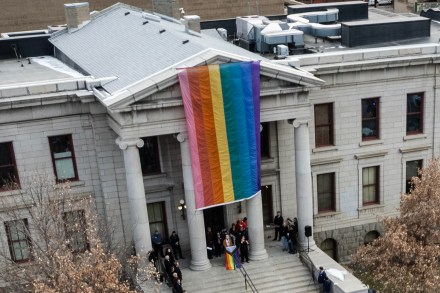
“The month of June has arrived and, once again, the godless groomers in our society want to attack what is decent, holy, and righteous so they can ultimately harm our children.” After starting his Monday morning with a nice cup of tea, Cockburn was surprised to open his email and find this attack on the alphabet community from Dave Williams, chairman of Colorado Republicans. The email, which also had last year’s email pasted below, was short and aggressive: “Thank you, and as we said last year, together, we can protect our children and future... but only if you get involved and defend the most vulnerable in our society from these woke creeps.” A clip of Pastor Mark Driscoll's sermon was linked in the email, in which he engages in a cute object lesson.

pride cockburn colorado gop

Scotland’s religious collapse

Last week, I had a drink with a Catholic priest friend who works with young people in custody. Inevitably, our talk turned to how radically unchurched they are – not badly disposed to Christianity, just unfamiliar with much of the doctrine and almost all the forms of worship, even though many had a Catholic granny or a non-practising parent. He mused over the startling speed of the secularisation of society. ‘Protestantism has collapsed,’ he said, and not in any triumphalist spirit. ‘Most people believe in or at least want to believe in some form of afterlife’ And so it has turned out in Scotland. The latest census, published last month, shows that for the first time a majority of Scots identify as ‘no religion’ whatsoever.

Why is it so hard to be a Christian in public life?

Is it any longer acceptable to be a Christian? News reaches me of a strange case involving the Liberal Democrat party. Ordinarily, I would pay no more attention to happenings within the Liberal Democrat party than I would to a golf tournament. But this case is a telling one. It involves somebody called David Campanale, who has been deselected from the Lib Dems’ parliamentary candidate list. You would have thought that is quite a difficult thing to do. First because it is extraordinary that anyone would want to join the Lib Dems – the party is hardly bursting with talent. Secondly, since the party and its predecessor have traditionally been led by alcoholics and dog-murderers, I should have thought selection is a tricky thing to fail.

An incisive memoir of life in the cloisters

From our US edition

Bishop Fulton J. Sheen, the immaculately Brylcreemed megastar of the golden age of Catholic television and radio evangelism in the United States, famously hated hearing the confessions of nuns. Doing so, Sheen is reported to have said, was “like being stoned to death with popcorn.” Despite this, Sheen — at one point broadcasting to over 30 million Americans — found himself hearing a lot of nuns’ confessions in his later career. He was reduced to this, alongside what was rather euphemistically referred to as his “international cassette tape ministry,” having fallen foul of the archbishop of New York, the doughty Cardinal Spellman.

Cloistered

Marjorie Taylor Greene’s strategery

From our US edition

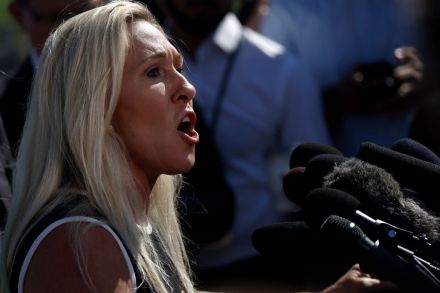
Dumb is dumb. Among the dumbest is a political strategy that harms your own side and infuriates your normal allies, the ones who stand with you on most issues. That describes Marjorie Taylor Greene, who is a master of both bad ideas and bad strategies. She’s a bomb-thrower who lights the fuse, gathers her friends around her and then drops the bomb on her own toes. She illustrated those qualities last week, not once but twice. First, she opposed a House bill on antisemitism, which passed easily with bipartisan support. Her reason was that the resolution could be used to attack believing Christians. To prove it, she dredged up medieval calumnies against the Jews as “Christ-killers,” who handed Jesus over to the Roman authorities.