China

The Chinese tried to get me drunk

China: what next? Around the time of the millennium, I wrote that during this century, many of the world’s great questions would be answered in Chinese characters and that great fortunes would be made, and lost, in the China trade. That is one prophecy which might hold good. No one ever says that they could take or leave Maotai Churchill said that the longer you can look back, the farther you can look forward, and it is worth following the Chinese example and thinking in epochs. Consider one of the most significant might-have-beens in history: the career of the 15th-century eunuch admiral Zheng He.

What the left calls ‘chaos,’ the rest of us call ‘winning’

From our US edition

They never learn, the libs. Back in 2016, they provided hours of entertainment assuring themselves that Donald Trump would “never be president” (“take it to the bank,” said Nancy Pelosi, who in another galaxy, long, long ago was speaker of the House). Patriotic citizens, eager to instruct the public about the dialectic of hubris and nemesis, stitched together many joyful compilations of Hollywood celebrities, ditto-head news readers and Democratic politicians intoning that party line.  Then, after the impossible mutated into the inevitable and Trump was elected, the narrative shifted to “the walls are closing in on Donald Trump.” If it wasn’t Russia, Russia, Russia it was Stormy Daniels, putatively shady business deals or putative efforts at insurrection.

‘The art of the deal’?

15 min listen

Two days ago, talk of a 90-day pause on Donald Trump’s ‘reciprocal tariffs’ was branded ‘fake news’ by the White House. But yesterday, the President confirmed a 90-day pause on the higher tariff rates on all countries apart from China. There is some confusion about whether this was The Donald's plan from the start – although the safe assumption is that it wasn't, and that someone senior in the White House sat him down and explained the market chaos he has caused. Is this 'the art of the deal’? Regarding China, the President wrote: ‘Based on the lack of respect that China has shown to the World’s Markets, I am hereby raising the Tariff charged to China by the United States of America to 125 per cent, effective immediately.

pivot

The art of the pivot

From our US edition

“THIS IS A GREAT TIME TO BUY!!!” President Donald Trump wrote on his Truth Social account yesterday morning. With trillions of dollars wiped off stock market value since his tariff announcements last week, this appeared to be an attempt to manufacture a silver lining. It also happened to be a literal statement. Within a few hours, the stock market was surging as Trump announced a 90-day pause on the higher “reciprocal” tariffs for most countries, while hiking the tariff on Chinese goods to 125 percent. Was this careless? Intentional? Insider trading? According to the White House, it had been the strategy all along. The President told reporters it had been “the biggest day in financial history.” Speaking to his aides beforehand, Trump noted the market was rallying.

Trump shock, cousin marriage & would you steal from a restaurant?

39 min listen

This week: Trump’s tariffs – madness or mastermind?‘Shock tactics’ is the headline of our cover article this week, as deputy editor Freddy Gray reflects on a week that has seen the US President upend the global economic order, with back and forth announcements on reciprocal and retaliatory tariffs. At the time of writing, a baseline 10% on imports stands – with higher tariffs remaining for China, Mexico and Canada. The initial announcement last week had led to the biggest global market decline since the start of the pandemic, and left countries scrambling to react, whether through negotiation or retaliation.

Tariff haters don’t live in the Rust Belt

From our US edition

There is a vacant lot at the edge of downtown Philipsburg, Pennsylvania, my hometown. Three years ago, a handsome, sturdy brick factory building stood in that lot, albeit most of the windows were broken, as it had been abandoned for years. After it closed, the building became a favorite hangout for ne’er-do-wells, whose act of arson forced its recent demolition. For decades, though, the clothing factory employed thousands of people and made downtown hum, as workers crowded the restaurants and took care of errands on their lunchbreaks. They – along with the hundreds of people employed by a cigar plant on the outskirts of town – also bought houses and rented properties here and supported locally owned pharmacies, barbers, hardware stores, grocery stores, and the hospital.

What does it take to be ‘an old friend of the Chinese people’?

38 min listen

The term ‘old friend of the Chinese people’ might seem a colloquial, almost sentimental, phrase to appear in official diplomatic language, but in the Chinese context, those words have a very specific meaning. Most often, they refer to high profile foreigners whose actions have helped the Chinese Communist Party in one way or another. The most famous of these is Henry Kissinger, who led the way for American rapprochement with China. That the CCP gives various foreigners this honour is revealing of China’s priorities over the decades, but also of its attempts to co-opt foreign forces to its cause. Think back to the United Front strategy, which we looked at on the podcast earlier in the year.

Give Trump’s tariffs a shot

From our US edition

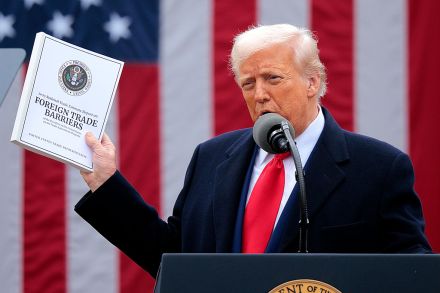
So the big question is: will it work? Will Trump’s protectionist policies, announced with some fanfare at a Rose Garden event at the White House yesterday, increase American prosperity? Or will they harm the economy?  Opinion on that matter is sharply divided. In one corner we have the free traders. They are wringing their hands and warning about higher prices, disruption of international trade and a trade war no one can win.  In the other corner are – what to call them? Most are not “anti-free traders” or “economic protectionists” (though some are).  Let’s call them “fair traders.” They like the idea of free trade – in theory. What they don’t like is the ethic of “free trade for thee but not for me.

Britain needs a Rearmament Isa

The City’s self-styled ‘cheerleader in chief’, Lord Mayor Alastair King, on a recent visit to Beijing and Shanghai found leading Chinese banks keen to expand in London. What with Chinese diplomats also keen to establish a fortress-embassy at Royal Mint Court on the City’s eastern edge, that may ring alarm bells with those who regard Xi Jinping’s neo-Maoist regime as anything but friendly. But as King also observes, ‘the tectonic plates are shifting’. All geopolitical relationships are up for review – though what follows is my own analysis, not the Lord Mayor’s.

The Boden Belt: the Lib Dems are the new party of the posh

The English social season has begun, kicking off with Gold Cup day. But this year, there is a new common denominator in the seats of southern England where the middle classes congregate: Liberal Democrat MPs. From the Cheltenham Festival in March right the way through to Goodwood in September, it is Ed Davey’s party which represents the constituencies where Britain’s bourgeoisie are most comfortable. Whether it is the Boat Race in April (Richmond) or the Derby in June (Epsom and Ewell), or even Wimbledon and Henley in July, everywhere Pimm’s is served, a Lib Dem is the local MP. They dominate the Boden Belt. And even Tories despair that the Lib Dems are the real ‘party of the posh’. At this week’s spring conference, the party was in an optimistic mood.

From Chimerica to Cold War II: how US-China relations soured

37 min listen

It’s easy to forget that, as recently as the start of this century, the US was China’s biggest ally. Washington saw Beijing as a necessary bulwark against Moscow, and consistently supported China’s entry into the world economy ever since rapprochement in the 1970s, including its accession to the World Trade Organisation. These days, the relationship couldn’t be more different. Why have relations cooled quite so fast? When was the turning point? And can we now say that rapprochement was a strategic mistake from the US? Bob Davis is a former senior editor at the Wall Street Journal, who was posted to China between 2011 and 2014.

Why is Jeremy Boreing exiting the Daily Wire?

From our US edition

Wired for sound Rumors abound about god king’s exit The right-wing media rumor mill threatened to spin off its axis earlier this week with the shock announcement that “god king” Jeremy Boreing was stepping down as co-CEO of the Daily Wire. Boreing, a keen film enthusiast who starred, wrote and directed in the Wire’s comedy movie Lady Ballers, is withdrawing to “focus on creative projects for the company,” per Axios’s Sara Fischer. The DW’s many detractors had a field day with the news – speculating that there was more to the story. Boreing and Ben Shapiro had fallen out, one hater claimed, and were retaining different PR agents to brief against each other!

Trump’s foreign policy isn’t unprincipled

From our US edition

"He [Donald Trump] sees American leadership as merely a series of real estate transactions." That was the verdict of the Democratic senator Elissa Slotkin following the President’s address to Congress. Trump 2.0 does, admittedly, have the appearance of a political version of The Art of the Deal, in which the Donald is prepared to leverage a bilateral compact with every country in the world — so long as the price is right. There are no friends in The Art of the Deal, no permanent friends anyway, only prospective business associates. Ukraine wants the flow of armaments to resume? Sign over the rights to half your natural resources.

Trump

Is the Trump administration ready to stop Chinese espionage?

From our US edition

For Republican voters sick of “deep-state” shenanigans, Kash Patel, the new head of the FBI, seems an ideal appointment. He and his new deputy, the former police officer turned podcaster Dan Bongino, look and sound like exactly the right men to disrupt a bureau that has at times in the past eight years acted as an investigative arm of the Democratic party in its attempts to thwart Donald Trump through the legal system. Patel is considered so pleasingly anti-establishment that his ties to a Chinese e-commerce business have been largely overlooked. He has holdings worth up to $5 million in a fast-fashion company called Shein, founded in China but headquartered in Singapore, and he intends to keep his stock. There’s nothing wrong with that, per se.

espionage

America needs talent

From our US edition

Before Donald Trump’s inauguration, Elon Musk caused a huge controversy within the MAGA movement by advocating increased high-skill immigration. As head of the Department of Government Efficiency he wanted, for example, to expand the H-1B visa program, which many Trump supporters are against. The angry debate over the visa issue still rages on social media and both sides tend to talk past each other. The MAGA movement is against any increase in immigration, whether high- or low-skill. Musk has acknowledged that the existing H-1B program was subject to abuse by employers and especially by IT firms that rely on outsourcing: the workers they import are often no better than the Americans they replace.

statue of liberty new york

The climate has changed on climate change

From our US edition

Like the Marxist dialectic, or the predictions of the Gospels, the green movement has long seen its triumph as preordained. Yet sometimes the inevitable turns out to be not so. Over the past few years green policies — notably the drive for “net zero” — have been failing. Both markets and politicians have seen the light. WhatJoe Biden’s treasury secretary Janet Yellen once called “the greatest business opportunity of the twenty-first century” has revealed itself to be something of a disaster. The new American President is likely to be blamed for the implosion of the green agenda, but its collapse long pre-dates his re-ascension.

Taking the fast train back to imperialism

From our US edition

I’m on a high-speed train. Forty years ago, such a statement would have been notable and specific: essentially, it meant you were in Japan or France. Nowadays, being on a high-speed train is barely a geographical indicator at all. Most of Europe has them, from Spain to Italy to Poland. Morocco has high-speed trains. Uzbekistan has high-speed trains. Even Egypt, Vietnam, Turkey, Thailand and the USA either have high-speed railways, or will have them in the next year or two. Just about the only country not powering ahead with high-speed rail is the birthplace of the railway — the United Kingdom — a fact that can either make you sob, or despair, or perform a kind of double sob etched with despair. What makes my experience unusual is that my high-speed journey is happening in Laos.

train

Rana Mitter on the legacy of Sun Yat-sen

43 min listen

Walking around Taipei a couple of years ago, I spotted a familiar sight – a bronze statue of a moustachioed man, cane in his right hand, left leg striding forward. The man is Sun Yat-sen, considered modern China’s founding father. I recognised the statue because a larger version of it stands in the city centre of Nanjing, the mainland Chinese city that I was born and raised in. That one figure can be celebrated across the strait, both in Communist PRC and Taiwanese ROC, is the curious legacy left behind by Sun. March 12th this year is the centenary of Sun’s death, so what better opportunity to look at his legacy, and who better to discuss Sun than the historian Rana Mitter, who needs no introduction with Chinese Whispers listeners.

China’s response to Trump’s tariffs marks a dramatic escalation

From our US edition

Might peace in Ukraine be prelude to an even more serious conflict between the United States of America and China? Is that a hysterical question? The deal-or-no-deal drama starring Donald Trump, Volodymyr Zelensky and European leaders has dominated the news in recent days, so much so that the latest clash between Washington and Beijing has gone all but unnoticed. Yet China’s official response to the Trump administration’s move to raise its tariffs on Chinese imports to 20 percent does appear to mark a dramatic escalation. "Exerting extreme pressure on China is the wrong target and the wrong calculation,’’ said China’s foreign ministry spokesperson Lin Jian. "If the US has other intentions and insists on a tariff war, trade war or any other war, China will fight to the end.

Is China serious about ‘war’ with America?

48 min listen

Freddy Gray is joined with Michael Auslin who is an academic and historian at the Hoover Institute and author of the Substack 'THE PATOWMACK PACKET'. They discuss China's response to Trump's tariffs, whether China is serious about threats of war and how concerned Trump is about China's relationship with Russia.