China

The truth about Chinese espionage

13 min listen

Tim Shipman's bombshell cover piece for the magazine this week explains how the collapsed spy trial blew up in the government’s face. As well as raising ‘serious questions’ about Keir Starmer’s judgment and Jonathan Powell’s role, ‘the affair reveals a Whitehall tendency to cover up the gory details of foreign spying in the UK’. According to Tim, four ‘highly credible sources in the upper echelons of the last government… have revealed that far worse scandals have been hushed up’. One, involving Russia, was suppressed ‘to avoid embarrassing a former prime minister’.

The questions the government must answer over the China spying case

Exactly a year ago, this magazine warned that ministers were showing a dangerous naivety towards China. We revealed that the Chancellor, the Foreign Secretary and the Prime Minister were all intent on cosying up to Beijing. They were scornful of the wariness Conservative ministers had shown towards the Chinese Communist party. The Labour leadership believed that their pursuit of growth could be supercharged by Chinese investment. They hoped one of their missions – the drive to decarbonise the grid – could be facilitated by Chinese tech. They thought Tory attitudes to China were warped by ideology and a more pragmatic line towards Beijing would be economically rewarding.

Portrait of the week: Gaza ceasefire, unemployment increases and a Gen Z uprising

Home Sir Keir Starmer, the Prime Minister, praised President Donald Trump for the Gaza ceasefire agreement while in India accompanied by a trade delegation of 126. He then flew off to Egypt for the summit at which the peace declaration was signed. Sir Keir asserted that the dropping of a prosecution against two men for spying for Beijing (which they deny) was because China had not been a ‘threat to national security’ when they were accused of espionage between December 2021 and February 2023; Lord Case, the former cabinet secretary, said it definitely had been, and two former heads of MI6 agreed. Kemi Badenoch, the Conservative leader, was seen to be more cheerful since her well-received speech at the party conference proposing the abolition of stamp duty.

Here be dragons: the truth about Chinese espionage

On 3 July a Chinese man, Xu Zewei, was arrested in Milan to face extradition on nine charges relating to the hack carried out by a group called Haf-nium during the Covid pandemic. Western companies had secrets stolen in 2020 and 2021 when a weakness in the Microsoft Exchange servers was exploited. The National Cyber Security Centre (NCSC), part of GCHQ, later said 70 British firms had fallen victim to ‘a malicious act by Chinese state-backed actors’. The court documents claim that officers of China’s ‘Ministry of State Security and the Shanghai State Security Bureau directed Xu to conduct this hacking’.

Are the Tories to blame for the China spy scandal?

14 min listen

Keir Starmer did not go into Prime Minister’s Questions with the intention of resolving the row over the collapse of the Chinese spying case: he merely wanted to avoid the pressure building too much. He announced in a long statement at the start of the session that the government would be publishing its three witness statements, and then spent the rest of his sparring with Kemi Badenoch arguing that this was all the fault of the previous government anyway. So who is to blame, the Tories or Labour? What does the inability to deal with this scandal say about the ineptitude of successive governments, and how they communicate with the public? James Heale speaks to Tim Shipman and Isabel Hardman.

Lab leaks & spy scandals: was Cameron wrong about China?

48 min listen

This week on Quite right! Michael and Maddie turn their sights to Westminster’s latest espionage scandal – and the collapse of the case to prosecute two men accused of spying for China. Was the case dropped out of incompetence, or out of fear of offending Beijing? As Michael puts it, ‘Either we’re not being told the truth, or this is a government of staggering incompetence.’ They also unpick the growing row over Jonathan Powell, Keir Starmer’s National Security Adviser, and his alleged role in shelving the case. What does his re-emergence, along with Peter Mandelson and other ‘Sith Lords of Blairism’, tell us about the return of New Labour’s old moral compromises?

You want a peace of me?

From our US edition

President Trump prevented World War Three yesterday, or so he claimed multiple times. “No one wants World War Three,” he said. Fact check: true. Trump and many of the world’s finest leaders gathered behind a large, tacky but also touching sign that read “Peace 2025.” Italy’s Giorgia Meloni also attended the summit. Trump called her “beautiful,” saying that in the US calling a woman beautiful could mean the “end of your political career.” Fact check: true. “I’ll take my chances,” Trump said. Cockburn enjoyed the day’s festivities, which featured enough comic moments to fill a season of The Office.

peace

China spy scandal: ‘a masterclass of ineptitude’?

13 min listen

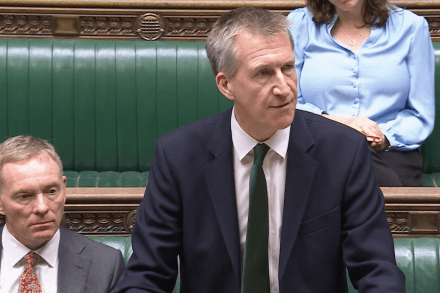
Tim Shipman and Charles Parton, China adviser at the Council on Geostrategy, join James Heale to discuss the ongoing fallout over the collapse of the Westminster spy case. Security minister Dan Jarvis answered an urgent question on the matter late on Monday in Parliament, stringently denying that the government played an active role in collapsing the case. But, as Charles and Tim stress, the case still doesn't add up. Is it as simple as the government not wanting to offend China? And is the deputy national security adviser being 'hung out to dry'? Produced by Patrick Gibbons.

Spy scandal: what is Labour’s policy on China?

15 min listen

It’s a ‘great and beautiful day’, as Donald Trump wrote in the guestbook at the Knesset, where he will address the Israeli parliament after the final hostages were handed back to Israel. It is, of course, a historic piece of diplomacy, and the conversation in Westminster has turned to the extent to which the UK was involved. Bridget Phillipson claimed over the weekend that Britain played a ‘key role’ in bringing about peace – much to the chagrin of Mike Huckabee, the US Ambassador to Israel, who called her ‘delusional’. Is she? The government have more pressing issues, however, with the collapsed China spy case – the sudden abandonment of a case brought against two men (Chris Cash, a parliamentary researcher, and Chris Berry, an academic).

In defence of Chris Cash

Can you be a spy by mistake? If, with no treacherous intent, without ever intending to disadvantage your own country, you share information which might give another country advantage over yours, are you spying for that country? In ordinary usage I’d answer these questions with a firm no. Spies operate for many reasons – reward, blackmail, ideology or as a profession – but they do know they are spies. It’s intentional behaviour. If I’ve ever met or communicated with Chris Cash, I don’t remember it. He has, however, been described to me by mutual friends whom I trust. Their descriptions concur. Nothing I’ve learnt about this young man, who worked at Westminster on research into China, suggests it’s likely he can justly be accused of being ‘a Chinese spy’.

Did Jonathan Powell torpedo the China espionage trial?

The antics of Keir Starmer and his top security adviser over the collapsed China espionage case bring to mind the slapstick British movie Carry On Spying – which is precisely the message it will have conveyed to Beijing. Instead of Bernard Cribbins, Kenneth Williams and their team of fictional incompetents, the real-life Whitehall farce has Jonathan Powell on a single-minded mission to appease China. Powell, Starmer’s national security adviser, has been accused of torpedoing the trial to avoid embarrassing China at a time when he is leading efforts to rebuild diplomatic ties with Xi Jinping. One can only imagine the despair in Britain’s security agencies and the Crown Prosecution Service, who would not have brought the charges unless they were reasonably confident of success.

The celebrity guide to selective outrage

From our US edition

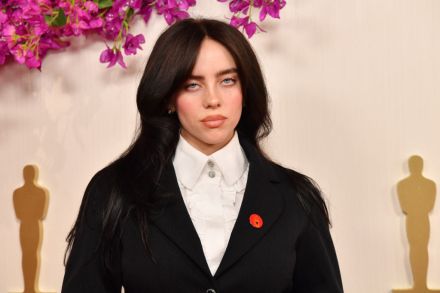
In the West, outrage has become performance art. It’s not about real causes, but about carefully branded ones that play well in pastel Instagram carousels. Climate change? Of course. A vague plea for “justice”? Naturally. A curated “Free Palestine” hashtag? Absolutely. But when it comes to standing with their peers in the Middle East – singers, actors, writers who are literally jailed or executed for their art – the voices vanish. This isn’t about Israel. The point is larger: why do so many Western artists reserve their outrage for one convenient villain while ignoring regimes that jail, torture and kill their peers? Syria’s Christians and Druze are being ethnically cleansed. Yemen is enduring a famine.

Billie Eilish

A new era of nuclear weapons is here

The world is moving into a more dangerous age. According to the Peace Research Institute Oslo, last year set a grim record, namely the highest number of state-based armed conflicts in more than seven decades. At the same time, we are seeing a fundamental realignment of global geopolitics – made clear from the recent meeting of the Shanghai Co-operation Organisation in Tianjin and the ‘Victory Day’ parade held in Beijing shortly afterwards. There, the leaders of what many in the West see as an emerging new world order stood shoulder to shoulder as Chinese military hardware was put on display to mark 80 years since the end of the second world war. That anniversary underscored the commemoration last month to mark the only two occasions where atomic bombs have been used.

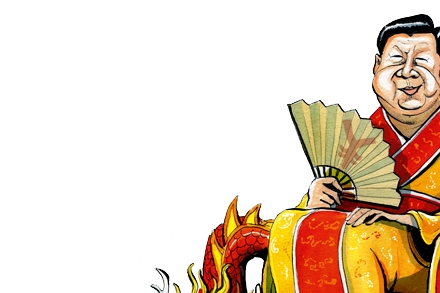
Fragile China: who’s really in charge?

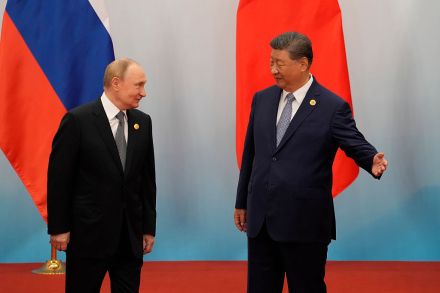
Xi Jinping effectively vanished in July and the first half of August. Some China watchers speculated that his unexplained absence was a sign that he was losing his grip on power. But he has since reappeared and been very visible again. At the end of last month, he visited Tibet, then indulged in a high-profile, back-slapping meeting with Vladimir Putin and the Indian Prime Minister Narendra Modi in Tianjin. He capped off his busy fortnight with the 3 September military parade in Beijing and a second meeting with his star guest Putin, this time accompanied by Kim Jong-un. So, a great triumph for the neo-Maoist leader and the new Axis of Evil? Not so fast. The lessons to draw from these three events are a sight more nuanced. Here are five take-aways from Xi’s last few weeks. 1.

How powerful is the China-Russia alliance?

From our US edition

This summer’s big security summit in Tianjin, followed by the military parade in Beijing on September 3, has been widely interpreted as a sign of a new global realignment. At a time of growing friction within the US alliances in East Asia and Europe, President Xi Jinping of China, President Vladimir Putin of Russia and about 20 leaders mostly from Central Asia have not just reaffirmed their nations’ close ties. They sought to strengthen the emerging multipolar system, which they see as a rejection of the US-dominated global order. This idea is hardly new.

China
space

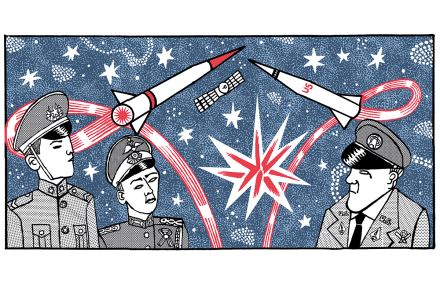
Russia, China and the US are preparing for battle in orbit

From our US edition

Russia is playing a dangerous game in space. Despite its history it’s a declining space power, having abandoned many of its long-term projects due to lack of money and technology. It effectively crippled much of its space activity when it attacked Ukraine, which was the source of many of its high-tech components. This year has seen its lowest launch rate since 1961 – the year Yuri Gagarin became the first person to go into space. Yet significantly, three of Russia’s eight orbital launches this year (the US has launched more than 100) could be potential anti-satellite weapons. On May 23, Russia launched the Cosmos 2588 satellite from the Plesetsk launch site situated 500 miles north of Moscow. The Cosmos designation is a general term used to obscure the satellites’ purpose.

Why Trump must build a nuclear reactor on the Moon

From our US edition

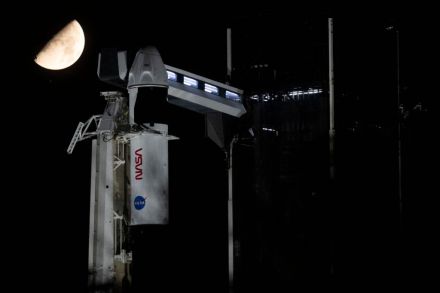
Sean Duffy, the secretary of transportation whom President Trump appointed last month as temporary leader of NASA, has issued a directive to fast-track efforts to put a nuclear reactor on the moon. “To properly advance this critical technology to be able to support a future lunar economy, high power energy generation on Mars, and to strengthen our national security in space,” he says.A small nuclear reactor on the moon is a good idea, but the directive is about more than that: it is about renewing America’s leadership in space exploration that, with its magnificent achievements receding into the past, looks vulnerable. Bill Nelson, NASA’s last leader, didn't mince his words when it came to the new rivals, China. “It is a fact: we’re in a space race.

The Moon

Tariffs and the psychodrama of Trump diplomacy

From our US edition

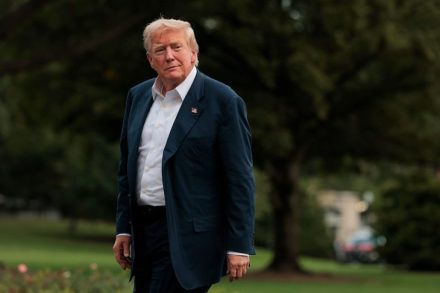
A bleached white conference room, somewhere near Jeddah in Saudi Arabia. On one side sits Volodymyr Zelensky, the Ukrainian leader, in his soldier-boy outfit. On the other, Russian President Vladimir Putin in dark suit and tie. And in the middle, a beaming President Donald J. Trump. "People said this could never happen," he says, as Zelensky and Putin stare awkwardly at the floor. "But it’s a beautiful thing." A White House memo lands in inboxes across the world: "THE PEACEMAKER-IN-CHIEF..." Pure fantasy, perhaps, but Trump does have an almost cosmic ability to get what he wants – and he really wants to end the war in Ukraine. Last night, having spent weeks telling the world how "disappointed" he was with Putin, Trump abruptly announced "great progress" in US-Russia dialogue.

trump Steve Witkoff and Vladimir Putin shake hands (Getty)

The Art of the Dealmaker-in-Chief

From our US edition

Who really thought Donald Trump’s America was about to join the stampede of first-world powers promising to recognize Palestine at the United Nations?  "Wow!" He exclaimed this morning on Truth Social. "Canada has just announced that it is backing statehood for Palestine. That will make it very hard for us to make a Trade Deal with them."  All over the world, commentators convinced themselves that Trump’s expression of concern on Monday about "real starvation" in Gaza meant he was pivoting with global opinion and against Israel.  It turns out, however, that Team Trump is not for turning when it comes to the Middle East. Marco Rubio, the US Secretary of State, has accused the countries now embracing Palestinian statehood of falling for "Hamas propaganda".

Trump deals