Steve Hsu

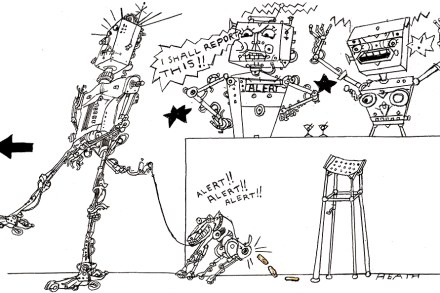
How useful is AI for research?

Late last year, I published the first theoretical physics paper in which the main idea originated from artificial intelligence – from an AI. And my experience working with the most powerful AI models left me both impressed and wary. The most accurate analogy I can offer is that it’s like something familiar to anyone who has done research: a brilliant colleague who is also unreliable. This colleague can produce deep insights at surprising speed – and then, the next second, make an error that ranges from the trivial to the profound. That tension – capability versus reliability – has shaped how I now use these systems in mathematics and theoretical physics. It is also what will shape how they affect scientific research over the next few years.

Welcome to the Chinese century

Competition between the US and China will shape the 21st century, but have the Chinese already leap-frogged the Americans? It looks as if they might have done. Since China opened itself up to trade and market economics under Deng Xiaoping almost 50 years ago, it has been furiously chasing the US in terms of economic and technological development – and it’s been catching up, fast. We can prove just how fast by measuring its innovation and output per capita. The US has about a quarter of China’s population, so if both countries were at a similar level of economic and technological development, one would expect China to produce roughly four times the number of scientific breakthroughs as America, four times the number of physicists and AI engineers and so on.

China

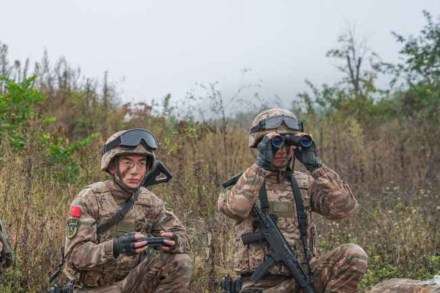
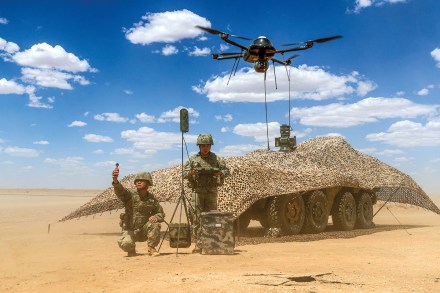
The frightening advance of China’s military capabilities

“The number (of kills) could have been higher. We showed restraint.” – Pakistan’s Air Vice Marshal Aurangzeb Ahmed “Godzilla 3? Godzilla 3? ... Explosion in Air.” – Indian Air Force flight radio “China’s hypersonic missiles could destroy US aircraft carriers in just 20 minutes.” – US Defense Secretary Pete Hegseth Historians of the future will need a word or phrase to describe the shock and the disorienting anxiety the West will feel in the coming months as it realizes that China has caught up with – even surpassed it – in technological capability. We could call these “DeepSeek” moments, named after the recent jolt to the western psyche caused by the astonishing capabilities of Chinese artificial intelligence.

China

America needs talent

Before Donald Trump’s inauguration, Elon Musk caused a huge controversy within the MAGA movement by advocating increased high-skill immigration. As head of the Department of Government Efficiency he wanted, for example, to expand the H-1B visa program, which many Trump supporters are against. The angry debate over the visa issue still rages on social media and both sides tend to talk past each other. The MAGA movement is against any increase in immigration, whether high- or low-skill. Musk has acknowledged that the existing H-1B program was subject to abuse by employers and especially by IT firms that rely on outsourcing: the workers they import are often no better than the Americans they replace.

statue of liberty new york