China

The UK’s shift in attitude to the threat of China

Gavin Williamson’s speech today is another demonstration of how the UK government’s attitude to China has changed. In the Cameron Osborne era, the UK was determined to be China’s best friend in the West. All the emphasis was on creating a ‘golden era’ in Anglo-Chinese relations. But now, the government strikes a more realistic—and hawkish—tone on China. In his speech today, Williamson brackets China with Russia as a threat. The headlines today have been about Williamson’s decision to send the UK’s new aircraft carrier, carrying both US and UK jets, to the Pacific in a message to Beijing. But just as telling is the emphasis that Williamson places on various alliances.

Is the Fed caving to the demands of the market?

From our US edition

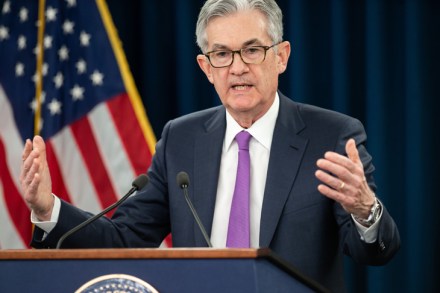
Has ‘Jay’ Powell gone wobbly, or does he know something we don’t? That was the question being asked after the US Federal Reserve, of which Powell is chairman, kept dollar interest rates on hold last week — rather than continuing to notch them upwards as it has been doing for two years — and hinted that the next move might actually be downwards. Trade tension with China, the impact of Donald Trump’s government shutdown and the risk of a no-deal Brexit were all cited as ‘cross-currents’ affecting the decision, but pundits led by Wall Street ‘bond king’ Jeffrey Gundlach declared the Fed to be ‘caving in’ to the demands of the stock market and the President.

fed jerome powell

The Fed’s U-turn on rates is a reality check, not a sop to Trump

Has ‘Jay’ Powell gone wobbly, or does he know something we don’t? That was the question being asked after the US Federal Reserve, of which Powell is chairman, kept dollar interest rates on hold last week — rather than continuing to notch them upwards as it has been doing for two years — and hinted that the next move might actually be downwards. Trade tension with China, the impact of Donald Trump’s government shutdown and the risk of a no-deal Brexit were all cited as ‘cross-currents’ affecting the decision, but pundits led by Wall Street ‘bond king’ Jeffrey Gundlach declared the Fed to be ‘caving in’ to the demands of the stock market and the President.

China’s obsession with Taiwan is nothing to do with money

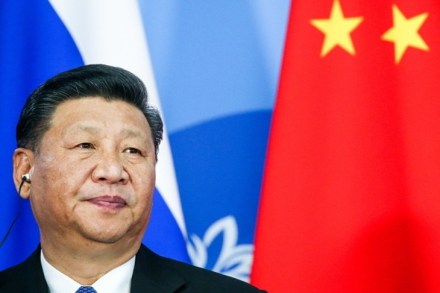
Does President Xi's first address of the new year spell trouble for Taiwan? In a 30 minute speech on Taiwan, Xi used much fiercer language than his predecessors on Taiwan’s reunification. Journalists have reported it as 'chest-beating' and 'threatening'. Phrases like ‘the reunification of Taiwan…is the inevitable requirement of the rejuvenation of the Chinese nation’ and ‘we do not promise to renounce the use of force’ certainly don't bode well. But the speech is actually interesting for a different reason: it reveals why the Chinese are so obsessed with Taiwan. Many outside China don't understand why a country of 1.7 billion people with the world’s second largest economy is so obsessed with a tiny island of 23 million people.

Maybe it’s time to accept that Huawei is a Chinese intelligence front

From our US edition

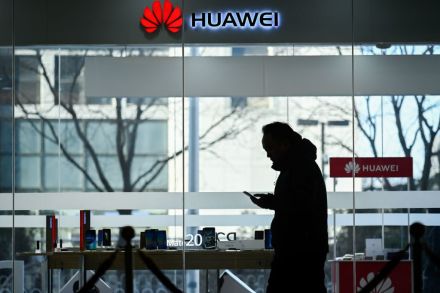
Established in the southern Chinese city of Shenzhen in 1987, it didn’t take long for Huawei Technologies to become a top player in global telecommunications. Since 2012, it’s been the world’s biggest manufacturer of telecommunications equipment. Last year, Huawei displaced Apple as the world’s second-biggest smartphone maker, after South Korea’s Samsung. Active in 170 countries, Huawei matters – to China and to the global economy.Yet there have long been questions raised about the company, starting with the fact that Huawei’s founder and CEO, Ren Zhengfei, is a former senior technologist for the People’s Liberation Army.

huawei

The Spectator Podcast: time to make your own mind up about a no-deal Brexit

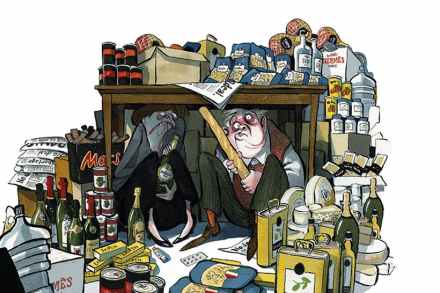
Lorries backing up in Kent, a Mars bar shortage, and no more Rome city breaks – these are just some of the things that we have been warned about when it comes to a no deal Brexit. But what will really happen? In this week's cover piece, Ross Clark weighs up the pros and the cons. It's fairly neutral, but on the podcast, we hear from two people who are anything but. Lord Peter Lilley, Tory MP, has said that a no-deal Brexit would be better than the status quo; he's joined by Ian Dunt, editor of politics.co.uk, who thinks that it would be an 'unmitigated disaster'. It was a pretty fiery exchange from the two Brexit experts - the debate ranged from nuclear isotopes to Chinese kettles. Tune in to make your own mind up about no deal.

From the archives: Peregrine Worsthorne on Bush 41

From our US edition

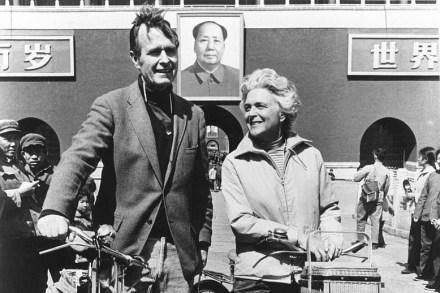
Four years ago, Peregrine Worsthorne wrote about his various experiences with American presidents forThe Spectator magazine. He concluded with this anecdote about George H.W. Bush from the mid-Seventies... The only thing I remember about George Bush senior was an exceptional act of kindness. He was then the American representative in Peking — as it was still called — and had asked me to lunch. It was a scorching day. In the course of the conversation I mentioned I was going on to sleep that night in Mao’s favorite village in the south, a place of pilgrimage for the faithful. ‘Don’t forget to take a good overcoat,’ he warned. ‘It’s mighty cold down there.

george h.w. bush 41

The US and China are headed for a showdown. Do the American people care?

From our US edition

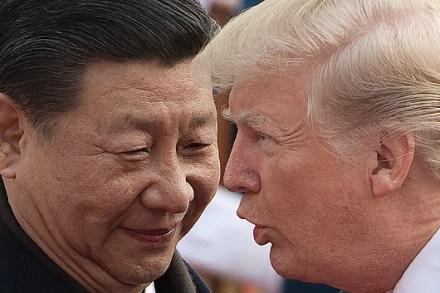
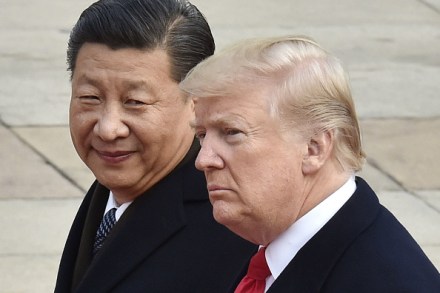
Know this: It doesn’t matter what happens during what can only be described as ‘dinner diplomacy’ between Donald Trump and Xi Jinping at the G20 — good, bad or breakthrough. That’s because the course of US-China relations — a complex relationship that blends cooperation, competition and geopolitical slugfest — is set in stone. The reasons are obvious. From tensions all around China’s near seas, to the final status of Taiwan, to the flow of hundreds of billions of dollars in trade to an arms race in Asia that will soon feature sci-fi like hypersonic weapons the future is frighteningly clear.

donald trump xi jinping showdown

Why China needs a deal with Donald Trump

China’s leadership knows it has badly underestimated the Trump administration’s will to raise the stakes on the trade front. They therefore hope that today’s meeting between the president and Xi Jinping in Buenos Aires produces a return to the status quo ante. The ideal outcome for Beijing would be agreement to establish an on-going dialogue similar to the one conducted earlier this century in which China could dictate the pace of concessions in order to alleviate the pressure from sanctions. This would be based on making the most of the Trump’s positive evaluation of his personal relationship with the Chinese leader and concern in the administration at the impact of tariff escalation on US consumers and inflation.

The great Chinese power grab

Five years ago President Xi Jinping gave a speech in Kazakhstan, launching the ‘Silk Road Economic Belt’, a wildly ambitious set of Chinese-backed infrastructure projects stretching through the steppes of central Asia to the Baltic Sea. Hundreds of billions of dollars later, this project more than any other has come to define China’s radical ambitions to upend a world order long dominated by Americans and Europeans. In 2015, Peter Frankopan, a dashing Oxford academic, wrote The Silk Roads, a weighty and widely acclaimed history of the ancient trading routes that once linked China to the world. It became a bestseller, partly because Frankopan, unusually for an academic, knows how to tell a yarn.

Can Dolce & Gabbana bounce back from its China disaster?

Sitting in a bar in Shanghai, each person at our table is listing all the Dolce & Gabbana items they have in their closet. In a normal setting this would be crass, but today they’re deciding what to burn. Dolce is not cheap and my friends would have saved up to buy one of their pieces, yet the brand is now so unpopular that they are considering not just a boycott, but total incineration. From social media it’s clear that we are not unique in China, where the outrage against Dolce began with their adverts for their ‘Great Show’ fashion event in Shanghai. Short video clips, which were subsequently removed from Weibo, showed a docile Chinese girl attempting to eat Italian food with chopsticks with a male voice-over.

China’s crackdown on Muslims in Xinjiang is sure to backfire

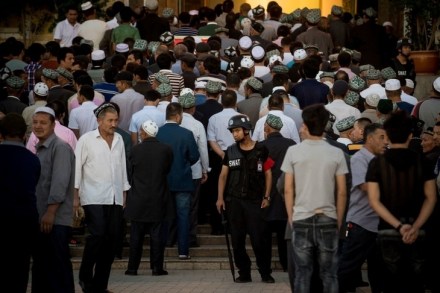
After repeated denials, Chinese officials finally admitted last month that they have set up internment camps in the far-western province of Xinjiang, where up to one million ethnic Uighurs, almost all of whom are Muslim, are being held. Under China’s anti-terrorism law and ‘religious affairs regulation,’ the government in the Xinjiang Autonomous Region publicly introduced the 'Regulation on De-extremification.' What it describes is a new gulag, where re-education and the suppression of Uighur identity is its main goal. There are approximately 25 million Muslims in China today, but these new draconian laws in Xinjiang are aimed solely at the ethnic Uighurs, of which there are just over 11 million.

The all-seeing state

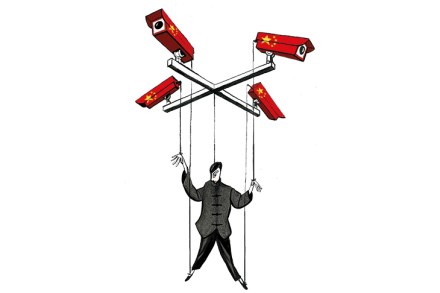
The bullet train from Beijing to Shanghai is the fastest in the world. It takes just over four hours to travel the 819-mile journey. From the train, it is impossible to ignore China’s economic success. There are cities the size of London that many westerners will never even have heard of. They are filled with glass towers and shopping centres, selling Cartier watches and Gucci bags. As the train sets off from each station, an announcement plays in both Chinese and stilted English: ‘Dear passengers, people who travel without a ticket or behave disorderly, or smoke in public areas, will be punished according to regulations and the behaviour will be recorded in the individual credit information system.

Peter Navarro slams Wall Streeters as ‘foreign agents’ hindering the White House

From our US edition

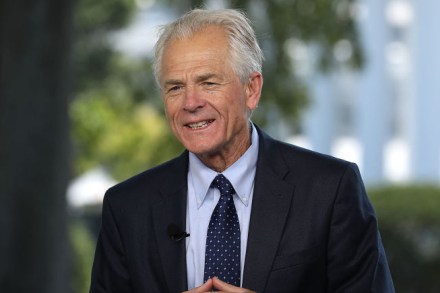
‘Wall Street and Goldman Sachs…here’s the most important thing,’ said Peter Navarro, the White House trade policy pointman, at a Washington think tank Friday. ‘When these unpaid foreign agents engage in this kind of diplomacy – so-called diplomacy – all they do is weaken this president and his negotiating position.’ The factionalism within the White House itself and the in-fighting over Washington’s China policy was on full display. The president’s encouragement of rival camps battling it out has often spilled over into plain view during the first two years of this administration.

peter navarro

The failure of globalization and the return of inflation

From our US edition

Most of today’s political debates are at heart about globalization. Terrorists, tree huggers, and Trumpists have their cultural complaints, but the great wave of Western populism is fueled by economic anger. Owing to the large amount of money that has been printed, financial asset prices have risen. But median incomes have stagnated. There is much truth in the claim that metropolitan elites have prospered, while the unvisited hinterlands have lost out, and much danger in the myth that all stakeholders benefit equally. Has globalization failed? On its economic merits, globalization can stand tall — not through increasing everyone’s income, though it has done this in many emerging economies, but by reducing everyone’s costs.

globalization

Chinese vaccine giant gets a taste of its own medicine

A few months ago I wrote about the damning revelations surrounding one of China’s most trusted vaccines providers. Changsheng Biotech had been profiteering from the creation and distribution of useless vaccines for children. First, they mixed old vaccines with new ones when selling jabs meant to immunise against diphtheria, whooping cough, and tetanus (all three diseases are potentially fatal to infants); then, a year later, they faked the production dates and batch numbers of rabies vaccines. The punishment for the first drugs transgression was a mere 3.4 million yuan – less than £400,000, and only 0.0003 per cent of the company’s annual turnover. It was no more than a slap on the wrist.

Politics trumps trade

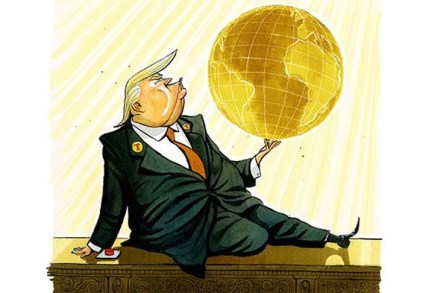
‘What the hell is going on?’ That anxious wail of economic incomprehension has been heard ever since President Trump decided last January to impose tens of billions of dollars of tariffs on China and other countries, including Canada, Mexico and the member states of the EU. The wail went up another octave last week as the White House announced a further $200 billion in tariffs. Among the politicians and think tanks of Washington DC, where I have spent the past few days, there is talk of little else; talk rendered more feverish by the prospect of midterm elections in November. A hundred billion here, a hundred billion there — pretty soon we could be talking real money.

How China sees the trade war

From our US edition

What started out as one of those trade wars that Donald Trump believes are ‘easy to win’ has turned into a far broader confrontation between the US and China which is set to expand and deepen further. In his no-nonsense manner, the President has brought the era of ‘constructive engagement’ between the world’s two largest economies to a shuddering halt. Gone are the days when successive administrations thought economic growth would make the Chinese and their leaders ‘more like us’. Instead, the last major country ruled by a Communist Party is identified as a strategic competitor whose further economic political and military expansion has to be checked in America’s national interest.

china xi jinping

Trading blows

Donald Trump campaigned as an unrepentant protectionist and, on the face of it, he has lived up to his word. He has torn up the US-Pacific free- trade partnership, threatened the European Union with trade wars and imposed tariffs on billions of dollars’ worth of imports from China. As you might expect, Beijing’s retaliation has been immediate — as has the damage. American cherry growers, for example, estimate that they have lost about $85 million after suffering retaliatory surcharges. Farmers are now having to be bailed out by the US government. Yet this week Trump has doubled down, introducing tariffs on another 6,000 Chinese imports. When China responds in kind, he says, America will move on to phase three.

The Vatican is strengthening its ties with China. But at what cost?

In the last decade or so there has been a thawing of relations between China and the Holy See. Sure, China can still be harsh in its treatment of some Catholics and the Vatican continues to maintain diplomatic relations with Taiwan, but a change is coming. Earlier this year, there was talk of a potential deal between Beijing and the Vatican, which would see China recognising the Pope as head of Chinese Catholics, in return the Vatican would give the Chinese government a say in the appointment of bishops. This week, we hear from two sources close to the negotiations that the deal is to be signed imminently – before the end of September. It’s no secret that Pope Francis has designs on China.