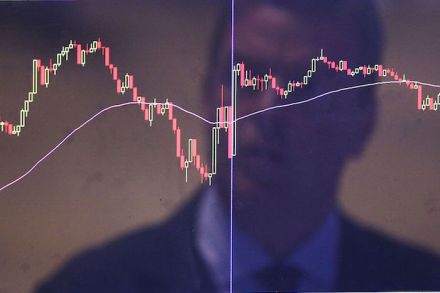
Mark Asquith

Mark Asquith is a fund manager.

Is inflation over?

From our UK edition

21 min listen

Freddy Gray is joined by Kate Andrews, The Spectator’s economics editor; and Mark Asquith, a fund manager, to discuss if the worst of America's inflationary pressures will soon be a thing of the past.

Why inflation will soon be over

From our UK edition

Here’s a quick test: do you feel, in your bones, that we’ve entered into a new inflationary era or is this just a blip? If you feel we’ve entered into a new inflationary era, you are an economic conservative. You may believe in secular inflation thanks to the following: Brexit, trade wars, de-globalisation, Covid and Ukraine, which have all created shortages in manufacturing, oil, and wheat that we are powerless to fix. Perhaps you believe that sinister world leaders, business interests, and cartels control the markets in all this stuff and have decided to restrict it. Or you may think that central banks have been printing money so recklessly, and for so long, that finally there is too much money versus stuff.
Bastard capitalism

‘If we will not endure a king as a political power,’ Sen. John Sherman of Ohio said in 1890, ‘we should not endure a king over the production, transportation, and sale of any of the necessities of life.’ These words helped drive through the Sherman Anti-Trust Act that saved early American capitalism by breaking up Standard Oil and the robber barons’ fiefdoms.A long line of Anglo-Saxon dragon slayers straggles behind the senator, all the way back to King John at Runnymede. Over-mighty kings and industrial barons get short shrift in Britain and America. This isn’t mere resentment. It is a philosophy of power and knowledge, and the principle behind democracy and free markets.

capitalism

The failure of globalization and the return of inflation

Most of today’s political debates are at heart about globalization. Terrorists, tree huggers, and Trumpists have their cultural complaints, but the great wave of Western populism is fueled by economic anger. Owing to the large amount of money that has been printed, financial asset prices have risen. But median incomes have stagnated. There is much truth in the claim that metropolitan elites have prospered, while the unvisited hinterlands have lost out, and much danger in the myth that all stakeholders benefit equally. Has globalization failed? On its economic merits, globalization can stand tall — not through increasing everyone’s income, though it has done this in many emerging economies, but by reducing everyone’s costs.

globalization

Stock pickers vs robots

From our UK edition

Most people manage to hide from their own failure, so pity the poor fund manager, whose every wild blast is measured in unforgiving performance numbers. Between 70 and 80 per cent of fund managers have underperformed a passive index over the past five years, a ratio known as the slaughtered three quarters. Fund managers are exposed by two things — their performance is quantified on a daily basis and there is a non-human alternative to compare them against. This is not the case with a politician or a policeman. Computers are getting better than us at an awful lot of things; the choice between human or computerised investment has implications well beyond the financial profession. But before we write active managers off entirely, what about the successful 20 per cent?