China

Is there any way back after Hong Kong’s ‘Bloody Sunday’?

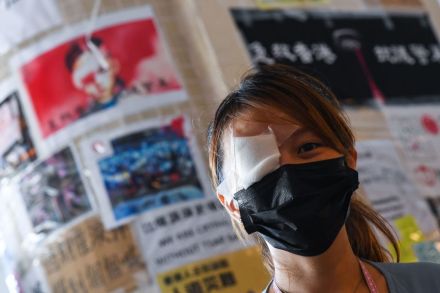
August 11th 2019 may go down as Hong Kong’s ‘Bloody Sunday’ as police officers bludgeoned and bruised protesters who had taken to the streets. A young woman was hit in the eye by a rubber bullet. A man was pinned to the ground by police, pleading for mercy as his bloodied face was pushed into the concrete. A policeman shot pepper balls at youngsters from point blank range. Another officer pushed protesters off escalators. Videos also emerged of police officers disguised as protesters making arrests. And there were reports of triad gangsters left free to roam the city, beating up unsuspecting demonstrators. Hong Kong’s protests started as protests about a single issue, amendments to the city’s extradition law.
Hong Kong protesters are following the wrong script

What do you call a global hub without an airport? Hong Kong. No other city can lay claim to this impossible status, for no global hub can exist without an airport. The closure of Hong Kong’s airport again today indicates how far the crisis in Hong Kong has gone, and how close one of the world’s greatest cities now is to a one-way ticket. For the fifth successive day, the world’s biggest flash mob has overrun one of the world’s busiest airports. The protesters have been peaceful – much more peaceful than anywhere else in the territory, where they have done their best to provoke the police as well as their fellow citizens. The police have also been more restrained than elsewhere, and haven’t (as yet) used tear gas or batons.

Hong Kong protesters are making things easy for China

The world is watching Beijing as it watches Hong Kong. There are nervous expectations that troops will be deployed in the region, as they were in Tiananmen Square thirty years ago. Were this to happen, it would be seen as proof that an era of malign Chinese enforcement had begun. Xi Jinping and his colleagues know that if they take drastic action, a new narrative will take hold about China’s draconian instincts. So instead, the Chinese government is deliberately holding back. It helps to understand the philosophy behind this approach. In Daoist tradition, the term ‘wu wei’ translates as ‘inaction’ – the art of simply doing nothing.

America should view China as a hostile, revolutionary power

From our US edition

Much has been made of the return of great power competition. In truth, it never went away, although the great game was so one-sided for a time that almost everyone in the West tuned out, assuming the match was over in perpetuity. It was too boring to contemplate and so attention drifted to other concerns and second- and third-order problems. China’s attention did not deviate, and once again it is a great power. Like cholesterol, great powers can be good, in that they accept the present international order, or bad, in that they do not. China does not, and seeks to overturn the contemporary order the West created.  This is the source of what is already the great conflict of 21st century. China is not a status quo great power.

xi jinping power

Letters | 8 August 2019

We don’t cut God Sir: The Revd Dr Peter Mullen suggests (Letters, 3 August) that Boris Johnson told him my BBC Great Lives programme had cut from our broadcast treatment of Samuel Johnson an extended discussion of Christianity’s role in Dr Johnson’s life. Boris J championed Samuel J for our programme, and your correspondent has been persuaded that Mr J argued at length the centrality of religion to the great lexicographer. I am fascinated by religion. My producers would not relegate a person’s faith where it was claimed as central to their greatness.

What my Hong Kong protest picture taught me about fake news

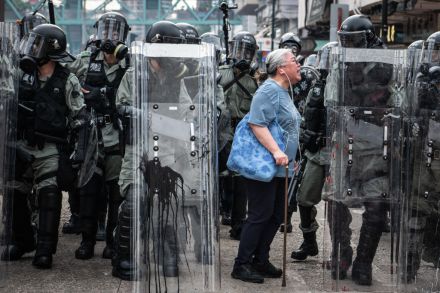
The elderly lady's face is red with rage as she screams with all her might at police. Leaning firmly on her walking stick, her head doesn't even clear the top of their riot shields. Her grey hair tied back in a ponytail, her worn T-shirt is in bitter contrast with the army green and black donned by officers in full riot gear.  I took her photo at a march attended by tens of thousands in the Hong Kong neighbourhood of Yuen Long. A short time later, protestors were dispersed by the authorities. The picture went viral the next day. For those who supported the demonstrations, this woman inadvertently became a symbol of resistance against the Hong Kong government.

Hollywood parrots the Chinese Communist party line

From our US edition

Let it never be said that Hollywood is cowardly. When there is a cause to go to the wall for, when there are monstrous dragons to be slain, when the ethical balance of our times tiptoes along the edge of calamity, is it not Hollywood – that steadfast, sensible battery of dream-makers – that rises to the challenge, earning the sighing respect and tearful admiration of us all? Weren’t we all thrilled, shocked and relieved in January when Robert De Niro – riskily breaking with precedent and the hidebound convention that A-listers should never opine about current events – said: ‘Trump is a real racist.’ Finally someone had the courage to say it!

hollywood china

Is China really the enemy?

China is a nation with values deeply at odds with the West. The Chinese spy, steal and bully. They don’t really care about human rights yet are getting disgustingly rich, and — well, I’m sure you’ve heard the rest. The western media likes to depict China as the new enemy — both morally and politically. It seems as if a new iron curtain is coming down, with my country (and family) on the wrong side of the divide. Of course, Britain is my country too: I’ve lived here longer than I did in China. But I have to confess that this fundamental ‘clash of values’ — described in such vivid terms by Mike Pompeo, the US Secretary of State — is one that passed me by. To be British--Chinese is not to be torn in two by competing value systems.

The problem of Beijing Biden

From our US edition

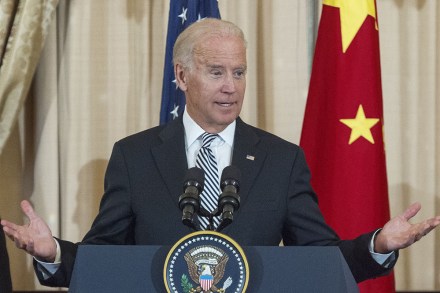
Imagine a presidential primary campaign candidate who is far ahead in the polls. Now, imagine that candidate leading in a diverse array of early states – Iowa, New Hampshire and South Carolina. This candidate is the most famous in his field. He has over four decades in the limelight. He routinely makes remarks that are offensive. Women suspect he is a sexual predator. The commentariat insist he’s finished. This politician is said to be out of step with his party’s base: his values don’t reflect theirs. Oh, and this candidate would be the oldest nominee in his party’s history, and America’s oldest elected president. This person is Donald Trump in 2016. He’s also Joe Biden in 2020.

beijing biden

One academic’s fight for the rights of Uighurs

From our US edition

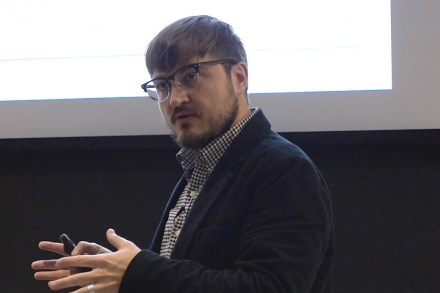
'After I testified in front of the Canadian House of Commons, the Chinese government might have put me in a different "category" on their blacklist,' Darren Byler said with a smile on his face. 'I possibly became an enemy of the state.' Byler is a lecturer in the department of anthropology at the University of Washington. He's an avid mountain climber, a Uighur poetry and literature enthusiast, and an advocate for Uighur rights in China. Since 2017, the People's Republic has interned as many as one million Uighurs, Kazahks, Kyrgyz, and other Muslim minorities in Xinjiang, the Uighur 'autonomous region' in northwestern China. Byler’s testimony, and the testimony of others, resulted in a Canadian government report condemning Chinese government’s treatment of Uighurs.

darren byler uighurs

Joining the tea set

It had to happen. Since almost everything became either ‘artisan’ or ‘curated’, conditions have been ripe for a curator of artisan teas. And sure enough, if you Google ‘tea curator’ you’ll find one promising regular infusions of ‘a curated selection of single-origin, artisan teas’. Now Compton Verney has done the sensible thing and curated an exhibition about the stuff. The starting point of A Tea Journey: from the Mountains to the Table is a copy of a painting by Johan Zoffany showing John Peyto-Verney, 14th Baron Willoughby de Broke, taking tea with his wife and three daughters around a tray loaded with Chinese porcelain, overlooked by a gigantic silver tea urn.

Portrait of the Week – 18 July 2019

Home In a televised debate between the rivals for election by members of the Conservative party as their new leader (and hence prime minister), Boris Johnson said of the Irish backstop, ‘It needs to come out,’ and Jeremy Hunt said that it was ‘dead’. This was described as ‘significant’ by Dominic Grieve, who said he was ready to bring the government down rather than see a Brexit without any agreement. Theresa May, the Prime Minister, said that she would continue to sit as an MP after her resignation on 24 July. Ffordd Pen Llech in Harlech was recognised as the steepest street in the world, at 37.45 per cent beating Baldwin Street in Dunedin, New Zealand, at only 35 per cent.

Has China infiltrated America’s universities?

From our US edition

As President Trump ponders restrictions on Chinese tech company Huawei, the FBI is warning American universities about espionage by Chinese researchers and academics. The FBI now advises research universities to track and observe Chinese students and faculty for signs of intellectual property theft. In the last year, the federal government has voided or re-evaluated the visas of 30 Chinese academics for this crime. In April, FBI Director Christopher Wray commented on China’s intelligence operation. China, Wray said, has 'pioneered a societal approach to stealing innovation any way it can, from a wide array of businesses, universities, and organizations'.

universities chinese

Portrait of the Week – 4 July 2019

Home Boris Johnson, the bookies’ favourite for the leadership of the Conservative party, would, if he became prime minister, ‘show the public sector some love’ said his supporter Matt Hancock. Jeremy Hunt, his rival for the leadership, said: ‘If you’re a sheep farmer in Shropshire or a fisherman in Peterhead… I will mitigate the impact of no-deal Brexit on you.’ The 160,000 members of the Conservative party, few of them public-sector workers, and even fewer sheep farmers or fisherfolk, were sent postal ballots from 6 July to vote for the new leader.

Watch out

I was recently treated to a small taste of the real China. It was in the incongruous setting of a vast conference centre in east London, directly under the flight path of City airport. On assignment for the BBC, I found myself wandering the stalls of Europe’s largest international security technology exhibition, filming for a new series on criminal justice. As soon as I arrived in the main exhibition hall with the production team, we were greeted by roving cameras, high-definition displays, drones and every variety of audio and video surveillance kit. All bar a handful of stands were manned by Chinese representatives, smiling politely, if somewhat stiffly, as we approached them.

Trump’s bad Huawei deal with Xi

From our US edition

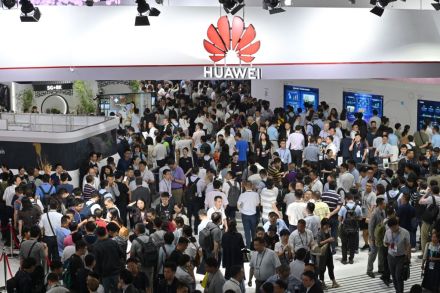
Trump’s decision to lift the ban on US companies doing business with Huawei, the Chinese telecommunications company, is a stunning defeat for him. It’s also a major reversal for the US intelligence community, which has been concerned for years about what it considers to be Huawei’s wholesale theft of American technology.Lifting of the ban reinstates Huawei at the leading edge of China’s global spying. It undercuts months of private attempts to encourage America's allies to join in what the US hoped would be something close to a worldwide ban. And, over the long term, it also threatens America’s strategic advantage as a leader in new technologies.

huawei

On Trump, President Xi had no idea what was coming

When Donald Trump took the US presidency in 2016, China was wary, but hopeful. Here's was a businessman for whom money was important, and China could offer economic growth for both countries through trade. But three years on, Trump has waged a trade war against China and boycotted its national tech champion, Huawei. The Wall Street Journal's Editor at Large, Gerard Baker, writes this week's cover piece, and argues that this is just the tip of the iceberg when it comes to the containment policy that America is taking against China. He joins Isabel Hardman on the podcast. We also hear from China expert Yu Jie from Chatham House, who points out that, like many of us, the Chinese leadership hasn't quite got its head around Trump's America.

Will the next prime minister betray Hong Kong again?

For many years, a framed cover of The Spectator looked down, like a silent reproach, on the drinkers in the Hong Kong Foreign Correspondents' Club. Its cartoon showed Britannia and the British lion on a barren rock, bent in a kowtow towards a distant, unseen overlord. The title read: Our Betrayal of Hong Kong. It was published when Margaret Thatcher was prime minister and the Tiananmen Square massacre had just taken place in Beijing. The editorial, two whole pages of eloquent indictment, did not please the woman who had signed the Joint Declaration with China by which the rights of Hong Kong were to be guaranteed for fifty years after the handover in 1997. There were, as we know, other things on her mind late in her premiership.

Chasing the dragon

It will be all smiles when Donald Trump meets President Xi Jinping this week in Osaka at the annual meeting of the G20: a show of comity for the cameras and financial markets. The two are midway through one of the biggest trade wars that the world has seen in recent years, with the US imposing tariffs on $250 billion of imports from China and Beijing retaliating in kind. It’s possible that some sort of truce will be reached, as it was when the two men met late last year. The next stage of escalation — additional tariffs, or worse — may be postponed again. Don’t be misled. The tariff fight is only the most visible, outward sign of a much larger struggle.

The Spectator’s Notes | 13 June 2019

You would think it would be unarguable that ‘Serious times demand a serious leader’. This, with small verbal variations, is the slogan of both Michael Gove and Jeremy Hunt in the current Tory contest, so it is obvious against whom their phrase is directed. Yet there is a counter-argument. The times we live in are undoubtedly serious, and for the past three years we have had, in Mrs May, the most unrelentingly serious leader ever. It has been a disaster. The post-2008 revolts across the western world have all been against seriousness as defined by existing leaderships. Trump, Salvini, Farage, Boris etc. strike a chord because they can burlesque the pomposity and self-righteousness of the conventional politicians who have led us badly.