James O'Malley

Will the NHS Covid app really make a difference?

From our UK edition

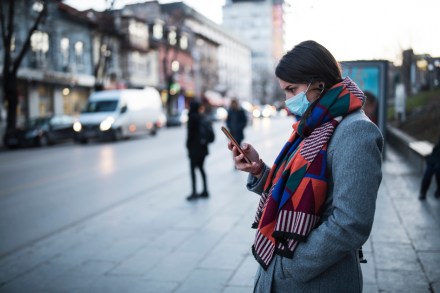
Yesterday afternoon Health Secretary Matt Hancock revealed some rare good news: the new Covid-19 track and trace app, which launched last week, has already been downloaded over ten million times. Clearly, the British people are eager to use the promise of contact tracing technology to limit the spread of the virus. The app’s arrival is months late after it was revealed the government’s original ‘centralised’ approach was fatally flawed. But now the new, improved version is here, the same question hangs over it: will it actually work? So far, the answer isn’t clear. In the days since launch, two potentially significant drawbacks have been identified by users. The first is technical.


Making the most of our electric cars

From our UK edition

One of the biggest contributors to our carbon footprint — and one of the clearest symbols of the polluted world we are trying to consign to the past — is our cars. With the average new car emitting 120.4g of CO2 for every kilometre driven, it’s clear we need to make the switch to electric transport sooner rather than later. That means a big shift in how we plan and manage our energy system to cope with the extra demand — and smart meters will play a significant role in making it happen. Last year, 59,911 new electric vehicles (EVs) were registered in the UK, giving EVs a 2.6 per cent share of the market. While it may not sound like much, this is more than a 400 per cent increase — up from just 0.

Why we can’t just break up Big Tech

From our UK edition

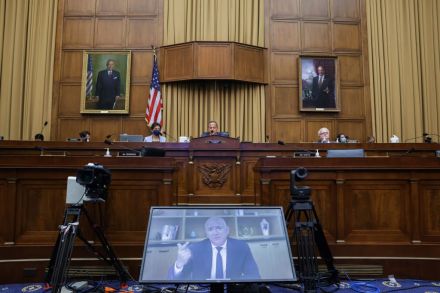
Yesterday was a historic day for Big Tech. For the first time, the CEOs of Facebook, Google, Amazon and Apple were forced to bend the knee before members of the US Congress, to answer questions about their monopolistic activities. ‘These platforms enjoy the power to pick winners and losers, shake down small businesses, and enrich themselves while choking off competitors,’ said the chair of the committee, Rep David Cicilline, in his opening remarks, adding that ‘Their ability to dictate terms, call the shots, upend entire sectors, and inspire fear represent the powers of a private government.’ He isn’t wrong. Silicon Valley’s largest companies pride themselves on innovation and a spirit of ‘move fast and break things’.

Why the UK should consider banning TikTok

From our UK edition

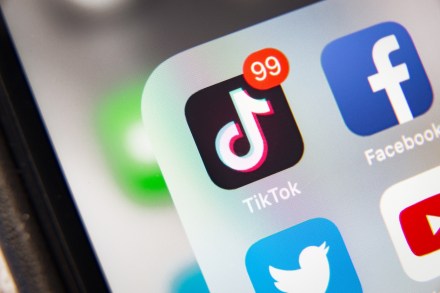
If you’re over the age of 20, TikTok can be a bewildering experience. Fire up the app and you’ll be bombarded with a bottomless feed of short, inane and loud videos that play on a loop. But flick through a few videos and maybe, just maybe, you’ll start to see the appeal. It’s an endless feed of pranks, stunts, dancing and lightning-fast comedy skits ­– and about as intellectually healthy as injecting sugar directly into your bloodstream. But love it or loathe it, one thing is clear: TikTok matters. It is currently thought to have around 800 million users – including 5 million Brits. Next year its British audience is forecast to double. What makes it curious in the pantheon of social networks is its parentage.

Why the NHS contact tracing app could be dead on arrival

From our UK edition

On Tuesday, the Isle of Wight became the nation’s Petri dish – the first place to try the NHS’s Covid-19 contact-tracing app. The app is definitely a clever idea: if our phones silently send a unique ID to everyone around us, when we get symptoms the government can alert everyone we have come into contact with. If enough people use the app – the theory goes – we will finally get a grip on the virus, and it will improve our track and tracing capabilities, limiting the spread of the disease. It might even enable us to get back to normal (or normal-ish) life more quickly. There’s just one problem: the app might not work. The reason why is technical, but important.

The dangers of letting Huawei build our 5G network

From our UK edition

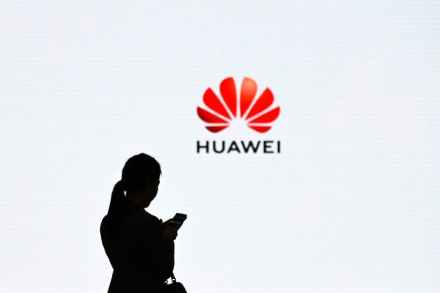
This afternoon Boris Johnson finally approved the use of equipment made by Huawei in building parts of Britain’s 5G network. The decision is a long time coming, having initially been kicked into the long grass by Theresa May last year, but it is also important. The decision will have profound strategic implications for the UK for years to come. Why such a big deal? 5G is the next generation of mobile phone technology. It is faster and more reliable than the 4G most of us are still using. And crucially, the technology isn’t just about improving our phones, as 5G chips will connect pretty much everything, from driverless cars, to electricity grids, to the emergency services.

How to stop a drone attack

From our UK edition

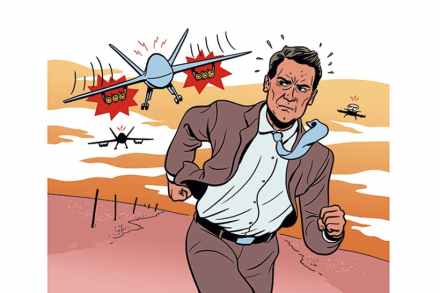
Drones have come of age in the war on terror. When the United States and Britain invaded Afghanistan in 2001, the technology was barely out of the lab. Today, these flying machines represent a huge security threat. If reports are to be believed, a Houthi rebel-launched drone attack in Saudi Arabia last weekend shut down 5 per cent of the world’s global oil supply and caused the largest spike in the price of oil since the first Gulf War in 1990. This is what the future of warfare looks like. So far, drones have been mostly on our side: used, very effectively, to disrupt and damage terrorist networks. The campaign against Al-Qaeda in Afghanistan and Pakistan that started in 2004 has been dubbed the Drone War. It’s estimated drones killed some 2,000 militants.

How to stop drones

From our UK edition

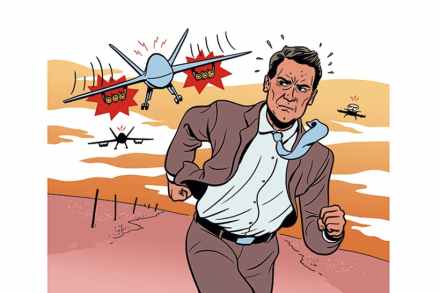
Drones have come of age in the war on terror. When the United States and Britain invaded Afghanistan in 2001, the technology was barely out of the lab. Today, these flying machines represent a huge security threat. If reports are to be believed, a Houthi rebel-launched drone attack in Saudi Arabia last weekend shut down 5 per cent of the world’s global oil supply and caused the largest spike in the price of oil since the first Gulf War in 1990. This is what the future of warfare looks like. So far, drones have been mostly on our side: used, very effectively, to disrupt and damage terrorist networks. The campaign against Al-Qaeda in Afghanistan and Pakistan that started in 2004 has been dubbed the Drone War. It’s estimated drones killed some 2,000 militants.

The all-seeing state

From our UK edition

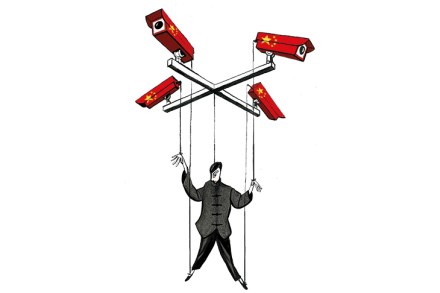
The bullet train from Beijing to Shanghai is the fastest in the world. It takes just over four hours to travel the 819-mile journey. From the train, it is impossible to ignore China’s economic success. There are cities the size of London that many westerners will never even have heard of. They are filled with glass towers and shopping centres, selling Cartier watches and Gucci bags. As the train sets off from each station, an announcement plays in both Chinese and stilted English: ‘Dear passengers, people who travel without a ticket or behave disorderly, or smoke in public areas, will be punished according to regulations and the behaviour will be recorded in the individual credit information system.