China

Letters | 13 September 2018

No debt without credit Sir: Liam Halligan and William Galston set out, convincingly, all the causes and effects of the 2008 crash, painting a doom-laden picture of the future of the world (‘The world the crash made’, 8 September). Not once do they mention China, which has to be the beneficiary of the consequential increase in global debt. Neither mentions that for every debtor there is a creditor. When I first worked in the financial world many years ago, the US was the world’s biggest creditor, Glass Steagall reigned supreme and, with growth slow but steady, everything seemed under control. But the Big Bang and Clinton’s repeal of GS opened the floodgates, allowing personal greed to determine the operation of the financial system.
The truth about China’s investment in Africa

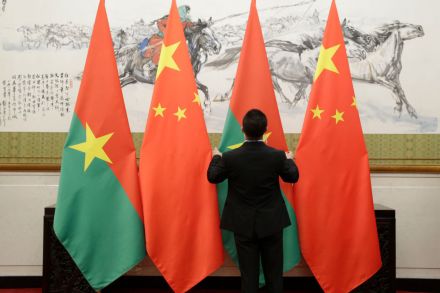
The Spectator’s leading article last week ended up saying ‘It is unrealistic to expect that we can achieve what China has in Africa over the past decade.’ If we were to have done that, I for one would wish to resign my British nationality. What they have done there for the past 30 years is to systematically rape and pillage the continent. China has insidiously worked its way into Africa by establishing ‘private’ contractors who then bid for building work and underbid all local opposition by being state-funded. Many local firms were thus put out of business. Their ‘aid’ projects — starting with the ill-fated TanZam railway — were funded not by grants but by loans accepted by weak and venal governments.

Letters | 6 September 2018

Chinese burn Sir: Your leading article last week ended up saying ‘It is unrealistic to expect that we can achieve what China has in Africa over the past decade.’ If we were to have done that, I for one would wish to resign my British nationality. What they have done there for the past 30 years is to systematically rape and pillage the continent. China has insidiously worked its way into Africa by establishing ‘private’ contractors who then bid for building work and underbid all local opposition by being state-funded. Many local firms were thus put out of business. Their ‘aid’ projects — starting with the ill-fated TanZam railway — were funded not by grants but by loans accepted by weak and venal governments.

Books Podcast: How the 2008 crash changed the world

In this week’s Books Podcast, I’m joined by the economic historian Adam Tooze, author of the new book Crashed: How A Decade of Financial Crises Changed The World. How are the subprime collapse in the US and the Eurozone crisis that came after linked? Why did a cartel of mega-wealthy businessmen do a good job at rescuing the US from disaster, and a group of well-intentioned political technocrats make such a hash of it in Europe? And how is the Balance of Financial Terror between the US and China holding up these days?

China’s child vaccine scandal spells big trouble for president Xi

The word changsheng means ‘long life’. But Gao Junfang’s Changsheng Biotech has long been in the business of robbing its victims of just that. Since taking over the company in the nineties, Gao oversaw the privatisation of the state-owned big pharma and turned it into her personal dynasty. She secured majority shares and planted her husband, her children, and their partners into the meatiest roles in the company. For decades, Gao was the entrepreneurial poster child – from rags (sort of) to riches, a walking example of the possibilities of China’s economic growth, and an idol especially for women. But last month, Gao was arrested along with 17 other people in the company. As of 2017, Changsheng had sold 250,000 dud DPT vaccines.

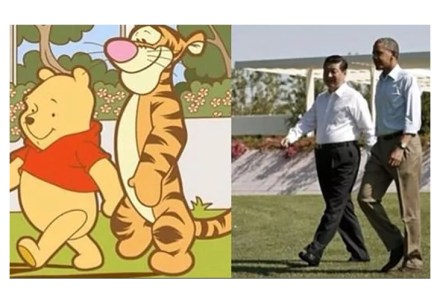
Xi Jinping avoids the Hundred Acre Wood

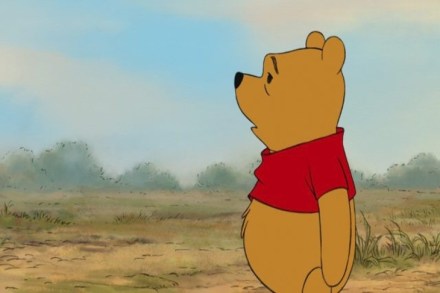
Why does President Xi Jinping of China dislike being compared to Winnie-the-Pooh? The new film about Christopher Robin and his teddy bear has been banned in China, apparently because Chinese dissidents make the comparison. True, Pooh is a bear of very little brain, lacks leadership skills and is somewhat stout, but it seems a friendly thought all the same. Wouldn’t a dictator be pleased to be considered cuddly? It is interesting that characters from children’s books are seen as subversive. Saparmurat Niyazov (‘Turkmenbashi’), the late dictator of Turkmenistan, passed a law banning anyone from dressing up as a hobbit. I wonder if, in Pooh’s case, there is some cultural misunderstanding.

Why does China’s Xi hate Winnie the Pooh?

Why is Winnie the Pooh like Ai Weiwei? Both have landed in political hot water with the Chinese government. The artist Ai has a long history of running into trouble with the Chinese authorities. In fact, earlier this week, Ai’s Beijing studio was demolished for reasons unknown (though perhaps you can take a guess). And Pooh’s become an equally worthy dissident, all because he bears an unfortunate resemblance to President Xi Jinping. Judging by his waistline, President Xi is obviously settling in to his cushy job with too much tea and honey. And he’s feeling sensitive about it. So much so that Disney’s upcoming film about Pooh bear, ‘Christopher Robin’, has been banned in China.

The Spectator Podcast: China’s new diplomacy

This week, China agreed to consider a trade deal with Britain post-Brexit, but does a closer relationship with China expose Britain to its expansionist ambitions? We also talk to two experts on what exactly a no-deal Britain would look like; and last, why are Britain’s great Catholic schools facing extinction? From cheap clothes to easy investments, it’s no secret that China’s rise has helped the whole world become richer. But at what cost? That’s the question that Asia expert Michael Auslin asks in this week’s cover, as Jeremy Hunt leads Britain into closer ties with China. Michael argues that Chinese trade paves the way for Beijing to strong-arm countries into China’s sphere of influence, supported by its rapidly growing military.

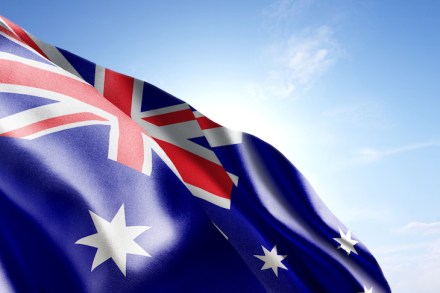
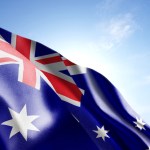
Australia’s choice: Chinese trade – or American security?

 SydneyFor decades, Australia has been known as ‘the lucky country’. At the end of the world geographically, we are separated from the global troublespots by vast oceans. We have recorded 27 years of uninterrupted growth, partly because of a surge in exports of commodities to China. At the same time, our tough border protection policies boost public confidence in, as John Howard put it, ‘who comes to this country and the circumstances in which they come’. As a result, our politics have not been profoundly affected by the kind of populist forces dismantling established parties across Europe. Nor have we witnessed an anti-globalisation backlash. Not for us any Trump- or Brexit-like insurgencies.

The Spectator Podcast: return of Ukip

It’s safe to say that Brexit negotiations haven’t gone smoothly. The Tories are down in the latest polls, but Ukip is up. Are we witnessing the beginning of Ukip’s return? Meanwhile, Australians are stuck between a rock and a hard place as China and America continue to bicker; and Cosmo Landesman complains about modern parenting. You don’t have to be following Brexit very closely to know that it’s not quite going to plan. May has lost the main Brexiteers in her Cabinet, and Jacob Rees Mogg is leading a Leavers revolt from the backbenches. If you voted for a hard Brexit, you would understandably be worried. Is this what explains a recent increase in Ukip’s popularity in the polls?

Australia at the crossroads

 Sydney For decades, Australia has been known as ‘the lucky country’. At the end of the world geographically, we are separated from the global troublespots by vast oceans. We have recorded 27 years of uninterrupted growth, partly because of a surge in exports of commodities to China. At the same time, our tough border protection policies boost public confidence in, as John Howard put it, ‘who comes to this country and the circumstances in which they come’. As a result, our politics have not been profoundly affected by the kind of populist forces dismantling established parties across Europe. Nor have we witnessed an anti-globalisation backlash. Not for us any Trump- or Brexit-like insurgencies.

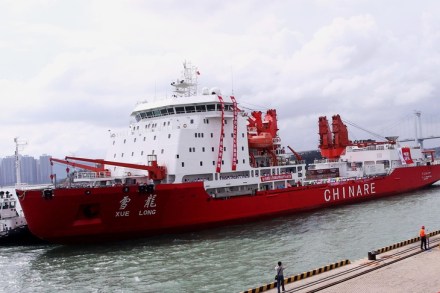
What is China up to in the Arctic?

In January, a pair of pandas flew to Finland on a diplomatic mission. Hua Bao and Jin Bao Bao had been dispatched from their native Chengdu as a gesture of goodwill from China’s president Xi Jinping. Their arrival, part of China’s ‘panda diplomacy’, is one of several signs that the country is on a High North charm offensive. Days after the pandas had settled into their new home, China released its first ever White Paper on the Arctic. It is a document that defies geography, referring to China as a “Near-Arctic State,” despite its borders lying over a thousand miles south of the Arctic Circle.

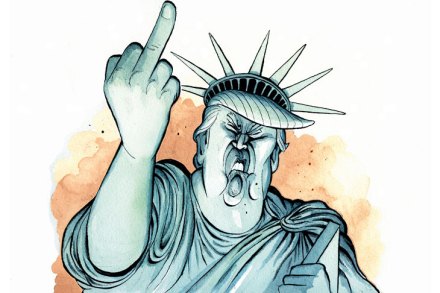
Are Trump’s tariffs a good idea?

Yes Supporters of the global free-trade regime that has been built up over the past 25 years like to think of themselves as capitalists. Benevolent capitalists, perhaps — ones who have only the interests of the world’s poorest workers and their own nations’ least wealthy consumers at heart — but capitalists nonetheless. So why is the biggest beneficiary of their world order in fact the last of the great, deadly serious Communist states — the People’s Republic of China? Trump’s tariffs, far from being the end of the liberal economic order, may be the one thing that can save it. That order, after all, to an embarrassing degree depends upon America’s dominant position in the world.

A trade war is a zero sum game

A decision on one of the more controversial of U.S. President Donald Trump's protectionist policies was yesterday postponed as the U.S. extended the exemption from tariffs on steel and aluminium imports for a handful of allies including the European Union. The news comes in the wake of talks with Europe's 'big hitters', French President Emmanuel Macron and German Chancellor Angela Merkel, who left Washington with seemingly little to show for their efforts. But this reprieve might quietly be considered a victory--so long as the Europeans can figure out a way to make it permanent. As tensions with China escalate, the bloc will hope that Trump is realising he needs the economic might of his close European allies.

Has Kim Jong-un finally grown up?

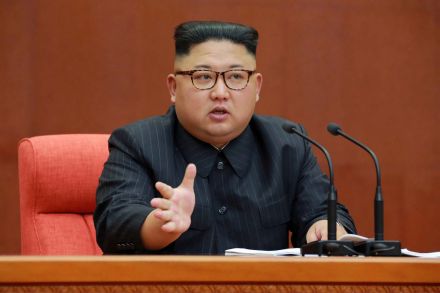
Given the mutual bluster, threats and sabre-rattling we got used to from Donald Trump and Kim Jong-un, it may be hard to credit the air of sweet reasonableness that has spread over the Korean peninsula in recent weeks leading to the weekend announcement of an end to weapons testing by the North. The potential for a reversion to confrontation is all too evident. Pyongyang has a long record of reneging on agreements and its announcement contained no mention of a reduction in its arsenal that includes missiles which can hit Japan and South Korea even if it stops development of ICBMs aimed at the USA.

The mind of Donald Trump, as explained by Anthony Scaramucci

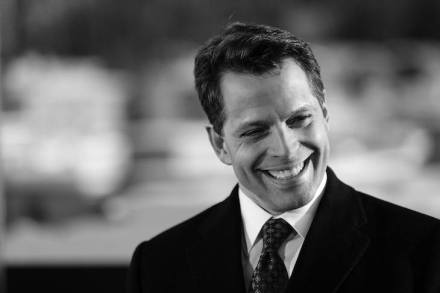
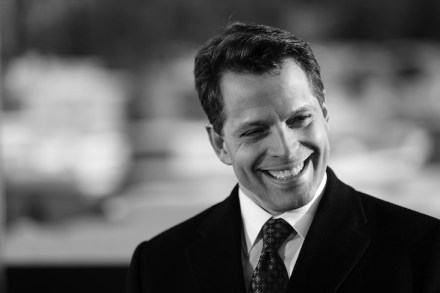
When Anthony Scaramucci announced that he was writing a book about his time with Donald Trump, the joke was that it should be entitled ‘Ten Days That Shook the World’. This, he says, does him an injustice because he managed 11 days as White House communications director before being fired — after a lava flow of stories that seemed extraordinary even by Trumpian standards. But he remained loyal to the President, and has been speaking in his defence ever since. This book promises to reveal one of the deepest mysteries in American politics: how Trump’s mind works. ‘I’m almost done with the manuscript,’ he says, fresh from a meeting with his publishers in New York. ‘Obviously, my short stint in the White House won’t be a major drama.

Meeting the Mooch

When Anthony Scaramucci announced that he was writing a book about his time with Donald Trump, the joke was that it should be entitled ‘Ten Days That Shook the World’. This, he says, does him an injustice because he managed 11 days as White House communications director before being fired — after a lava flow of stories that seemed extraordinary even by Trumpian standards. But he remained loyal to the President, and has been speaking in his defence ever since. This book promises to reveal one of the deepest mysteries in American politics: how Trump’s mind works. ‘I’m almost done with the manuscript,’ he says, fresh from a meeting with his publishers in New York. ‘Obviously, my short stint in the White House won’t be a major drama.

What would a serious trade war between the US and China look like?

This is an extract from Martin Vander Weyer's 'Any Other Business' column in this week's Spectator. 'Stocks plunge as China hits US goods with tariffs,’ said a headline after the long weekend, and the FTSE100 duly dipped below 7,000. But I wonder what a serious trade war would look like — and how markets would respond if the White House and Beijing took the gloves off. Last year, China exported $500 billion worth of goods to the US, while US exports to China amounted to $135 billion. Last month, President Trump announced import tariffs on $50 billion worth of Chinese steel and aluminium, 10 per cent of the total import bill.

A US-China tit-for-tat hardly amounts to a serious trade war

‘Stocks plunge as China hits US goods with tariffs,’ said a headline after the long weekend, and the FTSE100 duly dipped below 7,000. But I wonder what a serious trade war would look like — and how markets would respond if the White House and Beijing took the gloves off. Last year, China exported $500 billion worth of goods to the US, while US exports to China amounted to $135 billion. Last month, President Trump announced import tariffs on $50 billion worth of Chinese steel and aluminium, 10 per cent of the total import bill.

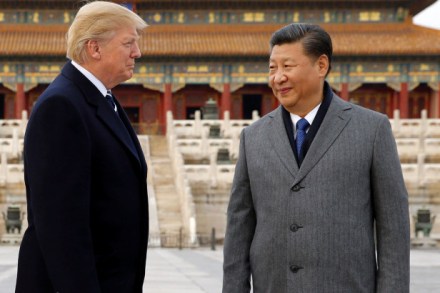
A trade war with China sounds terrifying – but the US is doing the right thing

Nobody likes the sound of trade war, and rightly so. China’s new retaliatory tariffs against US products feel like the beginning of something bad: an escalating tit-for-tat trade conflict between the world’s richest countries which could choke the global economy. But there are good reasons to think that, far from being another silly move by a hothead president, Trump’s right about trade with China and that, as he has with North Korea, he is grasping a dangerous nettle that other presidents dared not touch. It may be scary, but it needs to be done. And it’s not just necessary for America, but perhaps the rest of the world as well. China is deeply protectionist, and is rapidly becoming the most powerful country on earth.