Cambridge

Cambridge has fallen

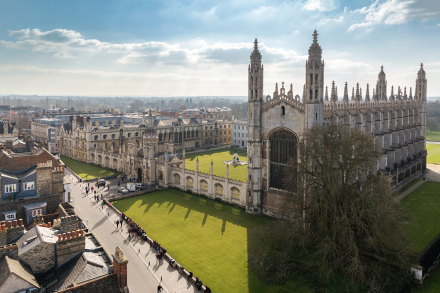
‘What distinguishes Cambridge from Oxford,’ A.A. Milne said in 1939, ‘is that nobody who has been to Cambridge feels impelled to write about it.’ Four decades later, Tom Sharpe would prove him wrong about Cantabrigian reticence with Porterhouse Blue – his riotous satire of the conflict between an idealistic new master and the stuffed shirts of the senior common room. It’s a shame that Sharpe isn’t around to enjoy the Jason Arday scandal – a farce so absurd that even he may have dismissed it as being too silly. When Arday was announced as Cambridge’s professor of sociology of education, he was lauded as the university’s youngest-ever black professor. His biography had a whiff of Hollywood. Arday had been diagnosed with a developmental disorder at the age of three.
Jason Arday has exposed Cambridge’s corruption 

The story of Jason Arday is so brilliantly illuminating of the rottenness of our Establishment that it seems – literally – fabulous. He seems to be almost too fantastic a figure for conventional fiction; rather, he is a character from fables of old – an archetype exposing the sins and hypocrisy of our times, a modern Till Eulenspiegel or Robin Goodfellow. In Arday’s frictionless ascent to academic eminence from a background of apparent disadvantage we see apparently elite institutions eagerly suspending their critical faculties in order to virtue-signal on race, disability and hardship. By studying Arday’s biography we can begin to understand just how in hock to progressive guilt our top universities are – and how damaging this is for real scholarship.

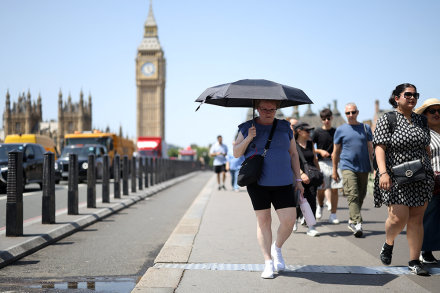
How does this week’s heatwave compare with 1976?

Prime numbers It looks as if Britain will just miss out on having seven prime ministers in the space of a decade as nominations for the Labour leadership election will not open until 9 July (David Cameron left office on 13 July 2016). Have we ever had seven PMs in the space of ten years? – After Lord Liverpool left office on 9 April 1827 Britain saw a further eight premierships within the following decade. Two, however, saw the same person returning to office, so we had seven different prime ministers within the space of ten years.

Was I too right-wing for MI6?

Like many people, I’ve been bemoaning the woke capture of our security services for some time. In 2024, Sir Richard Moore, then the head of MI6, resigned from the Garrick Club during the row over the admission of women, and earlier this year it emerged MI5 was excluding white people from registering interest for administrative roles due to the ‘under-representation’ of black, Asian and minority ethnic people. You would hope the recruitment of spies would be based on merit, given the vital role they play in protecting the national interest, but apparently diversity targets are more important.

Sabotage in occupied France: The Shock of the Light, by Lori Inglis Hall, reviewed

The courage of women dropped into Nazi-occupied Europe in order to work for Special Operations Executive (SOE), was immense. Trained as spies in Britain, they were tasked with sabotage and subversion of Nazi military rule and operated covertly with Resistance fighters and other British agents. It was a hugely risky job. Thirty-nine entered occupied France in this way, mostly by parachute. Imagining their experiences seems to be a rite of passage for many esteemed novelists – off the top of my head I can think of William Boyd, Sebastian Faulks, Simon Mawer and Kate Quinn. I have read and enjoyed their books, but there is often a sense of the protagonists being superhumanly lucky: beautiful, outspoken, brave, and able to glide through the espionage.

Pope Idol: Leo’s singing should be celebrated

‘But will anyone be interested?’ the vicar asked cautiously. It was a fair response to my latest madcap scheme. One of the vicar’s 12 churches, St Candida and Holy Cross at Whitchurch Canonicorum in Dorset, hosts one of the country’s only three remaining pre-Reformation saints’ shrines with the relics of the saint still present. In this case, the shrine is to St Wite, a ninth-century virgin princess martyred by the Vikings. Her saint’s day was coming up. Could we, I asked, recreate a pre-Reformation church service in honour of it? The vicar, the Revd Virginia Luckett, who is sometimes heard on Radio 4, agreed to my proposal – but with trepidation. She is used to conducting pilgrimages to the shrine, and knows the spiritual value of this medieval tradition.

A.C. Benson enters the pantheon of great English diarists

All great diarists have something intensely silly about them: Boswell’s and Pepys’s periodic bursts of lechery and panic; Chips Channon’s unrealistic dreams of political greatness leavened with breathless excitement over royal dukes and handsome boys; Alan Clark’s fits of romantic, almost Jacobite, dreaming; James Lees-Milne’s absurd flights of rage. I dare say the mania that drove the Duc de Saint-Simon in his demented campaign against Louis XIV’s attempts to create a place in court hierarchy for his bastards seemed ridiculous to his more sober contemporaries. Often the silliness comes from a mad overestimation of the writer’s ability. There is no more fascinating diary than Benjamin Haydon’s. He was an indifferent painter who never achieved the success he dreamt of.

Have I unmasked Cambridge’s bike bandit?

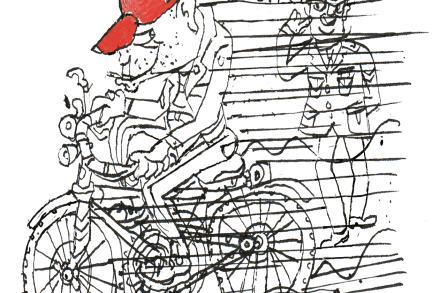
The Cambridge bike bandit emerged. I watched the rough, smiling face of the old man who came slowly from his bungalow and urged me to join him around the back; he didn’t look like a thief. We entered his grassless yard filled with bikes, tyres and tools. ‘This Raleigh, £80,’ he said, withdrawing a creaky frame from the pile. ‘I just changed the tyre. You see? Not heavy. Made in England. Nottingham. You can try a little bit. Try it for ten minutes. I don’t mind.’ A source had told me about the bandit, a man who openly shifted stolen bikes from a suburban Cambridge home, so bad and unpoliced has bike theft become in the city. I had got the outlaw’s phone number and arranged to meet him under the guise of making a purchase.

Trump’s revolution is coming to the UK

From our US edition

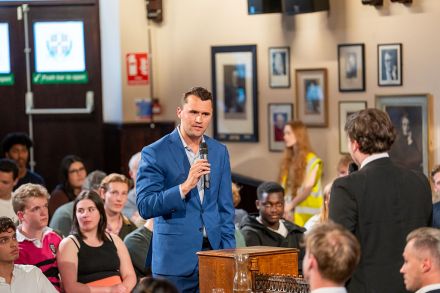
In May, Charlie Kirk, who died today from a gunshot wound, visited the United Kingdom to debate the students of Oxford and Cambridge, Britain’s two most prestigious universities. The Spectator asked him to write about the experience. The result was this well-observed, funny and now strangely prophetic-sounding piece about the condition of England. Charlie Kirk believed in free speech. He died speaking freely. RIP. Oxford and Cambridge When I was growing up, people often said British politics were where America’s would be in five, ten or 20 years. What this meant was that Britain was more to the left of America: more secular, more socially liberal, more environmentalist, more globalized.

Cambridge charlie kirk

My message to the Trumpists

Social media benefit from creating continuous belligerence in politics. For them, Donald Trump is the perfect politician. As I wrote last week, I think he is doing exciting things and I feel relieved that Kamala Harris lost. But it is impossible to support everything Mr Trump says or does. He never regards himself as bound by what he has previously said, so why should his followers seek to justify each piece of Trumpery? Since his victory in November, I have noticed several otherwise intelligent friends, all of them men, going crazy-culty about the dawning era – defending, for example, the removal of the security detail of Mike Pompeo, John Bolton and Brian Hook, or his pardon for all those convicted in the 6 January riots. It is nasty score-settling.

A pleasant respite from the tumult in Cambridge

From our US edition

Cambridge, England Inscribed on the lid of a two-manual harpsichord in Holy Trinity Church at Hildersham in Cambridgeshire is the Latin tag Musica Donum Dei — music is a gift of God. It was a sentiment I could hardly quarrel with as I listened in the little twelfth-century church to a variety of baroque sonatas for violin, recorder, cello and harpsichord. They were expertly performed by the Azur Ensemble, which is comprised of recent graduates of the Royal College of Music. A particular standout was the French harpsichordist Apolline Khou, who has performed widely in Europe and in a solo concert for King Charles III.

Cambridge

A post-Brexit entertainment: The Proof of My Innocence, by Jonathan Coe, reviewed

This is a novel that spans the Truss administration, from its heady dawn to its decline and fall 49 days later. The Proof of My Innocence starts as a satire, not so much of Truss and her world but the ideologists who thought that the prime minister’s brief, shining moment was their long-cherished future. They meet in a collapsing Cotswolds castle to hear from delegates such as Josephine Winshaw, who intones that everything now is woke: ‘Paying your TV licence was woke. Getting vaccinated was woke... buying avocados was woke, and reading novels was woke.’ Another speaker praises a reactionary novelist to a much smaller audience. Into this milieu steps Christopher Swann, a blogger. To him the radical economic libertarianism that Truss represents stems from early 1980s Cambridge.

Drama students: how universities raised a generation of activists

39 min listen

This week: On Monday, tents sprung up at Oxford and Cambridge as part of a global, pro-Palestinian student protest which began at Columbia University. In his cover piece, Yascha Mounk, a professor at Johns Hopkins University, explains how universities in both the US and the UK have misguidedly harboured and actively encouraged absurdist activism on campuses. Yascha joined the podcast to discuss further. (01:57) Next: Bugs, biscuits, trench foot: a dispatch from the front line of the protests. The Spectator’s Angus Colwell joined students at tent encampments this week at UCL, Oxford and Cambridge. He found academics joining in with the carnival atmosphere. At Cambridge one don even attended with their baby in tow. ‘Peaceful protest?

How universities raised a generation of activists

It was only a matter of time before America’s student protests spread to the UK. In Oxford, tents have been pitched on grass that, in ordinary times, no student is allowed to walk on. The ground outside King’s College in Cambridge looks like Glastonbury, complete with an ‘emergency toilet’ tent. Similar camps can be found at UCL, Manchester University and more. There have been no clashes with police, but that may yet come. In Leeds, for example, pro-Palestinian students tried to storm a university building, leading to bloody clashes with security guards. From the Sorbonne to Sydney University, the movement has gone global. Its ostensible cause is hardly ignoble. It’s possible to be appalled both by the 7 October attacks and the tens of thousands of Palestinian deaths.

We have lost an unforgettable teacher and one of Britain’s great critics

Tanner, the critic RICHARD BRATBY Michael Tanner (1935-2024), who died earlier this month, had such a vital mind and stood so far above the common run of music critics that it’s hard to believe he’s gone. For a philosopher to concern themself with the inner game of opera is not unknown (think of Friedrich Nietzsche and Roger Scruton). To do it as perceptively and as readably as Tanner is rarer. For two decades, starting in  1996, his weekly Spectator opera column offered as thorough and as stimulating an education in musical aesthetics as one could hope to receive; intellectual red meat served with forensic clarity and a mischievous, subversive smile.

Death of a choir

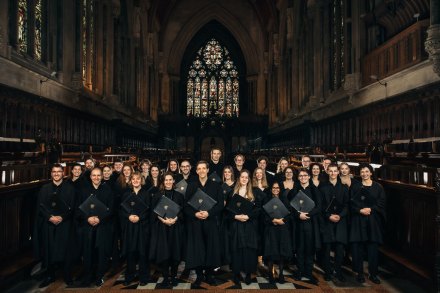
Always make your redundancy announcement when the people at the receiving end of it are on a high. This seems to be the favoured method of today’s managing executives, who perhaps imagine that adrenalin will somehow anaesthetise the blow of getting the sack. For the Cambridge student choir St John’s Voices, the news of its imminent disbanding and the redundancy of its director Graham Walker came just two minutes after the light was switched off at the end of a three-day recording session of Russian choral masterpieces last week. Does egalitarianism have to be promoted at the expense of up-and-running excellence?

Who put the toddlers in charge?

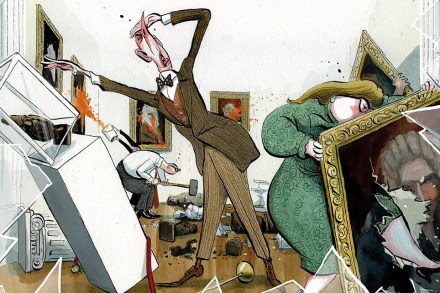
Regrettably, we must conclude that our culture is being dictated by two-year-olds. I do not literally mean children of two years of age, some of whom are among my favourite conversationalists. I mean people with the mental age of a two-year-old. That is, people who have never been told ‘no’ and have gone through their adult lives behaving as such. These are people who have never been told ‘no’ and have gone through their adult lives behaving as such The rot began with the green lunatics. I’m all for saving the environment. Most people are. But the moment vandalism became an acceptable way to persuade people of your cause was where things went wrong.

Why are the photo agencies punishing Kate?

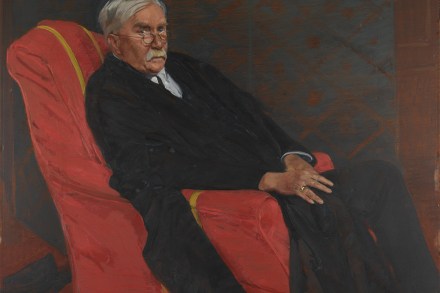
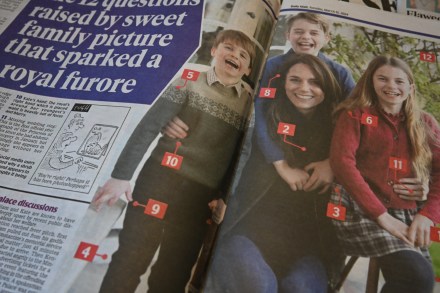
Media scrutiny of the Princess of Wales and her personal photoshopping of her Mothering Sunday photograph has been intense. One important set of players has escaped attention, however: the picture agencies. It was they – AP, Getty Images, AFP, Reuters, Shutterstock and PA – who issued a ‘mandatory photo kill’ of the image. They doubted what PA called its ‘veracity’. I hope it is not unduly cynical to point out that these agencies hate the fact that HRH distributes her own pictures (without charge). Her homemade pics take the bread out of the agencies’ mouths. Suppose other world figures get the DIY habit: what will become of the professionals then? Are the agencies trying to teach the Princess a lesson? Trinity College, Cambridge, houses de Laszlo’s portrait of A.J.

Lord Byron had many faults, but writing dull letters wasn’t one of them

In 1814, at the height of his fame, the poet, libertine and freedom fighter Lord Byron had his head examined. Not by a proto-psychiatrist but by the German phrenologist and physician Johann Spurzheim, who, after making a detailed study of the no doubt amused Byron’s cranium, pronounced the brain to be ‘very antithetical’ and said that it was an organ in which ‘good and evil are at perpetual war’. Two centuries after Byron’s death, this dichotomy is as pronounced as ever when it comes to analyses of the poet. His defenders point to his wit, his poetic genius, his heroic efforts in defence of Greek liberty and his personal flair; not for nothing has the word ‘Byronic’ entered the vocabulary as a largely admiring adjective.

America’s professor: the afterlife of C.S. Lewis

From our US edition

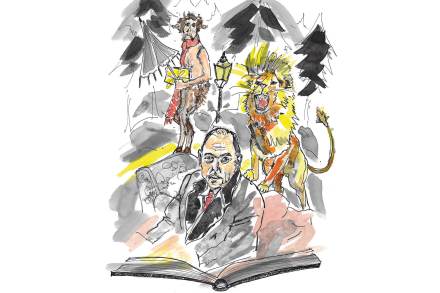
In the summer of 1955, an unusual meeting took place. Billy Graham visited the writer and academic C.S. Lewis in Lewis’s rooms at Magdalene College, Cambridge. It was unusual because leading British academics typically avoided Southern Baptist revivalists. But rather than encountering a fussy, prim don, Graham found a kind, intelligent scholar who was very happy to spend the afternoon with him. Later, Graham admitted he was intimidated by Lewis, but the English professor quickly dispelled any anxiety, probably by offering Graham a cup of tea. Graham’s impact on American religious culture, for good or ill, is unquestioned, but it is difficult to imagine what that same culture would look like without the works of C.S. Lewis.

lewis